

SMEunited marked its 45th anniversary in Brussels on December 10th with the high-level conference "Vision 2040 by Crafts & SMEs," an event dedicated to imagining how Europe’s small and medium-sized enterprises can thrive in the coming decades.
On the sidelines of the gathering, we spoke with SMEunited President Petri Salminen, who used the opportunity to underline a message he considers essential for Europe’s economic future: if policymakers want a prosperous society in 2040, they must finally and consistently 'Think Small First'.
Salminen began by reminding us that entrepreneurs are “optimists by nature,” and that this optimism underpins SMEunited’s decision to look far ahead. SMEs account for 99.8% of all European companies, and the vast majority—94%—have fewer than ten employees.
These businesses sustain local communities, preserve craftsmanship, train workers, innovate, and keep Europe’s regions economically and socially vibrant. Yet they are also exposed to the full force of today’s disruptions: geopolitical tensions, climate challenges, demographic shifts, labour shortages, and rapid technological transformation. According to Salminen, these pressures make long-term planning not only useful but indispensable.
Vision 2040 project
The Vision 2040 project presented during the conference is SMEunited’s response to that need. Developed with the support of the external consulting firm Capful, the initiative used foresight methods and scenario planning to explore how European society and the economy might evolve over the next 15 years. Capful first carried out extensive research and drafted three plausible scenarios for Europe in 2040.
SMEunited members from across the continent then discussed these scenarios in a series of workshops, examining what each would mean for crafts and SMEs. This iterative process allowed members to identify the most desirable elements for the future and combine them into a single shared vision.
As Salminen explained to us, the result is an ambitious but achievable outlook for SMEs: a Europe in 2040 where entrepreneurial diversity is valued, where competitive conditions reward quality and local production, where education fosters an entrepreneurial mindset, and where SMEs operate with fair access to markets, workers, digital tools and finance.
The vision also imagines a stable global environment, a strengthened and assertive European Union, and an innovation ecosystem where small businesses are fully involved in digital and green transformation.
The December 10th event presented this vision to European stakeholders and national SME organisations.
SMEunited Secretary General Véronique Willems highlighted that members see 2040 as a time when Europe embraces entrepreneurship as a core societal value and ensures equal opportunities for businesses of all sizes. Market-based solutions, rather than heavy reliance on subsidies, are expected to drive structural change and innovation. SMEs would benefit from a regulatory environment that is clear, proportional and stable—one that takes into account the specific nature of small business operations.
For Salminen, all of this requires a profound shift in how legislation is conceived. That shift is captured in SMEunited’s long-standing principle: 'Think Small First'.
In practice, the principle means that policymakers should start by considering SMEs when drafting rules, rather than designing legislation for large companies and only later trying to adapt it for smaller ones. Too often, he argued, this principle is acknowledged in theory but ignored in practice. The tools meant to support it—the SME Test, SME filter and other Better Regulation instruments—do not sufficiently translate into the lived experience of small businesses.
During our discussion, Salminen emphasised how deeply SME characteristics differ from those of large enterprises. Owner-managers in micro and small businesses perform multiple roles simultaneously: they invest their own capital, manage operations, coach staff, handle administrative tasks, engage with customers, and track regulatory developments. This multidimensional function means that complex or disproportionate rules create immediate burdens that cannot be easily absorbed.
For SMEs, he said, “one size does not fit all” must be more than a slogan—it must be built into policymaking.
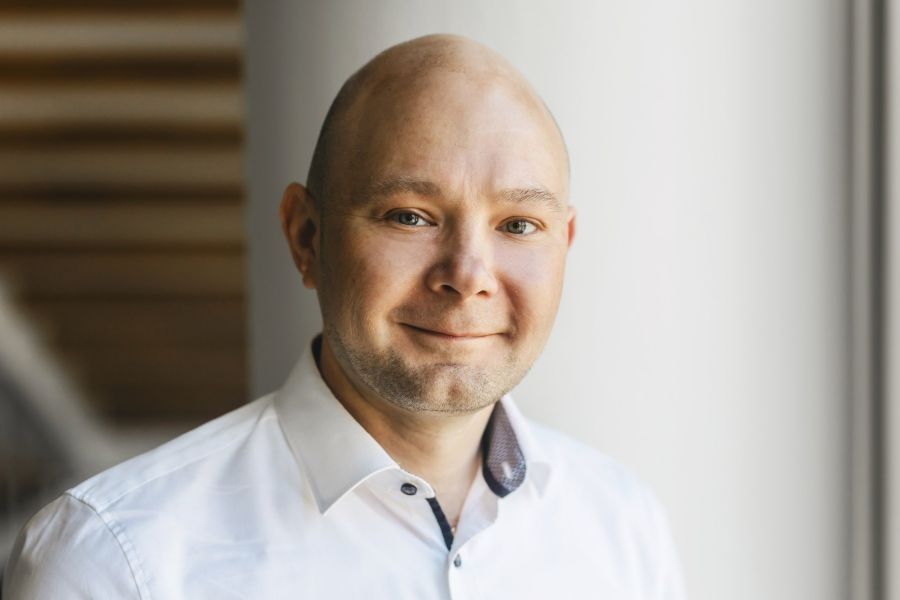
SMEunited President Petri Salminen
Three concrete actions
To make Think Small First a real driver of legislation, SMEunited has launched its Think Small First Charter, calling policymakers to commit to three concrete actions:
- First, policies with business implications must be drafted from the perspective of SMEs from the outset, ensuring practical applicability for micro-enterprises.
- Second, the direct and indirect effects of legislation on small companies should be systematically assessed throughout the policymaking process.
- Third, final laws should include SME-friendly provisions such as the once-only principle, longer transition periods, an “advise first, sanction later” approach and adequate support measures for implementation.
Salminen believes this approach will not only reduce burdens but also unlock growth. Proportionate and realistic rules create a pathway for small firms to scale up—something essential for Europe’s competitiveness. A lighter, smarter regulatory touch, he said, strengthens both entrepreneurship and innovation, two qualities Europe needs in facing global technological and geopolitical competition.
Reflecting on the Vision 2040 project, Salminen described it as a compass for SMEunited’s work in the coming years. The vision outlines what an SME-friendly Europe could look like if the right choices are made: strong local economies, resilient supply chains, widespread digital skills, efficient labour markets, access to finance beyond traditional banking, and a transparent, well-functioning Single Market.
It also imagines a Europe where crafts and SMEs are recognised not only for their economic contribution but also for their social role—strengthening communities, preserving traditions and fostering trust.
He cautioned, however, that the preferred future will not happen automatically. “We are not naïve,” he told us. “Much remains to be done to achieve the outcomes we want for society and the economy by 2040.”
But with the Vision 2040 roadmap and a renewed push for Think Small First, Salminen believes Europe can create the right conditions for its millions of small businesses to thrive—and, in turn, for society as a whole to prosper.
