
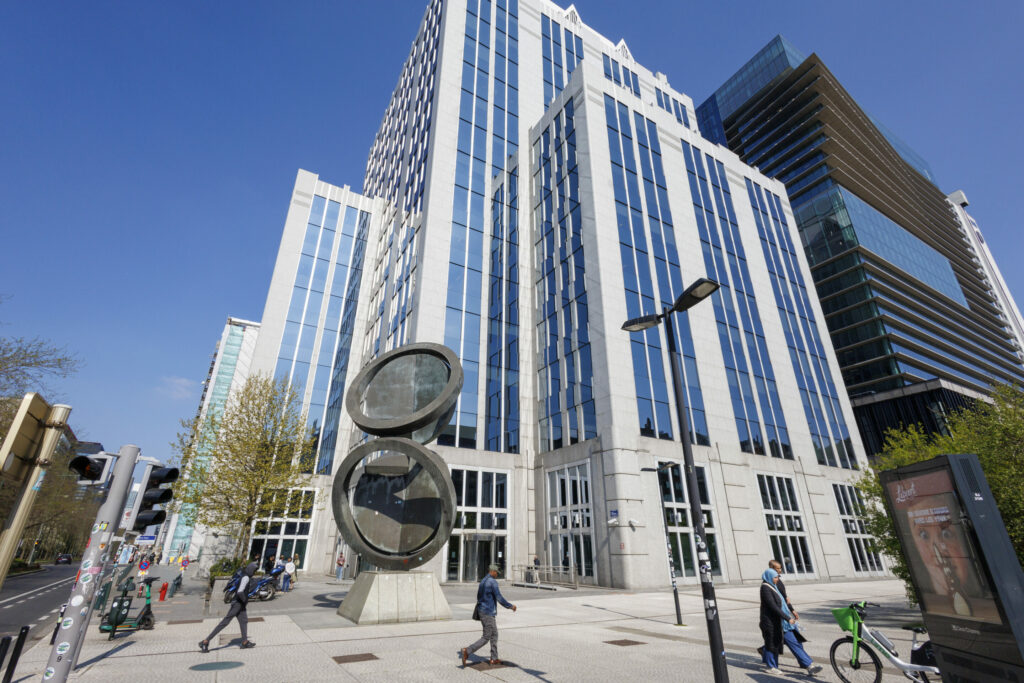
The European Union’s plan to finance Ukraine using frozen Russian assets in Belgium has sparked serious concern at Euroclear, a key financial institution, over potential retaliation from Moscow.
Guillaume Eliet, Euroclear’s head of risk, said the firm remains worried despite reassurances from the EU. Speaking to French news agency AFP at the company’s headquarters in Brussels, he said: “We have been very clear that we still have concerns.”
The EU aims to use €200 billion in frozen Russian Central Bank assets for an urgently needed loan to Ukraine amid its ongoing war with Russia. EU leaders are expected to discuss a target of €90 billion at a summit on 18 December.
Fears of Russian backlash
Under the proposed plan, Euroclear would lend the money to the EU, which would then provide it to Kyiv. However, Belgium has resisted the scheme, citing fears of financial or legal backlash from Russia.
The European Commission has tried to allay these fears by proposing a “three-level defence system” designed to ensure that Euroclear could return the funds to Russia if required. Member States would contribute guarantees to cover potential compensation.
Eliet highlighted that Euroclear needs immediate access to liquidity, expressing doubts about the reliability of the guarantees. “How can we be sure the guarantee mechanism will activate promptly if needed on a Monday morning?” he asked.
Concern for international investor confidence in Europe
Furthermore, Eliet questioned whether the system would remain dependable in the long-term, especially if political changes occur within EU Member States. “Are we certain that, in ten years, we will still be protected?” he asked.
Additional concerns include the risk that the loan arrangement could be viewed as a confiscation of Russian assets, leaving Euroclear or its clients in Russia vulnerable to lawsuits or asset seizures. The company currently manages around €16 billion worth of Russian-related assets.
Belgium has warned that liquidity issues at Euroclear could harm financial markets and erode investor confidence in the Eurozone economy. Eliet also raised fears of broader consequences, stating: “This could signal to international investors that Europe may not be a safe place to invest.”
Hoping for a consensus
With less than ten days before the summit, Eliet has called for an emergency meeting among legal experts to refine the proposal and “reduce risks.” He assured that Euroclear is willing to collaborate to create a feasible framework within the short term, adding, “We still believe a consensus is possible.”
Belgium has suggested that the EU also target €25 billion of Russian assets held elsewhere within the bloc, including in France, but this has yet to gain traction.
Eliet indicated that Euroclear feels singled out for this initiative, exposing it to potential hostility from Russia, which could include cyberattacks. “We monitor threat levels daily,” he said, adding, “Protecting our staff is a priority.”
