

The United Kingdom will rejoin the EU's Erasmus exchange student programme from January 2027, the European Commission confirmed on Wednesday.
The widely anticipated move has now been officially confirmed, following reports from the Guardian. The UK will rejoin the programme after former Prime Minister Boris Johnson pulled the UK out of the scheme in 2020, after exiting the EU without a deal.
Since the EU-UK summit in May this year, both sides have expressed a willingness to reforge closer ties and deepen cooperation in a number of fields, notably defence, energy, fishing and cultural exchanges.
Now, the European Commission and the United Kingdom have concluded their negotiations for the UK's association with Erasmus+ in 2027 – arguably the most popular student scheme in Europe.
"The agreement to join Erasmus+ in 2027 fulfils a key commitment made at the May summit will open up world-class opportunities for young people across the country," according to a statement from the UK on Wednesday.

A sign inside the St Pancras International train station. Credit: Nick Fewings / Unsplash
The UK’s absence from the student exchange programme, which gives students the chance to study in an EU city and EU students to study in the UK, was a bitter pill to swallow – particularly for the generations that missed out on it.
Now, young people from both sides of the Channel will get the chance to study and train abroad. This includes people from all backgrounds, learners, educational, youth and sport staff, according to the UK Government.
Opportunities available on Erasmus+ include further education for students and apprentices going on work placements in leading European companies.
Both expressed satisfaction with the terms of the deal, including the mutually agreed financial terms. "These represent a fair balance between the UK's contributions and the benefits the programme offers and pave the way for United Kingdom participation in the programme in 2027," the EU said in a statement.
With an estimated budget of €26.2 billion, Erasmus plays an important role in the educational, professional and social development of young people. Between 2014 and 2020, Erasmus+ gave 3.7 % of young people in the EU a chance to study, train, volunteer or gain professional experience abroad.
"Joining Erasmus+ is a huge win for our young people, breaking down barriers and widening horizons to ensure everyone, from every background, has the opportunity to study and train abroad," UK MP and EU Relations Minister Nick Thomas-Symonds said, adding that 100,000 British students could now benefit from it.
The great reset?
Last week, Thomas-Symonds met with EU Trade Commissioner Maroš Šefcovič in Brussels to instruct teams to step up talks before the end of the year.
The UK and the EU will now focus on concluding the negotiations of the United Kingdom's participation in the internal electricity market of the European Union.
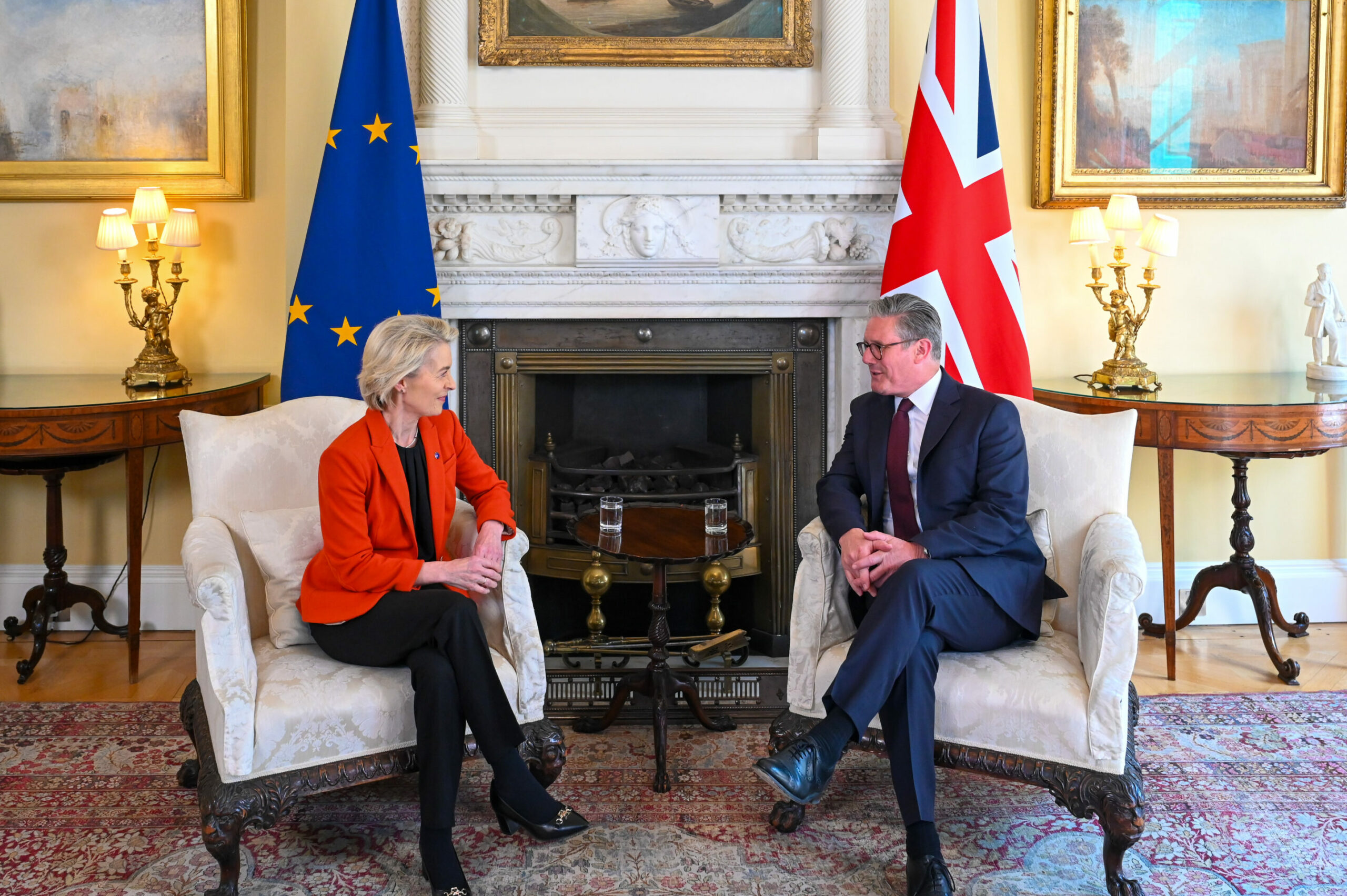
Ursula von der Leyen, on the left, and Keir Starmer, British Prime Minister, 24 April 2025. Credit: EU
They also confirmed they are aiming to conclude the negotiations at the next EU-UK Summit for the 'Youth Experience Scheme' with the European Union for individuals aged 18-30.
The proposal would see citizens on either side be given temporary visas to live, work, study, volunteer, or travel in each other's countries for cultural exchange.
A new report by the UK Trade and Business Commission (UKTBC) has outlined the details of a new Youth Experience Scheme, which would not increase migration – a key government concern – by introducing a 44,000 yearly cap.
While it would have clear-cut cultural and economic benefits, discussions have been complicated by the UK Prime Minister Keir Starmer's pledge to lower migration in his party's electoral manifesto in 2024.
The two parties are also seeking to establish a common Sanitary and Phytosanitary Area and to link their Emissions Trading Systems.
