
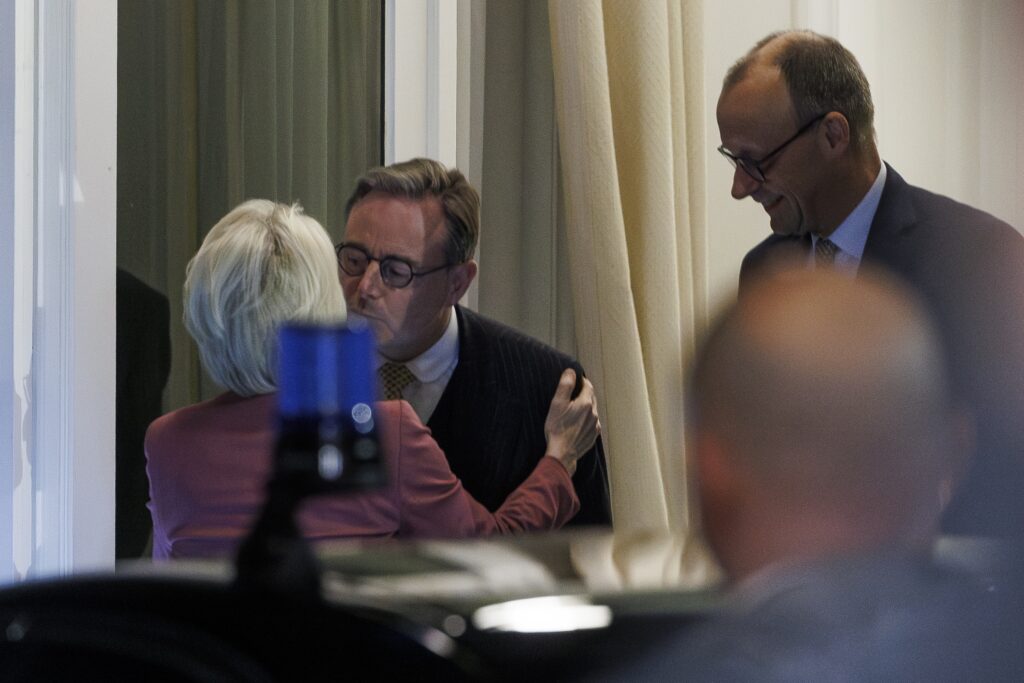
EU leaders are gathering in Brussels today for a crucial summit where they are expected to decide on how to provide long-term financial support to Ukraine.
Ukrainian President Volodymyr Zelensky will address EU leaders at 10.30am before participants debate whether to back an EU proposal to finance a reparations loan to Ukraine financed by frozen Russian assets.
The vast majority of the assets - approximately €190 billion - are currently held in Brussels-based financial clearing house Euroclear. Belgium has raised concerns over the financial and legal risks the EU's plan would entail, and has instead advocated for a joint loan to Ukraine. Last Friday, Belgium’s stance received support from Italy, Bulgaria, and Malta.
At the last EU summit in October, Belgian Prime Minister Bart De Wever took his counterparts by surprise by firmly rejecting the proposal. De Wever called the idea “unprecedented” and stated he would take “all necessary political and legal measures at national and European levels” to oppose it if certain conditions are not satisfied.
Since then, De Wever has been under fire from proponents of the scheme. Such is the anger in EU capitals over Belgium’s refusal to play ball, some countries have even suggested that the EU should move from Brussels unless De Wever backs down.
Last week, Politico reported that the EU will start to “turn the screws” on Belgium if the government continues to block the plan.
However, recent statements suggest a more conciliatory tone from the EU. On Monday, EU foreign policy chief Kaja Kallas emphasised Belgium’s importance in the decision due to its central role in holding the assets. “Without Belgium, it won’t be easy. They hold the majority of the funds, and it’s important they’re on board,” she said.
Is it really crunch time?
EU leaders are adamant that they won’t kick the can down the road on the frozen assets issue. In a statement to the European Parliament on Wednesday, European Commission President Ursula von der Leyen said leaders “must decide” how to finance Ukraine this week.
"We must decide which solution we want,” she said. “One thing is very clear: we have to make a decision on the financing of Ukraine for the next two years at the European summit."
Cypriot Deputy EU Minister Marilena Raouna told Politico on Monday that leaders “there is a readiness by all to stay in Brussels until we are able to have a decision on this issue of financing.”
A common loan requires unanimity among the Member States, and that does not exist. In principle, the loan with the cash from the frozen assets can be approved by a qualified majority (at least 15 countries - representing 65% of the bloc’s population) would be sufficient for approval at this week’s summit.
It would be surprising if the plan were approved without Belgium’s blessing. As analysts have pointed out, Belgium is the EU’s de facto capital, and antagonising its government (and its people) would be a strategic own goal for the bloc.
Will Belgium budge?
Despite the pressure he is under, De Wever appears to be holding firm on his position. EU ambassadors reportedly met late on Tuesday to hammer out the guarantees Belgium has been demanding. Euractiv reports that its sources “did not see any sign of movement from De Wever’s diplomats” on the issue.
The prime minister will address the European Affairs Committee in the Belgian Parliament at 8am today, before heading to the EU summit. According to Le Soir, he will use the parliamentary briefing to “demand the support of all parties, from north to south, right to left, in the power struggle unfolding across the EU-27 regarding the fate of Russian assets held in Belgium”.
De Wever is not completely ruling out a change in position, however. After a meeting with his British counterpart Keir Starmer in London on Friday, De Wever said, "If we return from the European negotiating table with the assurance that we are not alone and that we share these risks, then perhaps my people will be reassured."
