
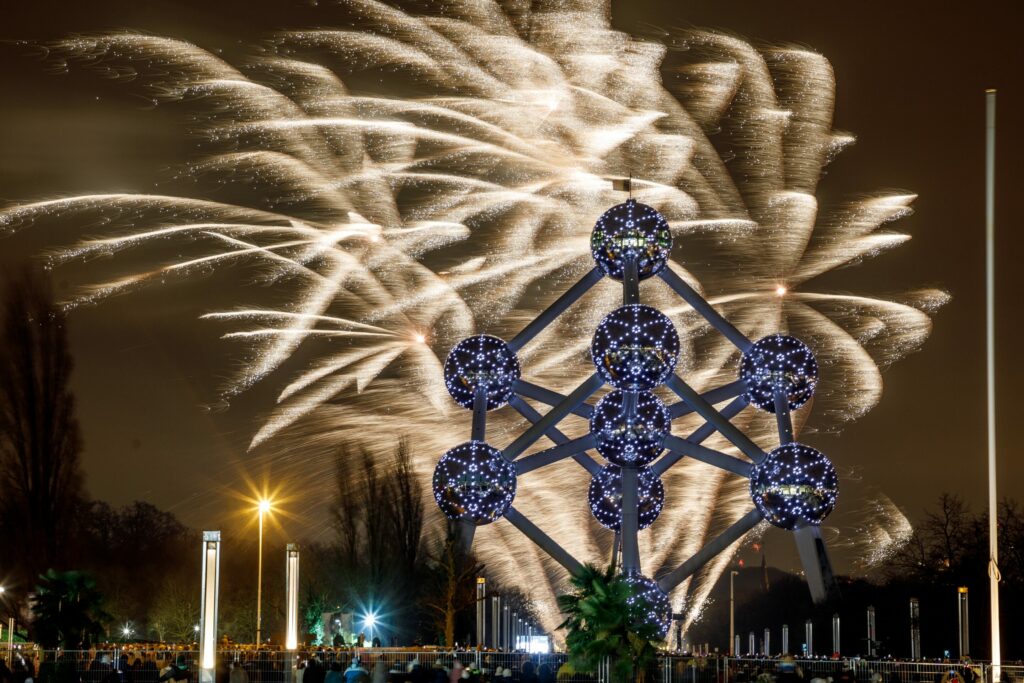
Ushering in 2026, Belgium is bracing itself for a night of festivities and things getting out of hand.
Recent years were marked by fires, vandalism, attacks on emergency services and hundreds of arrests. Authorities are rolling out stricter bans, earlier prevention and what officials describe as unprecedented coordination.
A question one might ask is, why do we continue to witness these antisocial behaviours on New Year's Eve?
In recent years, authorities in Brussels and across the country have witnessed a great amount of violence during the celebration of Saint-Sylvestre. Fires, Molotov cocktails, and hundreds of arrests, to name a few.
For 31 December 2025, preparation has begun earlier than ever. Measures now stretch from federal and regional coordination to street-level clean-ups weeks in advance, reflecting a decisive shift away from reactive policing towards pre-emptive containment.
Blanket ban on e-scooters
On the night ushering in 2025, Brussels recorded 159 arrests and more than 1,700 incidents. At least 60 cars were set alight. Firefighters and ambulance crews were pelted with stones and Molotov cocktails, sometimes forced to withdraw while on duty.
Despite a unified police command, hundreds of extra officers and a region-wide fireworks ban, large parts of the capital, particularly in the west and south, descended into chaos. Similar scenes unfolded in Antwerp and other Belgian cities.
The damage has not only been human. Vandalism in general costs Brussels' public transport operator around €4 million a year, with buses, trams, stations and street furniture specifically targeted on New Year's Eve.
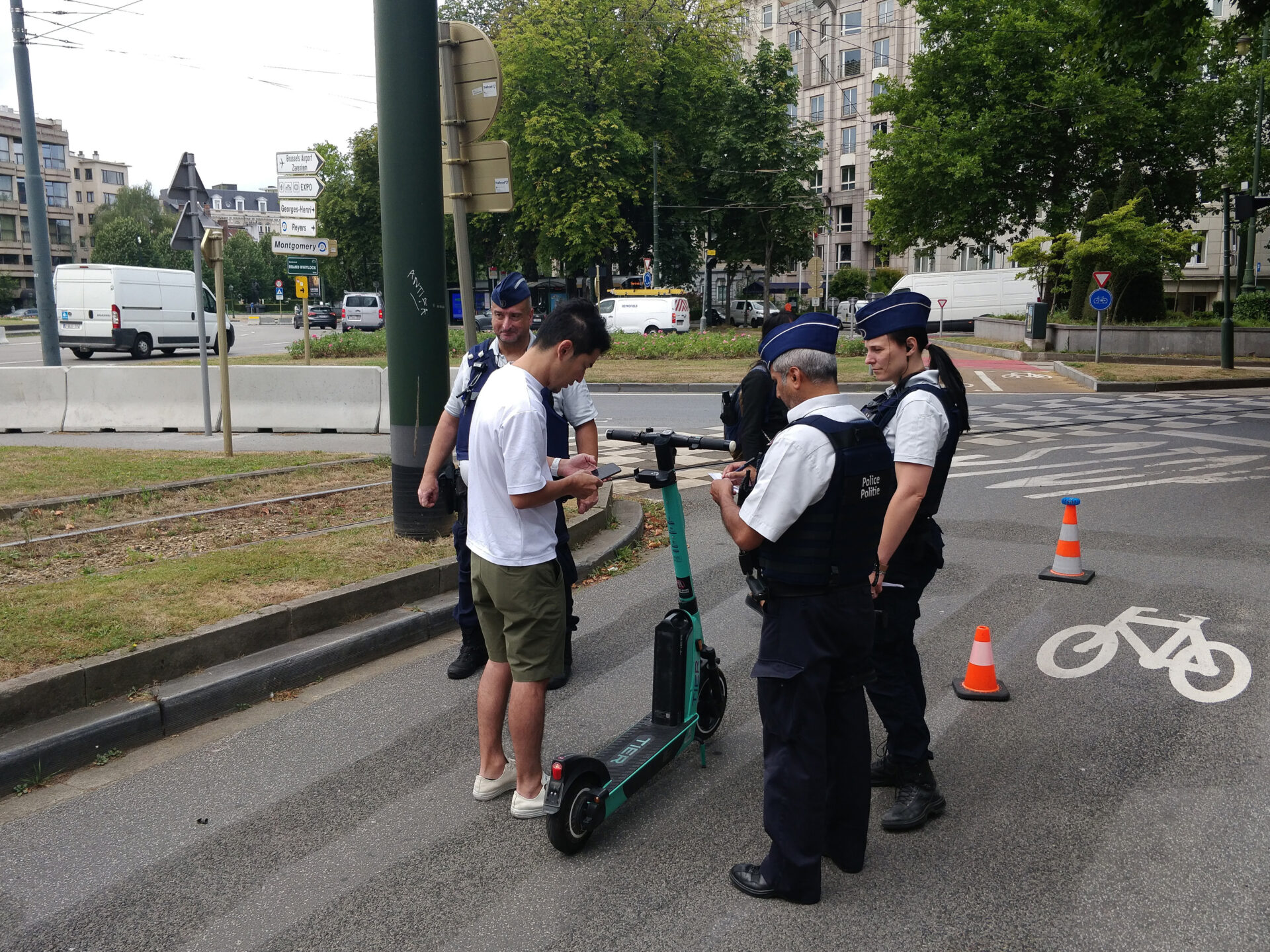
The local police in Brussels inspecting the use of e-scooters in the region. Credit: Belga / Antony Gevaert
In response, authorities have steadily tightened restrictions, including a full ban on e-scooters on New Year's Eve in 2025 after they were used to block emergency vehicles or thrown at police.
Anyone who fails to comply with the ban faces penalties of between eight and 14 days' imprisonment and/or a fine ranging from €234 to €1,800.
"To protect citizens and relieve our emergency services, all e-scooter traffic, whether private or shared, will be banned across the entire region from midday on 31 December until 9 a.m on 1 January. I call on everyone to act responsibly and remind them that the use of fireworks remains strictly prohibited. Let us celebrate together, but in complete safety." Rudi Vervoort (PS), Minister-President of the Brussels-Capital Region, said in a statement.
Change in location
For 2026, one of the most sensitive locations was the city centre. Brussels mayor Philippe Close (PS) has confirmed to The Brussels Times that the fireworks display will once again take place at the foot of the Atomium.
The choice is strategic. The Heysel site is intended as a family-friendly space, while the city centre is left to late-night party-goers attending events in bars and nightclubs. The aim is to separate crowds rather than funnel everyone into a single pressure point.
Unofficial fireworks remain banned across the Brussels-Capital Region, as does their sale and transport. The region also retains control over the zones where e-scooters will be prohibited at night, signalling that last year's restrictions are likely to remain firmly in place.
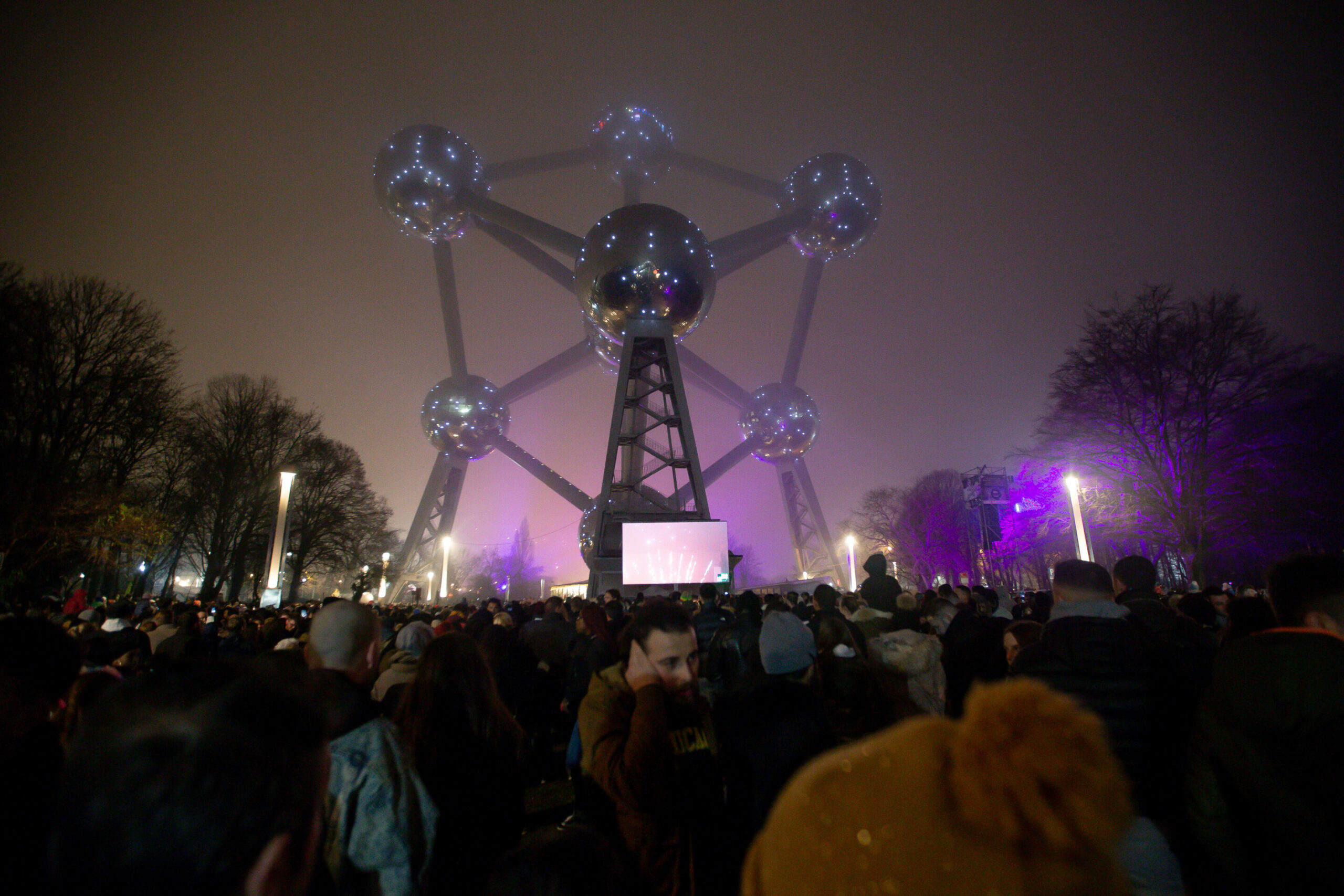
The New Year's Eve celebrations at Atomium on Tuesday, 31 December 2019. Credit: Belga/ Nicolas Maeterlinck
No curfews in Anderlecht, but few house arrests
In Anderlecht, long associated with New Year's Eve unrest, the approach for 2026 marks a notable shift. Instead of headline-grabbing curfews for -16s, the focus is on prevention.
Mayor Fabrice Cumps (PS) told The Brussels Times that preparations began on 1 December with what he dubbed 'Operation Pacman', a large-scale mobilisation of municipal services aimed at removing illegal dumping, vandalised street furniture and leftover construction materials.
The logic is that having fewer objects on the streets means fewer barricades, fewer fires and fewer projectiles. Certain neighbourhoods are receiving heightened attention based on past incidents.
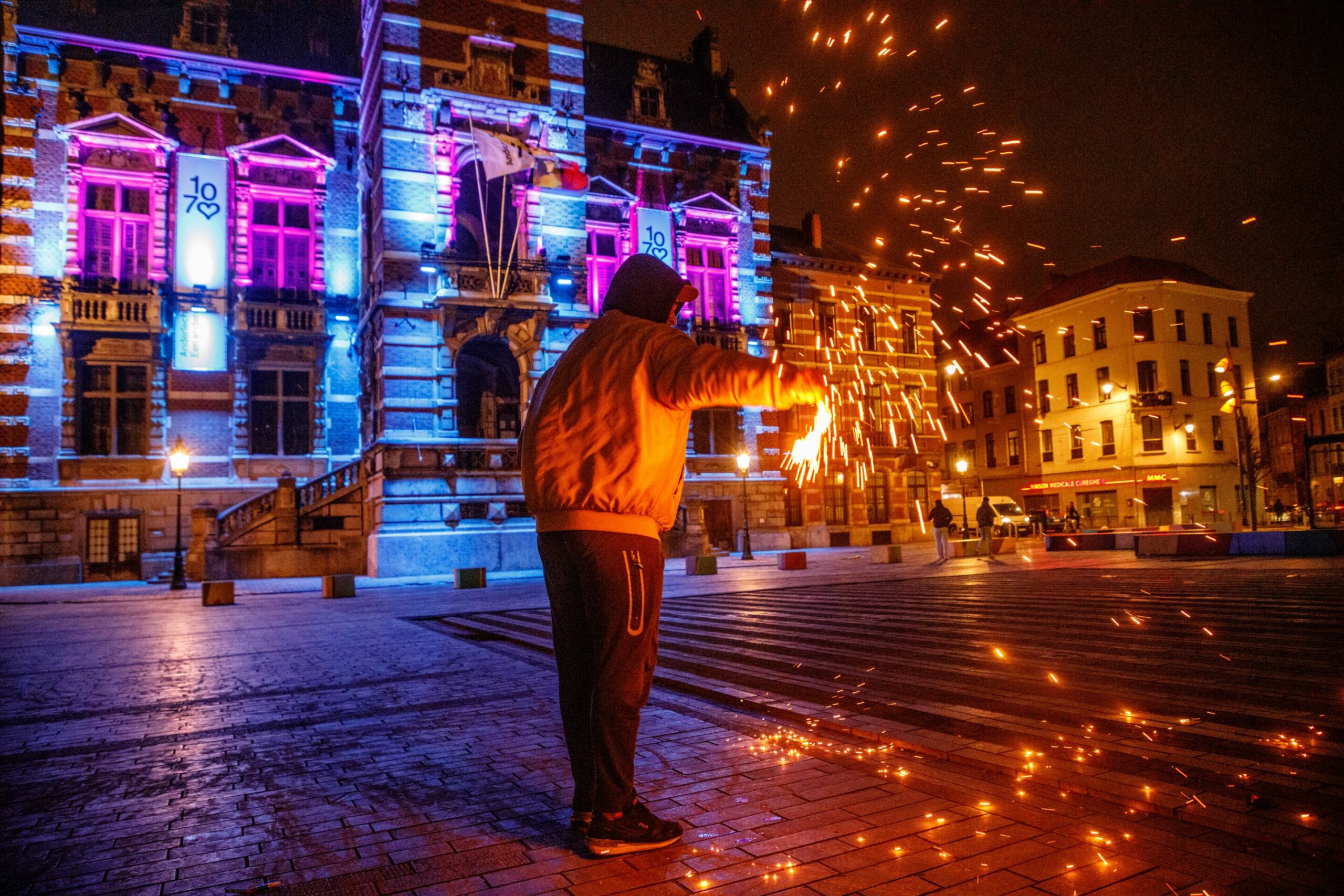
Fireworks pictured at the Kuregem/ Cureghem district of the Brussels municipality of Anderlecht pictured on New Year's Eve in Brussels, Tuesday 31 December 2024. Anderlecht Mayor Cumps imposed a curfew for minors under the age of 16 that will be in force from 7pm on New Year's Eve. BELGA PHOTO HATIM KAGHAT
In the final days of December, local police patrols will be reinforced, construction sites will be closely monitored, and containers will be banned from public space under a mayoral ordinance. Cumps, that is.
On New Year's Eve itself, police will be supported by a municipal guard of around 20 workers ready to intervene in real time to clear debris, remove burnt remains and protect emergency crews.
Bins will be removed ahead of the evening in sensitive areas, while awareness campaigns highlight the dangers of fireworks, a message that came at the right moment. Recently, a child was injured in a firework accident in the municipality.
To ensure the festivities run smoothly, a unified command will once again be in place this year, led by the Brussels-Capital Ixelles police zone, also known as PolBru.
Chief of Police Michel Goovaerts will assume the role of "gold commander." The command will be managed from the regional crisis centre, in close collaboration with the federal police.
Liaison officers from the six Brussels police zones will be present at this crisis centre, along with officials from the fire department, emergency medical services, public transport companies, and public prosecutors.
The fire department and police will also analyse each fire alarm to determine whether it is appropriate for the police to escort the fire engines.
The police will also deploy more personnel and resources compared to last year, especially in locations where incidents escalated last year.
Five residents of Brussels and one resident of Woluwe-Saint-Lamberchts were placed under house arrest for that night.
Federal backing for tougher local decisions
Federal Interior Minister Bernard Quintin (MR) convened a national coordination meeting at the National Crisis Centre, bringing together police chiefs from major cities, provincial governors and emergency service leaders.
The purpose was to align preparations, assess risks and ensure that policing and rescue services are ready for what has become one of the most demanding nights of the year.
Quintin has reminded all Belgian municipalities that the New Municipal Act provides a clear legal framework allowing mayors to act to maintain public order, based on local risk assessments.
"All necessary measures must be taken to guarantee security and public order on New Year's Eve," Quintin told The Brussels Times.
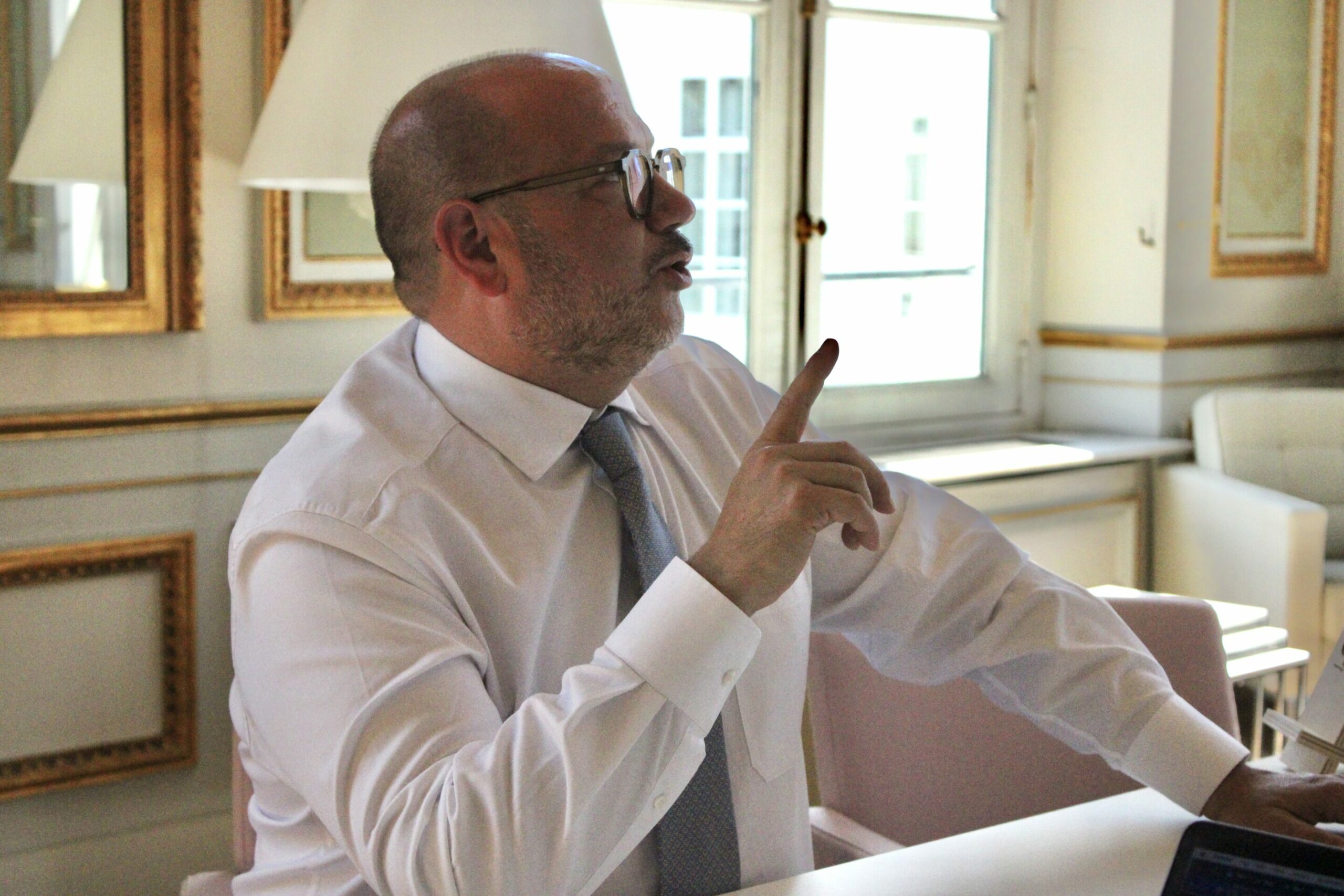
Bernard Quintin in an exclusive interview with The Brussels Times. Credit: Anas El Baye
"They won't suddenly become choirboys on New Year's Eve"
Antwerp mayor Els van Doesburg (N-VA) intends to once again impose preventive house arrests on young people suspected of causing disorder on New Year's Eve. A negative advisory opinion from the auditor at the Council of State in one case will not alter that decision.
In 2022, 27 young people in Antwerp were forced to spend New Year's Eve at home. The following year, that number rose to 31, including 18 minors. Last year, then-mayor Bart De Wever (N-VA) imposed house arrest on 47 young people.
"I would like to remind people that newspapers on 1 January reported that it had been a relatively quiet New Year's Eve compared with other years. So the measure is certainly useful. The mayor, therefore, plans to impose house arrests again this year," said David Cleiren, spokesperson for Mayor Els van Doesburg, to Gazet Van Antwerpen.
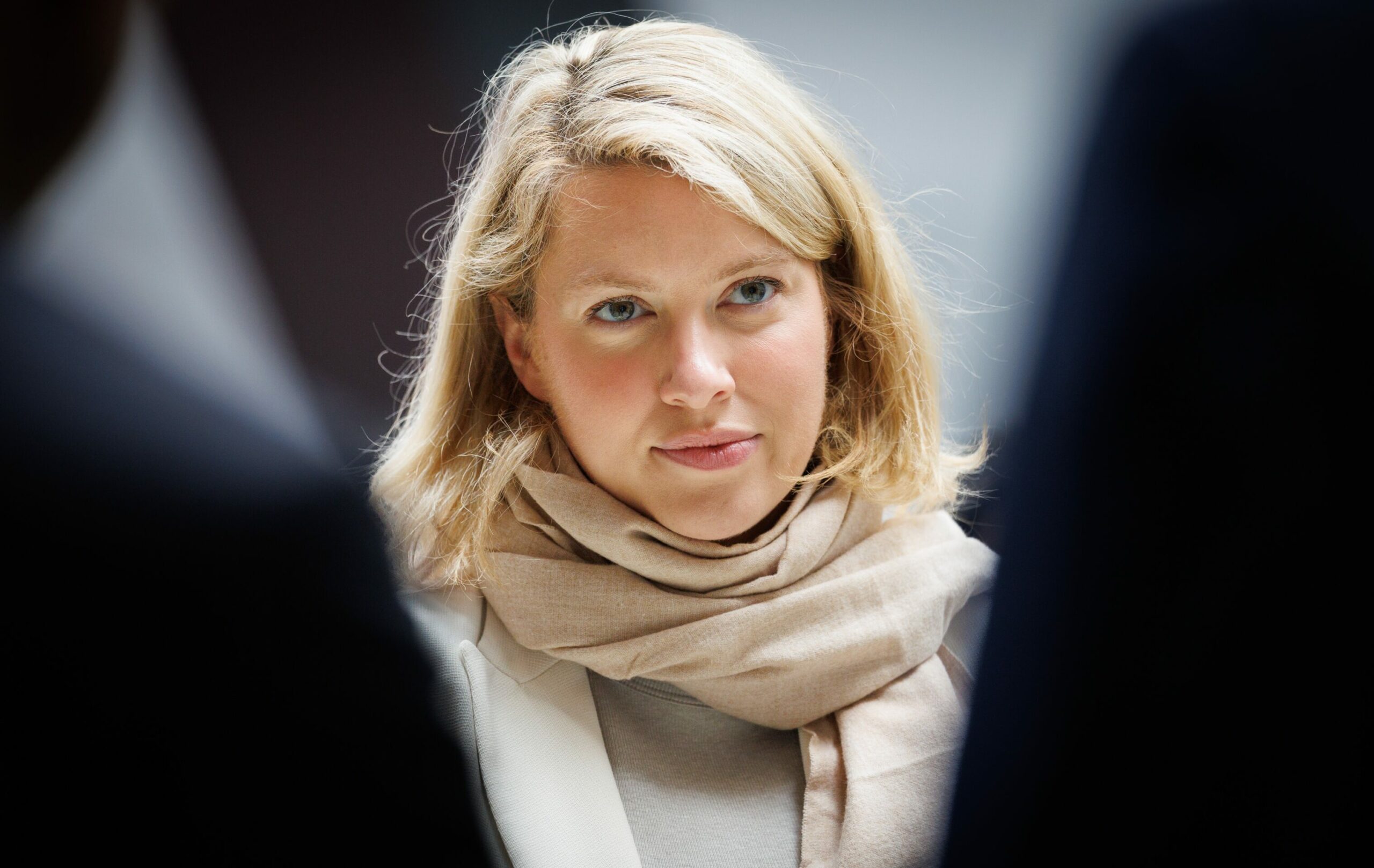
Antwerpen mayor Els Van Doesburg pictured during a visit by the President of the Republic of Singapore to the Port of Antwerp Harbour Master's Office as part of his State visit to Belgium Tuesday 25 March 2025. Credit : Belga/Benoit Doppagne.
It is not yet known how many young people will be placed under house arrest this year, as procedures are still being finalised. According to the mayor's office, the highly controversial measure will target individuals involved throughout the year in offences such as arson, vandalism, assault, theft, extortion and homophobic attacks.
"They won't suddenly become choirboys on New Year's Eve. These are known repeat offenders, responsible for sometimes very serious crimes," the mayor's office said.
A recent advisory opinion from the auditor at the Council of State does not affect the city council's plans. The opinion was discussed last Friday in the case brought by one of the 47 people placed under house arrest last year.
According to lawyer Abderrahim Lahlali, who represents the now 18-year-old from the Rozemaai neighbourhood, the auditor stated that the measure should be annulled in relation to his client.
"According to the auditor, the measure was careless and insufficiently substantiated. The official reports linking my client to the alleged offences were unsubstantiated; in several cases, he was not even questioned about them," Lahlali said to Gazet Van Antwerpen.
Related News
- Pre-emptive NYE measures: Are they legal and will they help prevent antisocial behaviour?
- How is Brussels preparing for a safe New Year's Eve?
- NYE curfew: Young Antwerp offender appeals pre-emptive house arrest
- The working class youths who defied stereotypes on New Year's Eve
Hotspot bans
Lahlali also argues that less severe measures could be used. "The auditor says the mayor has not demonstrated that a less drastic measure than restrictive house arrest, such as a ban from hotspots, would not achieve the legitimate objective," he said.
The Council of State has yet to issue a ruling in the case, and it is unclear when that will happen. As this was an individual challenge, the measure itself is not currently under threat.
However, further legal proceedings may follow in light of the negative opinion.
For Lahlali's client, the legal debate changes little. He will spend New Year's Eve in custody. The now adult young man is one of the suspects in a case involving a so-called handyman service linked to the drug mafia.
Why does it keep happening?
The holy grail question. Even the most detailed security plan does not answer the enigma of why New Year's Eve repeatedly turns violent. According to sociologist Walter Weyns, the unrest is no longer accidental.
Speaking to HLN, Weyns argues that the violence has become ritualised. It is expected, anticipated and, for some, actively prepared. Perpetrators gather materials in advance, already looking forward to the night.
He points to a subculture where older youths boast about previous years' exploits, fuelling a macho dynamic that encourages younger ones to outdo them.
Fire, he notes, carries a powerful symbolism at the turn of the year, the burning of the old to welcome the new, making New Year's Eve a uniquely charged moment.
A third factor is a deeper sense of rejection, Weyns explained. For some young people, the violence reflects hostility towards the dominant culture in which they live.
Understanding these motives, Weyns stresses, does not make the damage any easier to accept for victims whose cars or neighbourhoods are destroyed.
As for solutions, curfews and house arrests may help in some cases, but they also risk backfiring. Weyns believes responsibility does not rest solely with politicians and police, but also with educators, authority figures and communities themselves.
The justice system, too, plays a role, as arrest-and-release cycles do little to deter repeat offenders.
