
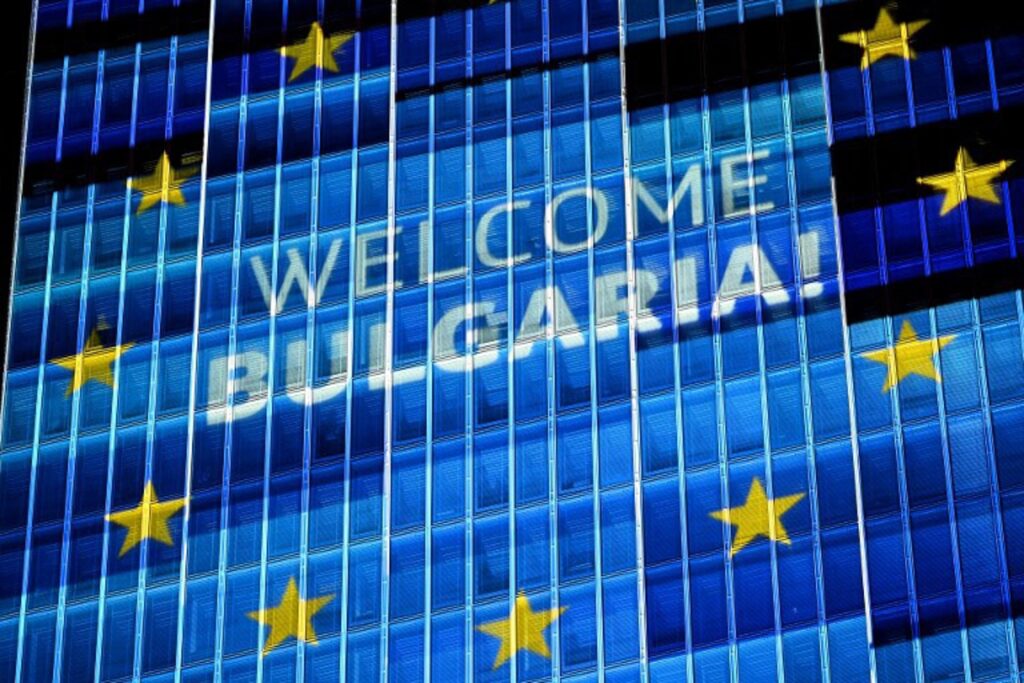
Bulgaria is set to adopt the euro, becoming the 21st country to join the eurozone, amidst concerns over inflation and political instability.
At midnight on Wednesday (11 p.m. Brussels time), the Balkan nation of 6.4 million people will bid farewell to its national currency, the lev, which has been in circulation since the late 19th century.
Ahead of the official switch, many vendors at Sofia’s oldest and largest market, known as the “Women’s Market,” are already displaying prices in both leva and euros.
“All of Europe managed with the euro; we’ll cope as well,” said Vlad, a 66-year-old pensioner shopping for New Year’s candles and fruits. He expressed hope that the change would strengthen Bulgaria’s ties with Europe and distance the country from Moscow.
A stall selling canned vegetables at the market attracted a long queue, with Lucy, the vendor, stating she is already accepting payments in euros. She believed the public would quickly adapt to the new currency.
However, concerns about price hikes are widespread. “People are afraid prices will go up. Today it’s 4 leva, and tomorrow it’ll be 4 euros, but wages will stay the same,” said a worried shopper in her 40s who chose to remain anonymous.
This fear is exacerbated by the fact that food prices have already risen by 5% over the past year, according to the National Institute of Statistics, adding to inflationary concerns across the country.
Bulgarian officials have attempted to reassure citizens, projecting that joining the eurozone will boost the economy of one of the EU’s poorest countries, which joined the bloc in 2007. They believe the switch will anchor Bulgaria more firmly in Western Europe, shielding it from Russian influence.
European Commission President Ursula von der Leyen echoed these sentiments, declaring that “the euro will bring tangible benefits to Bulgarian citizens and businesses.” She highlighted its potential to ease travel, increase market transparency and competitiveness, and facilitate trade.
