
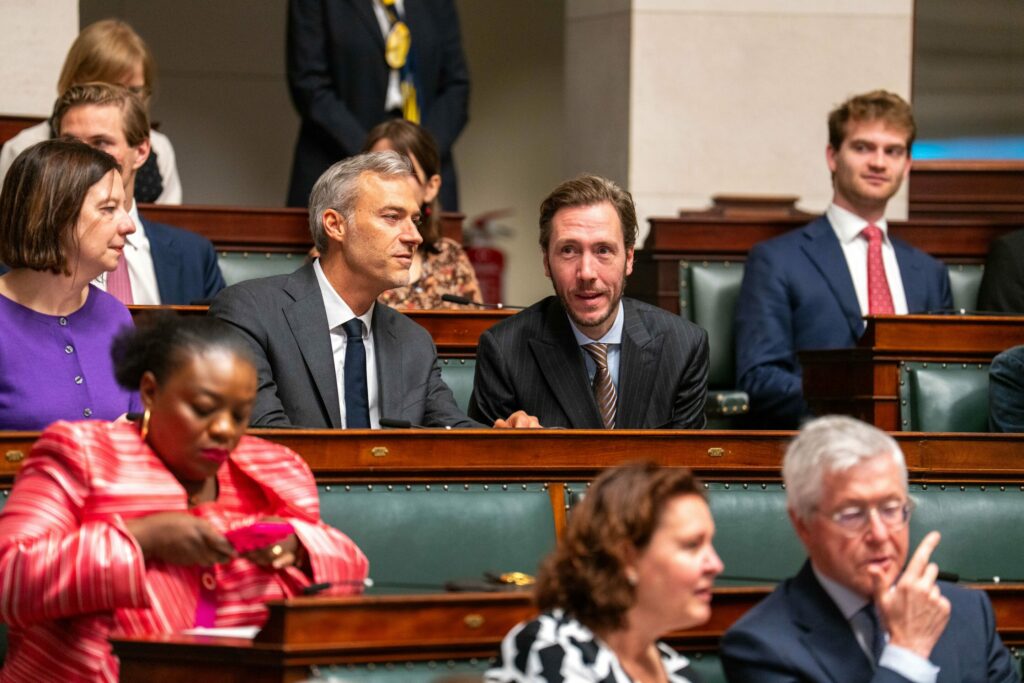
In the ongoing 19-month saga to form a regional Brussels Government, new bilateral meetings are taking place between the different political parties this week.
On Christmas Eve, the leader of Brussels' Francophone centrist party Les Engagés, Yvan Verougstraete (who is currently leading the negotiations), sent a first draft for a policy plan and a proposed budget to the parties hoping for a new ruling majority for the Brussels-Capital Region.
Verougstraete is aiming to form a centre-left government – dubbed the "Guinness coalition" – which would include the French-speaking socialists (PS), greens (Ecolo) and Brussels regionalists (DéFI), as well as Dutch-speaking greens (Groen), socialists (Vooruit) and Christian democrats (CD&V).
"They have provided comments, which we have been incorporating as best we can since 2 January and which will be the subject of bilateral meetings starting this Tuesday," Verougstraete told Belga News Agency.
Following the bilateral talks, intensive negotiations are expected to take place from the end of the week. Verougstraete stated that he aims to get Brussels out of its political deadlock by early 2026.
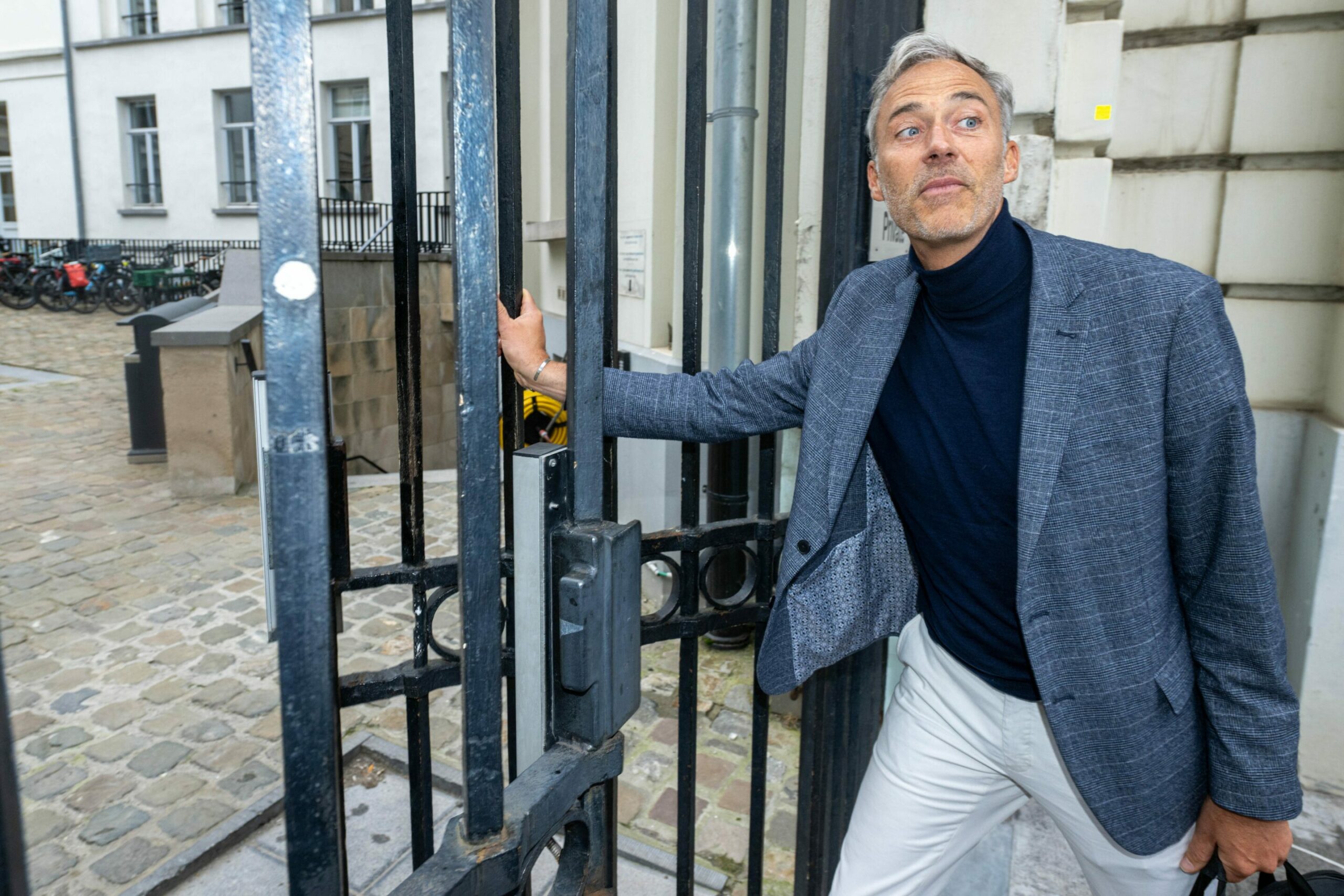
Les Engagés leader Yvan Verougstraete arrives for a meeting, part of the negotiations to form a new government for the Brussels Capital Region, on Monday 03 November 2025 in Brussels. Credit: Belga/Jonas Roosens
"We are continuing to move forward as quickly as possible so that Brussels has a budget for 2026, as well as a multi-year trajectory and a vision for the future," he said, calling on everyone at the table to "overcome political and ideological deadlocks and party-political ambitions."
Importantly, the seven parties at the table do not have a parliamentary majority, as they represent just 44 of the 89 seats in the Brussels Parliament (45 are needed for a majority).
Thanks to the defection of a former PTB/PVDA member to PS, the four parties on the French-speaking side have a narrow majority of 37 out of 72 seats. On the Dutch-speaking side, however, there are still two seats missing to achieve a majority.
Verougstraete hopes to bring Open VLD on board for this, but De Tijd reported last week that the party's new leader, Frédéric De Gucht, does "not seem impressed" by what he had heard about the draft policy statement and budget table in the media.
'Anti-Bouchez coalition'
Notably absent from the envisioned coalition is the Francophone liberal MR party, which won the most votes in the elections. As the election winners, the party has led negotiations since June 2024 – without success.
At the end of 2025, MR leader Georges-Louis Bouchez still tried to force another attempt at a breakthrough, but also failed. Now, Verougstraete is trying to form a coalition without the liberal party.
This infuriated the MR leader, particularly with his party partnering with Verougstraete's Les Engagés in the regional Walloon Government and at the federal level.
During MR's New Year's reception on Sunday, Bouchez stated that the recent negotiations are "not respecting the election results, with parties now pursuing "an anti-Bouchez coalition."
"Brussels needs us more than ever," he said. "We will continue to work and submit all proposals from the negotiation notes to the Brussels Parliament."
Still, many negotiating parties believe that Verougstraete's attempt might be the final one after a year and a half of failed efforts, Bruzz reports. However, that does not make the Verougstraete's task any less difficult.
"Our task is to find solutions for the population," Verougstraete stressed. "I am therefore determined to continue to do my utmost in the general interest, for the people of Brussels. Because they deserve much better than the current situation."
