
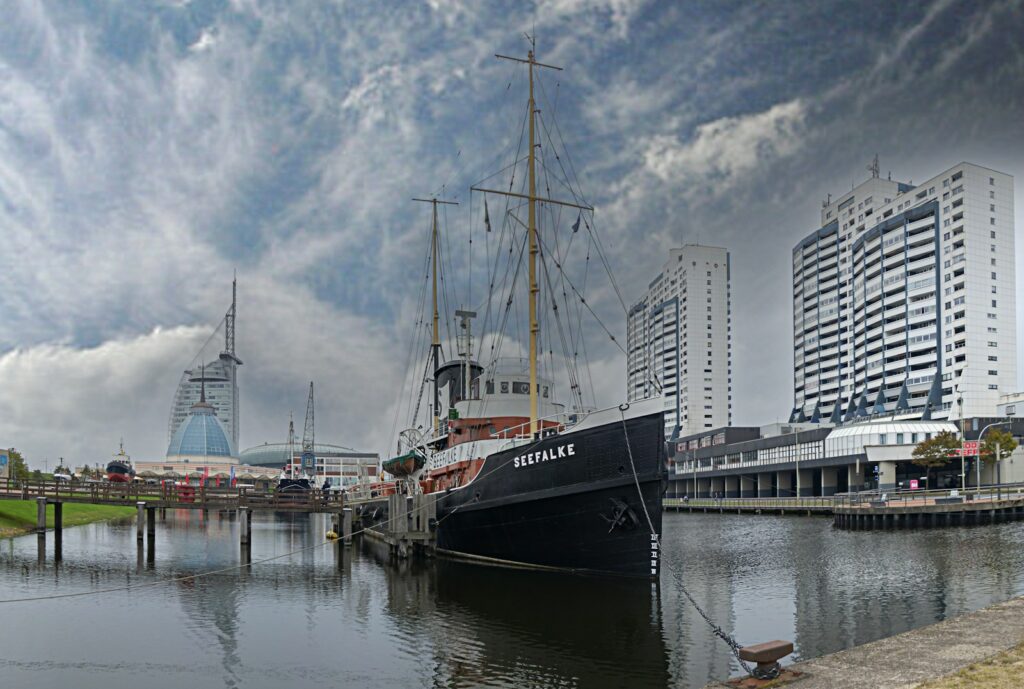
Bremerhaven’s historic fishing harbour has been transformed from industrial wasteland into one of northern Germany’s most popular visitor attractions.
Originally founded in 1896, Bremerhaven’s harbour was for decades a major hub for European fishing, with catches shipped as far as Austria and Switzerland, the European Commission informed in a report on Tuesday.
The site declined rapidly after international quotas led trawlers to stop landing catches, forcing the harbour’s closure near the end of the 20th century.
Regeneration began in the early 1990s through investment from the states of Bremen and development company FBG, including the restoration of the historic Hall IV in 1992, which now houses restaurants and shops.
Over the following decades, a range of new attractions was introduced, such as the fish station, which became a centre for exhibitions and performances after opening in 1996.
The fish cooking studio, launched in 2014, offers interactive cooking shows and workshops open to the public.
The district now features reconstructed fishing cottages, artisan shops, public terraces, and a floating jetty. The side trawler Gera, restored as a floating museum, and Fischbahnhof360°, an immersive film experience showcasing fishing history and underwater exploration, were added as further attractions.
Hundreds of thousands of visitors attend each year, with more than 25 major events held at the former harbour—including the Bremerhaven herring festival’s fish party and harbour spectacle.
The restoration has become an economic boost for local businesses, with the area now one of the city’s most photographed landmarks.
Funding and revitalisation
Continuous EU support over more than three decades was crucial for the harbour’s transformation, including programmes such as the European Maritime and Fisheries Fund, the Commission stated.
Financial assistance enabled repairs, restoration, and modernisation of facilities, along with supporting exhibitions, marketing, and visitor services.
Sebastian Gregorius, head of department at the Fischereihafen-Betriebsgesellschaft mbH and member of the Bremerhaven Fisheries Local Action Group, said the site now acts as a “shop window” for visitors to learn about the fishing industry and its importance, combining tradition and new developments in the sector.
