

EU enlargement has regained strategic momentum. While the necessary consensus among the 27 member states and their political will are far from in sight, the debate on how to move forward is taking place.
Montenegro, Albania, Ukraine and Moldova are now the clear frontrunners, and it is entirely realistic that at least one could conclude accession negotiations by 2028 and reach full membership by the end of this decade. It is therefore no surprise that the European Commission has begun quietly preparing the ground for drafting pre-accession treaties. The geopolitical logic is compelling; so is the urgency. But the framework for this next wave of enlargement will look different from anything we have seen before.
Proposals for "staged" or "gradual" accession suggest that candidate countries would enter the Union with limited rights until its institutional reforms, such as expanded qualified majority voting, are completed. German MP Anton Hofreiter has argued that future members might temporarily forgo national veto rights so that "enlargement is not slowed down by individual EU states blocking reforms."
Observers and the expert community note that temporary derogations should not surprise anyone: credible enlargement must align strategic interests with the EU’s ability to function, calm the fears of sceptical publics and politicians in some member states and avoid new "Hungarys". Hence, temporary limits may be part of that bargain. Analysts stress that reforming decision-making could help unblock enlargement by reducing reliance on unanimity.
Unfortunately, the probability of member states agreeing to such reforms any time soon is very low. To date the German-Slovenian non-paper calling for a reduction of unanimity in the enlargement process has received support from only 16-member states, around 10 member states are still staunch protectors of their veto rights. Efforts by some member states to push for QMV in common foreign and security policy, and taxation have not progressed that far.
Challenges to institutional reform
The thinking behind temporarily removing veto rights for new potential EU members derives from reasonable grounds. Not everyone in the EU is pro-enlargement, mainly because of fears that a larger EU would not be able to function properly, a surge in migration and more money needed for new member states, and so on and so forth.
To quench the fears of skeptical EU member states and their publics, the idea of removing the voting rights for new member states has so far received great traction among decision-makers and experts. Still, such proposal deserves more scrutiny: letting newcomers join the EU, but without a veto right, indefinitely, until institutional reforms are enacted.
This is not a "two-speed Europe." Two speeds describe situations where member states choose not to participate in certain initiatives or cannot yet meet the standards required, e.g. the Euro, Schengen, the European Public Prosecutor — here, neither applies. The candidates would accept full obligations and undergo the complete scrutiny of accession. The restriction of rights would be imposed on them, for reasons that may be justified, but with potentially enormous consequences.
One consequence is political psychology. Some member states may perceive this arrangement as a blueprint for future internal reforms — a path toward eventually curtailing their powers. Even if that fear is unfounded, politics is often about perception. A single anxious member state could block an accession treaty simply to avoid setting a precedent that might one day rebound on it.
Second, solutions without end dates tend to solve today’s problem while creating tomorrow’s crisis. The Western Balkans know this well. The Dayton Peace Agreement, hailed as a triumph of diplomacy in 1995, contained no mechanism to evolve — and now locks Bosnia and Herzegovina into structural dysfunction. Peace negotiations rarely allow built-in expiry clauses; EU accessions absolutely can. And they should.
Third and most importantly, the new potential members are not the reason for the stalled EU internal reform. It is the existing member states that cannot agree on it. Whilst thinking about precautionary measures is justifiable, such a debate is carried out from the wrong angle.
No veto, but not forever
A more balanced approach is possible. The EU could require new members to enter without veto powers, but with a clear and legally binding end date. Such a clause could stipulate that the no-veto period expires either when the EU adopts its governance reforms or at the start of the next Multiannual Financial Framework (post-2035) — whichever comes first. If Montenegro were to join in 2030, this would give the Union five years to fix its institutions.
If reforms succeed, the new member transitions to full equality. If reforms fail, the temporary derogation ends anyway — preventing a permanent second-class membership. A legal paper has suggested that a temporary derogation of veto rights can be consistent with EU law and could be justified if properly framed and limited (e.g., linked to treaty reform or decision-making enhancements), though permanent exclusion would be problematic.
A second expiry date should also be set for the veto right to block further accessions. This is relevant given the current bad neighbourly relations in the Western Balkans. As suggested by the European Policy Center, new members should not be able to block future accessions or use veto power in certain areas to preserve the Union’s capacity for reform and progress.
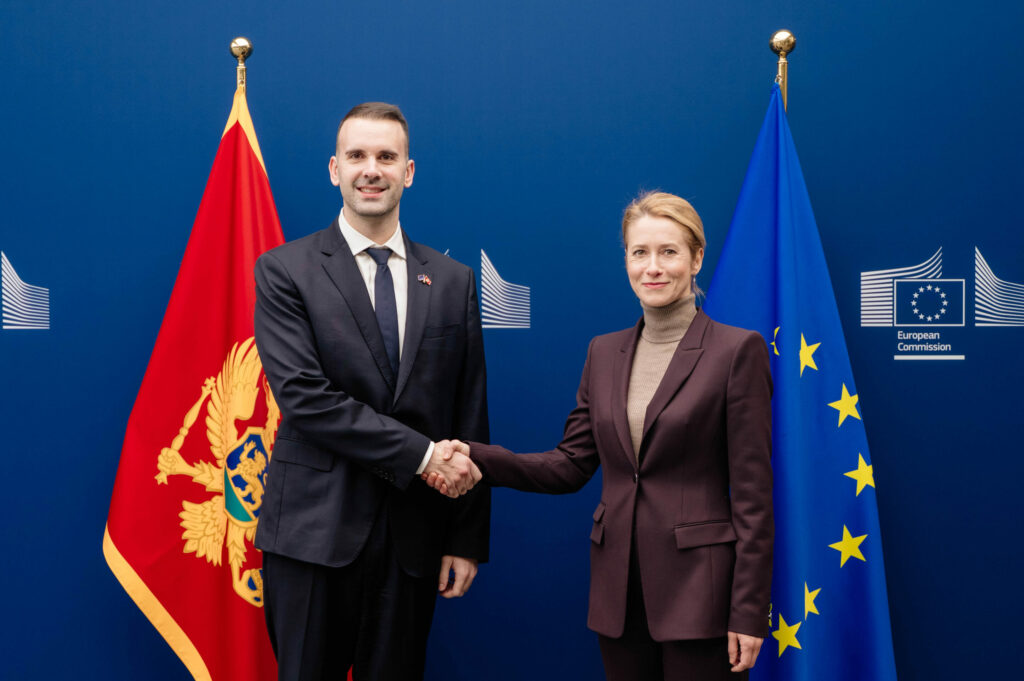
Unsurprisingly, the frontrunner candidate countries have expressed mixed feelings about the non-veto right. Albania has expressed reservations but has not been very loud about it. Montenegro’s Prime Minister Spajic on the other hand, has made it clear that they would not agree to becoming a member of the European Union without fulling voting rights stressing that "sovereignty is very important to Montenegrins."
Arguably, no-veto with a clear end date safeguards the Union from immediate gridlock while protecting new members from limbo. Yet, the enlargement should revitalise the European project, not fracture it into castes. With clear timelines and political courage, the EU can enlarge without compromising the equality that defines it. For candidate countries, it would restore a degree of merit-based logic at the end of the process and provide motivation to remain on the EU accession path.
As some political elites in the candidate countries have shown over the past 20 years, there is an alternative to EU accession, even if that means stagnation and no long-term progress for their country.
