
Meals in schools and homes for the elderly will become more expensive in the near future due to a controversial increase in VAT on prepared meals.
As a budget measure, the federal government recently decided to raise the VAT rate on prepared meals from 6% to 12%.
The government struggled for days with the definition of such a meal. Finally, it was decided that all meals that have to be eaten within two days fall within that definition, including items such as take-away pizza, burgers and fries. In a supermarket, frozen pizzas will keep the 6% rate, while a fresh salad goes to 12% VAT.
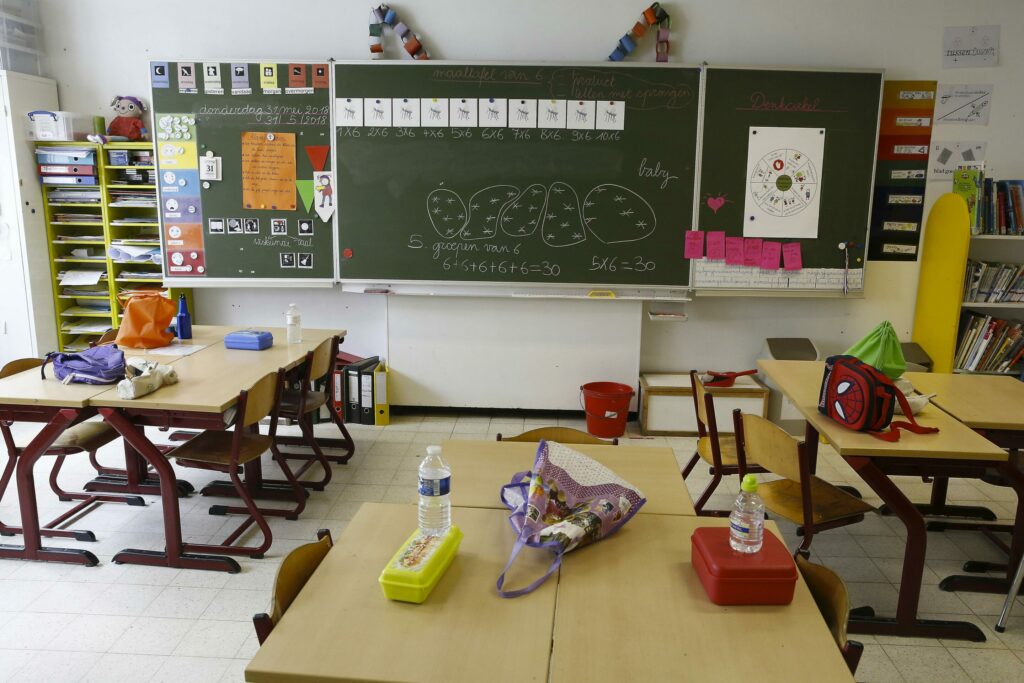
But VRT reports that there has been an unforeseen consequence of the new rule: schools or homes for the elderly that do not have their own kitchen will have to pay more.
Meals from external caterers are subject to the 12% rate. The sector warns that this will have adverse effects. Per meal, the additional cost for the parents or the elderly is limited, but on a monthly basis, the effect is not negligible.
In recent years, healthy and affordable school lunches have been a frequent topic of public debate. Opposition parties say the VAT decision runs counter to that priority.
Fierce criticism from French-speaking community
Criticism has been pouring in from the French-speaking community, where the Wallonia-Brussels Federation, a priori, has little budgetary leeway to potentially intervene.
The Socialists had already voiced their concerns in Parliament on Thursday, and reiterated their stance on Friday. In a press release, the Socialist Party (PS) indicated that it is calling on the MR-Engagés coalition government of the Wallonia-Brussels Federation, which is responsible for education, to "act urgently." The Socialists want the government to "refer the matter to the Consultation Committee (CODECO) to obtain an exemption for school meals" or, failing that, "specific financial support for schools ."
The newspapers Le Soir and L'Echo reported on Friday that the French-speaking parties in the Arizona federal coalition — the same MR and Engagés — are indeed troubled by the fact that the measure applies to school meals prepared by an external partner.
However, the possibility of an exemption for school meals, which both parties would like to introduce in one way or another, could run up against European law, which prohibits adjusting VAT based on the end customer.
On Thursday in Parliament, Finance Minister Jan Jambon clarified that the draft royal decree "is currently under review by the Council of State" and that "it is possible that it will be amended" following their opinion. The matter is therefore not yet closed.
In Flanders, meanwhile, concerns have been raised that more expensive school meals clash with the Flemish government's ambition to serve healthier meals in school.
