
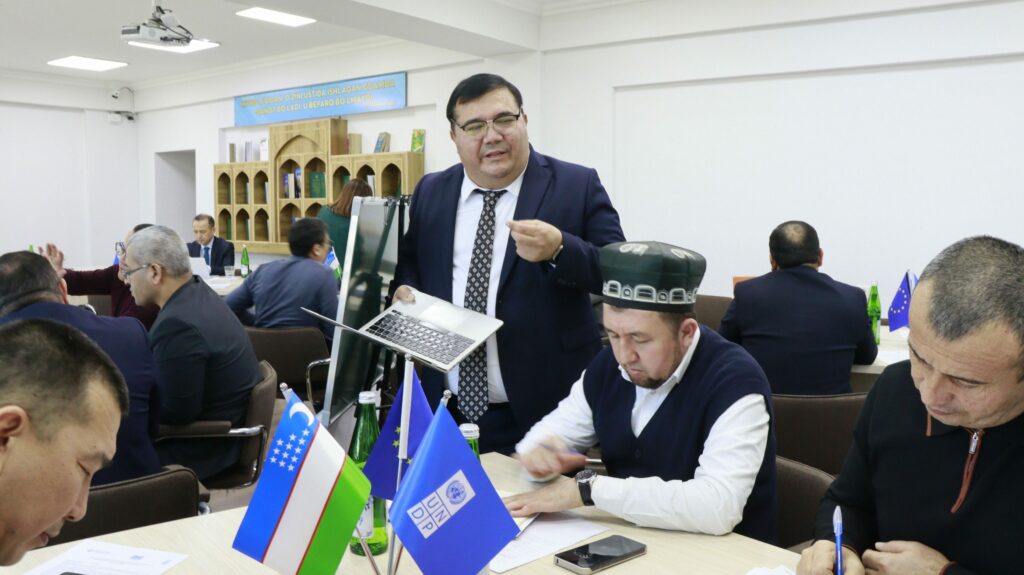
A series of EU-backed anti-corruption training sessions covering all regions of Uzbekistan has concluded, with 501 local officials participating.
The initiative spanned all 14 regions of the country — including the Republic of Karakalpakstan — and was aimed at strengthening the practical skills of territorial anti-corruption councils in identifying and reducing corruption risks, increasing transparency, and enhancing public oversight at the local level, the European External Action Service (EEAS) said on Monday.
The programme combined theory and practical exercises and included topics such as prevention methods based on international standards like the United Nations Convention against Corruption and ISO 37001, an international anti-bribery management system.
Participants examined regional corruption risks, shared recommendations, and submitted proposals to Uzbekistan’s Anti-Corruption Agency for region-specific plans.
Key recommendations developed included fostering a zero-tolerance approach to corruption at local community and household levels, expanding citizens’ participation in identifying cases, and further digitalising public services to cut down bureaucratic procedures.
Focus on local needs and wider participation
Other recommendations involved strengthening protection for whistleblowers, limiting managerial roles for those convicted of corruption-related crimes, and ensuring tougher penalties for offences beyond fines or compensation.
Territorial anti-corruption councils in Uzbekistan comprise representatives from government, law enforcement, judiciary, local councils, schools, health care, media, and civil society, the statement from the EEAS noted.
The training sessions formed part of a joint project led by the Anti-Corruption Agency and the United Nations Development Programme, supported and funded by the European Union.
Following the trainings, region-specific plans will be developed to reflect local priorities and conditions.
