
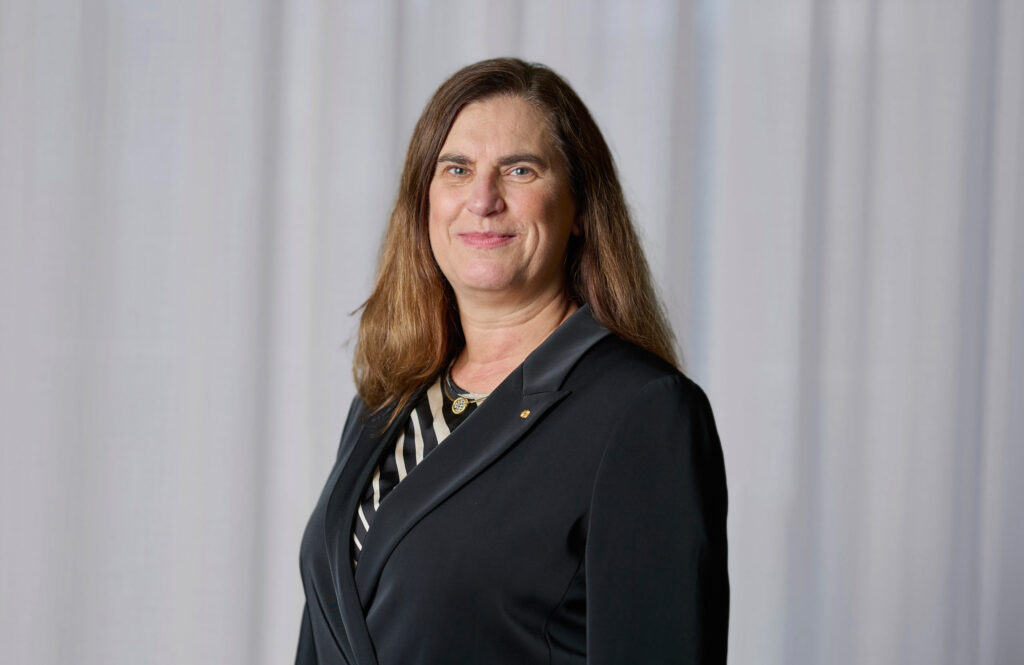
In November, Ellen Moons made history by becoming the first woman — and first Belgian — to lead the Royal Swedish Academy of Sciences (RSAS), the institution responsible for awarding Nobel Prizes in physics, chemistry, and economics.
Moons, who previously chaired the Nobel Committee that nominated and selected the Nobel Prizes in physics, was elected as RSAS Secretary General on 12 November at the institution's general assembly.
"The fact that I got the trust of the general assembly means something. I'm very thankful for that trust," she told The Brussels Times in a recent interview.
Her new role will now involve leading approximately 650 people at the RSAS and overseeing the academy's operations, of which the Nobel Prize is only one element – albeit the most visible.
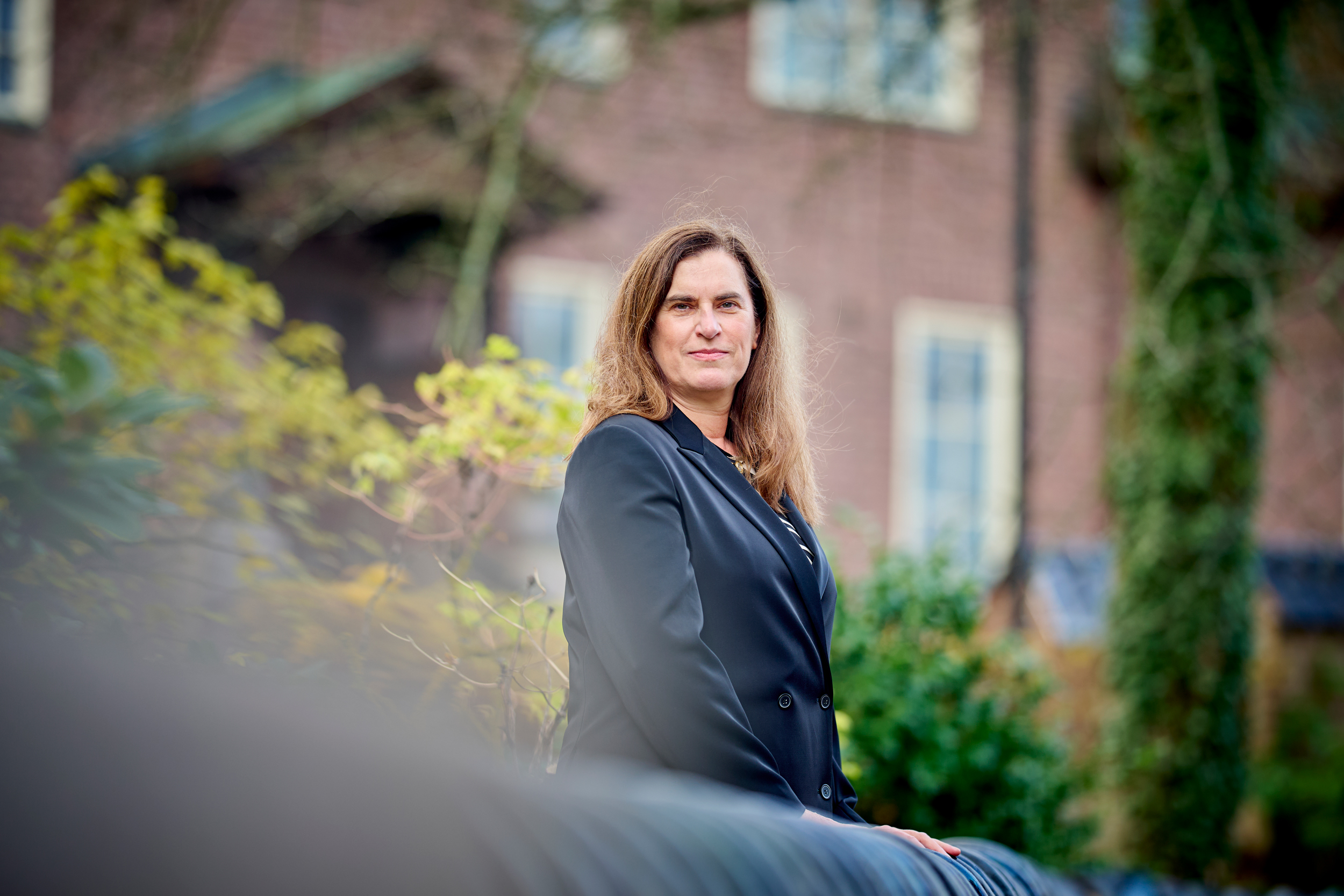
Ellen Moons, Secretary General of the Royal Swedish Academy of Sciences. Credit: Patrik Lundin
The 59-year-old materials scientist is the first woman to hold the role since the Academy's founding in 1739. "The Academy has long been a reflection of the academic world," she explains. "In Sweden, 30% of professors are women. But a rapid change has begun."
According to Moons, although women tend to be well represented in the fields of biology and chemistry, fields such as physics and engineering are more male-dominated. Furthermore, women continue to be underrepresented in senior positions.
"Of all the new members elected in the past five years, 45% are women," she says. "But in the field of physics, only between 5 to 10% are female professors."
She believes there is no one answer to explain this phenomenon. "I think it is a combination. The number of female students in physics is not so bad; it is quite balanced. But then the more you go up on the academic ladder, PhD, assistant professor, it is largely more men. Maybe it could have something to do with the environment, if you are always in a group, the only woman, it is not so pleasant."
But this should not deter young women from pursuing a career in physics, she argues. Keen to set the trend, she wants to encourage those with a passion for science to go for it.
"If you are passionate about doing science, go for it," she says. "Just because you are a young woman, it does not mean that you are not suitable. Your passion will drive you to do a good job, and if you do a good job, people will notice it and will give you opportunities."
An inspirational physics teacher
Born and raised in Wulpen, a small town near the coastal municipality of Koksijde, Moons was an only child. Her late father was a journalist, and her mother, who still lives in Wulpen, was a nurse and sculptor.
Moons attended primary school at the Annuntiata Institute in the city of Veurne, but her passion for physics was ignited when she was at secondary school. She says lab experiments were fascinating to watch – a moment of escape from the grind of math problems.
She credits Hugo Van Gheluwe, her physics teacher, for showing her the way. "He had a nice pedagogical approach," Moons remembers. "I just remember him doing these demonstrations that made me understand the theoretical concepts, and it helps you find the relations that are expressed in terms of mathematical equations."
"It is important to find new ways to practise, maybe in a different way than just by pen and paper," she adds.
At 18, Moons moved to Ghent, where she completed a master's degree in physics at the University of Ghent. She was then awarded a scholarship by the Israeli Foreign Ministry, which marked the beginning of her life and career abroad.
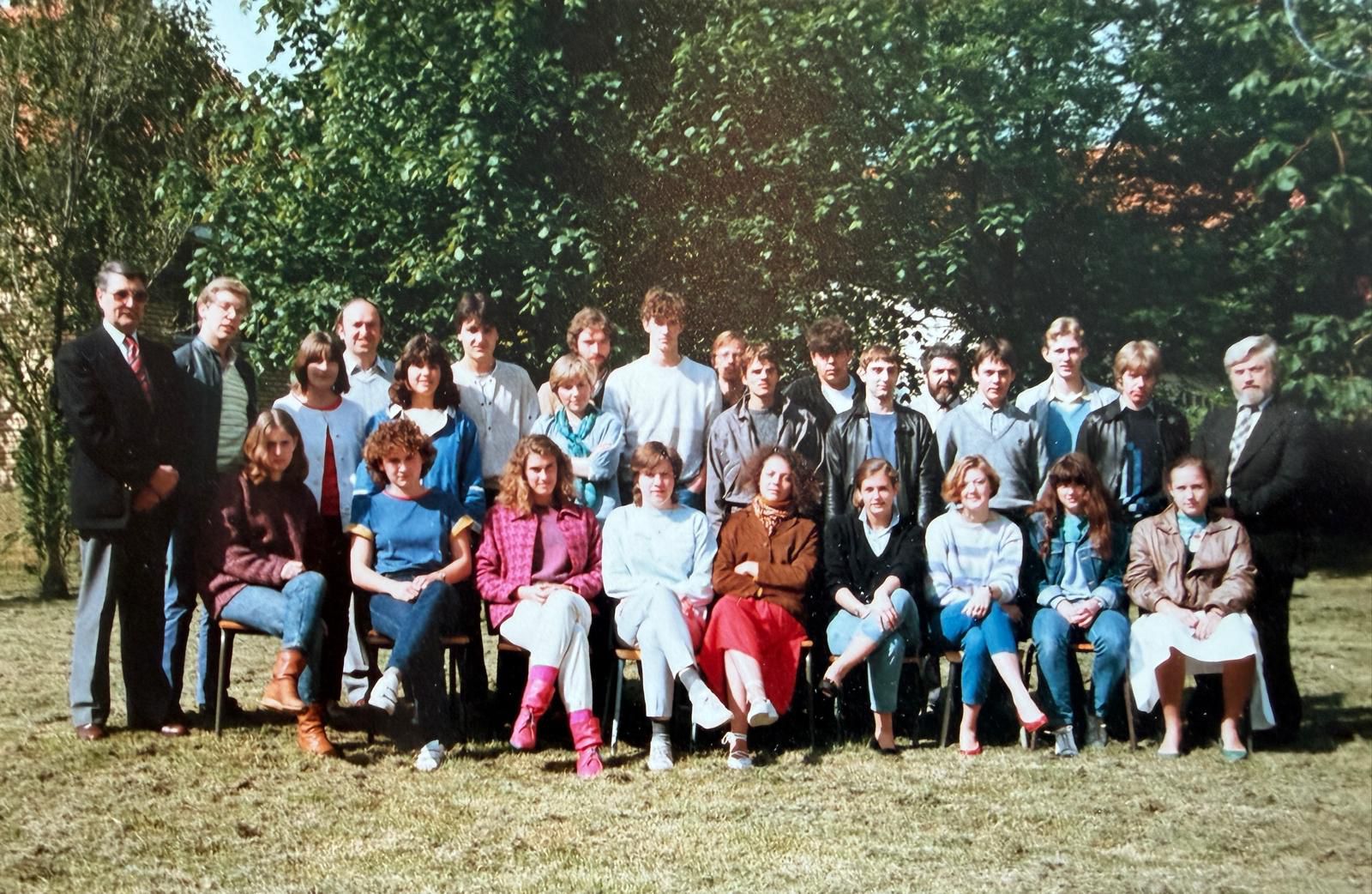
Ellen Moons (front row, in pink). She was in her final year at Atheneum Veurne. Her chemistry teacher is also in the photo, as is her Latin teacher. Credit: Handout.
In 1989, she left Belgium for Israel and later worked in Delft in the Netherlands, Lausanne in Switzerland, and Cambridge in England.
When she met her husband, a professor of physical chemistry, they decided to settle in Sweden. Today, they live together in Karlstad with their 18-year-old son and both work at Karlstad University.
To this day, Moons still takes great pleasure from conducting the kinds of experiments she enjoyed so much in secondary school – even if, she admits, "I don't do them myself anymore".
"I don't have the time", she says. "But if doctoral students are given the time to take measurements in the synchrotron in Lund [where researchers can study materials down to the atomic level using UV and X-rays], I will always go along."
