

"If President Trump proceeds with these tariffs, then the Scotland deal is dead," said the leading MEP who will drive the European Parliament's position on Greenland to The Brussels Times on Monday.
Yesterday, US President Donald Trump doubled down on his threats to seize Greenland, escalating the crisis and deepening questions over the future of EU-US relations.
In response to the latest US attempts to acquire the Danish autonomous territory, the EU heads of state will meet on Thursday evening in Brussels to discuss possible countermeasures, including retaliatory tariffs or deploying their trade "bazooka" option.
This comes as the US President on Sunday threatened to hit eight European countries (including six EU Member States) with additional 10% tariffs, valid from next month, for not supporting his administration's desire to annex Greenland and for sending troops there.
The tariffs imposed on Britain, Denmark, Finland, France, Germany, the Netherlands, Norway and Sweden could even increase up to 25% in June, and would be in place until a deal is reached for the "complete and total purchase of Greenland," according to Trump.
On Monday, a European Commission spokesperson stressed that the EU has tools at its disposal to "do everything necessary" to protect its interests.
US deal 'on ice'
MEPs, too, have indicated they will not approve the US-EU trade deal agreed by President Ursula von der Leyen and Trump in Scotland, due to Trump's latest threats and attempts at coercion.
"President Trump is trying to bully us again. Now, it is with tariffs against several European countries who are standing up for the people of Greenland," MEP Barry Andrews (Renew - Ireland), the recently-appointed rapporteur on EU-Greenland relations, told The Brussels Times on Monday.
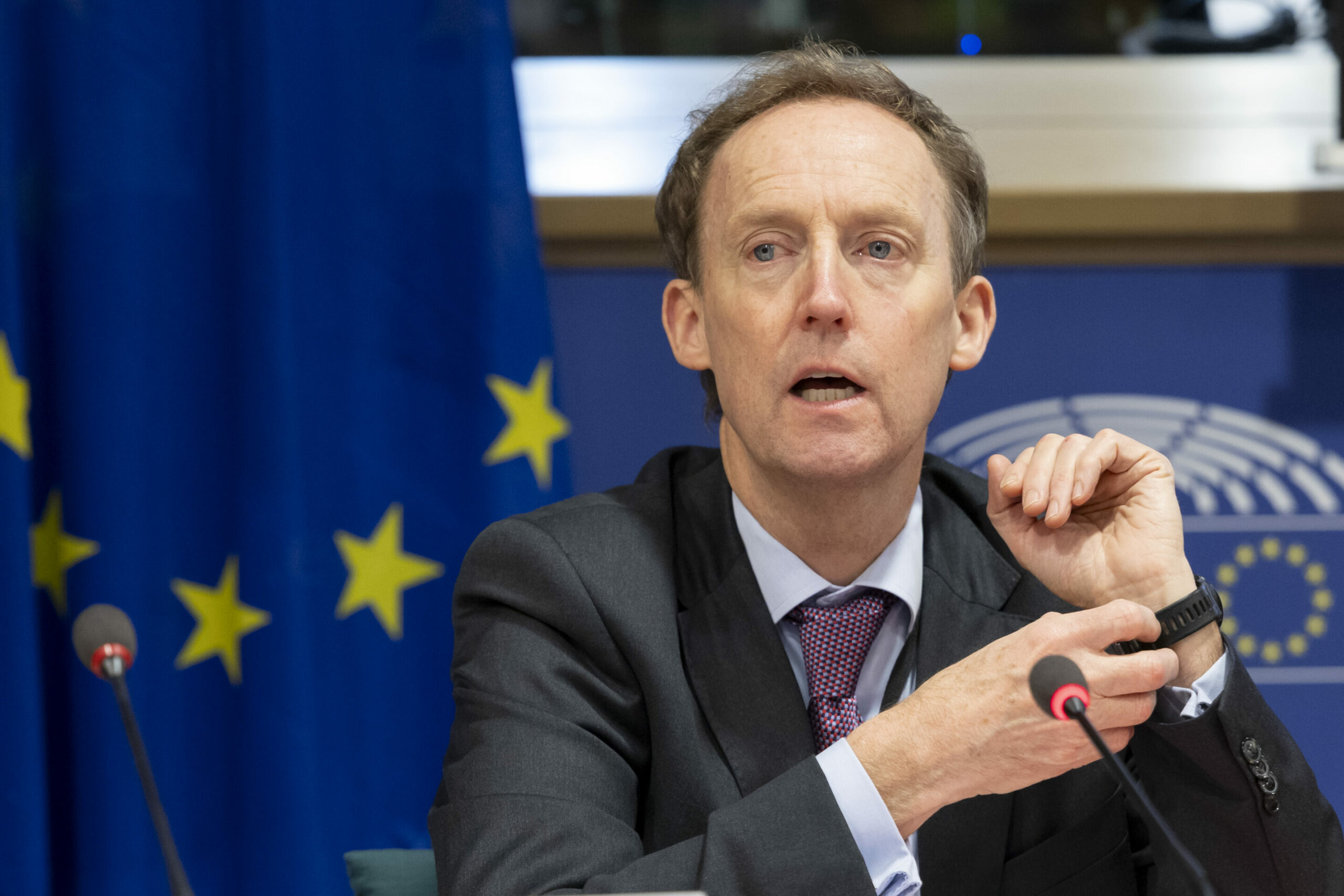
Barry Andrews MEP (Renew Europe - Ireland) speaking in the European Parliament, 2025. Credit: EU
The European Parliament will now not approve the US-EU trade deal, which sees all EU exports to the US taxed at 15% while other duties are removed on US industrial goods and some agricultural products.
The largest group, the right-wing EPP, confirmed this weekend that the approval was "not possible" – despite being in favour of the deal – due to the latest US tariffs.
This was also echoed by the Irish MEP and rapporteur of EU-Greenland relations, who believes it cannot now go ahead.
"The European Parliament cannot now proceed with the flawed deal struck in Scotland last summer between President von der Leyen and the US. I welcome statements from the main political groups to that effect," Andrews said.
What can the EU do in response?
Indeed, the EU-US trade deal may not be dead in the water, but is definitely "on ice" for now.
He argued that now is "clearly the time" for the EU to trigger the Anti-Coercion Instrument (ACI), often dubbed the "bazooka" option.
The tool is applied when an external country seeks to pressure the EU or a Member State into making a particular choice by using – or threatening to use – measures affecting trade or investment.
"This is exactly the situation it was designed for, and if last-minute consultations in Davos this week do not work, then President von der Leyen must begin that process," the MEP stressed.
In terms of other responses, Andrews pointed to the possibility of shutting off the "lucrative" EU public procurement market to US firms.
Furthermore, European countries may also start considering buying European weapons systems over US ones, and also reevaluate their investment strategies, given how many US bonds are held in Europe, he added.
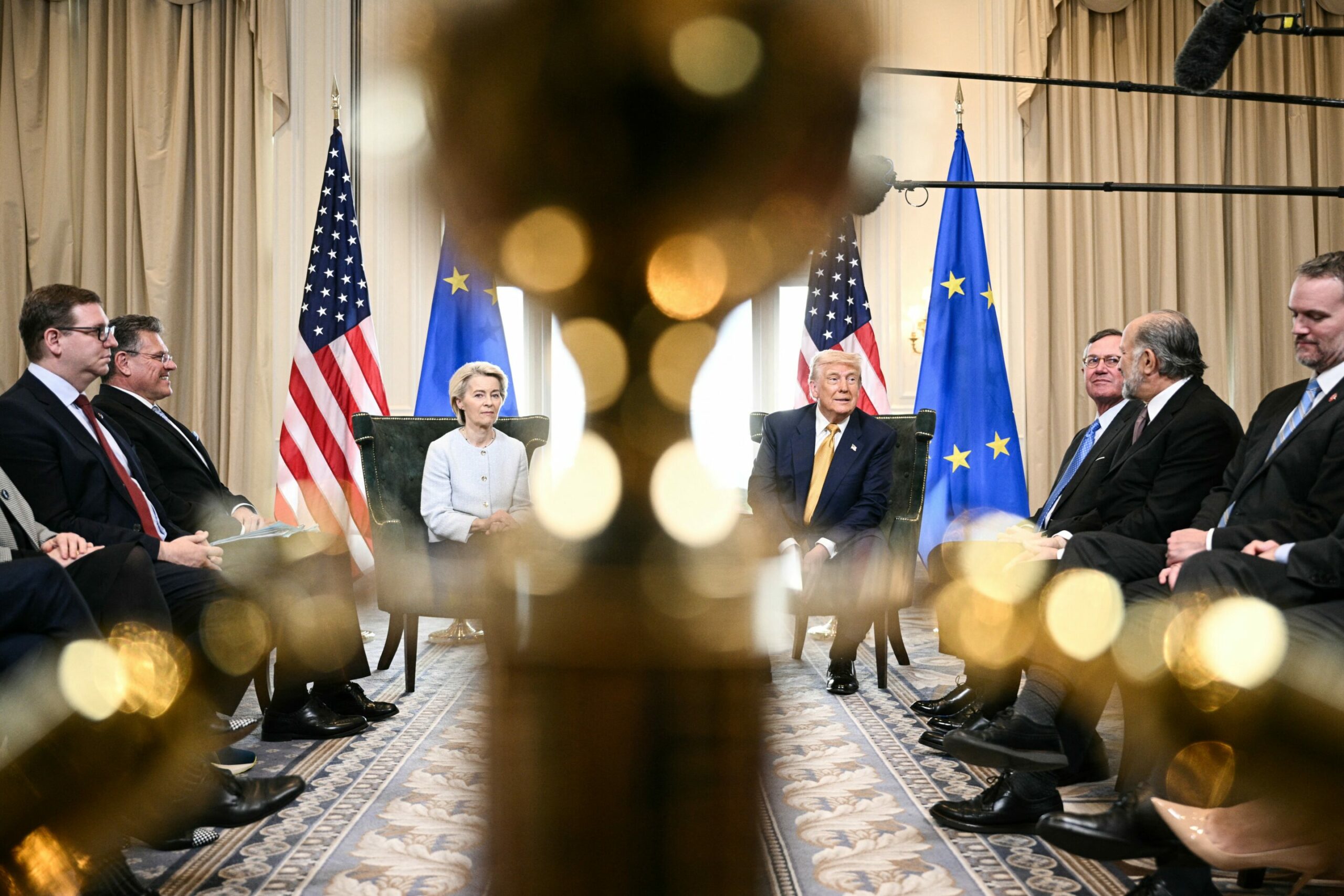
Trump and von der Leyen after reaching a new transatlantic trade deal at Trump’s Turnberry resort in southwest Scotland on July 27, 2025. Once hailed as a “good deal,” it now underscores the EU’s struggle to assert strategic autonomy amid growing US dominance. Credit: Brendan Smialowski / AFP
According to an analysis by the European Council on Foreign Relations (ECFR) released in March, the EU also has the Enforcement Regulation, which enables it to impose countermeasures in the absence of a functioning World Trade Organisation (WTO) dispute settlement system.
Other options, included in the council's report, are for the EU to "weaponise" its agricultural and environmental standards to discriminate against American products.
Another option would be to scrap the recently announced Digital Omnibus, which foresees sweeping deregulation for the tech sector, which critics have argued largely benefits large US tech firms.
However, the European Commission did not comment on any specifics of a response ahead of Thursday's council summit, including the ACI.
Keep calm and carry on
"We are trying to be calm," said spokesperson for the European Commission, Olof Gill, on Monday. "The priority here is to engage, not escalate and avoid the issue of tariffs."
Overall, the message from Brussels on Monday was to stay measured and engage both sides for ongoing consultations: "Sometimes the most responsible form of leadership is restraint," Gill said.
The spokesperson did confirm that the EU was considering bringing into force the €93 billion package of counter-tariffs, agreed last year, on 7 February if Trump carries out his threat to impose new tariffs.
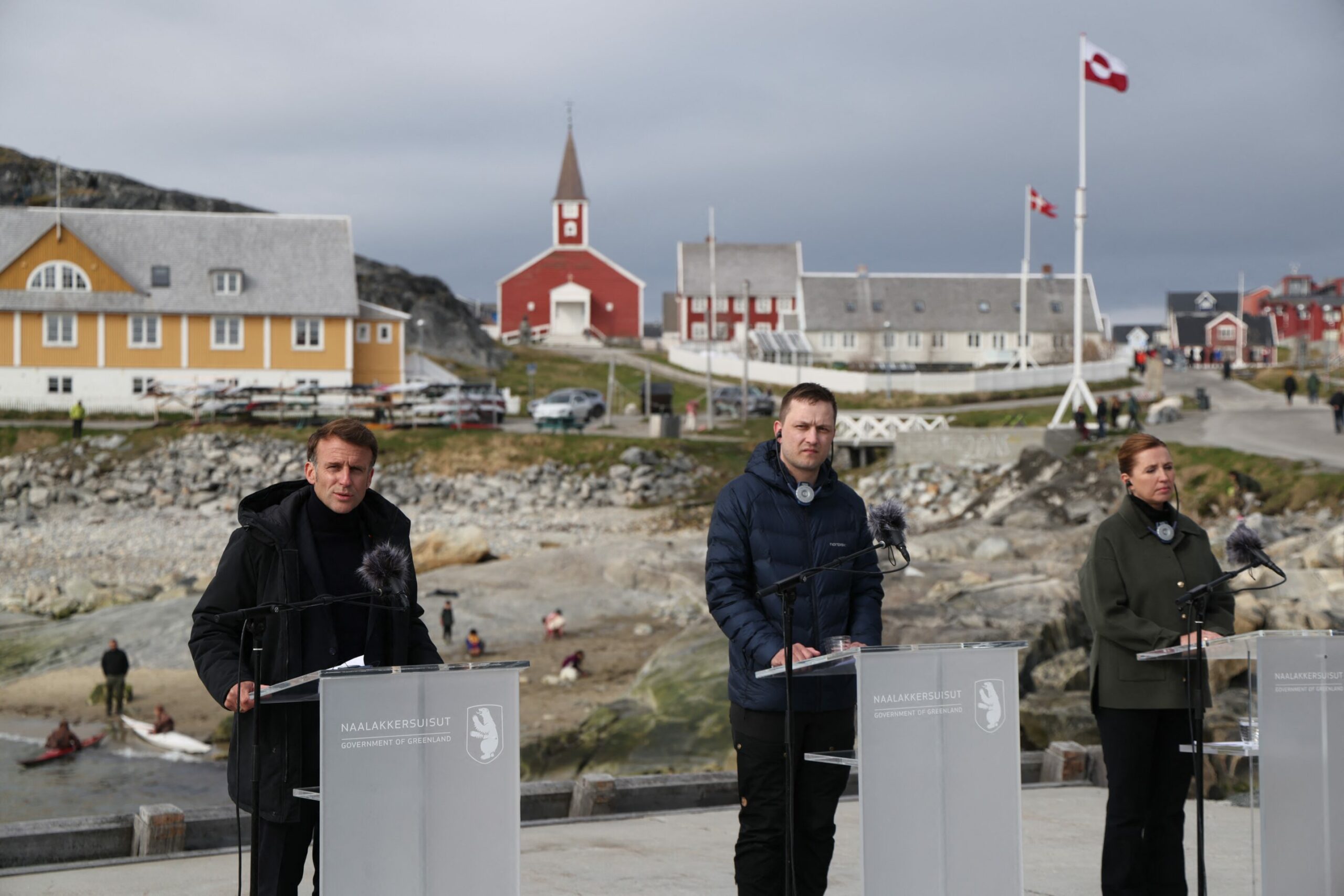
(L-R) French President Emmanuel Macron, Greenland's Prime Minister Jens-Frederik Nielsen and Danish Prime Minister Mette Frederiksen attend a joint press conference in Nuuk, Greenland, on June 15, 2025. Credit: Belga / AFP
Yet, Trump’s comments continue to provoke, with some Europeans calling his threats a form of blackmail.
A leaked letter sent to the Norwegian government, reported on Monday by PBS, appeared to link Trump's threats to seize Greenland to his being snubbed for the Nobel Peace Prize.
Notably, he said he "no longer feels an obligation to think purely of peace" and will prioritise "what is right" for the US.
"Many of these latest comments from President Trump are frankly ridiculous," Andrews explained. "We cannot rule out that President Trump will use force to take Greenland, but I cannot imagine a case where there would be a military conflict between NATO allies on the island."
While the US might be able to take Greenland by military force, Andrews believes that Europe would surely then have to respond with great trade, economic and diplomatic force. "It would be a trade war."
United Europe?
Many Europeans hope this crisis will unite the continent, with rising calls for President von der Leyen and her Commission to take a firmer stance against Trump's hostilities.
"Hopefully, more European leaders are becoming aware of the futility of appeasing a bully like President Trump. He only responds to strength and power," Andrews stressed.
He believes the EU must learn how to exercise its power and not to rely only on past system rules and norms, as "that world of rules and norms seems over."
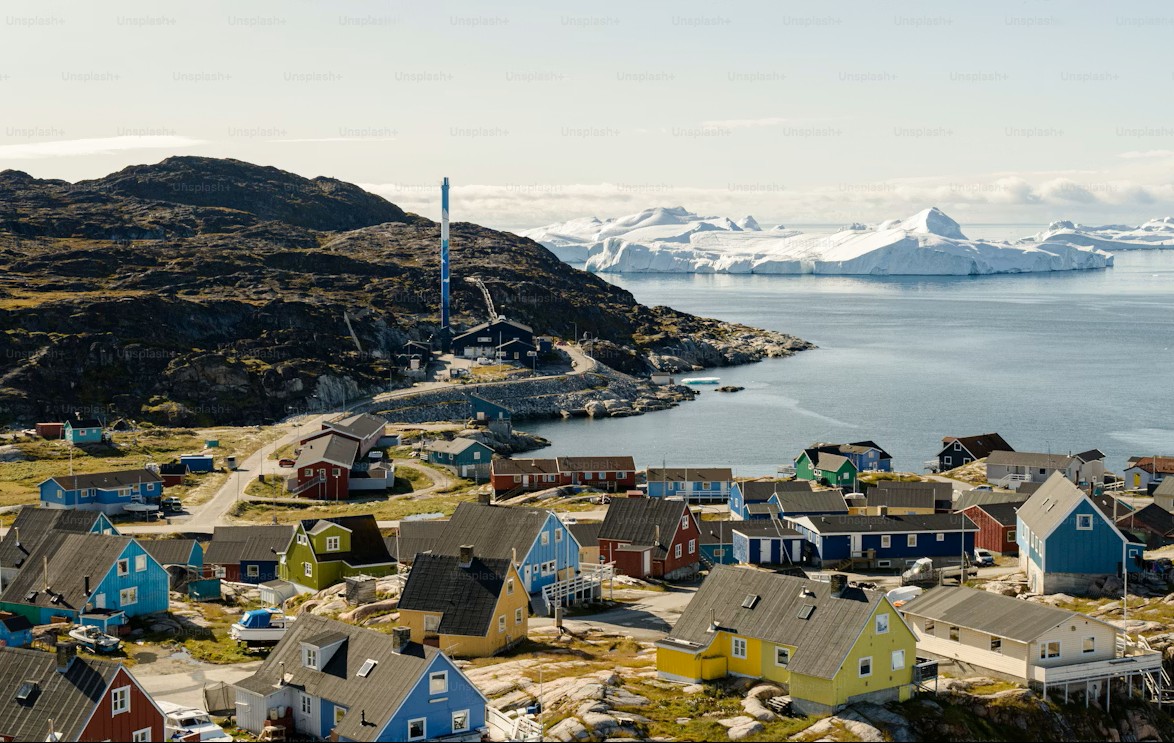
Greenland. Credit: Unsplash/Mads Schmidt Rasmussen
"Europe is made up of small countries and countries that do not yet realise they are small. Clearly, we must work together more to have a chance of survival in this new and openly lawless world," the Irish MEP concluded.
Now, Andrews will drive the European Parliament's position on doubling the EU's funding of the autonomous territory of the Kingdom of Denmark, as proposed by the Commission.
While it is not part of the EU, Greenlandic residents are EU citizens, and it is formally associated with the EU as an Overseas Countries and Territories (OCTs).
Aside from the obvious questions around European sovereignty, the area is important for fishing, but also for renewable energy and critical raw materials.
