
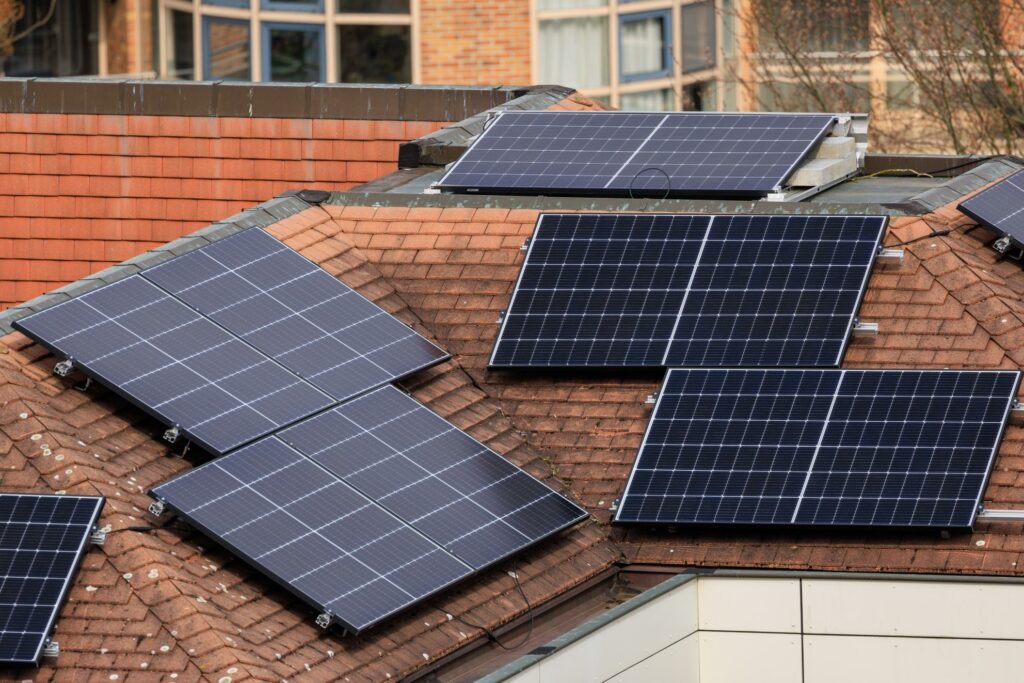
The roofs of the EU’s 271 million buildings could host about 2.3 terawatts peak of solar panels and generate around 2,750 terawatt-hours of electricity a year using current technology.
The above finding has come from a new study from the European Commission’s Joint Research Centre.
The analysis estimates rooftop solar potential for individual residential and non-residential buildings across the EU using a high-resolution building database and national administrative data, the Commission said in a release on Wednesday.
It found around 1,800 gigawatts peak of potential capacity on residential rooftops and about 500 gigawatts peak on non-residential buildings, with total annual generation equivalent to roughly 40% of electricity demand in a fully renewable EU energy system by 2050.
Solar photovoltaic capacity is usually measured in “peak” terms — the maximum output under standard conditions — while electricity generation is measured in terawatt-hours, a unit of energy used for national power systems.
How rooftop solar compares with existing targets
More than half of the EU’s 2030 solar target of 700 gigawatts could be met using non-residential rooftops alone, the Joint Research Centre said.
Large buildings with more than 2,000 square metres of roof area could host about 355 gigawatts peak of solar capacity.
Only about 10% of European building rooftops are currently fitted with solar panels, but rooftop systems account for about 61% of the EU’s 339 gigawatts peak of installed solar capacity in 2024.
Buildings account for about 42% of the EU’s energy consumption and 36% of energy-related greenhouse gas emissions, while the electrification rate for households is 26%, Eurostat data cited in the statement show.
The study was published in the journal Nature Energy and is based on the latest release of the European Digital Building Stock Model, a publicly available dataset covering 271 million buildings across the EU.
