
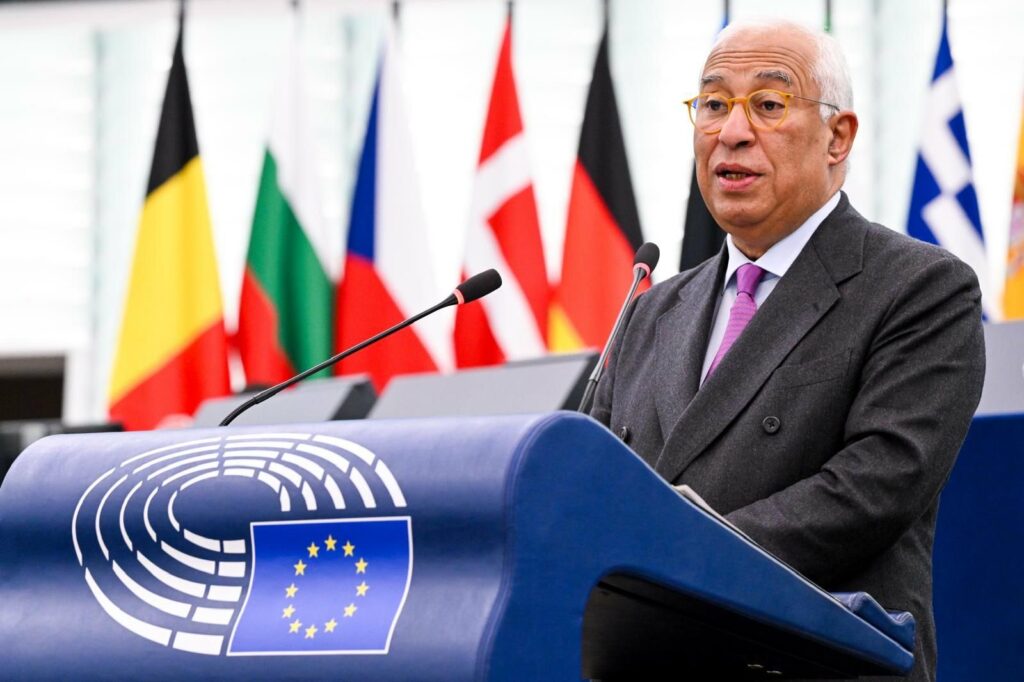
European Council President António Costa and European Commission President Ursula von der Leyen told the European Parliament that the EU must defend international law, strengthen security and protect its economic interests.
Costa said defending international law and multilateralism was “key” for the EU, rejecting “violations of international law whether in Ukraine, Greenland, Latin America or Gaza”, and “violations of human rights whether in Iran, Sudan or Afghanistan”, the parliamentary press service reported on Wednesday.
He also stated EU leaders were united on international law, territorial integrity and sovereignty ahead of an EU summit on 22 January, and expressed “full solidarity” with Denmark and Greenland.
Costa warned that further tariffs would harm EU–US relations, while saying the EU was ready to defend itself against “any form of coercion” and was willing to continue constructive engagement with the United States.
On trade, he described the EU–Mercosur agreement — a proposed deal with South American countries in the Mercosur bloc — as “historic.”
Greenland, tariffs and Ukraine
Von der Leyen said Europe must act “decisively” and strengthen its sovereignty in security and the economy amid a “seismic shift in the international order."
She said “the future of Greenland lies solely in the hands of the Greenlandic people”, while warning that imposing tariffs risked a “dangerous downward spiral between allies.”
Von der Leyen announced increased EU investment in Greenland’s local economy and infrastructure, enhanced cooperation with partners on Arctic security, and a reassessment of the EU’s broader security strategy.
She reiterated support for Ukraine “until a just and lasting peace is achieved”, including a decision to establish a €90 billion support fund.
In responses during the debate, many MEPs backed continued EU assistance to Ukraine, including the €90 billion loan, and several rejected coercion or threats against European territory while voicing solidarity with Denmark and Greenland.
MEPs were split on trade agreements such as Mercosur, with some citing benefits and others warning of negative impacts on farmers and standards.
