
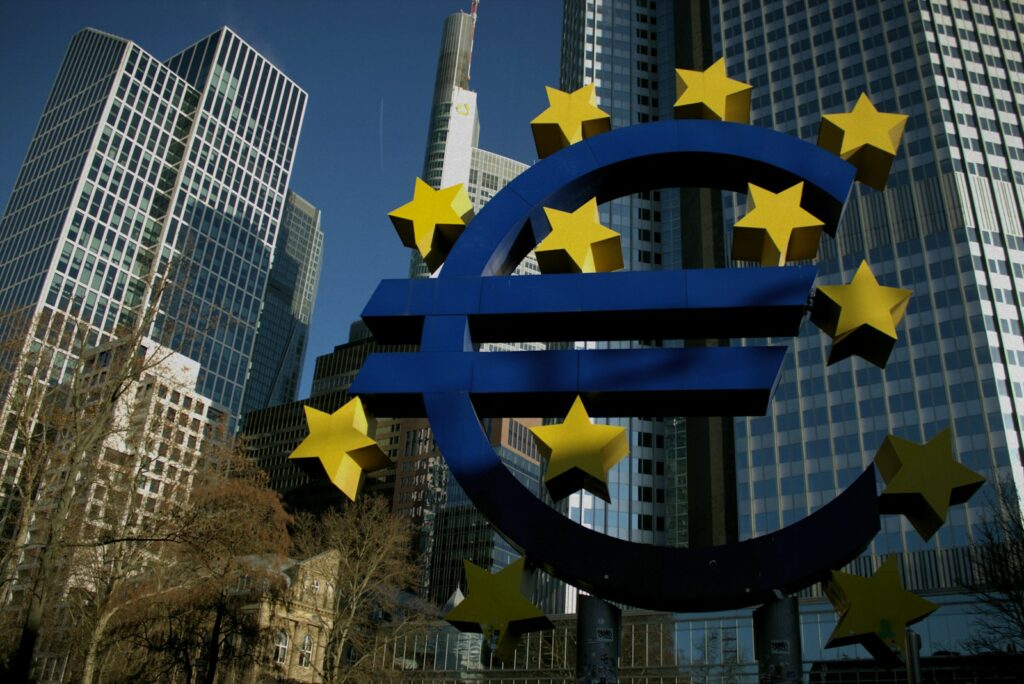
The European Central Bank and the European Systemic Risk Board have published a joint report warning that rising geopolitical risks and geoeconomic fragmentation could affect financial stability in the euro area and across the EU.
The report, titled "Financial stability risks from geoeconomic fragmentation", sets out the channels through which geopolitical shocks can spread into the financial system, including via tighter financial conditions, market stress, higher risk premia and weaker loan growth, according to a joint statement by the ECB and the ESRB.
Geopolitical risks and policy uncertainty have risen markedly since the mid-2010s, with notable increases in 2024 and 2025, the two bodies said.
Over the same period, financial market volatility has remained contained or short-lived.
Estimates in the report suggest geopolitical risks lower expected growth outcomes and are linked to “downside tail risks” for the real economy — meaning a higher chance of rare but severe negative outcomes — alongside heightened financial stress.
The report also says geopolitical events can change how closely different markets move together, including bonds, commodities, equities and exchange rates.
Uneven impact across countries and lenders
The effects of geopolitical shocks vary across EU Member States, with more open economies and those with higher public debt ratios tending to be more vulnerable to amplification effects, the report said.
It also found that banks and non-bank financial firms respond to geopolitical shocks by adjusting their balance sheets and reducing lending, especially cross-border exposures. This can reduce exposure to external shocks but also limits international diversification.
The two bodies stated the report introduces a new monitoring framework that integrates geopolitical indicators into financial stability analysis, and they called for enhanced, more harmonised datasets and complementary scenario analysis.
