
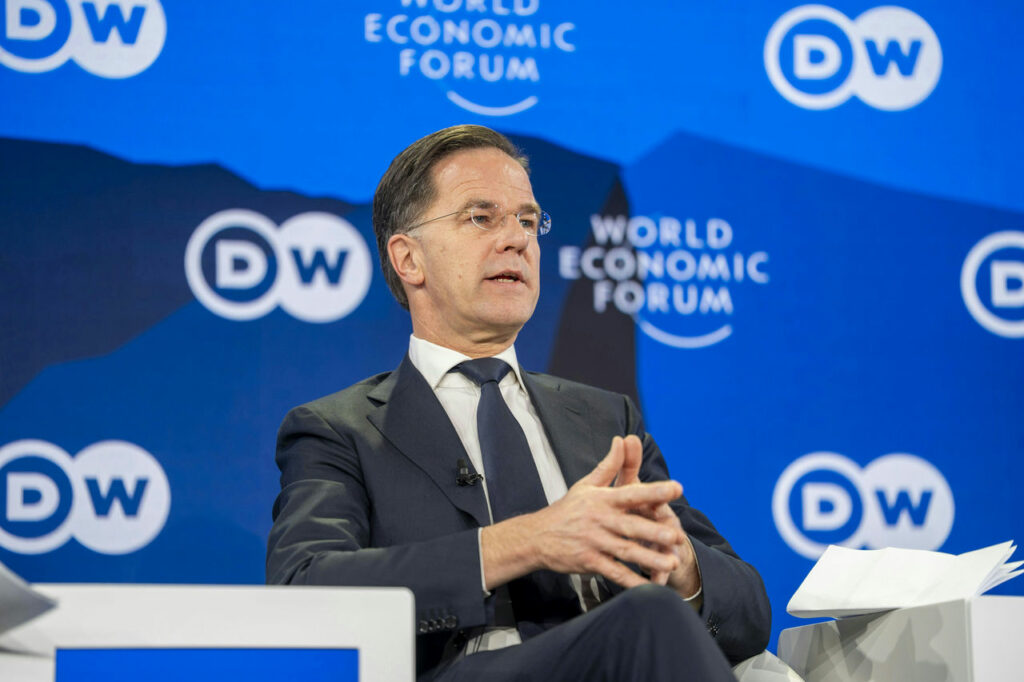
NATO Secretary General Mark Rutte has said Europe remains safe because of what European countries are doing within NATO and because of the alliance’s relationship with the United States and Canada, speaking at the World Economic Forum in Davos, Switzerland.
Rutte said the US sees NATO as central to its own security, citing the need for a “safe Arctic, a safe Atlantic, and a safe Europe”, according to a release of the Secretary General's remarks in Davos.
Asked about reported tensions linked to Greenland, Rutte said he would not comment publicly and said he was working “behind the scenes."
Rutte stated NATO needed to do more to defend the Arctic because sea lanes are opening and because China and Russia are increasingly active in the region.
He said seven of the eight Arctic-bordering countries are NATO members — Finland, Sweden, Norway, Denmark, Iceland, Canada and the US — with Russia the only Arctic-bordering state outside the alliance.
Defence spending and Ukraine
Rutte pointed out the US currently spends 3.5% of GDP on “core defence”, while European allies spend an average of 2%.
He also said NATO leaders had agreed at a summit in The Hague to increase overall defence spending to 5%, including 3.5% on core defence.
Rutte noted the US still has more than 80,000 soldiers in Europe, including in countries such as Poland and Germany.
He said NATO’s collective defence clause, known as Article 5, has been triggered only once — after the 11 September attacks in 2001 — and said allies supported the US at that time.
Rutte said Ukraine should remain the “number one priority”, adding that Russian missiles and drones were attacking Ukraine’s energy infrastructure while temperatures in Kyiv were minus 20 degrees.
He also cautioned Ukraine could meet 60% of its own electricity needs and warned that Ukraine did not have enough interceptors and other equipment to defend itself.
Rutte said further Russia lost 1,000 people killed each day in December — more than 30,000 over the month — but had continued and increased its attacks.
In response to a question about preparedness beyond the current conflict, Rutte said NATO was ready “today” but needed to remain ready in future years and said defence industrial production was not high enough in the US or Europe.
