
The upcoming foreign affairs council is expected to decide on significant sanctions against Iran, a high-ranking EU official told journalists on Friday.
At the meeting next Thursday (29 January), EU’s foreign ministers will discuss among others the situation in the Middle East in light of the latest developments. The situation continues to be volatile with no-one knowing what will happen until the meeting, the official said.
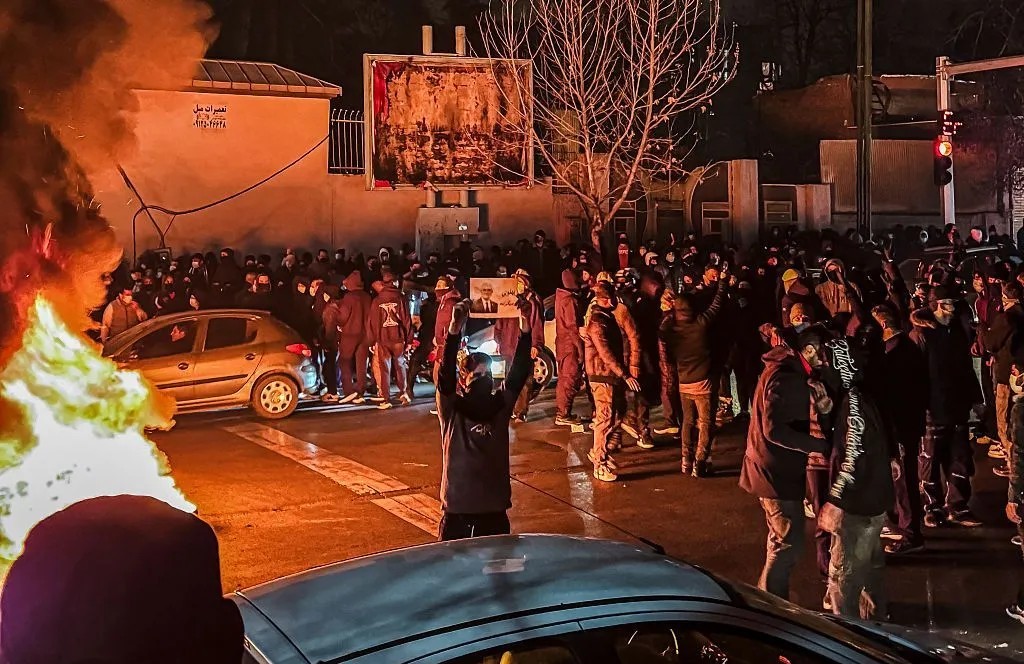
The foreign affairs council will draw conclusions from the recent massive suppression of the protests and demonstrations in Iran. Sanctions will likely target the Islamic Revolutionary Guards Corps (IRGC). In the latest crackdown, the “Basij Resistance Force”, a volunteer paramilitary organization supporting the regime under the IRGC, was also implicit in the suppression but not mentioned in the briefing.
Until now, the EU has imposed sanctions on individuals and entities in Iran in response to human rights abuses and its military support of Russia's war of aggression against Ukraine. The IRGC as a whole, however, has not been designated by the EU as a terrorist organisation despite evidence of its involvement in terrorist attacks also in Europe.
European Commission President Ursula von der Leyen said earlier, at a press conference in Cyprus following the official opening of its EU Presidency, that the EU is looking into deepening the sanctions against Iran. According to von der Leyen, the sanctions are biting and weaking the regime, helping to pushing for it to fall.
However, regime change is not EU’s policy. The EU still believes in “critical engagement” with the Iranian regime. Ultimately, it is the Iranian people, who are bravely fighting for change and have EU’s full support, to bring about the change, she said. “They have asked us to sanction not only the IRGC but also all others that are responsible for the atrocities (in the crackdown of the protestors),” she added.
The region is bracing for a possible US strike against Iran which could lead to an Iranian counterstrike against Israel with unforeseeable consequences. The 12-days long war last June between Israel and Iran caused devastation on both sides. Iran’s nuclear sites and missile capacity were significantly damaged and reduced. Since then, Iran has reportedly replenished its missiles and launchers.
EU’s foreign ministers will also exchange views with UN High Commissioner for Human Rights, Volker Türk, over a working lunch. The UN Human Rights Council held a special session on Friday on the situation in Iran with the High Commissioner calling on Iran to end its brutal repression. “The killing on the streets of Iran may have subsided, but the brutality continues,” he said in a statement.
“The violent repression of the Iranian people does not solve any of the country’s problems. On the contrary: it creates conditions for further human rights violations, instability and bloodshed.” In the statement, he delivered several messages for the “top leadership” in Iran, intended as an appeal to find a solution to the current crisis, and as a way forward for the people of Iran.
In a resolution, adopted by a vote of 25 in favour, 7 against and 14 abstentions, the Human Rights council “strongly deplored” the violent crackdown of peaceful protests resulting in the deaths of thousands of persons, and called for an urgent investigation by a Fact-Finding Mission.
US President Donal Trump, who has been threating to attack Iran because of its brutal suppression of demonstrations against the regime, cancelled one and half week ago a planned attack because of signals from Iran that it would not execute arrested protestors. The killing of protestors in the streets, however, continued until the demonstrations were suppressed last week.
Figures about the number of people killed are uncertain. According to the Iranian authorities, more than 3,000 people were killed, including 500 members of the security forces. Other sources claim that 5,000 people were killed but the actual number can be much higher with many more injured. Officials in Iran's Health Ministry told the American magazine "Time" that approximately 30,000 people may have been killed in just two days (8-9 January).
Since then, the US has sent reinforcements to the region to keep the military operation on the table and to put pressure on the Iranian regime to agree to serious talks about ceasing enrichment of uranium, giving up its stockpile of enriched weapons-grade uranium, reducing its arsenal of ballistic missiles and stop its destabilizing actions in the region via proxies.
The tension is mounting after the US Central Command chief arrived yesterday in Israel to meet the Israeli military command to discuss coordination in the event of a possible US strike which might affect Israel. The US is building up its forces in the region with the arrival of an aircraft carrier. Trump said on Friday that a “big flotilla is going in that direction and we’ll see what happens.”
