
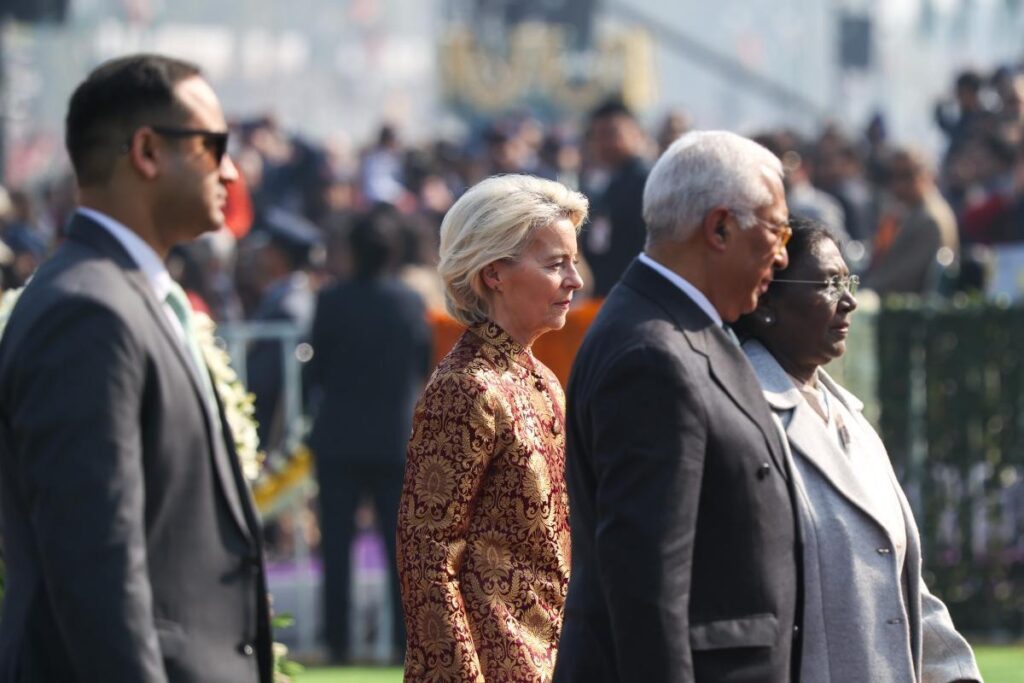
The European Union and India have agreed on a free trade deal that aims to eliminate €4 billion in tariffs for exporters, the European Commission announced on Tuesday.
Indian Prime Minister Narendra Modi hailed the agreement as "the deal of all deals" while hosting European Commission President Ursula von der Leyen and European Council President António Costa in New Delhi. Von der Leyen described the accord as “historic.”
Talks between the EU and India began in 2007 but were suspended in 2013 before resuming in 2022. Currently, trade in goods and services between the two regions totals €180 billion annually.
The Commission estimates the agreement will double EU exports to India by 2032 by slashing import tariffs by 96.6%, while the EU will remove duties on over 99% of trade.
India has granted the EU unprecedented market access, which is expected to give significant advantages to key sectors such as agri-food. Producers of European food and beverages will gain entry to India’s market of 1.45 billion people, whose GDP stands at €3.4 trillion annually.
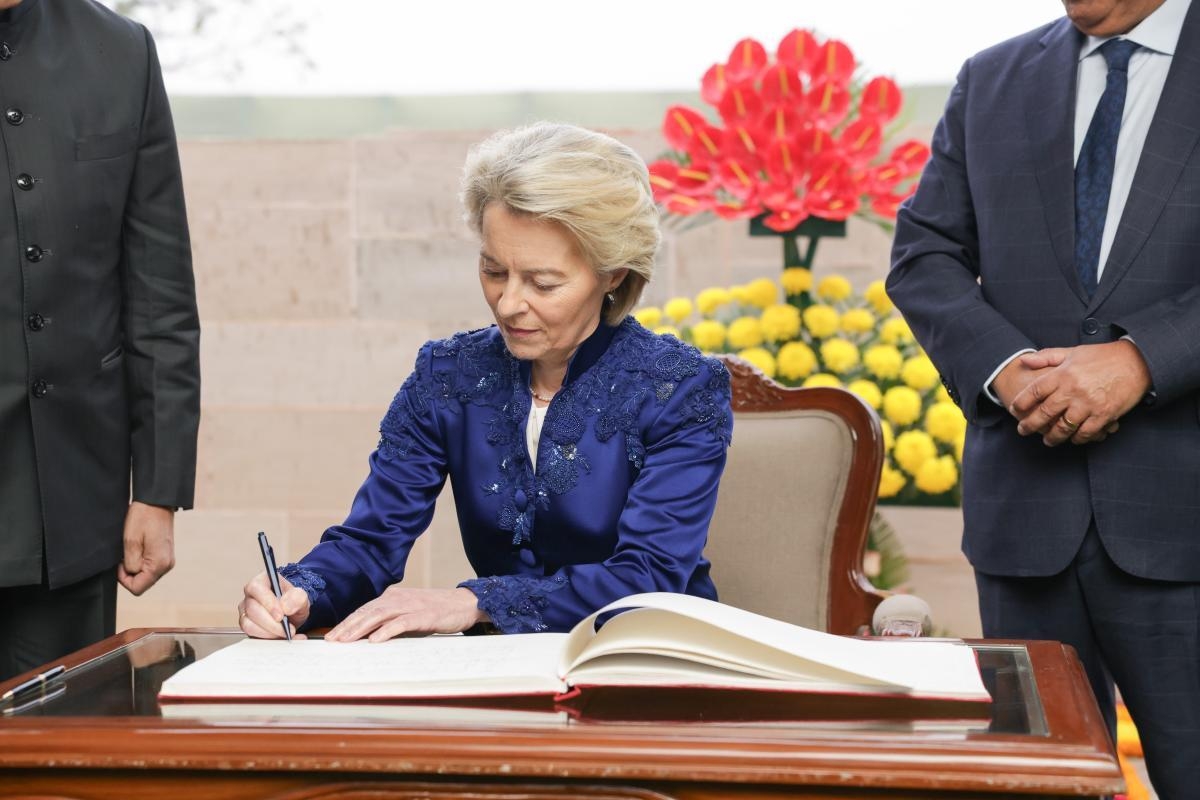
European Commission President Ursula von der Leyen signing the India trade deal 27 January 2025. Credit: EU
Under the deal, agri-food tariffs, currently averaging 36% and sometimes reaching 150%, will see drastic reductions. Wine tariffs will drop from 150% to a maximum of 30%, beer tariffs will fall from 110% to 50%, and duties on vegetable oils, fruit juices, non-alcoholic beer, and processed food products will be removed.
However, the EU will maintain tariffs on sensitive goods such as beef, sugar, rice, chicken, and powdered milk, with safeguards in place to prevent market disruptions.
Automotive tariffs, currently as high as 110%, will gradually be reduced to 10%, with a yearly quota of 250,000 vehicles. At present, only 3,000 cars are exported to India annually due to high tariffs. Duties on machinery (up to 44%), chemicals (up to 22%), and pharmaceuticals (11%) will mostly be scrapped as part of the deal.
Negotiations faced hurdles over issues like the EU’s Carbon Border Adjustment Mechanism (CBAM) and labour and sustainability standards. India criticised many EU rules as “neo-colonial,” according to European sources.
The agreement includes provisions for technical dialogue on CBAM and commitments by India to implement key labour and gender equality conventions. A climate cooperation platform will also be established. However, no consensus was reached on critical raw materials, energy, or public procurement.
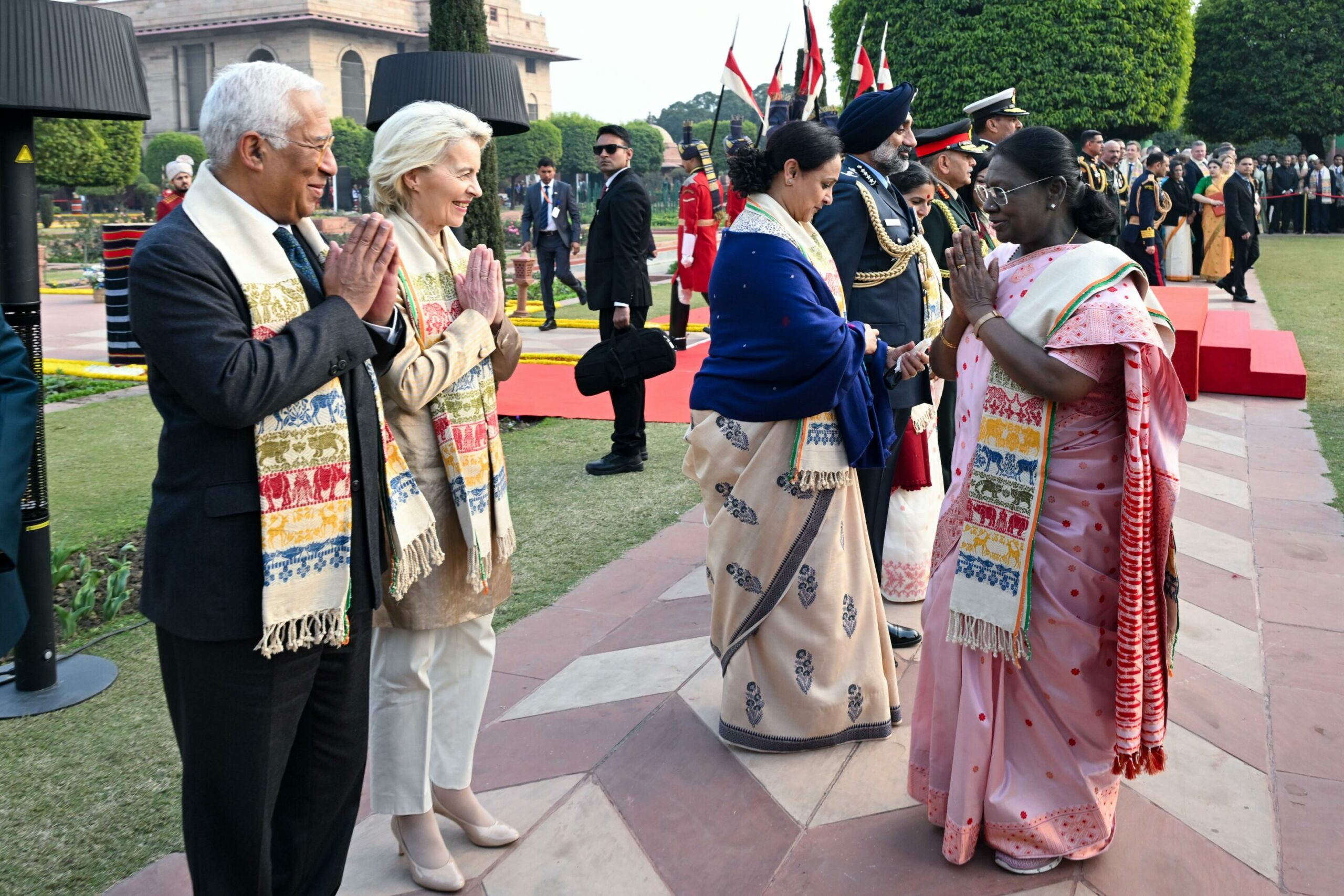
Antonio Costa, Ursula von der Leyen, from the left, Droupadi Murmu, on the right. Tuesday 27 January 2026. Credit: EU
The deal comes amid criticism of Prime Minister Modi’s government by human rights organisations over its treatment of religious minorities, civil society, and the media. On Tuesday morning, activists staged a sit-in outside the European Parliament in protest.
Nevertheless, Ursula von der Leyen emphasised the global significance of the agreement, stating, “We are sending a signal to the world that rules-based cooperation continues to deliver strong results.”
The deal aligns with the EU’s strategy to diversify trade relationships, a priority as tensions with the United States remain over tariff threats, and relations with China are strained due to export restrictions.
This announcement follows the EU’s recent free trade agreement with South American Mercosur nations, finalised after 25 years of negotiations. That accord faces domestic opposition from Europe’s agricultural sector and awaits judicial review and parliamentary approval.
For the formal signing of the EU-India trade deal, approval from EU member states is required, followed by ratification from both the European Parliament and India’s government.
