
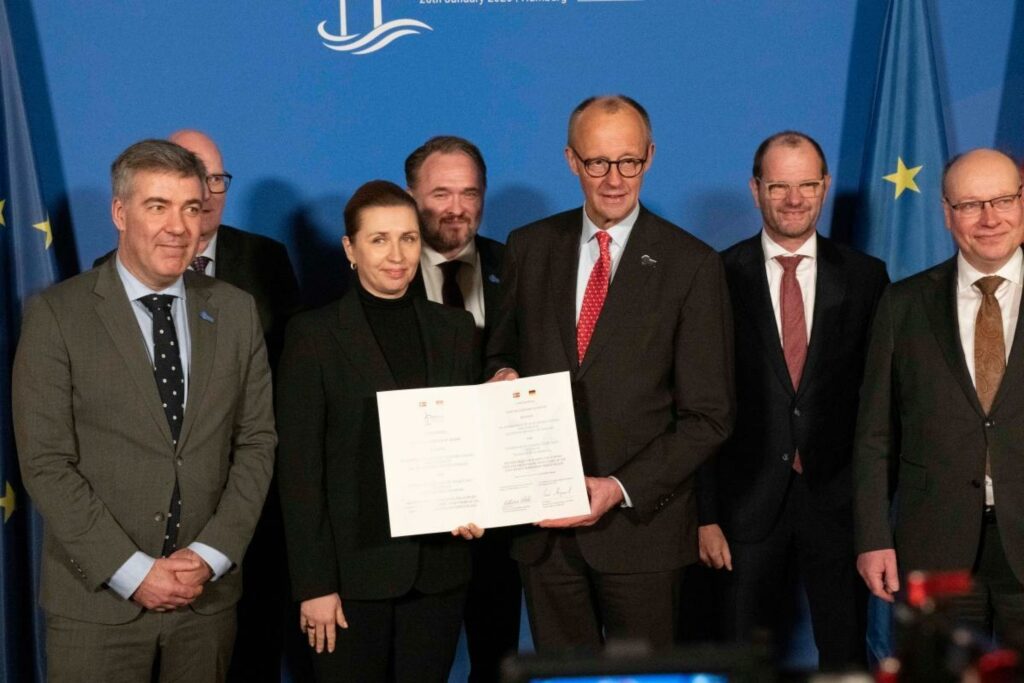
Germany and Denmark have agreed to move ahead with the Bornholm Energy Island project to develop offshore wind power.
The project will connect 3 gigawatts (GW) of electricity generated at sea to the Danish and German power grids — enough capacity to supply millions of homes depending on wind conditions and electricity use, the European Commission informed in a statement on Monday.
The Commission described it as an early delivery under its “Energy Highways” initiative, part of the European Grids Package published in December 2025, which set out plans to expand and modernise electricity networks across the EU.
The EU executive said the Bornholm project has been listed as a “project of common interest” — an EU label for cross-border energy infrastructure considered a priority for funding and permitting.
It is backed by a €645 million EU grant for construction works from the Connecting Europe Facility.
Funding and next steps
The Commission said it will continue to support Germany and Denmark as they implement the agreement.
"Today’s agreement on the Bornholm Energy Island is a truly remarkable example of Europe working together to deliver clean, homegrown, safe and affordable energy to its citizens," declared EU Commissioner for Energy and Housing Dan Jørgensen.
"The Bornholm Energy Island is a blueprint for EU offshore renewable energy. This is a project the European Commission has strongly supported and recently marked as a key strategic interconnection as part our Energy Highways initiative," he added.
