
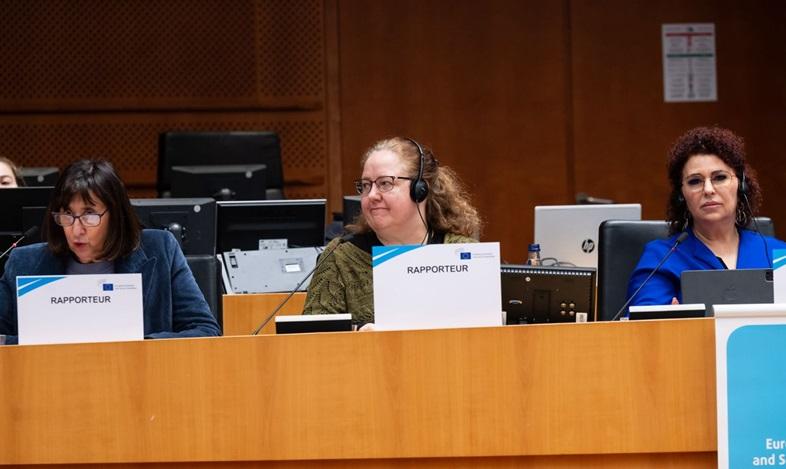
The European Economic and Social Committee (EESC) has adopted a resolution setting out the EU’s priorities for the 70th United Nations Commission on the Status of Women, with a focus on access to justice, women’s participation in public life and tackling gender-based violence.
The resolution was adopted during the Committee’s January 2026 plenary session, EESC said in a statement on Wednesday.
It declared women and girls continue to face legal, financial, cultural and digital barriers that stop them from exercising their rights or seeking redress, both in Europe and globally.
The Committee called for reforms to remove discriminatory laws and practices, guarantee affordable and high-quality legal aid, and strengthen “gender-responsive” justice systems — meaning courts, police and legal services designed to recognise and address gender-based discrimination.
It also urged measures to protect the safety and confidentiality of survivors of violence during legal proceedings.
Digital access and public life
The Committee insisted that EU member states improve digital access to legal information, including by expanding digital literacy and making online legal tools accessible regardless of background or socio-economic situation.
It also restated support for equal representation of women in political, economic and public decision-making, and a “zero tolerance” approach to gender-based violence online and offline.
The Committee said women human-rights defenders and civil society organisations should be protected, particularly where civic space is shrinking.
It also called for “intersectional” approaches that account for how factors such as disability, migration background, socio-economic status or sexual orientation can combine to worsen discrimination.
The EESC declared it would promote structured dialogue with civil society and social partners, and backed stronger monitoring and accountability measures including improved data collection broken down by sex and other indicators.
