
Cyprus has set out its priorities for its presidency of the Council of the EU, including action on online child protection, organised crime, migration, energy security and water resilience.
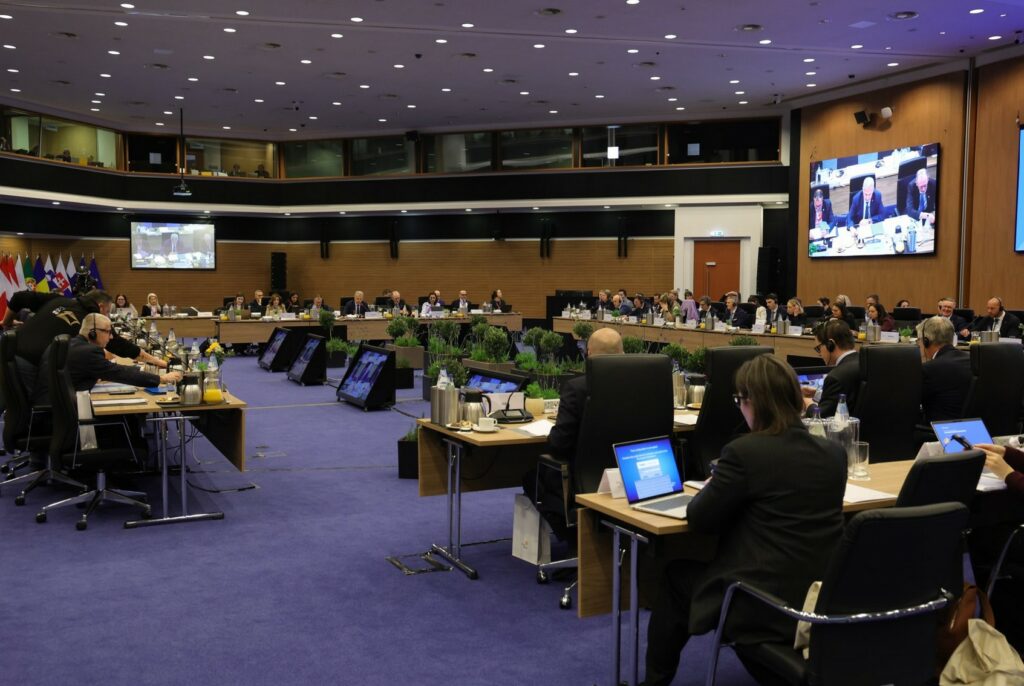
Ministers from Cyprus briefed MEPs in a series of committee hearings in late January, with the presidency running until the end of June 2026, the European Parliament announced on Friday.
Justice and Public Order Minister Constantinos Fytiris told MEPs that tackling serious and organised crime, drug trafficking and terrorism, child sexual abuse and “digital threats” would be among the priorities, alongside closer cooperation through Europol, the EU’s police agency, and stronger external borders.
Migration would be another focus, with an emphasis on implementing the EU’s Migration and Asylum Pact and strengthening returns in partnerships with non-EU countries.
In internal market discussions, Energy, Commerce and Industry Minister Michael Damianos said the presidency would prioritise the EU’s 2030 consumer agenda, protecting minors online, and tackling deceptive consumer practices.
Research, Innovation and Digital Policy Deputy Minister Nicodemos Damianou said the presidency also wanted to progress work on “digital omnibus” files and conclude negotiations on EU customs reform and rules on the posting of workers — when employees are sent temporarily to another EU country for a job.
Energy, defence and water resilience on the agenda
On energy and industry, Damianos highlighted securing energy supply through interconnections, decarbonisation “without deindustrialisation”, reducing critical dependencies and simplifying rules to speed up industrial and energy projects, the Parliament said. He also pointed to a new legislative proposal on electricity grids.
In a separate hearing, Damianou said the presidency would work on the Digital Networks Act, which covers telecoms infrastructure, including 5G and 6G, and push online child protection through age verification.
He also promised Cyprus would try to finalise work on an EU Space Act, it added.
Defence Minister Vasilis Palmas said the presidency would focus on continued support for Ukraine, strengthening Europe’s defence industry, speeding up defence readiness and innovation, investing in maritime security and supporting humanitarian operations, including evacuating non-combatant personnel, according to the Parliament’s account.
Environment Minister Maria Panayiotou told MEPs that water resilience was a security, economic stability and public health concern, while also stressing legislative simplification without lowering EU environmental ambition and moving towards a circular economy to reduce dependence on raw materials. She also referenced a planned revision of CO2 standards for cars and vans.
