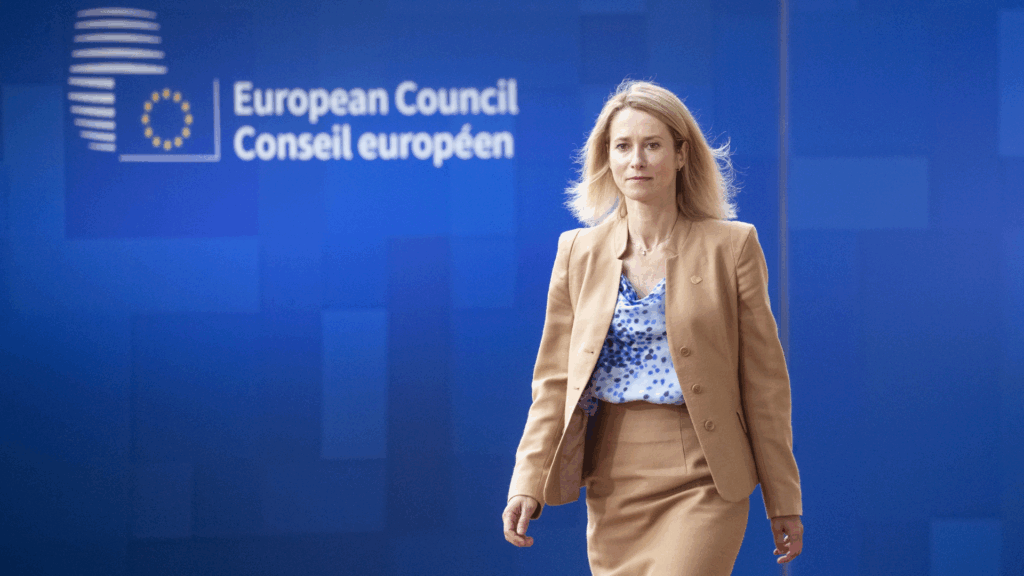
The Arctic is no longer “a region of low tension and high cooperation” as Russia’s war in Ukraine, China’s growing presence and US claims over Greenland change the security picture, according to EU foreign policy chief Kaja Kallas.
Speaking alongside Norway’s foreign minister Espen Barth Eide at the Arctic Frontiers conference on Monday, Kallas said she had visited a Norwegian coast guard ship in Tromsø harbour earlier in the day and described it as a symbol of the challenges of protecting security in harsh Arctic conditions, the European External Action Service (EEAS) reported.
She stated that “hybrid threats” — actions that fall short of open warfare — were increasing in frequency and intensity, citing GPS jamming, sabotage and spying as examples affecting the Arctic and other parts of Europe.
Kallas also pointed to what she described as Russia’s continuing military build-up in the “high north” and said European allies were stepping up security efforts in the region.
EU Arctic strategy to be updated
The EU is updating its Arctic strategy with member states to reflect the changed security environment, and Greenland will be “a core pillar” of the revised approach, Kallas declared.
She said security in the region was not only about military forces but also about resilient societies, trusted institutions, secure infrastructure and sustainable livelihoods, adding that the EU contributes through financial support, scientific co-operation and research tools.
Norway was described as one of the EU’s closest and most trusted partners, and Kallas said co-operation with NATO would continue to focus on stability, security and deterrence in the high north.
She added that the EU-Norway Security and Defence Partnership was moving “from paper to action”, with closer work on cyber security, maritime security and the protection of critical infrastructure — such as energy and communications networks.
As an example of deepening ties, Kallas said the EU’s SAFE defence financing instrument would be open to Norway, and Norwegian companies would continue participating in European Defence Fund programmes.
