
Buying a house in the Brussels-Capital Region became €50,000 more expensive over the past five years, according to the latest figures from the Federation of Notaries (Fednot).
With a median price of €510,000, Brussels is the most expensive area to buy in Belgium – much more pricey than the provinces of Flemish Brabant and Walloon Brabant, just outside the Capital Region, where the median price is €400,000.
Over the past five years, "the median price of Brussels homes has risen from €460,000 to €510,000 – representing a 10.9% increase in value", said notary Stijn Joye, spokesperson for Notaris.be.
As a result of the high cost, the increase in the number of sales in Brussels (7.1%) was less pronounced than in Wallonia (16.7%) and Flanders (14.1%) in 2025. "The reduced tax rates of 3% in Wallonia and 2% in Flanders for first-time buyers probably encouraged some prospective buyers to purchase in those regions rather than in Brussels."
The lack of a Brussels government certainly plays a part as well, he said. "This uncertainty does not generate momentum among investors, and the lack of a government also prevents renovation grants from being obtained."
From Molenbeek to Ixelles
Even within the Brussels-Capital Region, there are large differences in house prices between municipalities.
Molenbeek-Saint-Jean remains the cheapest municipality in Brussels for those looking to buy a house. Woluwe-Saint-Pierre, meanwhile, is the most expensive, with a median price of €746,500 (nearly 10% more expensive in 2025 compared to 2021).
"Forest recorded the strongest increase of the 19 Brussels municipalities over five years," said Joye. "Prices increased by 25.8%, bringing properties to a median price of €553,500, with a slight increase between 2024 and 2025 (3.5%)."
Strikingly, only one Brussels municipality has seen a decline in the median house price over the past five years: in Ixelles, property prices dropped by 5.1%, to a (still very high) average of €700,000.
At the same time, two of its neighbouring municipalities – Auderghem and Etterbeek – did not record a rise either. But instead of a drop, they saw median house prices stagnate: 0% in five years. "Taking inflation into account, we can say that these houses have actually fallen in value," Joye said.
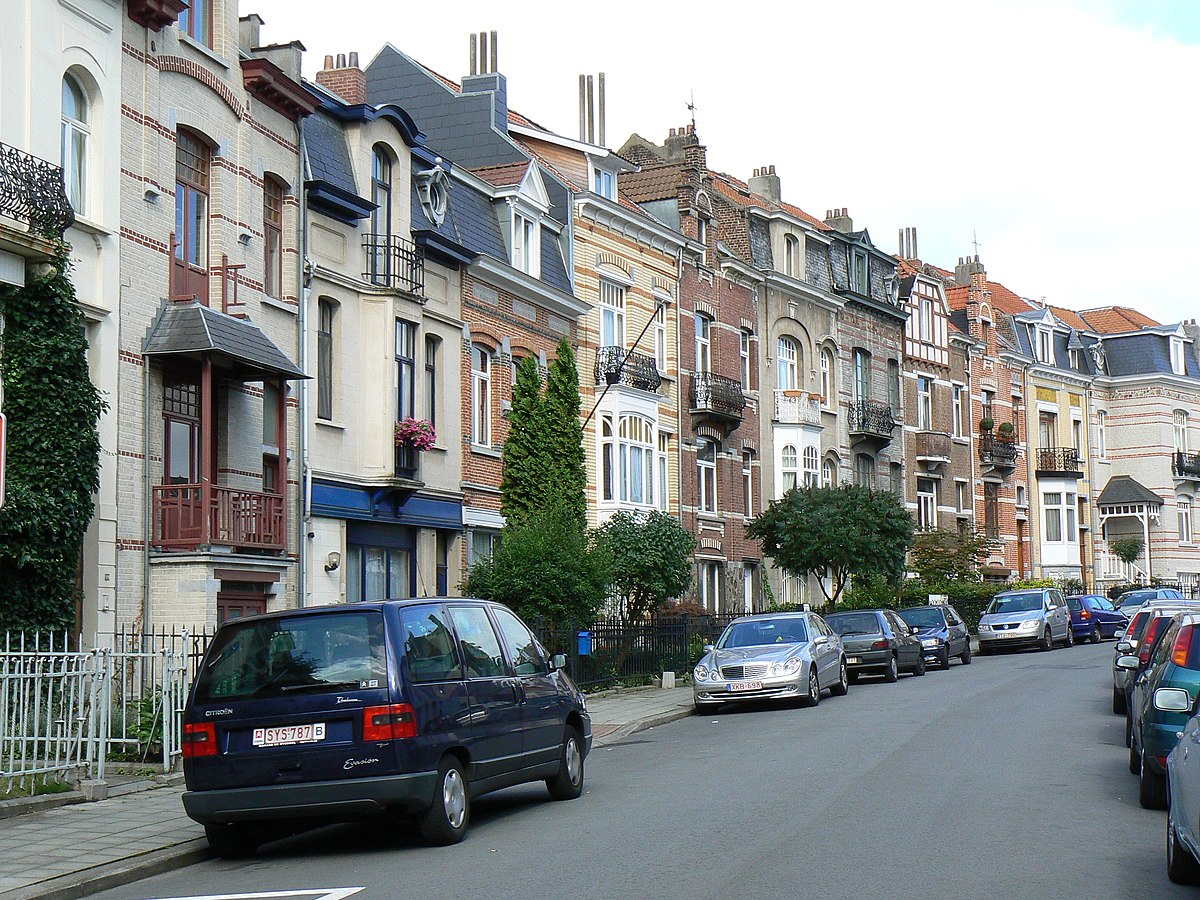
Woluwe-Saint-Pierre. Credit: Wikimedia Commons
The large majority of people buying property in Brussels do not buy a house, but instead buy an apartment, according to Fednot.
"Apartments in Brussels represent 70.3% of the property market – by far the largest share of the three regions," Joye said. "In Flanders and Wallonia, these percentages – 32.7% and 21.5%, respectively – are almost reversed."
While the median price for an apartment in Brussels rose by 3.3% in 2025 (increasing to €265,000), the capital is not the most expensive place in Belgium for flats.
People wanting to buy an apartment in the provinces of Flemish Brabant (median price of €287,000) and East Flanders (€270,000) will have to put down even more money.
Up and coming Saint-Josse
Like with houses, the most expensive flats in Brussels are also found in Woluwe-Saint-Pierre, with a median price of €360,001. "This makes the municipality more expensive than Ixelles, as a result of a 4.3% increase in the median price of flats between 2024 and 2025," said Joye.
"Ixelles, on the other hand, saw a slight decline in 2025 (-1.4%), but over five years, there has been an increase of 11.3%," he said. "Incidentally, median prices have risen in all 19 Brussels municipalities over the past five years. From a 1.66% increase in Uccle to a 18.4% rise in Koekelberg."
Over the course of a year, the increases are generally less pronounced, with Saint-Josse-ten-Noode as the only exception: the median price for flats in the municipality rose from €199,500 in 2024 to €230,000 in 2025 (up 15.3%).
During the same period, the median price of flats in Forest fell by 3.3%, from €289,500 to €280,000 – the sharpest decline in the market.
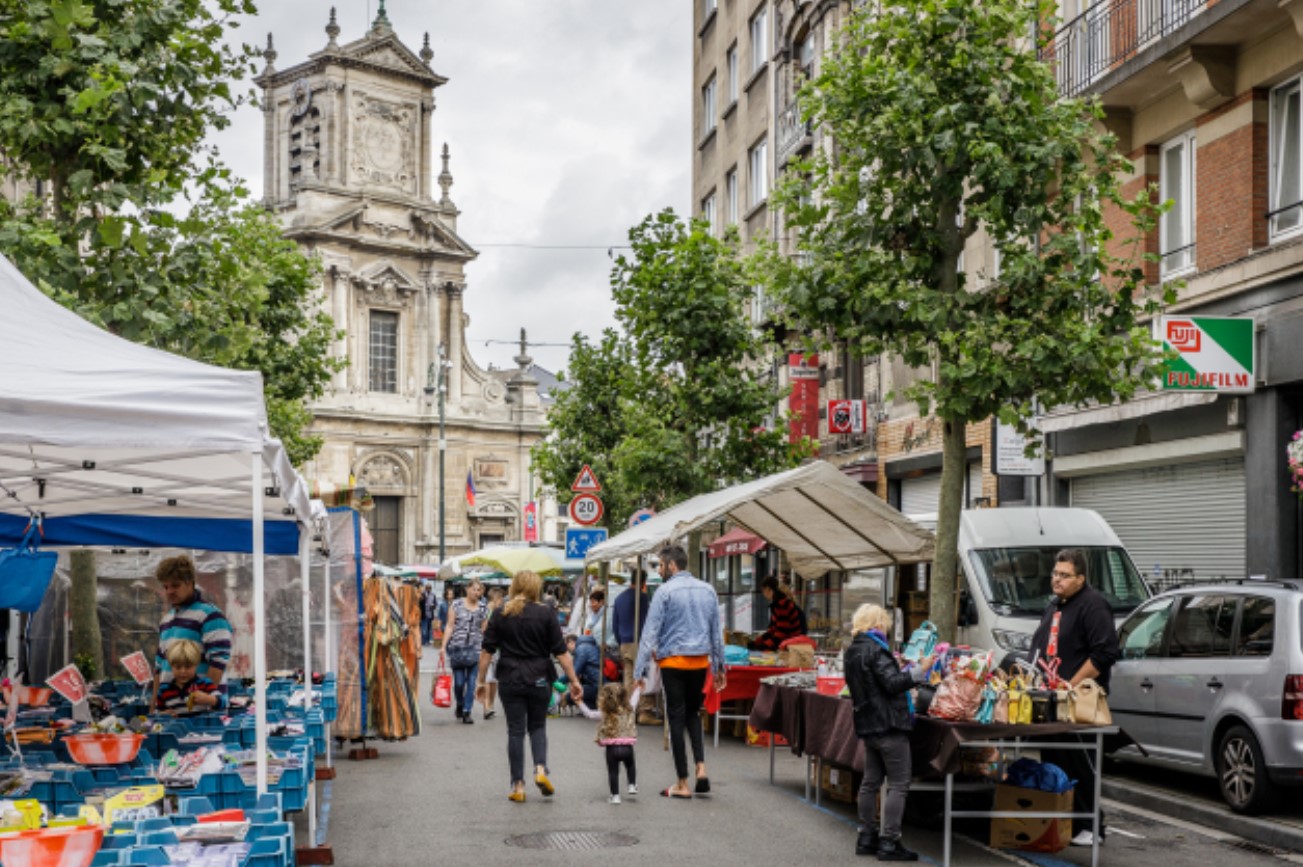
Saint-Josse-ten-Noode. Credit: Living in Brussels
The average age of buyers in Brussels is slightly higher than the national average: 39.8 years in the capital, compared to 39.2 years for the country as a whole. For flats, it is mainly 26- to 30-year-olds (21%) who are the most active, compared to 36- to 40-year-olds (23%) for houses.
"People over 65 are not very active on the Brussels property market. Only 1% buy a house, and just 4% buy an apartment," said Joye.
Young people (aged 18-30) who decide to buy an apartment opt for cheaper municipalities: 35% buy in Saint-Josse and 34% in Molenbeek. The least popular municipalities among 18-30 year olds are also the most expensive ones: Uccle (21%) and Woluwe-Saint-Pierre (17%).
"In Brussels, Schaerbeek stands out among young buyers (aged 18-30) who decide to buy their first home: 18% choose the municipality of Schaerbeek," said Joye.
Homes in Brussels City, with its pedestrian zone, bars and attractive prices, and those in Molenbeek (where you will find the cheapest homes in the capital) were purchased by 17% of 18 to 30-year-olds. "Meanwhile, the 36-40 age group – the most active age group for houses in Brussels – is very active in Forest (33%), Ganshoren (27%) and Evere (27%)."
Settling in Brussels
Brussels residents deciding to settle more permanently in the Capital Region tend to opt for Auderghem; 95.1% of the houses sold in the municipality in 2025 were bought by people who already lived in Brussels.
Ixelles, on the other hand, tends to attract buyers from outside the capital: 20.1% of house buyers in this municipality come from outside Brussels.
"For flats, it is once again Forest that stands out with a purchase rate of 88.1% by Brussels residents, just ahead of the neighbouring municipality of Saint-Gilles with 87.6% Brussels residents," Joye said. "Flats in Woluwe-Saint-Pierre attract 28.4% of buyers from outside the capital."
In 2025, most apartments were sold in Brussels City, accounting for 14.1% of sales, while the small municipality of Watermael-Boitsfort represented only 1.3% of the sales volume of Brussels apartments last year.
In Uccle – with 12.6% of this market – most houses in Brussels were sold in 2025. In contrast, the market for Brussels houses is particularly small in Saint-Josse, which represents only 1.1% of the total market.
