
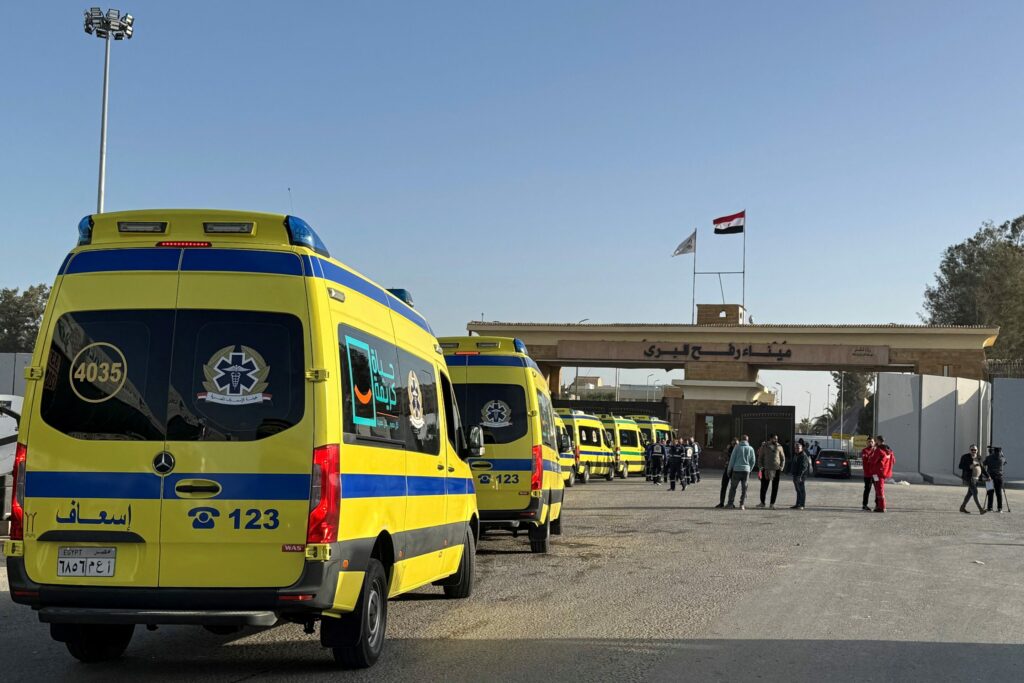
Traffic at the Rafah border crossing between Gaza and Egypt, with staff from the EU Border Assistance Mission (EUBAM) supervising the crossing, has not increased since it was opened for citizen movement on Monday.
The opening was agreed between Israel and Egypt and is currently limited to between 150 and 200 people in both directions.
Sick and wounded people with their escorts are allowed to leave, and people who left Gaza during the war are allowed to return. EUBAM currently deploys 30 experts in border management and security from 11 EU Member States.
EUBAM monitors the movements and reports to the European External Action Service (EEAS). On the first day, fewer than 20 people crossed the border in each direction.
Since then, the figures have been more or less the same: 40 in and 40 out on Tuesday, 25 in and 25 out on Wednesday, and 21 in and 21 out on Thursday. The number of people allowed to cross the border almost equates the EUBAM personnel.
The EU mission is mandated to support (monitor and advise) the Palestinian border personnel to operate the Rafah Crossing in line with applicable provisions and has no executive mandate to enforce procedures, The Brussels Times was told.
It is not present at the Israeli military checkpoint, established beyond the crossing on the Gaza side, where returning Palestinians are questioned.
The numbers are decided by Egypt and Israel, who have an interest in limiting them for political reasons. The actual demand of people who need to leave Gaza for medical treatment abroad or want to return to Gaza to reunite with their families is far higher.
EUBAM says that it has no influence on the number of people allowed to cross, but is ready to support any increase in traffic should Egypt and Israel agree.
In the meantime, the ceasefire between Israel and Hamas continues to be fragile and is violated by both sides. On Wednesday, Israel carried out strikes against Hamas militants after an incident where they had opened fire, which wounded an Israeli soldier.
The strikes targeted Hamas, but the majority of the more than 20 Palestinians who were killed were civilians.
