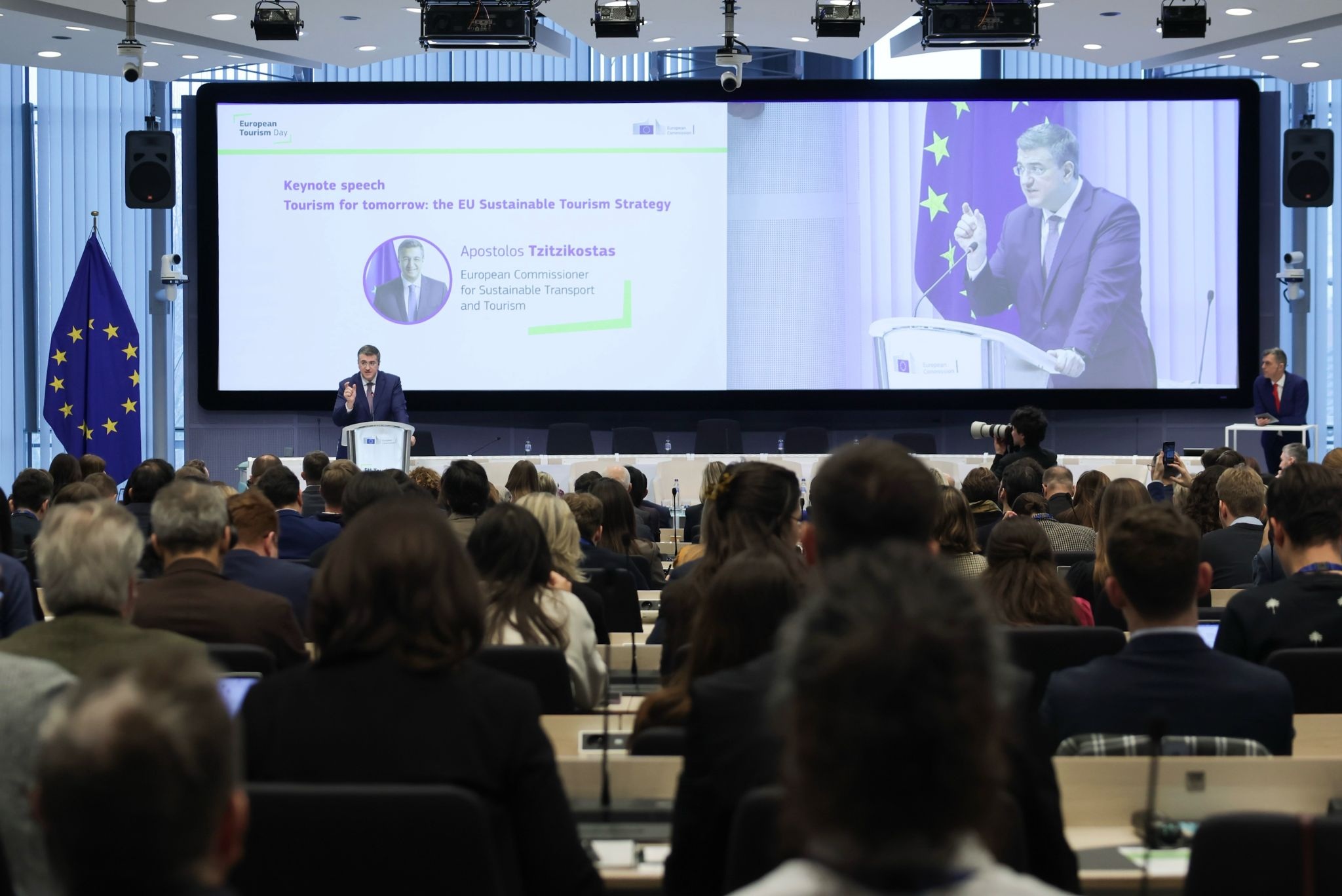
“Tourism is a pillar of Europe’s competitiveness, cohesion, and global influence,” declared Sustainable Transport and Tourism Commissioner Apostolos Tzitzikostas on Monday (26 January), opening European Tourism Day — the European Commission’s flagship biennial event.
Held in Brussels, this highly anticipated event brought policymakers, city representatives, destination managers and industry experts together to explore how Europe can shape the tourism of tomorrow. Attended by around 450 participants, with many more following online, the event marked a key step towards finalising the EU’s upcoming Sustainable Tourism Strategy, due in Spring 2026.
With insights from senior dignitaries including a member of the European Parliament, The Deputy Minister of Tourism of Cyprus, the Mayor of Dubrovnik, and the Secretary-General of UN Tourism, a packed programme spanned political debate, expert panels and business perspectives from industry leaders and the CEOs of major travel and hospitality companies. Discussions ranged from sustainability and investment to digital transformation, accessibility and rebalancing tourism flows. With tourism contributing close to 10% of EU GDP, the message was clear: tourism is not a niche policy field, but a strategic sector central to Europe’s economic strength, cultural vitality, social cohesion and global identity.
In his keynote speech, Commissioner Tzitzikostas set out his vision for the decade ahead. Building on the EU Agenda for Tourism 2030, the forthcoming strategy aims to reinforce Europe’s global leadership while safeguarding the environment and protecting the heritage and well-being of local communities. Its objective: a tourism model that is globally competitive, sustainable and inclusive.
Four priorities will guide the roadmap: boosting competitiveness and sustainability; tackling labour shortages and improving workers’ skills; harnessing data and technology and also strengthening Europe’s global image as a rich and diverse destination. The Commissioner highlighted plans for major initiatives to project Europe worldwide as a safe and sustainable place to visit. These include an expanded European high‑speed rail network linking EU capitals and a single digital ticketing system enabling seamless, cross‑border multimodal travel. “You cannot have a world‑class tourism destination,” Commissioner Tzitzikostas noted, “without seamless, sustainable mobility.”
Work is also advancing on a common European data space for tourism, with shared data frameworks and AI initiatives designed to help destinations manage visitor flows more effectively. Examples were given of innovative digital tools including the Dubrovnik Pass and ‘Julia’, the virtual assistant for Rome that can promote the best experience and impressions of a location. Encouraging travellers to explore lesser‑known areas and hidden-gem destinations was outlined as a way to ease pressure on hotspots and spread the distribution of benefits, while supporting local communities and preserving Europe’s natural and cultural assets. Protecting heritage and community are seen as vital with the Commissioner adding that: “Decisions that harm local communities are, by definition, bad tourism decisions.” Efforts to cut emissions, regenerate landscapes, develop ecosystems and strengthen environmental responsibility will also form core elements of the strategy.
The event highlighted impressive projects such as the Colourful Culture’s regenerative platform empowering artisans in Croatia, accessibility initiatives on Skiathos Island in Greece and the development of green spaces and hiking trails in Vilnius City, Lithuania. It also examined the significant impact that the film industry can have on the industry, listing the spikes in job creation, investment in the local economy and holiday bookings that resulted from the TV programme The White Lotus, filmed in Sicily. Additionally, the forum highlighted how tourism can unite community — how, even in places of conflict, it can thrive and be an engine for hope, as is the case in Ukraine with the developoment of memory route and memory site projects.
Beyond the formal programme, European Tourism Day served as a platform for exchange and cooperation — showcasing projects in smart destination management, sustainable mobility and community‑focused regeneration. Exhibitions in the foyer revealed initiatives already contributing to Europe’s tourism transition — with AI and VR-based teletransportation experiences, smart tourism and green pioneer locations highlighting how digital tools and local initiatives can help drive Europe’s broader tourism transition.
Throughout the day, one message resonated: delivering the EU’s tourism ambitions will require cooperation across borders, sectors and levels of governance. EU frameworks must support local action, offer practical tools and align with funding mechanisms. Success will hinge not only on stakeholder engagement but on collective commitment to put ideas into practice.
As the Commission prepares to finalise its strategy, European Tourism Day sent a strong signal: Europe’s tourism future will be shaped by collaboration, shared responsibility and a common vision. The challenge now is to turn that vision into action — ensuring that Europe’s tourism of tomorrow is competitive and inclusive, while staying firmly rooted in the communities that make it unique.
By Lucie Touhy
