
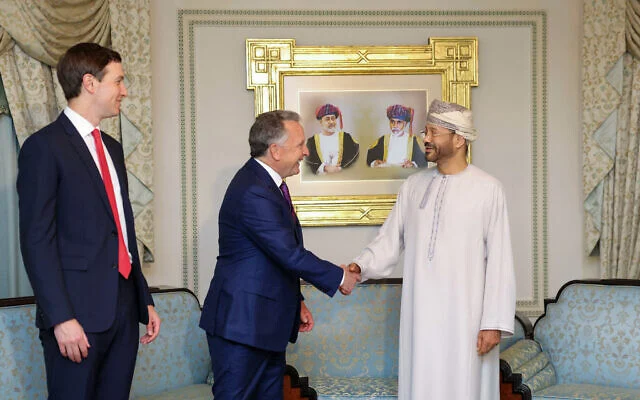
The US-Iran talks mediated by Oman last Friday ended on a positive note, indicating that the talks would continue this week, but no date was set. Disagreement about the negotiations' scope might derail them before they restart, which could ignite a regional war.
Iran’s foreign minister, Abbas Araghchi, said after the talks that the negotiators would return to their capitals for consultations. In Iran, the scope of the mandate will be decided by the supreme leader, Ali Khamenei, the 86-year-old Ayatollah. The regime is still in turmoil after its brutal crackdown on the protest movement, and threatens to respond with regional war if the US launches an attack against it.
The talks focused on Iran's nuclear programme, where the enrichment of uranium was crucial. On Sunday, the Iranian foreign minister sounded less optimistic and stated that Iran will not give up its right to enrich uranium on its territory, even in the face of war.
"Iran has paid a very heavy price for its peaceful nuclear programme and for uranium enrichment," he claimed. "No one has the right to dictate our actions."
In fact, Iran is already a nuclear threshold state and is believed to hide 440 kg of uranium, which has been enriched up to 60% or near bomb grade, enough for multiple weapons, according to a report by the International Atomic Energy Agency (IAEA) last year. For now, domestic enrichment of uranium is a "red line" for Iran.
Mistrust between the parties is high after previous talks last year on Iran’s nuclear programme passed a two-month deadline set by US President Donald Trump without any agreement. The collapse of the talks was followed by the Israeli attack on 12 June against Iran’s nuclear and missile programmes. The US joined the war with strikes against nuclear sites in Iran. After 12 days, Trump imposed a ceasefire.
The talks in Oman were "very good," according to Trump. "Last time, they decided maybe not to do it, but they probably feel differently. We’ll see what the deal is. It’ll be different from last time."
In the meantime, American forces have arrived in the region, and the military build-up continues – giving Trump military options if the talks fail.
He says that he is in no rush and referred to Venezuela, where "we waited around for a time". Trump is known to be unpredictable, leaving many to question his decisions. Experts believe that he first wants to exhaust diplomacy before launching a strike. To increase pressure, he has imposed 25% tariffs on any country which trades with Iran.
In the meantime, Israel’s Prime Minister Benjamin Netanyahu surprisingly decided to travel to the US to meet Trump on Wednesday to discuss the latest developments and "ensure Israel's interests".
Israel – which, like other countries in the region, dissuaded Trump from striking Iran two weeks ago – says that it would not strike first but is on alert and prepared to intercept Iranian missiles in case of an Iranian counter-attack after a possible American strike.
The maximum American conditions for a diplomatic agreement do not meet the minimum conditions that are acceptable to Iran.
In 2018, Trump withdrew the US from the nuclear deal, encouraged by Netanyahu, who claimed that it was not good enough. The Joint Comprehensive Plan of Action (JCPOA) limited Iran's nuclear program in exchange for sanctions relief but included sunset clauses that allowed Iran to resume enrichment.
To claim that he has solved the conflict, Trump might this time settle for a permanent solution of only the nuclear issue in return for lifting the economic sanctions – something that Iran desperately needs.
Iran would have to hand over its uranium and ensure that its nuclear programme is strictly monitored by the IAEA and intended for civilian purposes.
The worst scenario is another temporary solution to the nuclear issue while leaving the other issues on the table unsolved: Iran’s unlimited production of ballistic missiles, its support to terrorist organisations in the region and the continued mass arrests and punishment of protestors and their families.
Since the June war last year, Iran has restored its missile arsenal, which has become a more immediate threat than its uranium.
For the protestors, leaving the last issue outside the scope of the talks would be a betrayal after Trump encouraged them to protest.
The Iranian regime refuses to include the other issues in the talks because they are crucial for its deterrence and survival. Asked if the EU has any common position on the scope of the US-Iran talks, the Commission’s foreign affairs spokespersons declined to reply and repeated the EU’s position on Iran’s legal obligations to accept a lasting negotiated solution of the nuclear issue.
