
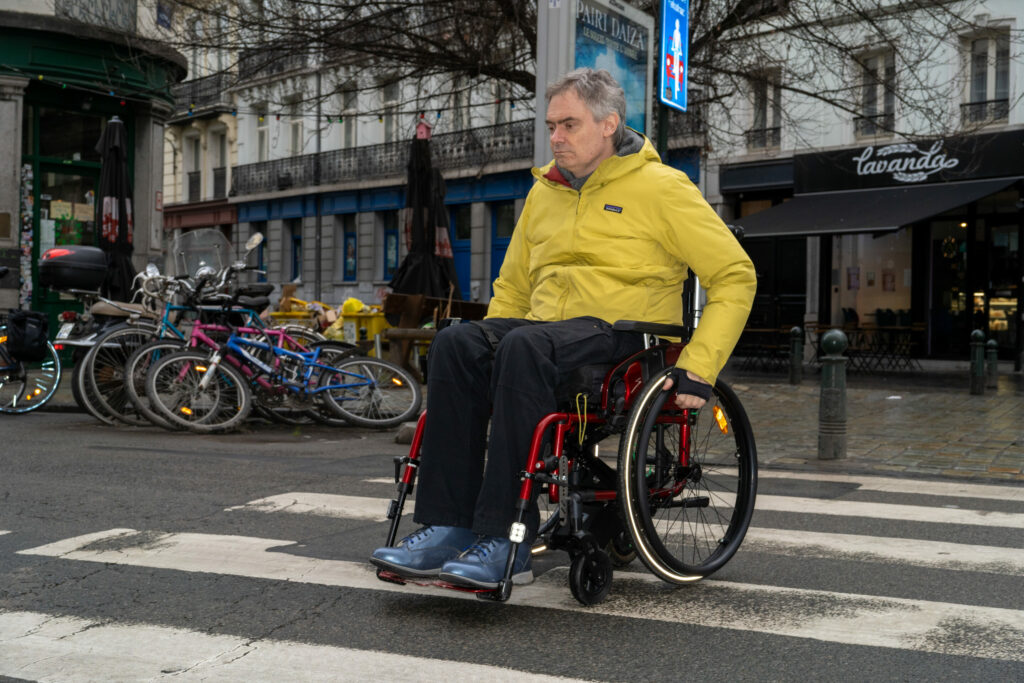
"Do you know L’Archiduc?” asks David Seffer, his face lighting up as we approach the end of the street. My shake of the head takes him by surprise. “You don't know Brussels then,” he says jokingly.
Seffer is, of course, referring to the iconic Art Deco bar established in the centre of the Belgian capital in 1937, and still a staple for jazz lovers to this day.
The first time Seffer, 54, stepped into the bar was almost by chance. The Ostend native was a student in Leuven in the summer of '92, when he found out his Guns N’ Roses gig was cancelled. He can't recall why exactly: "Maybe Slash, the guitarist, broke his hand,” he says. But he still remembers the night that ensued instead: the first time he went to Brussels.
At some point in the night, Seffer, then in his 20s, found himself with a group of friends at the jazz bar on Rue Antoine Dansaert.
"There was this piano player, and nobody was paying attention to him. We sat around the piano, and he played anything we asked, if it was punk, rock, jazz, or classical. He played everything. It was amazing,” he says.
That night forever shaped the course of his life: it made him want to move to Brussels. So that's exactly what he did. He made the capital his home in the late 1990s, and almost 30 years and two children later, he says he has never considered leaving.
But these days, he rarely returns to his favourite jazz bar. In fact, he tends to avoid bars in the city altogether, because as a wheelchair user, he finds it hard to relax and enjoy a night out when there are no wheelchair-accessible toilets.
What came first: The chicken or the egg?
Seffer was diagnosed with multiple sclerosis (MS) in 2008. The incurable neurological condition, affecting around 13,500 people in Belgium, gradually leads to a variety of problems, which can affect a person's vision, balance, or mobility.
The condition has left Seffer wheelchair-bound for the last four years. “I used to have quite a busy social life," he says. "I used to go out a lot, but all the bars I went to, all the restaurants I went to, it's finished. It's just not possible anymore."
While the lack of wheelchair accessible bathrooms is the main thing that often keeps him indoors, Seffer also points to the insufficient number of accessibility ramps around the capital as another big challenge.
He cannot just decide to go somewhere on a whim – he always has to plan ahead. “It's strange, and it feels like passive aggression,” he says. “Every time you cannot just go into a place. Or also the time you spend just calling [ahead of time]: Do you have a ramp? Do you have an accessible toilet?”
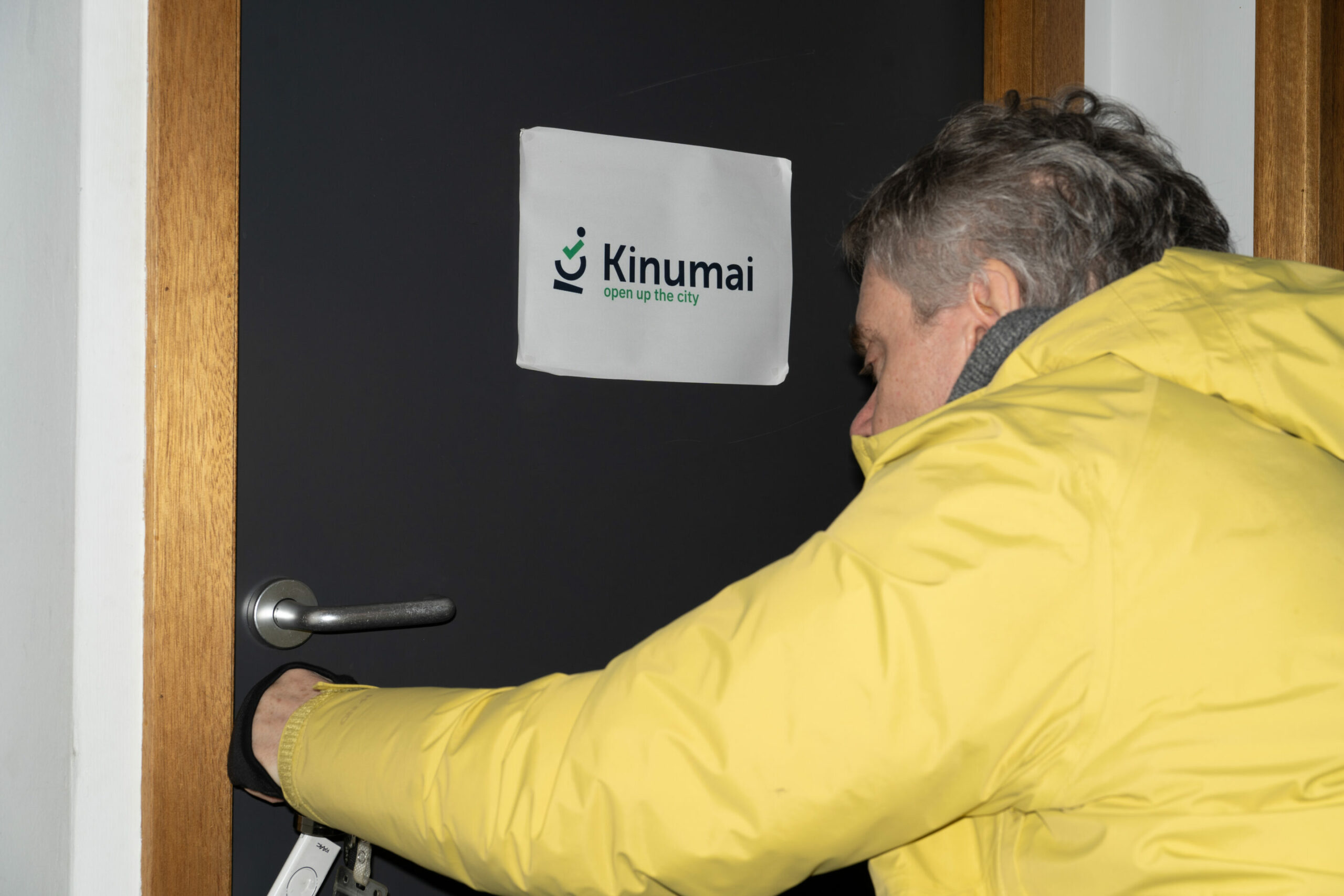
Seffer at the Kinumai office. Credit: Vicente Torre Hovelson/The Brussels Times
In 2020, Seffer decided to take the challenge to “open up the city” for wheelchair users into his own hands and founded, with an old friend, the non-profit Kinumai. In addition to raising awareness, the organisation sells temporary ramps to establishments across Brussels.
While some have embraced Kinumai's mission, Seffer has encountered a lot of resistance over the years.
“Shops often say, ‘No, we don't want a ramp. We never see people in wheelchairs.’ But that is like the chicken and the egg [dilemma],” he says. “Of course, you don't see wheelchair users because they cannot access the places.”
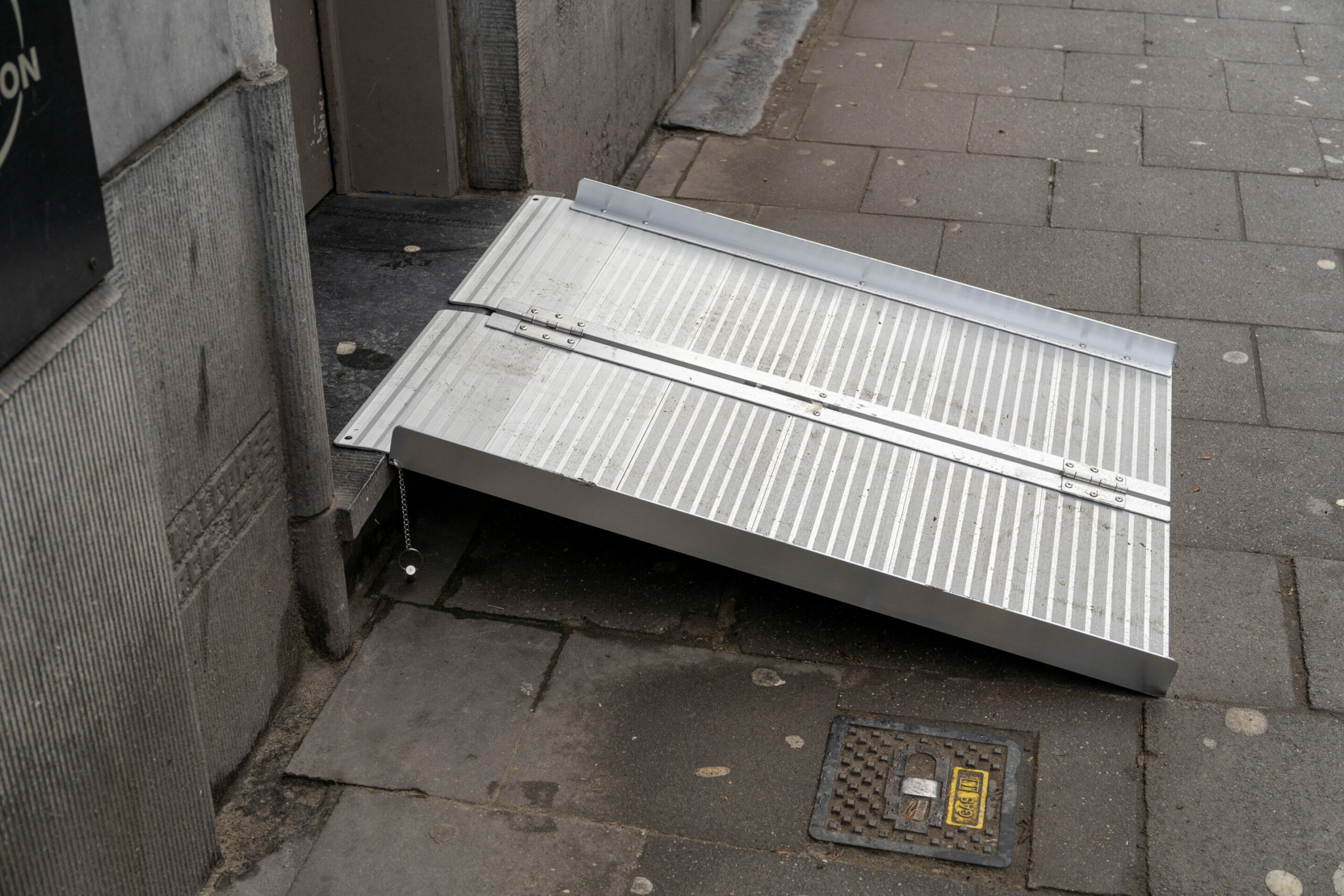
A ramp that Kinumai installed in a pharmacy in the centre of Brussels in February 2026. Credit: Vicente Torre Hovelson/The Brussels Times
The exact number of wheelchair users in Brussels can only be estimated based on reimbursements for mobility aids, according to the organisation Iriscare.
Between 1% and 1.5% of the Belgian population is wheelchair-bound, according to Seffer's estimates based on reimbursement data from the National Institute for Health and Disability Insurance (RIZNIV).
Brussels' obstacle course
Seffer runs Kinumai from an office in the centre of Brussels, a wheelchair accessible space. However, the pavements just outside are a different story, he tells The Brussels Times as we take a trip into the centre of the city together.
"They tilt towards the gutter to let the rain water flow…and so when you're in a wheelchair, you are constantly pushed towards the cars,” he says. “I also have weakness in my arms due to my MS, so it's very hard, because I constantly have to counter-push.”
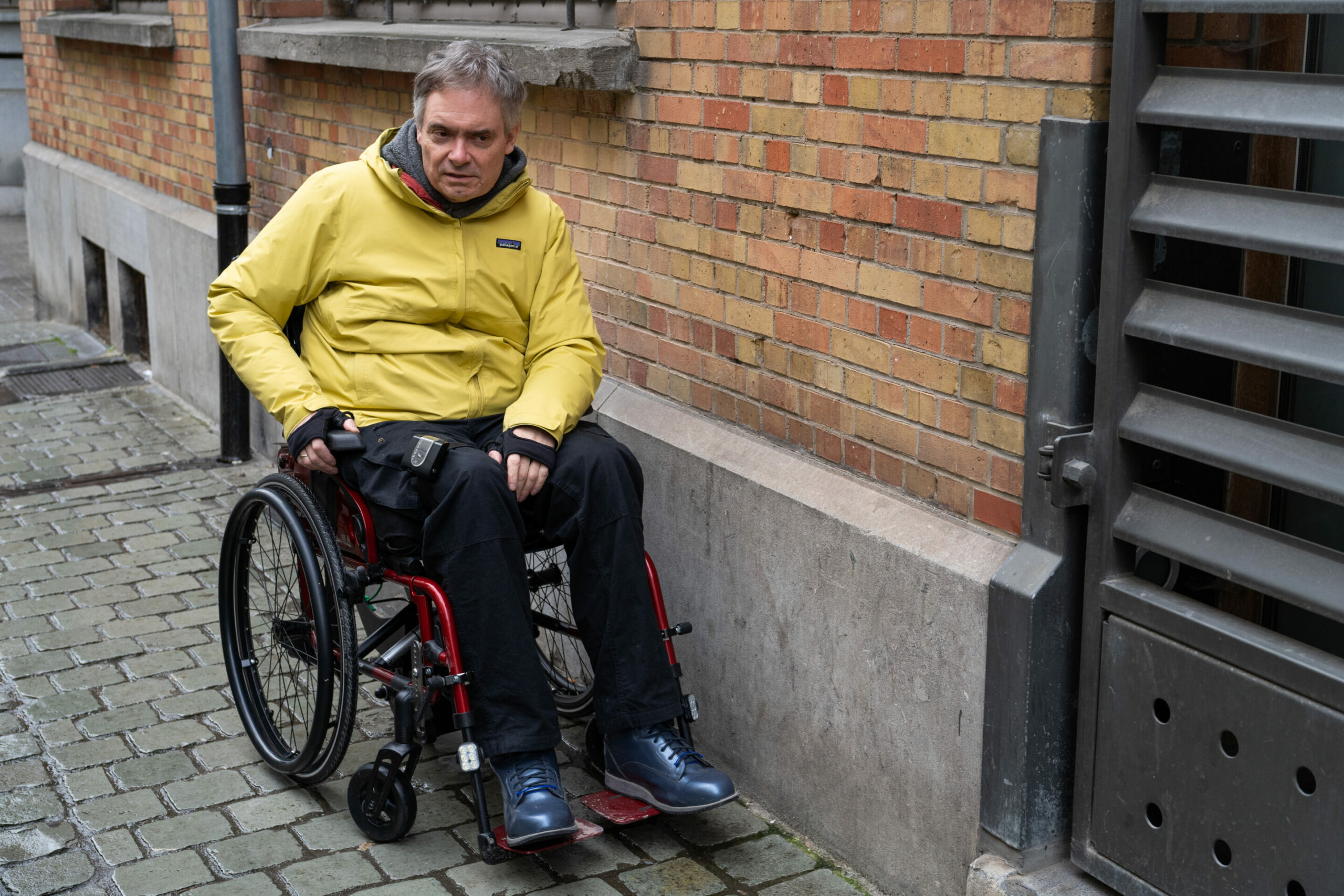
Seffer took a trip to the centre of Brussels with The Brussels Times. Credit: Vicente Torre Hovelson/The Brussels Times
As he rides over the Brussels pavement stones, his body jolts due to the vibrations. “It's not comfortable,” he says, adding that the movement loosens the screws on his chair over time.
But the challenges don't stop there. There are rubbish bags on the streets, terraces on narrow pavements, and even the occasional missing cobblestone along the way.
“You constantly have to watch out. It's like for you, if the pavement were packed with hundreds of dog poos. You would not be able to look at the shops or anything around you. You would just have to watch out.”
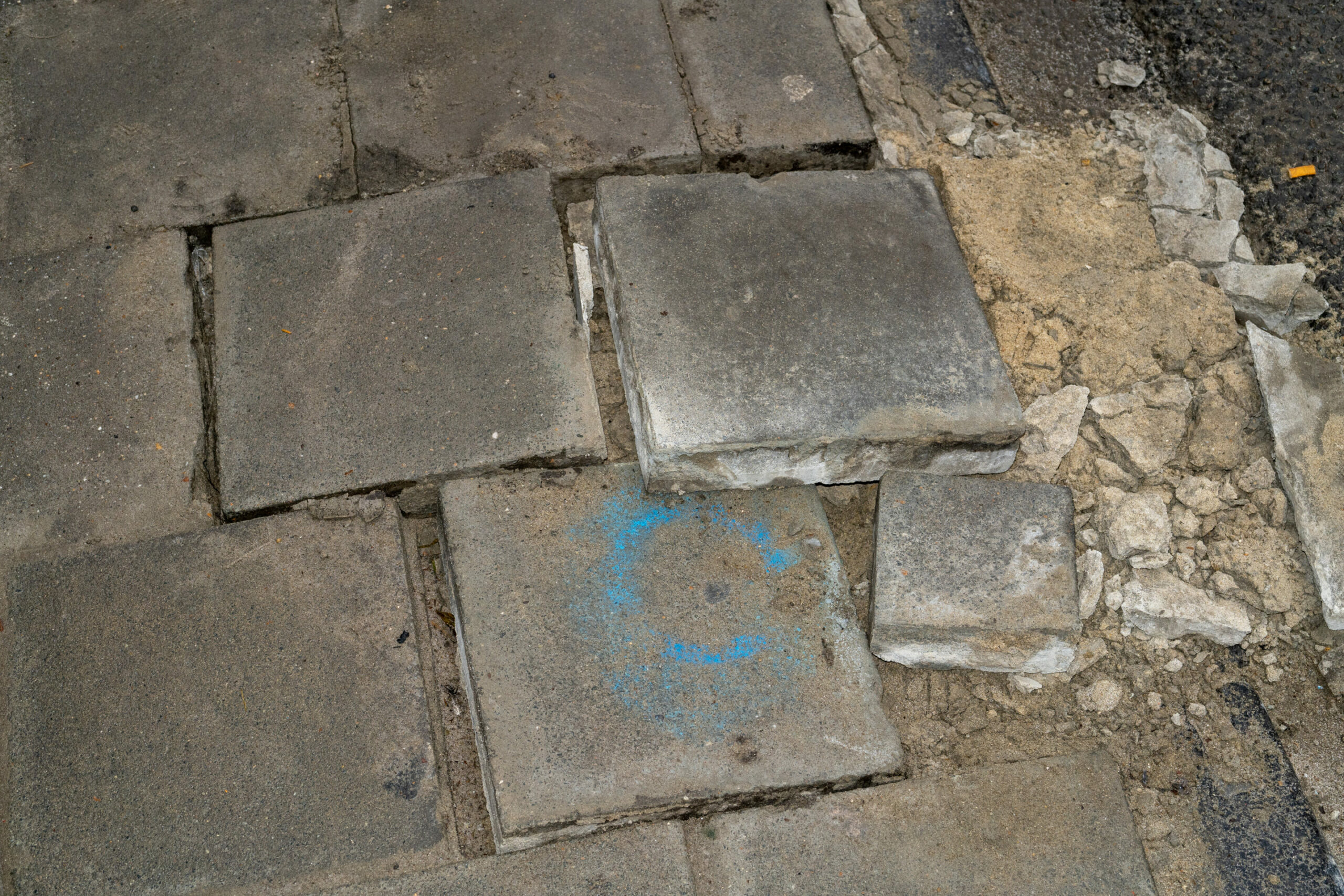
A broken pavement. Credit: Vicente Torre Hovelson/The Brussels Times
The obstacles on the pavement mean that the road is often the smoothest path to take. Seffer's wheelchair is equipped with lights for visibility on the road. His clothing is also chosen for that purpose. "I like to wear black normally, but you're not that visible,” he says, wearing a yellow jacket.
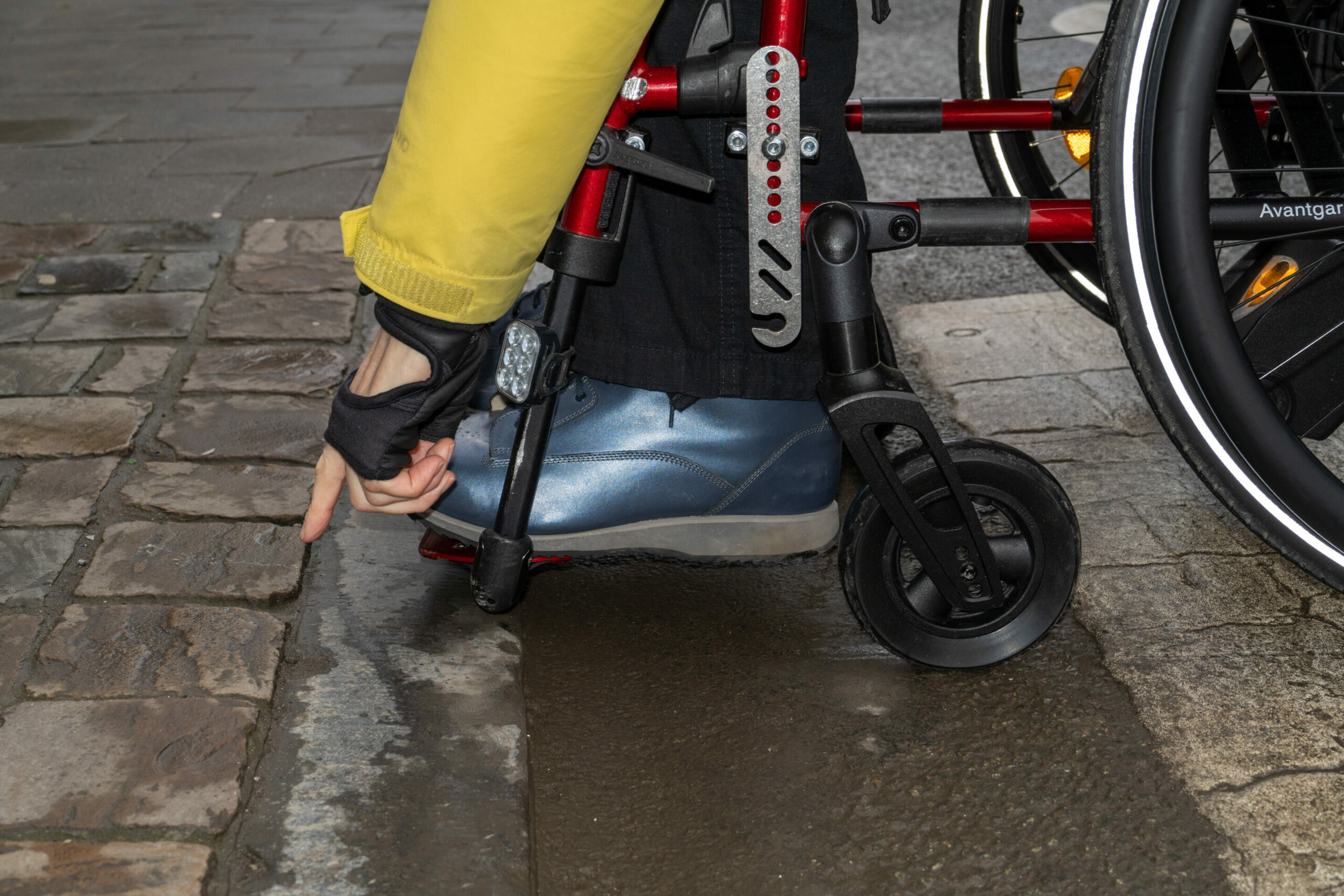
Seffer pointing to a kerb in Brussels showing how the cobblestones right behind it create a type of second kerb that he needs to mount. Credit: Vicente Torre Hovelson/The Brussels Times
During our trip around Brussels, I notice that before crossing a street to mount a kerb, Seffer often stops to evaluate his options, trying to find the safest and easiest way around. But on two occasions, his footrest collides with the ground, as kerbs can be hard to judge from a distance.
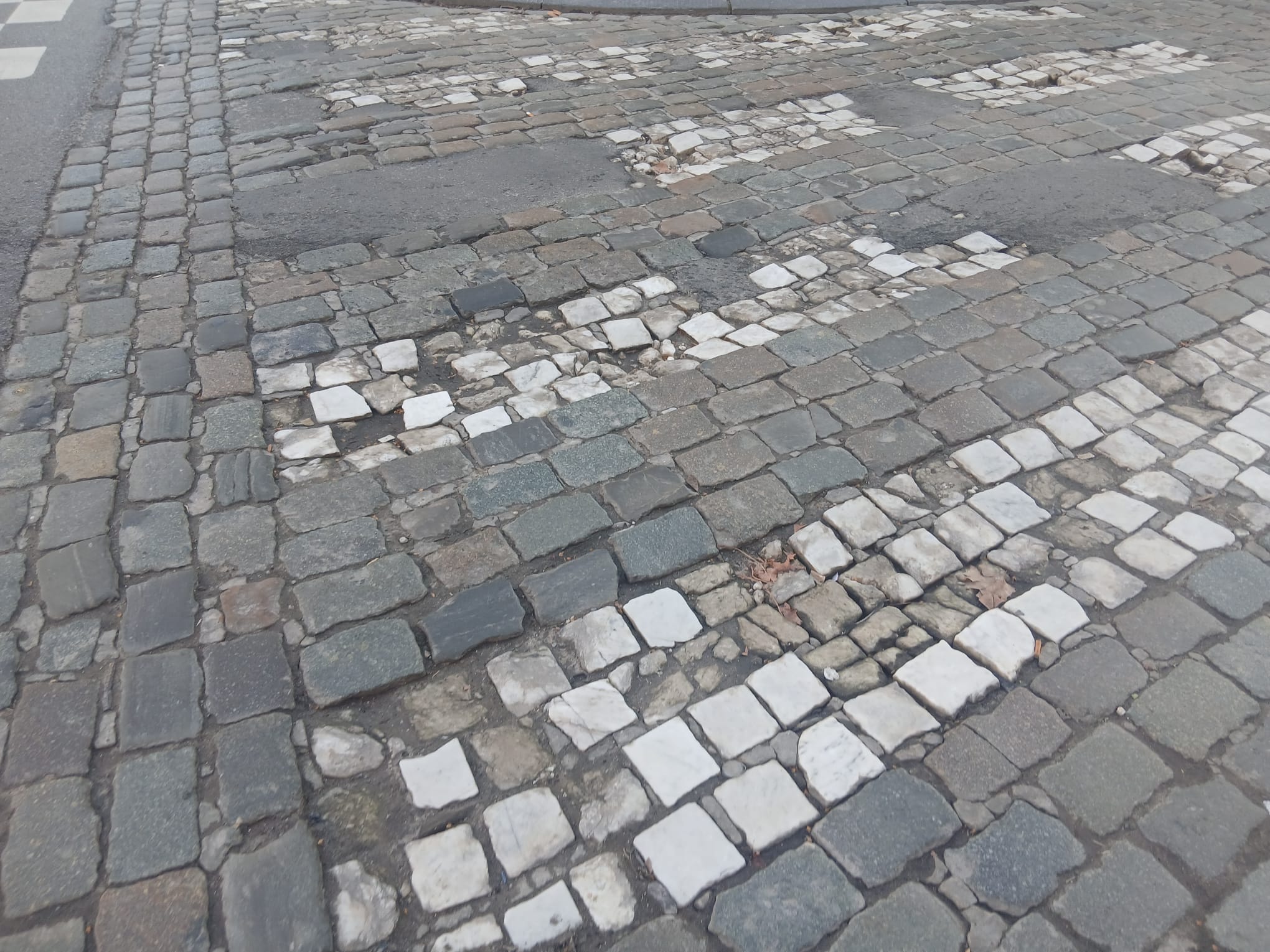
A not very smooth zebra crossing in the city centre of Brussels. Credit: Rita Alves/The Brussels Times
The mental and physical effort required to move around Brussels means Seffer's routes are not as flexible as they used to be. “I avoid every part [of Brussels] I do not know by heart,” he says.
Surprise improvements
Despite the many challenges, Seffer still considers Brussels relatively accessible compared to other places in the country.
This is in part due to the longer stretches of roads and pavements, accessible large cultural venues, as well as the options for wheelchair users to travel within the STIB transport network, including the TaxiBus service for those with disabilities.
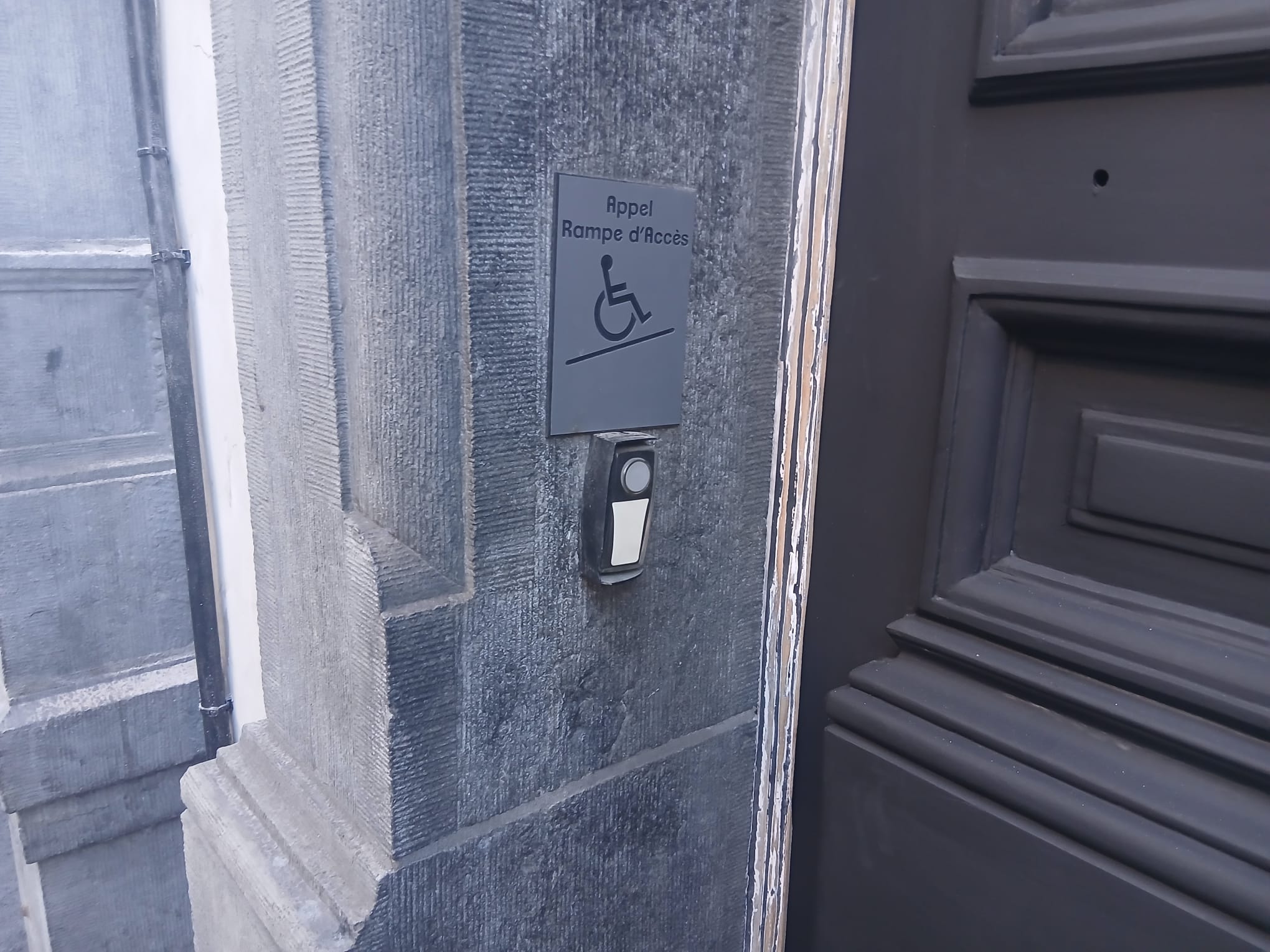
A doorbell with the words "call for access ramp" is seen by a building in the city centre of Brussels. Credit: Rita Alves/The Brussels Times
He also emphasises that some improvements have been made around the capital. An example is part of the area by the Brussels City administrative centre, where the roads have been made smoother and "lifted” to be more level with the pavement.
Seffer isn't sure whether the change was made with the goal of accessibility in mind, but he welcomes it nonetheless.
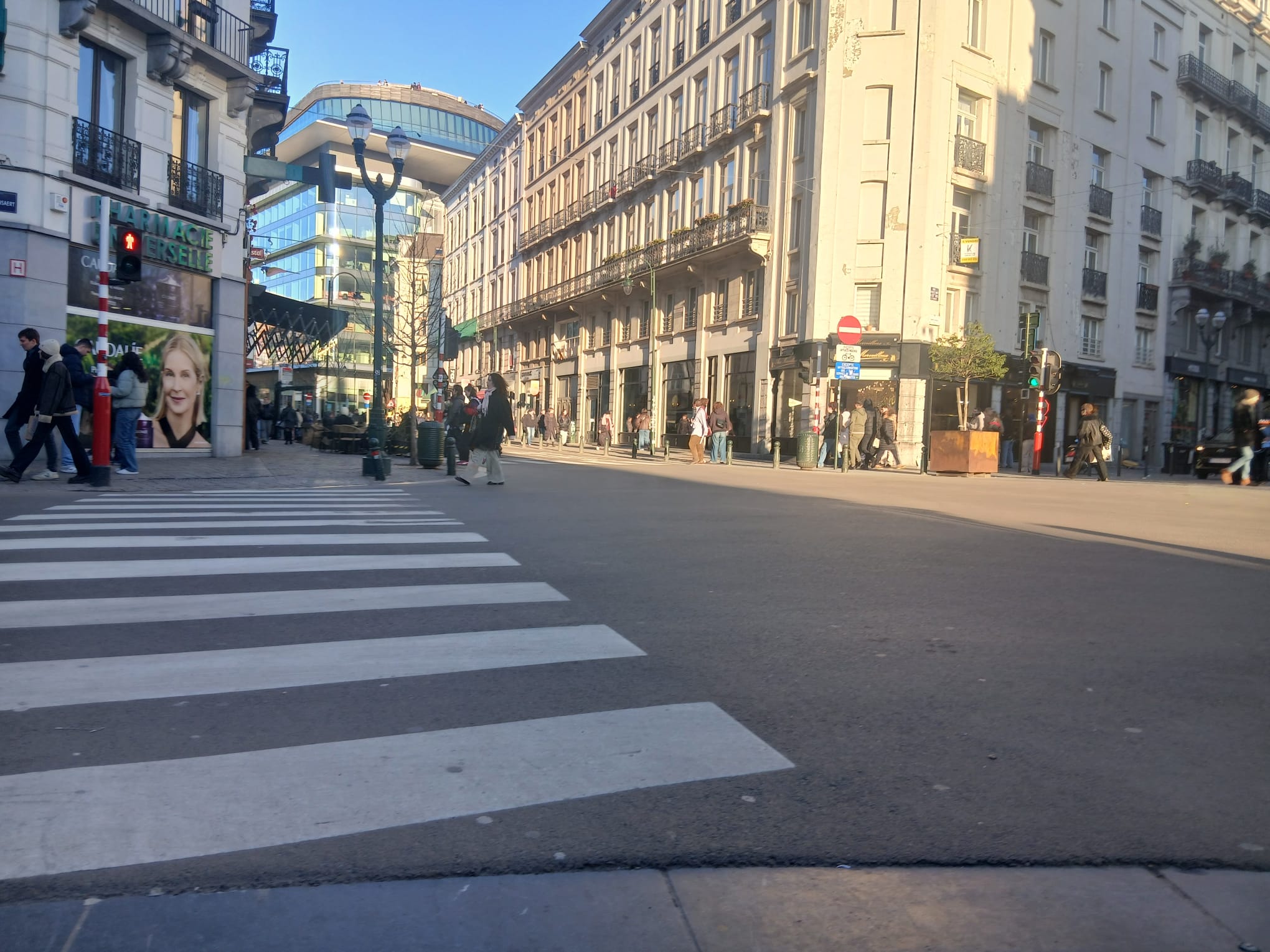
Area near the Brussels City administrative centre with quite flat and smooth surfaces that are at the level of the pavement. Credit: Rita Alves/The Brussels Times
While he acknowledges that making areas more accessible is not always simple – due to, for example, laws protecting heritage sites – after seeing the approaches in other countries, such as Canada, where he went on holiday a few years ago, he believes more can be done here in Brussels.
“I remember we walked to this lake in the middle of nowhere…and they actually had a pontoon, and there was a lift to lift you from your wheelchair into the water…and it was functioning…I thought, wow, that's unimaginable,” says Seffer.
Change on the horizon?
The Belgian constitution already outlines the principle of accessibility in the country. It states: “Every person with a disability has the right to full inclusion in society, including the right to reasonable adjustments.”
While accessibility boards, regulations, and organisations exist across Belgium, the challenges Seffer describes suggest the principle is not always followed.
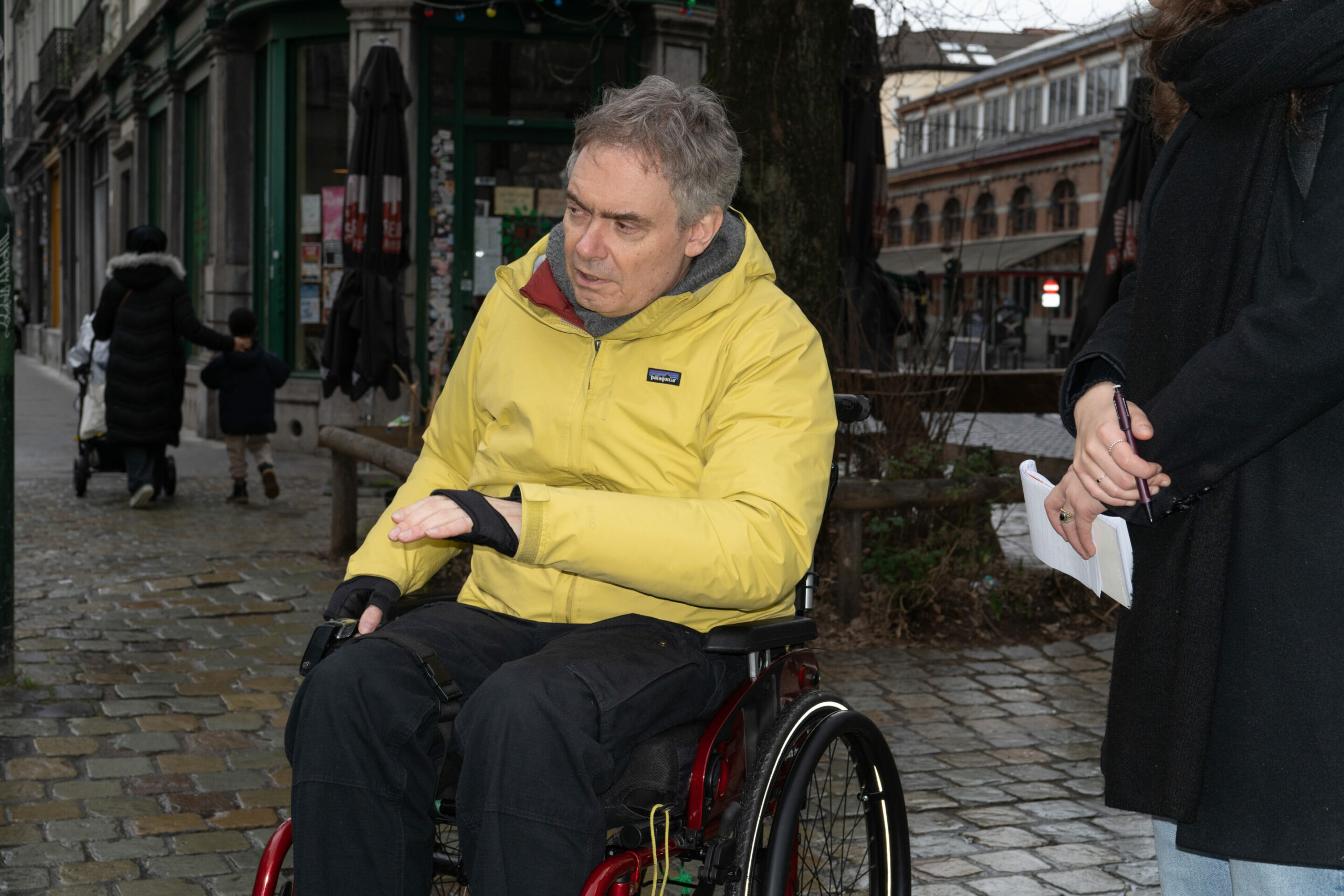
Seffer speaking to The Brussels Times. Credit: Vicente Torre Hovelson/The Brussels Times
When asked about wheelchair accessibility in Belgium, Federal Minister for People with Disabilities, Rob Beenders (Vooruit), told The Brussels Times:
“We are more or less the worst country in Europe for people with disabilities. First of all because of accessibility. Our streets and sidewalks, our buildings, the train stations: none of them are adapted.
"It is ridiculous that someone who uses a wheelchair has to reserve their train in advance. We really need to push forward now, no more tinkering at the margins. It is time for a thorough transformation.”
Beenders added that he wants “to sign a binding protocol with the regions stating that our society will be given ten years to adapt.”
This would mean that after the adaptation period, owners of a building, local authority, or companies that are not accessible would "be held liable and sanctioned”.
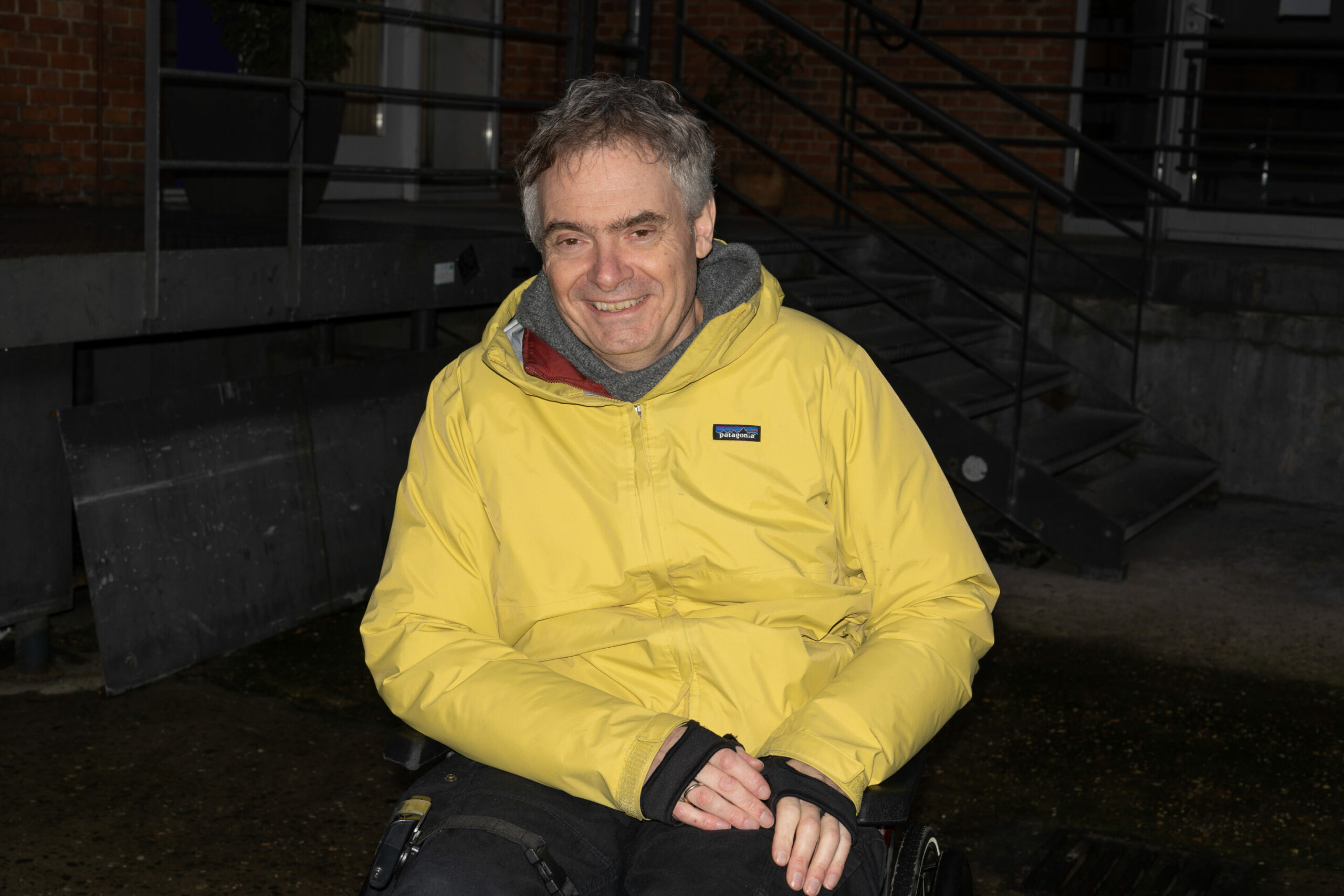
David Seffer. Credit: Vicente Torre Hovelson/The Brussels Times
Nonetheless, in the meantime, Seffer will continue his work through Kinumai. Among his initiatives, he is now trying to recruit runners who want to push a wheelchair user during the Brussels 20k run to raise awareness for a more accessible city.
How does Seffer keep himself going after years of challenges and rejection? “It's, well, hope,” he said. “Hope that it could make a difference, or that just a few more places…become accessible.”
The Brussels Times contacted the bar L’Archiduc, the regional group for equal opportunities equal.Brussels, and the (at the time outgoing) Brussels-Capital Region ministers for urban development, Ans Persoons, and mobility, Elke Van den Brandt, for comment. We did not receive replies at the time of publication.
