
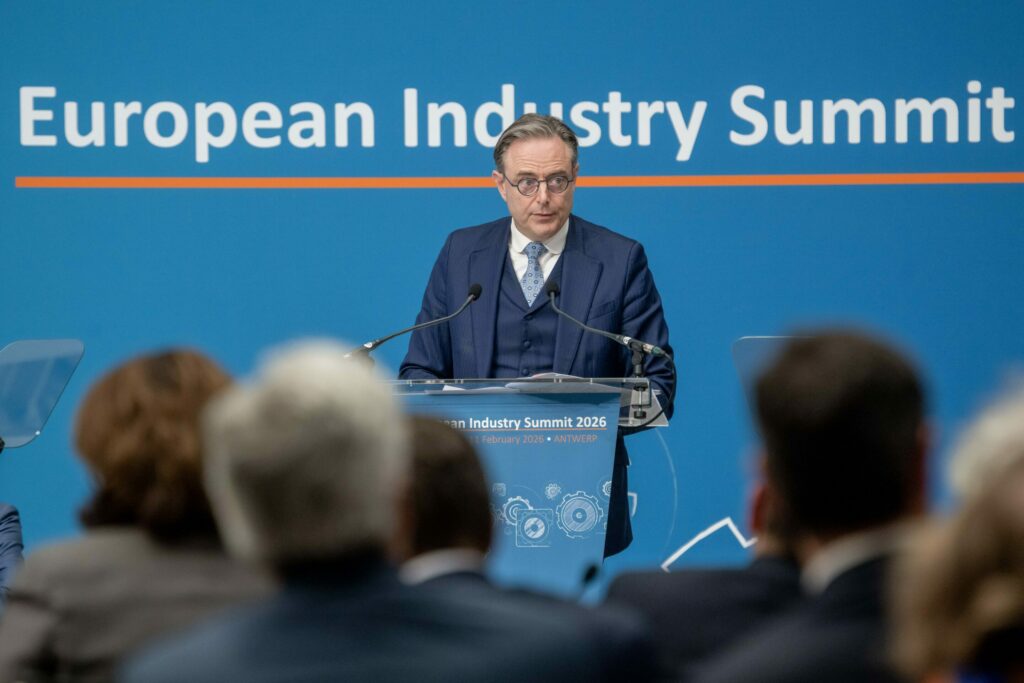
This week, the capital of Europe is not in Brussels, but in Limburg. At the initiative of Belgium's Prime Minister Bart De Wever (N-VA), EU leaders and top officials are gathering on Thursday in a historic castle in the Flemish countryside to discuss competitiveness.
The two-day informal summit started on Wednesday with the European Industry Summit in Antwerp. CEOs from the largest Belgian and European companies gathered to discuss what political action is needed to help industry.
"If we want to talk about the future of our industry, we must first believe that our industry is the future," said De Wever during his closing remarks on Wednesday.
"A year ago, I was not yet convinced that this belief was so widespread. Today, I am slightly less sceptical, but this growing belief must now lead to urgent action," he added.
'Snacks in a castle'
To discuss this urgent action, De Wever is hosting European Commission President Ursula von der Leyen, French President Emmanuel Macron, German Chancellor Friedrich Merz, Italian Prime Minister Giorgia Meloni and other heads of state and government in the imposing Alden Biesen Landcommandery.
There is one single theme on the agenda: competitiveness. However, there are no surprising new proposals expected. In 2024, former European Central Bank President Mario Draghi – who will also be present at Alden Biesen – published his much-discussed "Draghi report," listing possible measures to make the EU more competitive.
In the face of the austerity measures that De Wever has imposed in his own country, his push for EU-wide competitiveness and deregulation (with support from Merz and Meloni) has drawn harsh criticism in Belgium.
"On the menu at the gathering: snacks in a castle, while workers suffer from short-sighted budgetary austerity measures," said Bert Engelaar, president of the General Labour Federation of Belgium (ABVV-FGTB) in a press release.
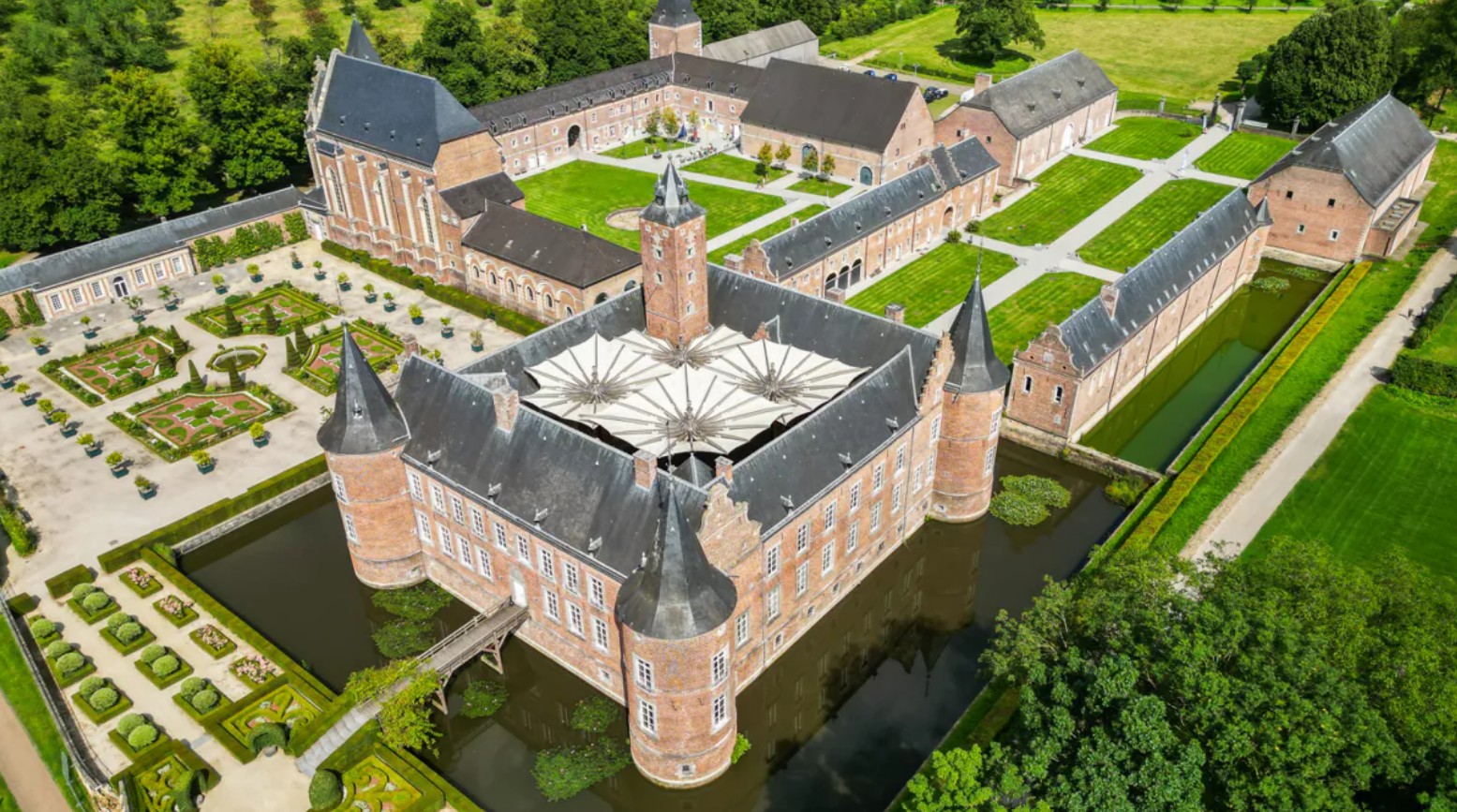
Alden Biesen. Credit: Belga
"We would like to remind you of an essential reality: without workers, there is no industry. When industry weakens, the entire European model falters," he stressed, adding that industry is an essential part of the socio-economic fabric and brings together research and innovation.
Engelaar emphasised that deregulation, unconditional government support, pitting workers against each other and the obsession with competitiveness are "recipes that do not work and do not stop the disappearance of know-how and jobs."
"Europe will not succeed in its industrial transition or its climate transition without social justice," he said. "While the snacks cool on silver platters, the driving forces of industry are ready to roll up their sleeves."
The agenda of the summit has also been criticised from within the European Parliament. The Socialists and Democrats (S&D) called for a renewed economic direction to respond to geopolitical fragmentation, climate change, technological disruption, and slower growth.
'This is not competitiveness'
In a letter to European Council President António Costa, S&D Group President Iratxe García stressed that competitiveness cannot be reduced to costs or deregulation, but must focus on improving living conditions, creating quality jobs, strengthening strategic autonomy, and ensuring long-term resilience.
"Today in the European Union, 8.2% of workers are at risk of poverty, and 9.2% of Europeans cannot afford to heat their homes in winter. Since 2015, housing prices have risen by more than 63%, making access to a home a social emergency," García said.
"This is not competitiveness. Competitiveness must never mean impoverishing the people who sustain our economy," she said.
In a separate letter, the Greens/EFA stressed that EU leaders have mainly misused the Draghi report's simplification to push forward deregulation so far.
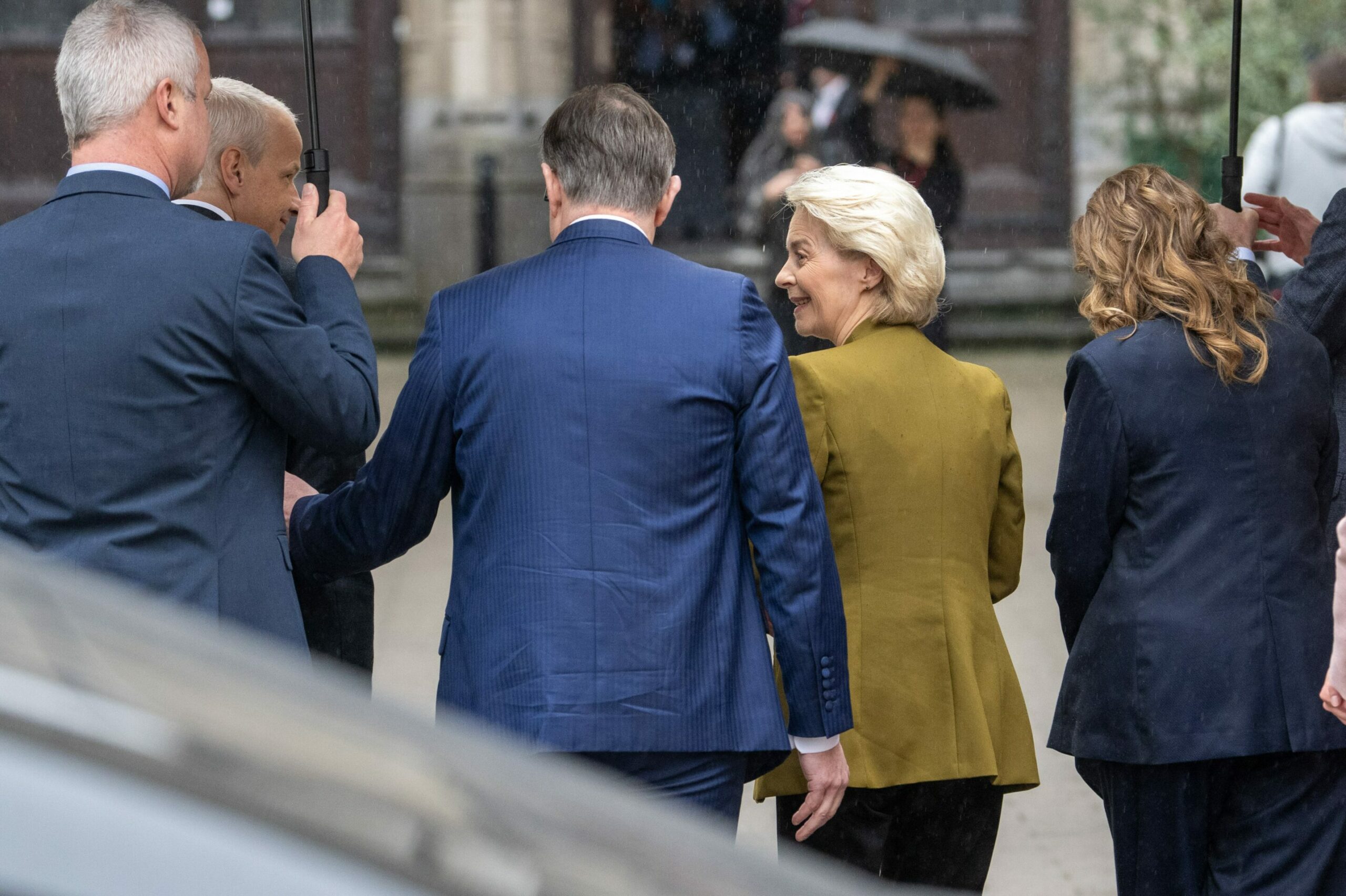
Belgian PM Bart De Wever and European Commission President Ursula von der Leyen arrive for the European Industry Summit, Wednesday 11 February 2026. Credit: Belga/Jonas Roosens
"This plays exactly into [US President Donald] Trump's cards and deeply divides Europe, one omnibus at a time – instead of regaining autonomy on the international stage," said Greens/EFA President Bas Eickhout.
“We need an independent Europe, free from reliance on foreign fossil oligarchs and autocrats. With a strong green industry that can compete with China and the US," he added. "Europe will only be free when we are fossil-free."
"We need to drive innovation with massive common 'buy European' investment programmes based on common debt. We must support European industry that is clean, that provides decent jobs and guarantees our strategic autonomy," Eickhout said. "European taxpayers' money should support European Industry, not our competitors in the US or China."
