
After over 600 days of twists, turns and (mostly) standstill, Brussels finally has a new Regional Government.
Since Tuesday morning, seven political parties have been locked up in a conclave – set up by MR leader Georges-Louis Bouchez – to negotiate a government agreement. Over 20 months after the June 2024 elections, these negotiations finally led to a new government for the Brussels-Capital Region, Bouchez announced on social media.
There are seven parties in the new Brussels Government: on the French-speaking side are MR (liberals), PS (socialists) and Les Engagés (centrists). On the Dutch-speaking side, it involves Groen (greens), Anders (liberals), Vooruit (socialists) and CD&V (Christian Democrats).
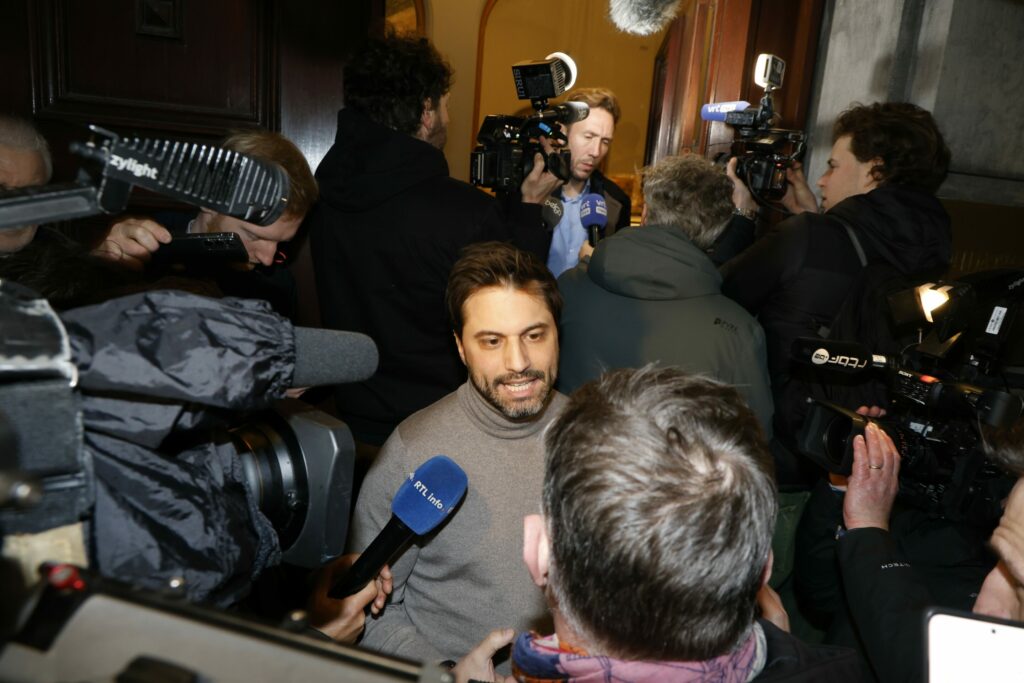
"We have reached an agreement with seven parties on a Brussels government. Although the negotiations took a long time, our agreement contains many innovations. It is also our response to the concerns of the people," Bouchez told reporters when leaving the building.
"We are relieved that, after more than 600 days, we once again have a government in the capital of Europe," he added.
Strikingly, the current government constellation has previously been attempted three times. First, in the summer immediately after the elections in 2024, then in February-March 2025, and one final time last summer.
However, it seems like on this fourth attempt – under the watchful cameras and microphones of the entire national press waiting outside the building – there was sufficient pressure to finally find an agreement.
According to Bruzz, the government agreement guarantees that the Capital Region's budget will be balanced by 2029, the Good Move mobility plan will be kept (although it will be renamed and amended), and various Brussels administrations will merge. Additionally, the Brussels train stations will be subject to a targeted security approach, and personal income tax will fall by 1%.
What's next?
Now that the seven parties have reached a final agreement, it is time to distribute the ministerial positions for the new government.
The parties will propose a Minister-President (usually French-speaking), as well as four ministers (two French-speaking, two Dutch-speaking) and three state secretaries (of which one must be Dutch-speaking).
The state secretaries are technically not "official" members of the government, but are in a more "junior" position and report to a minister, who determines their powers. However, as they do attend (nearly) all government meetings, they are usually still referred to as part of the government.
In practice, this means that the Brussels Government consists of eight members: five French-speakers and three Dutch-speakers.
There is still much speculation about who Brussels' next Minister-President will be, but several parties have made it clear that they expect the person in charge of the Capital-Region to speak both official languages sufficiently.
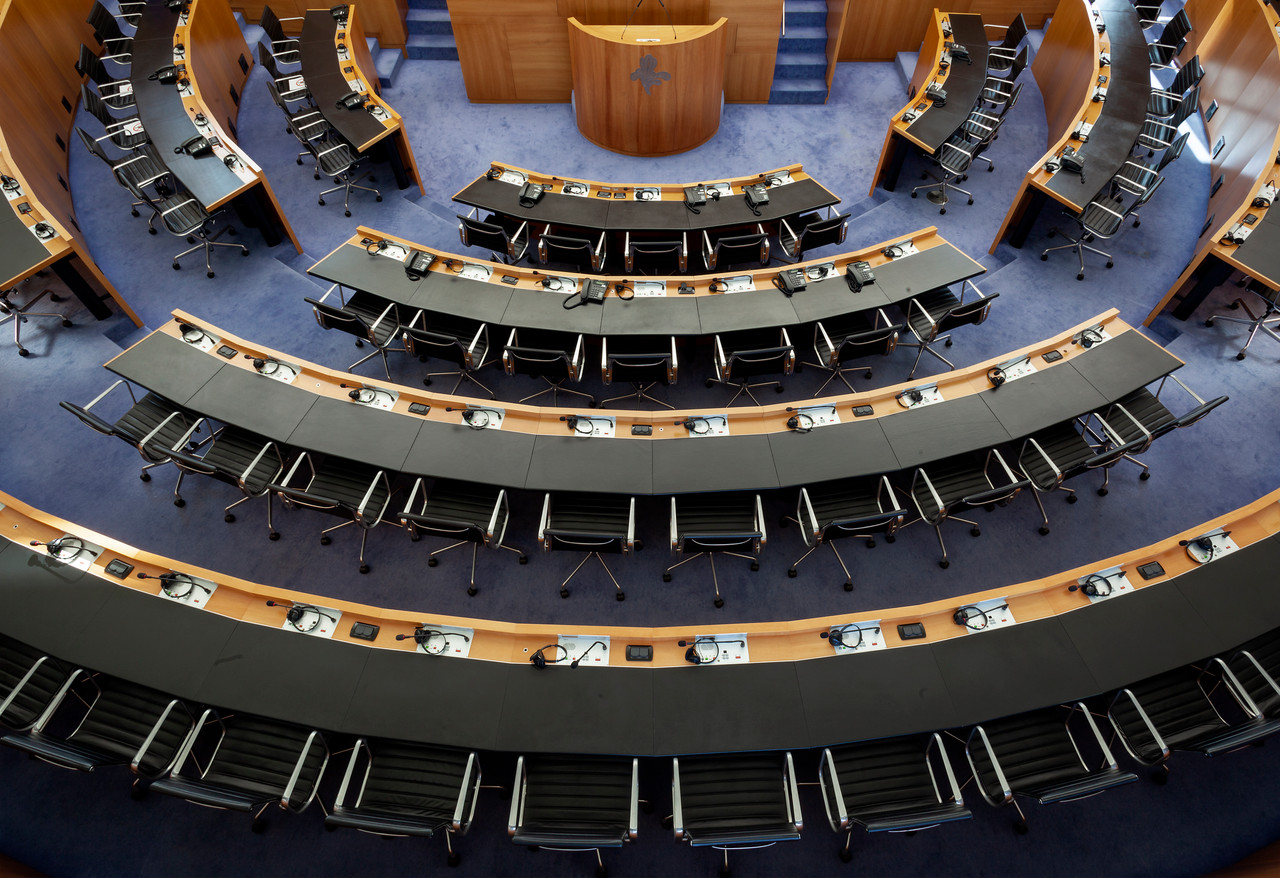
Empty Brussels Parliament. Credit: Belga
On top of the expected linguistic complications, a gender balance within the government must also be respected. Among the five French-speaking government members, three must be female and two must be male. Of the three Dutch-speaking members, there must be at least one man and one woman.
After the positions are divided up, the new government ministers will be presented to the Brussels Parliament, which will, in all likelihood, approve them.
After the vote in Parliament, the new Minister-President will be sworn in by Belgium's King Philippe – marking the official takeover of the new Brussels Government and the replacement of Rudi Vervoort's (PS) outgoing government.
Afterwards, the Parliament will vote on the state secretaries. On that same day, the new government agreement – sometimes also called policy statement – will also be presented in parliament, followed by a debate (and potentially, 48 hours later, a vote of confidence).
The new government has a so-called "double" majority in the Parliament: MR, PS and Les Engagés hold 46 of the 72 seats on the French-speaking side, while Groen, Anders, Vooruit and CD&V have nine of the 17 Dutch-speaking seats.
Together, the coalition holds a comfortable majority of 55 seats (out of 89) in the Brussels Parliament.
Who gets which competency?
The distribution of powers is regulated by the Special Brussels Act, which states that the French-speaking members can first select the Minister-President and pick a first package of powers.
Then the Dutch-speaking members choose, followed by the French-speaking members again. However, this exchange is often not more than a formality, as the packages of powers are often part of the talks during the government negotiations.
As the biggest party in the coalition, MR will appoint the Minister-President from within its own ranks. PS and Les Engagés will each appoint a minister on the French-speaking side.
On the Dutch-speaking side, the two biggest parties in their linguistic group (Groen and Anders), will each get a ministerial post.
In principle, MR, PS (the biggest French-speaking parties) and Vooruit (the third biggest Dutch-speaking party) each get a State Secretary.
However, this is not completely set in stone, as it is not yet clear whether a position within the government is planned for CD&V. As the smallest of four parties in the Dutch-speaking coalition, which only has three ministerial positions to distribute, it is unclear what its role will be.
