
Europe’s industries are struggling to compete globally and there are now growing calls to ditch the European Union’s flagship climate policy, the emissions trading system.
Much of the EU’s energy transition success is a result of the bloc’s emissions trading system (ETS) finally starting to do what it was intended to do, more than a decade after it was established.
The ETS is a market, which sets a price per tonne of CO2 emitted. Industries like steel, aluminium and cement, plus power generators, shipping and aviation, must buy enough pollution permits to cover their emitted CO2.
Essentially, the idea is to make it so that investing in green low-carbon technologies is more affordable than buying permits. This is the polluter pays principle and it’s starting to really work, because the ETS price is finally high enough to trigger those investments.
But some are saying that it is doing its job too well, particularly in Europe’s struggling heavy industries, where the search for a scapegoat is truly underway.
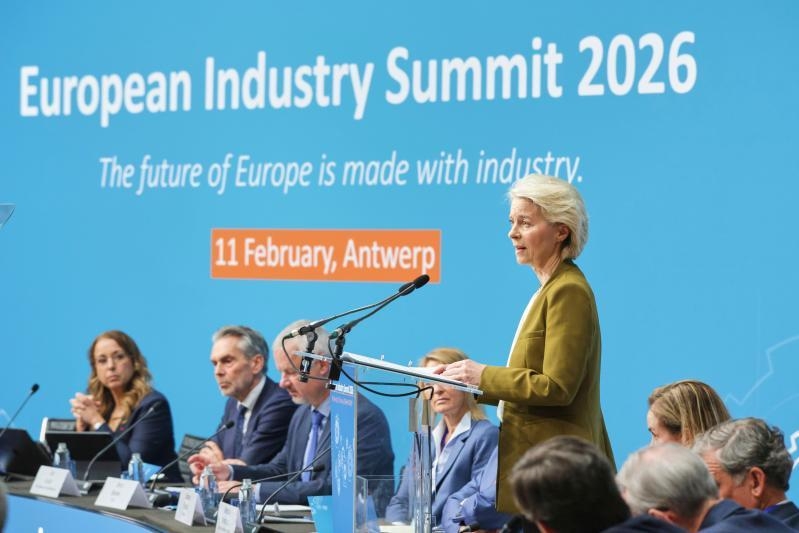
German chemical giant BASF, for example, came out earlier this week and said that the ETS is obsolete, shortly before a big meeting of industrial players in Antwerp.
While it is true that the ETS imposes a non-significant cost on these sectors, after all that is what it is designed to do, there are bigger problems to worry about.
High energy prices are like poison for power-hungry businesses and there is the simple matter that for many sectors, the world already has too much capacity, so it is not just European firms that are struggling.
But that has not stopped the ETS from being called into question. There are calls to increase the number of free pollution permits doled out to industry, for the period in which those gratuities will be available to be extended or even for the market to be suspended.
It is a dangerous time for climate policies, especially the ones that are actually working. A review of the ETS is due by the summer, so the debate will not be going away anytime soon.
Is the cat out of the bag?
At the Antwerp industry meeting, European Commission President Ursula von der Leyen staunchly defended the ETS, urging businesses to focus on decarbonisation measures instead of lobbying against the carbon market.
EU climate boss Wopke Hoekstra was even more candid, saying that calling the market into question is “intellectually lazy”.
However, the Commission may have already made a rod for its own back, despite this initial willingness to fight for the ETS.
The EU’s executive branch has recently been on a bit of a deregulation kick, publishing so-called ‘omnibus’ proposals that ostensibly cut red tape and make it easier for businesses to go about their day-to-day.
It has been part of the EU’s shift away from Green Deal to Industrial Deal, illustrated best by the recent decision to water down the upcoming ban on sales of new petrol and diesel cars that is due to come into force in 2035.
After the automotive lobby cried foul, the Commission has agreed to grant a whole list of flexibilities including one that will allow carmakers to keep manufacturing hybrid vehicles.
It is a similar story with the little brother of the ETS, the ETS2, which will cover road transport and buildings, two sectors where emissions are stubbornly refusing to fall off.
That new carbon market was due to go live in 2027, but after a group of EU governments and enough members of the European Parliament insisted that it was a bad idea, the ETS2 has been pushed until 2028.
This very much is a case of the Commission’s chickens coming home to roost, as it was inevitable that vested interests would seek to overturn these policies if ever given a chance.
Incumbents do not like change and the ETS is one of the most powerful agents of change in the EU’s legislative arsenal. It is only because the market spent so long failing to be effective that these calls to shelve it are now getting louder.
It should be defended to the hilt, because it has enabled the EU to phase polluting fossil fuels at an increasing rate out of its energy mix, invest billions in innovative technologies and show the rest of the world how carbon pricing can work.
The job is only half done, pausing now would be disastrous, it would punish those frontrunners that have decided to embrace the future and it would tell the rest of the world that the EU is not serious about leading the way into an electrified world.
Want more updates and analysis of what is happening in the world of energy and climate? Interested in finding out more information about public tenders and consultations? Sign up to our Energy Rundown newsletter here!
