
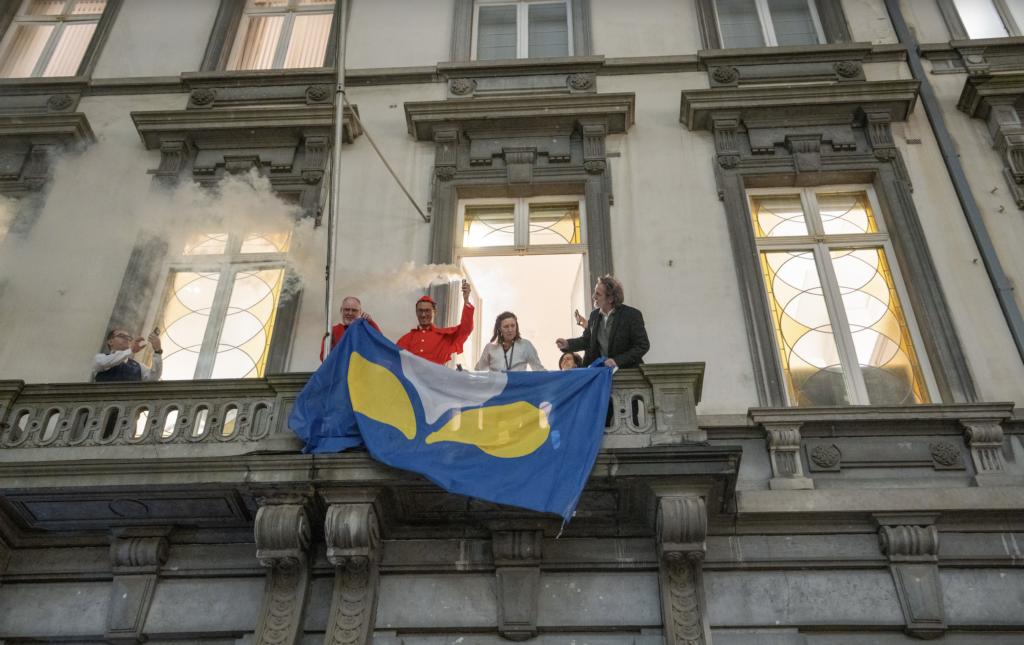
White smoke emerged from the Brussels Government conclave on Thursday evening, after over 600 days of wrangling, in-fighting and stand-offs.
A renewed sense of urgency brought politicians back to the table this week despite the wide-ranging visions for the future of Brussels.
The Belgian capital's uniquely complex system, which divides French- and Dutch-speaking parties into two electoral colleges which need to agree among themselves and then with each other, complicated matters.
Who's in the coalition?
But after (only) 613 days, an agreement was found. On Saturday at 10:00, the new government will be inaugurated.
On the Francophone side, there's a coalition of MR (neoliberals), PS (socialists) and Les Engagés (centrists). On the Dutch-speaking side, Groen (greens), Anders (liberals, ex-Open VLD), Vooruit (socialists) and CD&V (Christian Democrats).
Flemish nationalists N-VA, who won two seats, were left out after Anders dropped their veto on not entering a government without them. PS too had refused to work with the Flemish nationalists.
So, after so long, what was actually agreed by the parties? And how will this affect Brussels residents?
While the final agreement was still being drawn up, Francophone and Flemish public broadcasters RTBF and VRT were able to preview its contents.
Budget and finance
Balanced budget by 2029
One of the key areas of disagreement was the budget, with talks of the Brussels Region's dire finances being of international fame.
Now, the new coalition will aim to balance Brussels' finances by 2029. This week, it was revealed that the deficit in Brussels was almost 25% lower than expected by outgoing Budget Minister Dirk De Smedt (Anders), which allowed PS and Anders to sit back at the negotiating table.
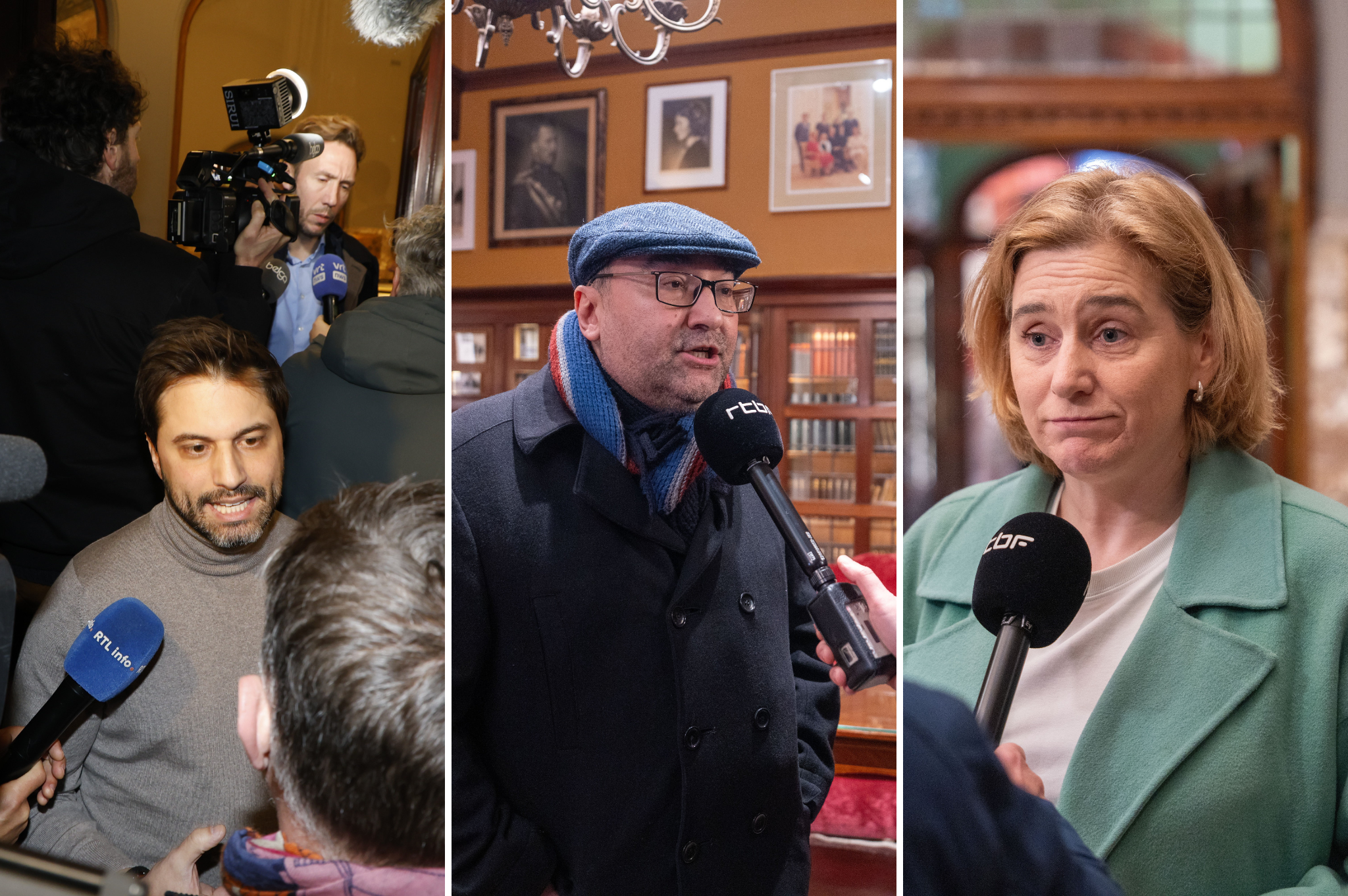
MR's Bouchez and Anders' De Gucht (L); PS's Ahmed Laaouej (C); Groen's Van den Brandt (R). Credit: Belga
Just over €1 billion would need to be found to plug budgetary gaps, which seemed palatable to both the socialists and liberals.
Secret discussions between the two focused on finding a deal that would enable a return to balance in 2029 without placing the burden solely on savings in public services or subsidies to the non-profit sector.
This includes restructuring and merging different departments of the Brussels administration – which should lead to roughly €500 million in savings. Four regional entities will form a new service for strategy and support on budgeting, HR and accounting, modelled on the Federal Public Service BOSA.
Additionally, the Brussels Government is counting on €210 million in various revenues. These could be new taxes, but few details are known at this stage. Finally, €80 million in revenue is expected from other measures, but it is not yet clear what those would be.
Income tax
For Brussels residents, the additional personal income tax will be reduced by 1%. According to the Anders party, this means that a working Brussels resident will pay an average of €268 less in taxes per year.
What is being funded?
The Kanal-Centre Pompidou Museum project has been saved, but will be forced to make substantial savings. It will still receive funding to open at the end of November 2026 and for its initial expenses, but will then have to draw up a new financing plan.
Brussels public water provider Vivaqua will receive €180 million, with the Region reportedly acquiring a 50% stake in its capital. Hydria, which deals with water recycling, is also being integrated into Vivaqua.
The moratorium on the recruitment of civil service staff in the Brussels Region will also be maintained to help with cost-cutting. This should bring around a saving of €250 million.
Mobility
Metro 3
Unsurprisingly, the launch of the hugely controversial Metro Line 3 project has been put on hold for 10 years.
However, structural work will be completed so that trams may be able to run there in the future.
Ongoing work to complete the missing link in the existing pre-Metro network between Anneessens and Brussels-Midi will be completed. This includes the difficult passage under the Palais du Midi, which drew protests from residents on Friday.
The new tunnels will be used by underground trams, not metro trains.
Near Brussels-Midi station, a new phase of work related to Metro 3 could begin under Place Bara, affecting tram lines 4 and 10.
Works will also be undertaken at Place de la Constitution to allow tram lines 4 and 10 to run faster.
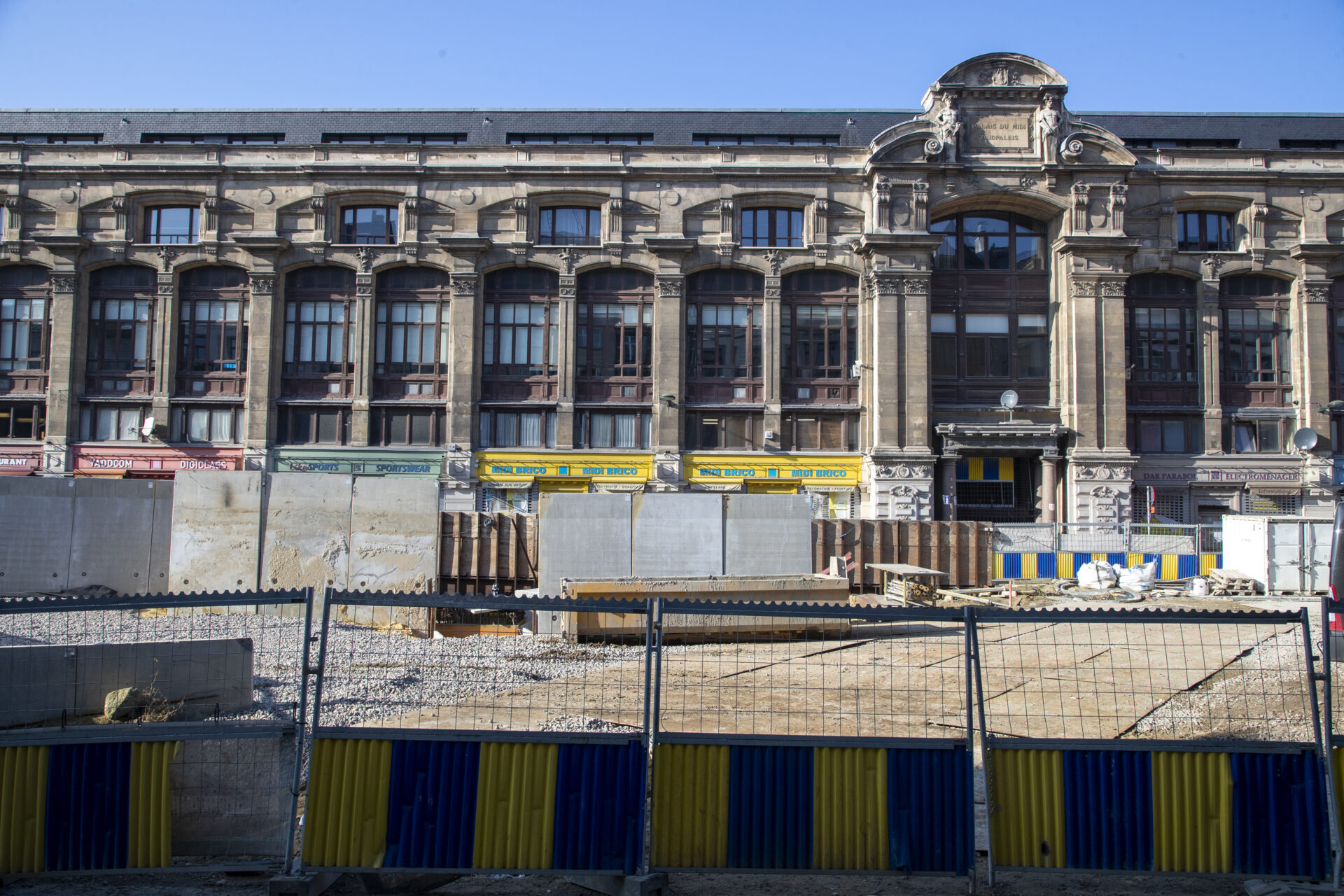
Metro 3 line was supposed to go under the Palais du Midi. Credit: Belga
Tram 15
The tram 15 project linking Brussels-North station to Simonis via Tour & Taxis will definitely go ahead, with a view to eventually connecting the line to Brussels-Central station.
It is hoped this line will open the Tour & Taxis district, currently seeing heavy investment and gentrification.
Car-free Sunday
Not much information out there, but Brussels will get a second annual Car-Free Sunday in addition to the fixed September date. This will please the many Brussels residents who, every year, call for more editions to be organised.
Good Move
In Thursday’s agreement, Good Move will be renamed and modified, with priority for pedestrians and cyclists, followed by a focus on boosting public transport services.
This is one of the most contentious issues in Brussels due to the controversial launch of the Good Move policy, subject to heavy protests in some municipalities. It aimed to reduce traffic and pollution in large parts of the capital, which regularly breaches legal limits.
The controversial concrete blocks, put in place to divert traffic as part of Good Move, will also be removed.
Safety around schools and managing smaller traffic networks will be the focus of the new transport policy, with additional emphasis placed on citizen participation.
Road vignette
Brussels will adopt the road vignette, which is currently being negotiated between Flanders and Wallonia.
LEZ
The Low-Emission Zone (LEZ) will continue, but fines will be reduced to €80.
STIB
Public transport operator STIB/MIVB will maintain the rate of €1 per month for young people and senior citizens. The other rates will be indexed annually.
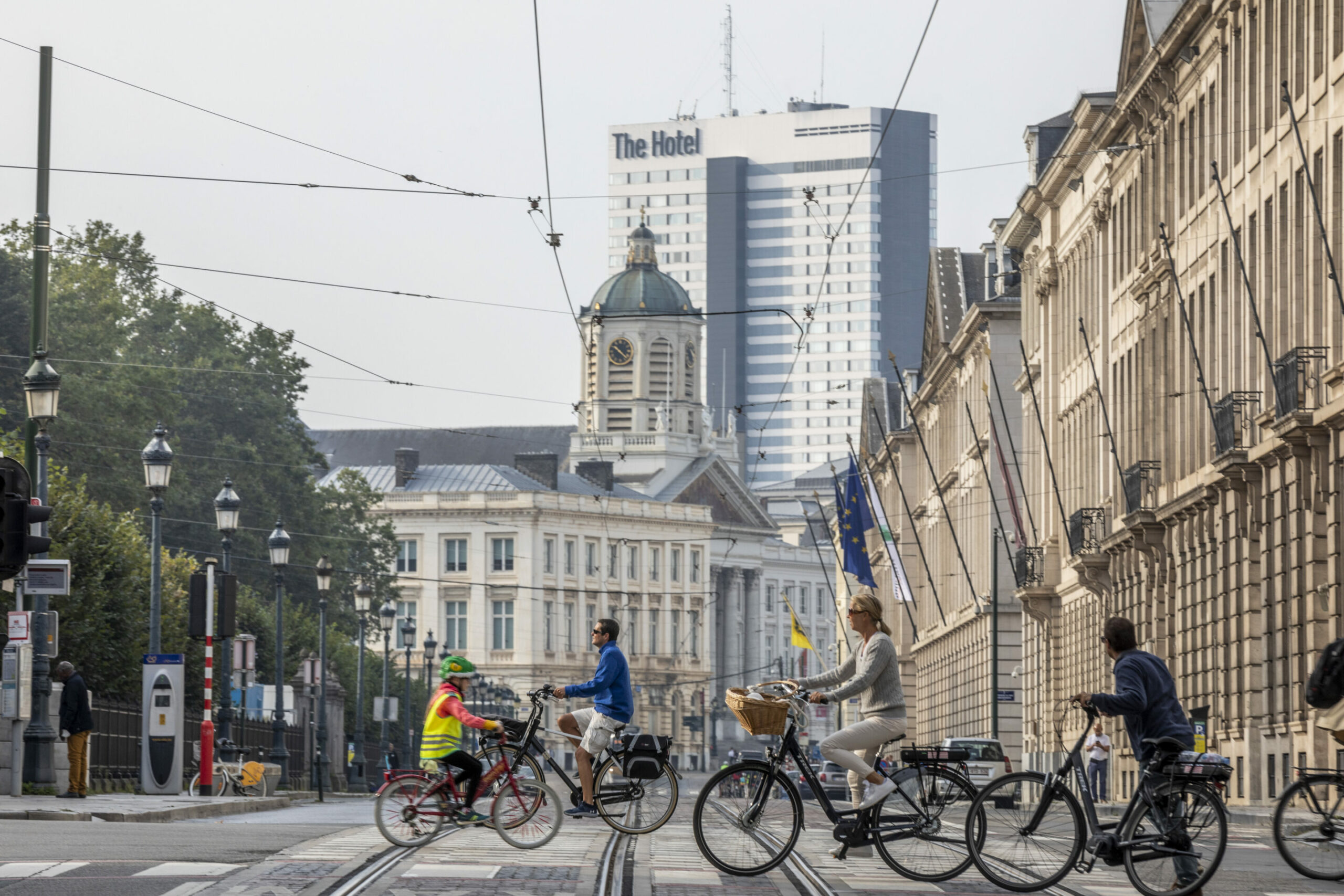
Car Free Sunday in Brussels in 2023. Credit: Belga/ Hatim Kaghat
Housing
Funding boost
On housing, the new coalition has agreed to the financing of the Brussels Regional Housing Company (SLRB), in dire need of funds, with a boost of €400 million to ease rising housing pressure in the Belgian capital.
There will also be 1,000 social housing units to be built in this term.
Home owners
Fiscally, the new coalition will support middle-class homeowners by doubling the Be Home bonus from from €160 to €320. This is a reduction in property tax for owners who live in the property they own.
Registration fees raised
To fight against rising property prices in the capital, the ceiling for the reduction in registration fees has been raised from €600,000 to €800,000. Liberals MR had wanted to lower the fees when purchasing a home, like they have done in Wallonia, but had to renounce these ambitions.
These two last measures were reportedly aimed at keeping the middle classes living in Brussels and removing any temptation to relocate to Flanders or Wallonia.
Insulation grant
Renolution grants will be scrapped under the current form for zero-interest loans, which will result in savings for the government. These grants were designed to help Brussels residents carry out construction and renovation work to insulate their homes.
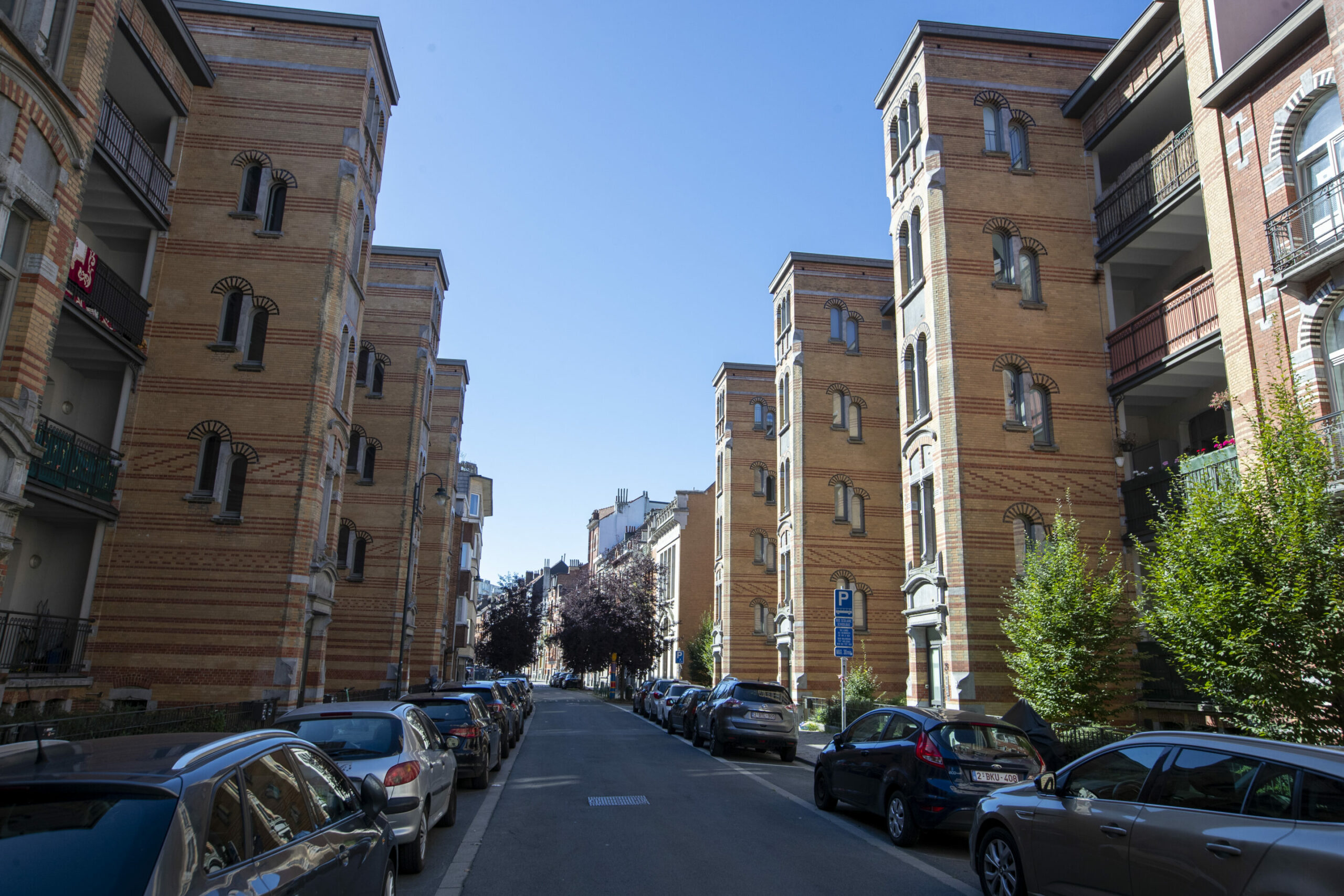
Art Nouveau building for a social housing project, in Brussels on Sunday 20 August 2023. Credit: Belga / Nicolas Maeterlinck
Safety
A Brussels drugs commissioner will be appointed, who will look at both safety, prevention and health policy. A new regional drugs plan will also be drawn up, aiming to better regulate repression, prevention, early detection and care.
There will be additional resources for the Brussels Fire Brigade, including more staff and better equipment. A large new fire station will also be built.
Cleanliness
Underground containers
Waste collection will be reformed, including the expansion of underground containers and voluntary collection points. The region's waste agency, Bruxelles-Propreté/Net Brussels, will also be reformed and modernised.
A 'Fast Response Team for Cleanliness' will be established to clear up rubbish and deal with vandalism in order to act swiftly and prevent deterioration.
Fly-tipping
To tackle fly-tipping, Brussels will install additional smart cameras, increase fines and deploy more inspectors.
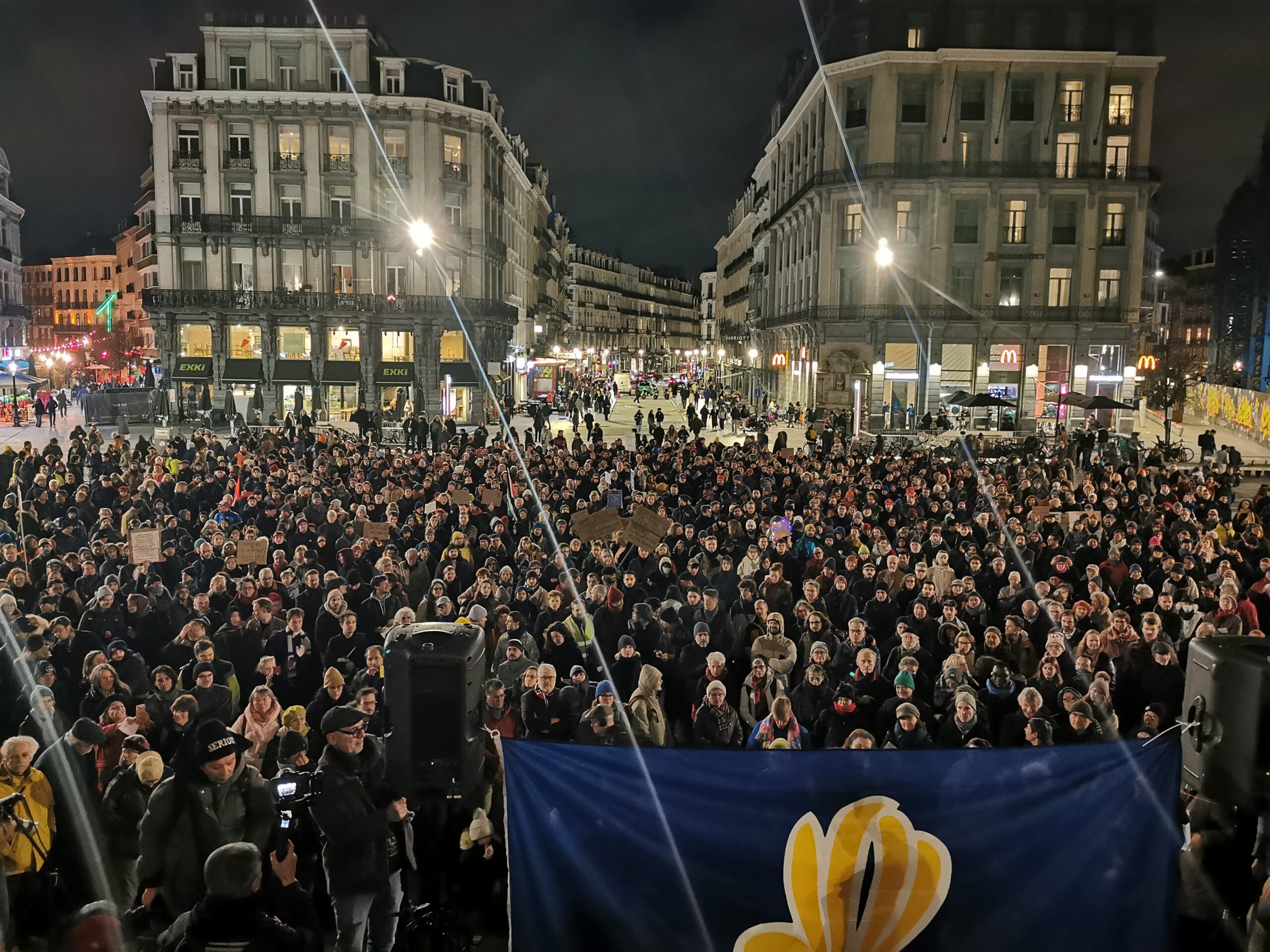
Picture of protest against the prolonged absence of a fully functioning regional government. They call for the formation of a sustainable political project for the Brussels-Capital Region, on Friday 30 January 2026, Brussels. Credit: Belga
Employment
Brussels will aim to increase its employment rate to over 70% by 2030. Currently, it is just under 65%.
Those who are viewed as not seeking employment will be more easily subject to sanctions, according to VRT.
More employment agency staff will be deployed at Actiris to provide intensive support to unemployed people in finding work.
A language test will be mandatory upon registration. If the result is unsatisfactory, a language course will be imposed.
Bilingualism
A new masterplan for bilingualism will be introduced to improve services in Dutch. This will provide additional resources for language training in administration and healthcare.
Hospitals will also be forced to assist patients in Dutch too, with new mandatory language policy plans to be introduced across Brussels hospitals.
