
The European Commission’s Expert Group on Urban Mobility has completed its 2025 work programme, publishing reports and feedback on topics ranging from cycling to access rules for freight and coaches in cities.
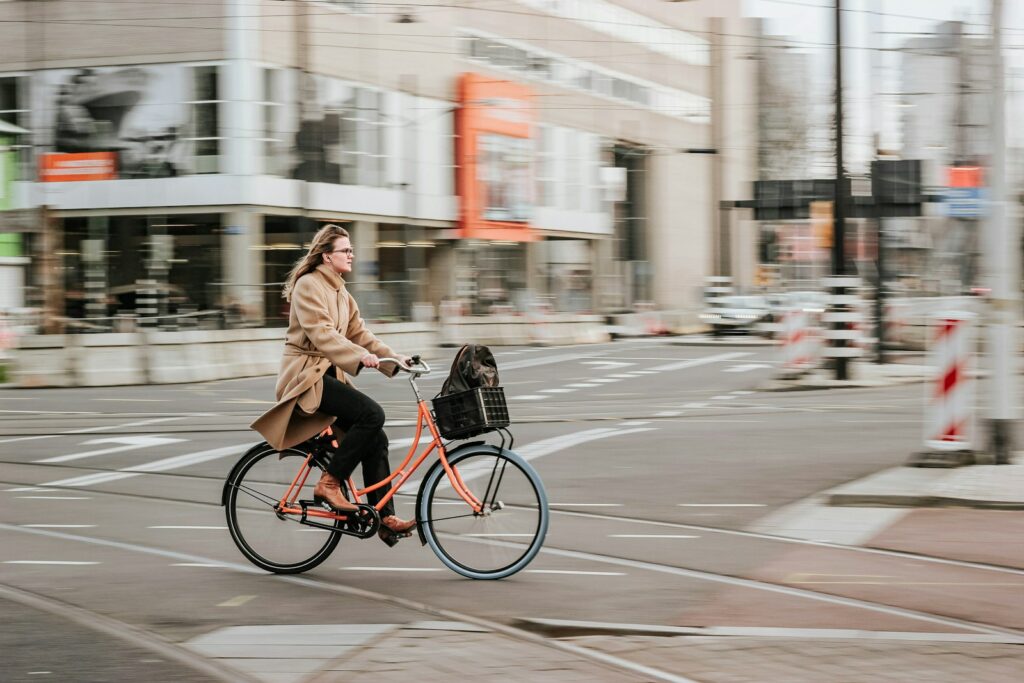
The group contributed to the first progress report on the EU Declaration on Cycling, which was released in October, the Commission informed on Friday.
It also looked at “urban nodes” in the trans-European transport network (TEN-T) — places where long-distance passenger and freight links connect with local and regional transport — focusing on how cities and other stakeholders work together.
The urban nodes work set out different cooperation models and shared challenges, and included practical examples such as metropolitan transport authorities.
Reports on getting into cities
Three targeted reports examined ways to facilitate mobility and “access to the city”, including for businesses, the Commission said.
One report covered mobility service providers for sustainable passenger transport, looking at regulatory and operational frameworks that affect how effective and sustainable they are.
Another focused on road freight transport, examining how freight operators access European cities as urban mobility policies change, including how access rules interact with low- and zero-emission vehicle fleets.
A third report examined coach access to cities, with a focus on coach tourism, documenting challenges and identifying practices linked to sustainable urban mobility and the “economic vitality” of coach travel.
The expert group plans to focus in 2026 on urban nodes, city access and active mobility, including work on multimodal passenger hubs and encouraging commuters to shift to rail within urban nodes.
Further 2026 topics listed include access for innovation ecosystems and start-ups, possible “use cases” for authorities accessing vehicle information, guidance on links between tourism and urban mobility, and work on walking policies and monitoring implementation of the EU Declaration on Cycling.
