

One year ago in Munich, JD Vance delivered a speech that landed in Europe like a cold shower. Today, as leaders again gathered at the Munich Security Conference over the weekend, the uncomfortable truth remains unchanged. The tone in Washington may fluctuate, but the strategic direction does not: Europe will increasingly have to rely on itself for its security.
A cold shower in Munich
Exactly one year ago, JD Vance delivered a speech at the Munich Security Conference that was received in Europe like a cold shower. With a mixture of disdain and strategic detachment, he made it painfully clear that the United States no longer stands ready to step in for Europe. This was not merely electoral posturing aimed at the anti-European MAGA base in the US and its supporters in Europe, but also a continuation of the long-standing “pivot to Asia.” The tone may change one day, but the message almost certainly will not: Europe will increasingly have to rely on itself for its security.
Even if the United States were to remain formally within NATO, a reduced level of engagement, or a withdrawal from arrangements such as the Berlin Plus agreements, could leave Europe in a position where it is militarily unable to manage a serious crisis on its own. The hard reality is that, without American support, Europe today lacks robust command-and-control structures, strategic intelligence, air defence and logistical power.
This vulnerability is not theoretical. The Bruegel Institute and CSIS have recently backed it up with hard numbers. In his analysis, Max Bergmann calculated that for Europe to replace the American military presence it would need, among other things, dozens of additional brigades, hundreds of combat aircraft, massive investments in air defence and missile shields, and a fully autonomous satellite and intelligence architecture. This is not a matter of a few billion euros, but of hundreds of billions, and of a decade of joint planning and industrial build-up, something no single Member State can achieve alone.
Treaty promises without power are empty
This brings us to the very heart of the European Treaties. Article 42.7 of the EU Treaty contains a collective defence clause that, in theory, goes even further than NATO’s Article 5. But treaty promises without capabilities are empty. If Europe cannot guarantee its own security, what remains of the Union’s political credibility? The same treaties nevertheless provide a pathway towards a genuine defence union. Once politically sensitive, it has now become simply indispensable.
The recent summit in Alden Biesen showed that this realisation is spreading across other policy areas as well. Whether in competitiveness, industry or security: fragmentation makes us weak, scale makes us strong. Europe must finally dare to acknowledge that sovereignty in the 21st century does not mean every country clinging to its own small army, its own rules and its own industry, but pooling power. Paradoxical as it may sound, it is a simple reality: if we want to regain sovereignty vis-à-vis China or the United States, we will have to transfer some national sovereignty to the European level.
It’s about prosperity and security
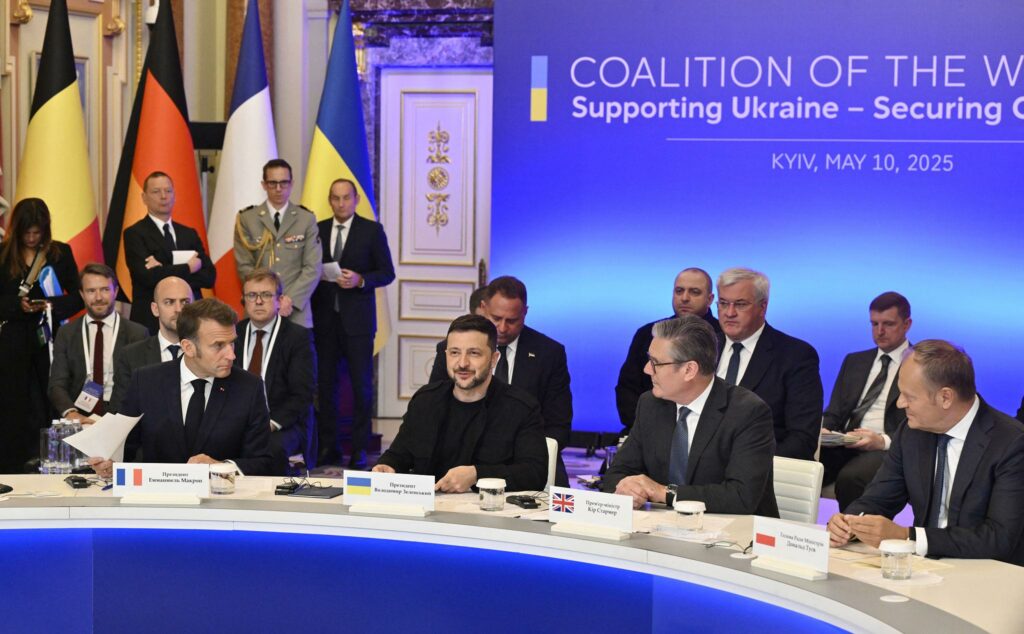
The same logic applies to Ukraine. Support for Kyiv is not charity; it is an investment in our own security. A Ukraine that holds out also keeps the Russian threat away from our borders. That is why Europe must not only continue to deliver today, weapons, money and political backing, but also offer a credible perspective for tomorrow: a future within the European Union, at a pace that is realistic and fair for all Member States, but without false ambiguity.
In a world where American priorities are shifting and authoritarian powers are growing ever more aggressive, Europe no longer has the luxury of remaining divided. Strategic autonomy is not an ideological project; it is a prerequisite for protecting our way of life and safeguarding our prosperity and security. The question is no longer whether we want this. The question is whether we dare to do it, and whether we are finally willing to step out of our own shadows.
