
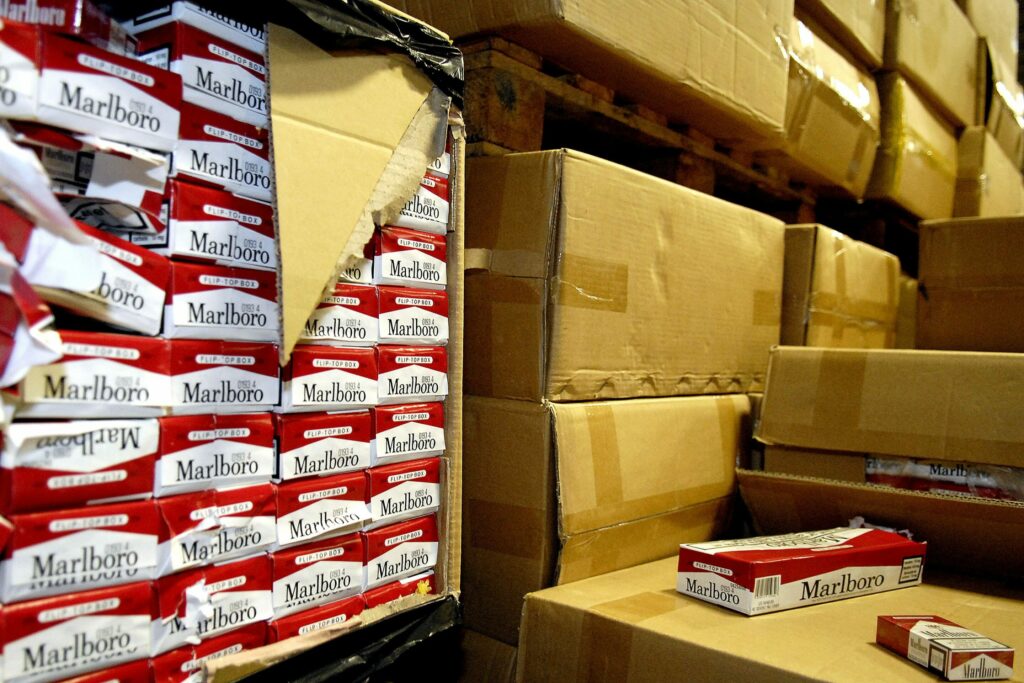
Last September, behind the walls of an anonymous warehouse in Ledegem, West Flanders, Belgian customs and police made a remarkable discovery.
Inside the warehouse, criminals had built an improvised cigarette factory, with production lines, drying lines, a packaging machine and two oil-fired generators. There were also sleeping quarters, a shower, a kitchen and a recreation room with a ping-pong table.
"When we raided the premises, 29 people were arrested, most of them Ukrainians," Florence Angelici, spokesperson for the Belgian Finance Ministry told The Brussels Times. "Everything was there to produce counterfeit cigarettes on a large scale. The factory operated 24 hours a day and produced six million counterfeit cigarettes per day.
According to Angelici, in just a few weeks, the criminals had "already recouped their investment".
"To arouse as little suspicion as possible, the workers always stayed inside," she said. "Cameras kept a constant watch on the surroundings. The two generators made a hellish noise, but the building was very well insulated, so the neighbours didn't notice anything."
Belgium's attractive location
The problem of illegal cigarette production is persistent in Belgium. In 2024, customs officers dismantled 12 factories – a record number. Last year, they shut down 10 such facilities.
"Belgium is attractive because of its location and its good road network," says Angelici. Counterfeit cigarettes easily find their way from Belgium to Great Britain and France, where excise duties on tobacco products are high and there is a market for cheap but illegal smoking products.
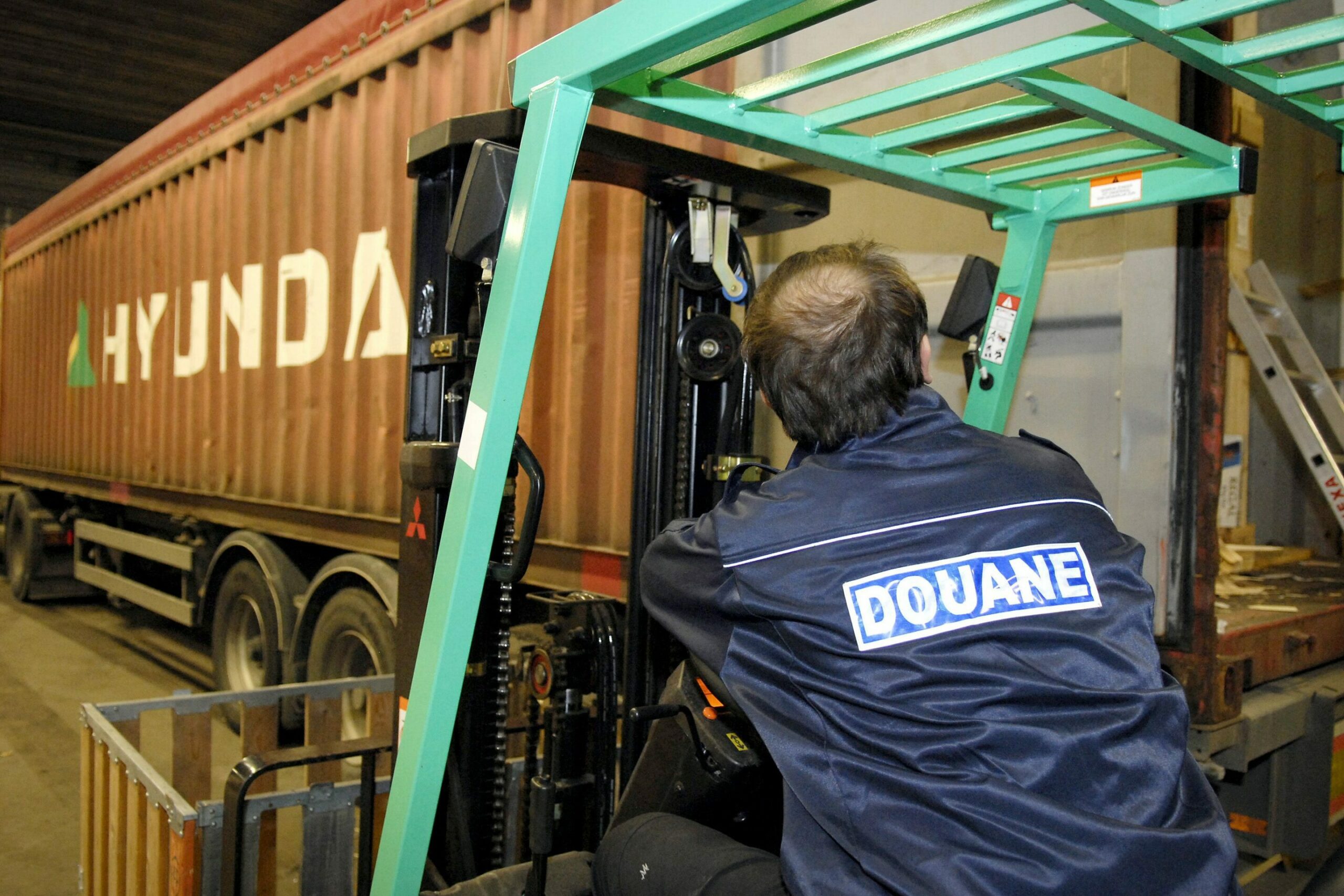
A customs employee pictured during a raid on a counterfeit cigarette factory in Antwerp. Credit: Dirk Waem/Belga
Belgium is by no means the only country where illegal factories are a problem. Eastern Europe in particular is also struggling with this issue. "Poland is by far the largest producer in Europe," notes Angelici. "The workers in Belgian factories are often in the country illegally."
Last year, during a parliamentary exchange, Minister of the Interior Bernard Quintin (MR) referred to findings by the federal police showing that workers are often lured to Poland via Russian advertisements with a salary of €2,000 euros per month. Once here, they are forced to work in illegal factories.
"This criminal activity generates hundreds of millions of euros in profits for criminal organisations," Quintin confirms to The Brussels Times.
Illegal consumption is growing in Belgium
Most counterfeit cigarettes are destined for foreign markets. However, under pressure from rising excise duties and taxes, the consumption of illegal tobacco products is also increasing here. Belgian smokers now pay £12 for a pack of twenty Marlboro cigarettes, the most counterfeited brand. That is double what it was ten years ago.
In five years, excise duties on cigarettes have risen by 85%, and on rolling tobacco by as much as 142%. Illegal cigarettes cost barely half the price of cigarettes in shops. In some cases, they cost considerably less.
Many people may not realise that they are taking a major health risk. Heavy metals or other toxic substances are sometimes found in illegal cigarettes. "The factories we shut down do not comply with hygiene rules in any way," says Angelici. "It's always very dirty there. The workers don't smoke their own cigarettes. They know the risks."
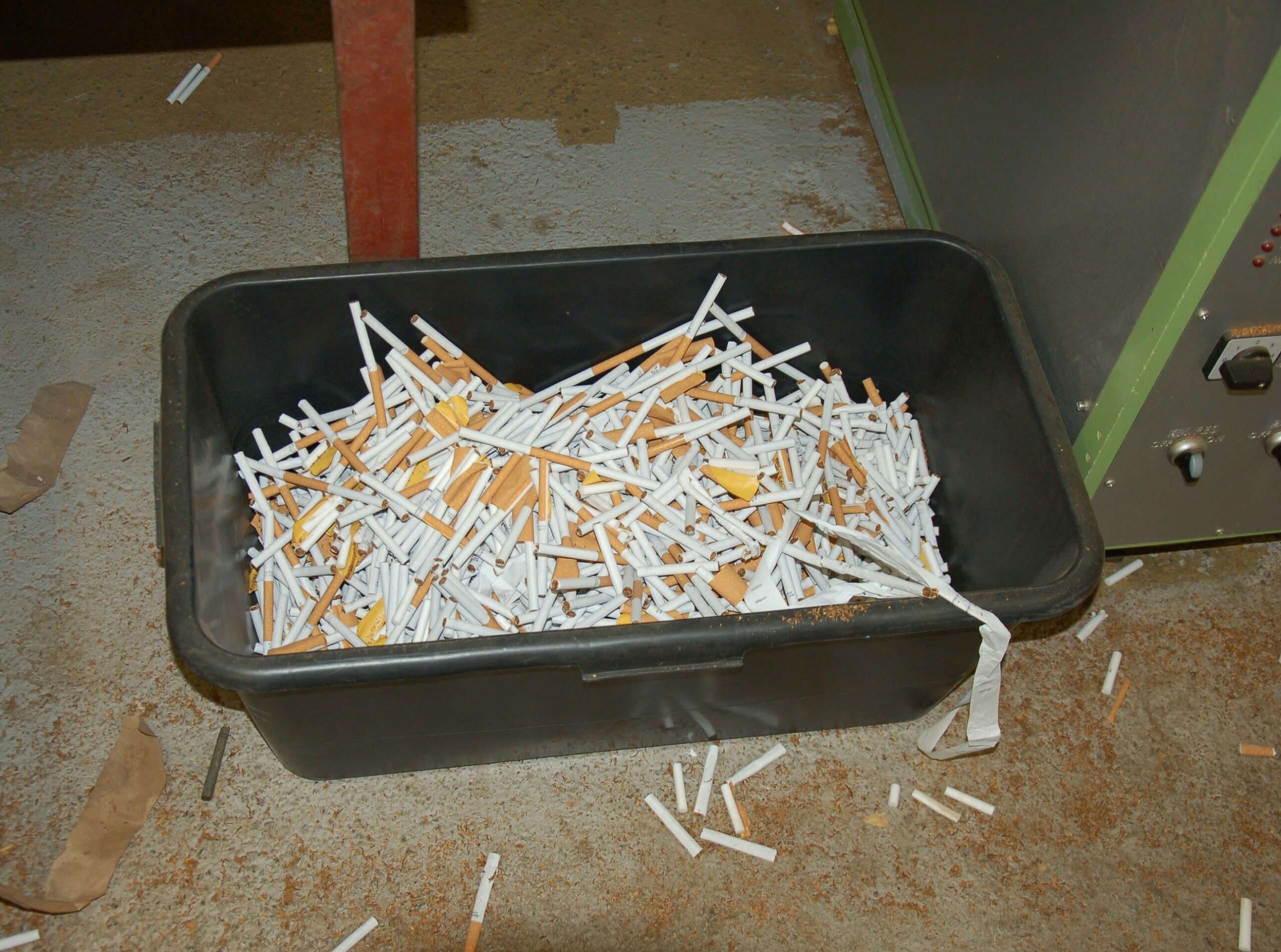
Counterfeit cigarettes. Credit: Eric Cornu/Belga
Illegal traders in Brussels
The problem is acute in Brussels. Dozens of sellers peddle their illegal wares every week at the market at the Abattoir site in Anderlecht, among other places.
"They don't shy away from imposing themselves on visitors," says Paul Thielemans of the Abattoir Market. "They are often illegal immigrants who have nothing to lose. Police officers patrol as much as possible, but it's not enough. The problem has gotten worse in recent years."
Some illegal vendors are armed and intoxicated. "They cause nuisance. There are sometimes fights between competing vendors," says the owner of a vegetable stall. A hired security service is supposed to help keep the problem under control.
"The problem is that illegal cigarettes also attract drug trafficking and other crime. I sometimes see people dealing drugs in public here. It creates a negative spiral, while this neighbourhood really has potential," says Thielemans.
"We have police teams patrolling during the weekend," Anderlecht Mayor Fabrice Cumps (PS) tells The Brussels Times. "Thousands of cartons of cigarettes are seized every year, but one of the problems is that the dealers are becoming more aggressive. We are using all the resources we can."
The Brussels Times also contacted the local and federal police services, but did not receive a response within the specified deadline. The local police referred to the agreement that is required from the public prosecutor's office, but which did not materialise.
Failing policy?
The tobacco industry sees the growing trade in illegal cigarettes as a failure of anti-smoking policy. It regularly publishes figures on the consumption of counterfeit cigarettes.
According to the most recent data from tobacco giant Philip Morris International, 33% of cigarettes smoked in France are counterfeit or illegal, compared to 26% in the United Kingdom. In neighbouring countries, the Netherlands (8%) and Germany (2%), the figure is much lower. In Belgium, it is 15% (though Angelici could not confirm these figures).
Health experts dispute that the policy is failing. According to Sciensano, around 28.5% of Belgians smoked in 2001. By 2024, that percentage had fallen to 17.6%.
Studies by Sciensano also show that counterfeit cigarettes are not the main way smokers cope with high prices. The government organisation points to tobacco tourism to Luxembourg, where excise duties are much lower. There are companies that take Belgian smokers to shopping centres across the border by coach.
The European Commission is working on a proposal to stop tobacco tourism which involves equalising prices between EU Member States, thereby eliminating cross-border purchases.
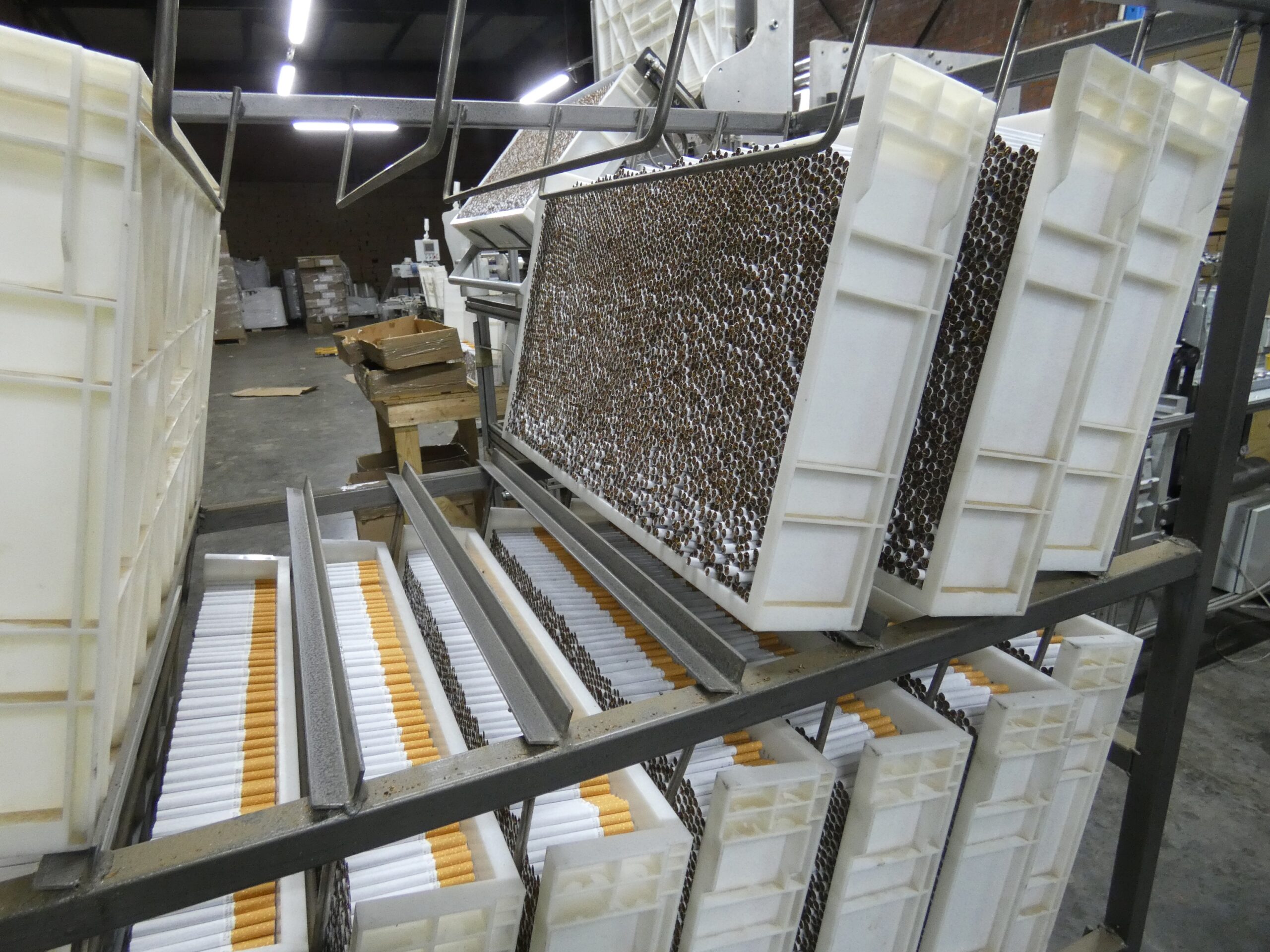
Counterfeit cigarettes seized by the Antwerp customs at a production site in Aartselaar, Antwerp in 2021. Credit: Tijs Vanderstappen/Belga
Organised crime
An additional problem is that organised crime is closely involved in the trade in counterfeit cigarettes. In 2024, there were 34 gangs active across Europe that focused entirely on excise fraud, mainly through cigarettes, according to Europol.
According to the Federal Police, most of them operate from Poland, Slovakia, Ukraine, Spain or the UK. Half control the entire production chain. The other half specialise in one link, such as production, transport or distribution. Some gangs combine cigarette fraud with drug trafficking and use ordinary companies as a front.
Government steps up fight
Counterfeit cigarettes are a European problem, and Belgian customs agents rely on foreign intelligence to combat the trade. In Europe, there is EMPACT, a cooperation programme between countries, police and customs against international crime such as tobacco smuggling and excise fraud.
In 2023, 68 illegal cigarette factories were dismantled in Europe. Around 100 cutting and storage sites were discovered and 790 million cigarettes were seized. That is enough to supply 230,000 smokers with around ten cigarettes a day for a year.
The Belgian government is also stepping up its efforts in the fight against illegal cigarettes. The coalition agreement states: “We will intensify the fight against the production and trade in illegal cigarettes.”
In July, Finance Minister Jan Jambon (N-VA) emphasised that specialised customs teams are permanently dedicated to combating tobacco fraud. "In the future, the fight will be stepped up," he said last year in the House Committee. Angelici also sounds combative. "We are increasingly well equipped to tackle illegal production and consumption," she says.
