
Animal welfare NGOs have recently sent letters to the European Commissioner for Health and Animal Welfare, Olivér Várhelyi, as no progress has been made so far in revising the EU's outdated animal welfare legislation.
As previously reported, a letter concerned the use of high concentrations of carbon dioxide gas (CO2) as a stunning method for pigs and the follow-up of the so-called PigStun project. The European Commission confirmed that it had received the letter and that a response would be sent in due course, without giving a deadline.
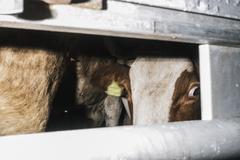
Another letter concerned the transport of unweaned calves from Ireland to France, and from there to other EU Member States. Each year, about 200,000 calves are exported. Ethical Farming Ireland and several other animal welfare NGOs sent the letter to Varhelyi.
The transport of unweaned calves breaches existing legislation as they are not fed during the long journey on board the ferries, according to the letter, based on a DG SANTE audit in 2022. As in the other case, a spokesperson of the Commission replied that the letter had been received and would be responded to in due course.
It appears in both cases that the Commission did not apply the 'Code of Good Administrative Behaviour' (Decision 2024/3083), which requires it to answer enquiries from the public without delay. If a reply cannot be sent within 15 working days, the service responsible shall send a holding reply, indicating a date by which the addressee may expect a reply.
In the Irish case, the Commission added that it is in regular contact with the Irish authorities for their full compliance with the provisions of the regulation on the protection of animals during transport.
It expects the Irish authorities to bring technical developments to ensure full compliance with EU law, but declined to clarify the possibility of launching an infringement procedure against Ireland if the non-compliance with the current regulation continues.
Polarised European Parliament
The specific issue of the transport of unweaned calves is linked to the Commission’s proposal from December 2023 on a revision of the legislation on live animal transport.
According to the proposal, travel times will be shortened. During long journeys, animals must be unloaded for periods of rest, feeding and watering. Special rules will apply to animals for slaughter, and to vulnerable animals such as unweaned calves and pregnant animals. Export of live animals to non-EU countries will still be allowed under tightened rules. Long-distance travel by sea will not be limited.
However, inside the European Parliament, the discussions have reached a standstill after co-rapporteurs Tilly Metz (Greens/EFA) and Daniel Buda (EPP) have only agreed on a number of technical amendments to the Commission's proposal. MEPs are therefore expected to vote on 3,000 amendments to the proposal, which would risk a patchwork of legislation.
“I have been working on this file for over a year to secure workable compromises while ensuring that millions of animals are better protected during transport,” Metz told The Brussels Times. “After so many months of work – and in light of the slow progress in the Council – there is no justification for Parliament to rush into a fragmented position now that would even risk weakening animal protection.”
“Given the procedural implications in case two co-rapporteurs cannot find an agreement – including for future cases – I have asked the responsible committee chairs to seek guidance from the Constitutional Affairs committee to ensure clarity and legal certainty on how we proceed.”
“From a civil society perspective, the continued bog-down of the transport file in the European Parliament is deeply worrying,” commented Olga Kikou, Director of Animal Advocacy & Food Transition. “After more than two years of debate, we now face the prospect of yet another setback, either a withdrawal of the proposal or an outcome that could be even weaker than the existing legislation.”
According to the Cyprus EU Presidency, progress was made at the Working Party meeting last week, chaired by the Presidency. “Member States expressed broad support for the Presidency’s compromise proposals and demonstrated a clear willingness to move the file forward.”
“The Cyprus Presidency will continue discussions, as originally planned, on the transport of animals to and from third countries, as well as on sanctions and the procedural, transitional and other provisions of the Regulation. The Presidency intends to advance the file at a technical level while securing the broadest possible agreement.”
A diplomatic source told The Brussels Times that for terrestrial animals, ventilation standards, minimum ceiling heights, and transport practices will be more clearly defined. Livestock vessels must meet reinforced requirements on structural integrity, monitoring, facilities for sick animals, and arrangements for feed, water, and bedding.
Window of opportunity
The Brussels Times asked political scientist Neil Dullaghan for his take on animal welfare legislation. In his recent book, The Compassion Mandate: Remaking the European Union's Leadership on Farmed Animal Welfare, he explains how EU animal welfare reforms have advanced and then stalled – and what the EU must do to recover its role as a global leader.
His book addresses, among other things, live animal transport, though mostly in the historical context of the veal crate debates of the 1990s.
“The UK's ban on veal crates created perverse outcomes: around 40% of UK-born calves were exported live to continental Member States to be raised in crates, slaughtered, and reimported as veal meat. This highlighted how different national rules within the single market created both welfare problems and competitive distortions.”
The book documents several cases where consumer pressure drove change, but can consumers exert pressure on Member States and the EU to update and enforce the legislation? "The historical record suggests consumers can play an important role, though the current system makes this harder than it should be," Dullaghan said.
"However, systematic consumer pressure is undermined by the lack of comprehensive welfare labelling," he added. "Eggs remain the only animal product with legally mandated welfare labelling in the EU. Consumers can only pressure their representatives to uphold the law when it's clear to them that the law is being violated."
"Without labelling and especially in more opaque supply chains, it's not possible for consumers, or citizens, to have enough information to act. That's why civil society groups have had to step in with investigations revealing practices on farms," Dullaghan said.
Asked about the urgency of updating different elements of the current animal welfare legislation, he replied that each has different characteristics that affect feasibility and urgency. "Caging of farmed animals (particularly laying hens) has the strongest political momentum. Around 62% of EU egg production is already cage-free."
“Stunning at slaughter, particularly for fish, addresses perhaps the largest addressable welfare gap in terms of individual animals affected. Live animal transport is currently the only reform actively under negotiation, which makes it urgent in practical terms," he said.
Dullaghan noted that the proposed revision of live animal transports has so far been slow-walked by both Member States and MEPs. "The window for influencing the outcome is now," he concluded. "However, the political landscape appears challenging, with risks of either failure or a weakened regulation."
