
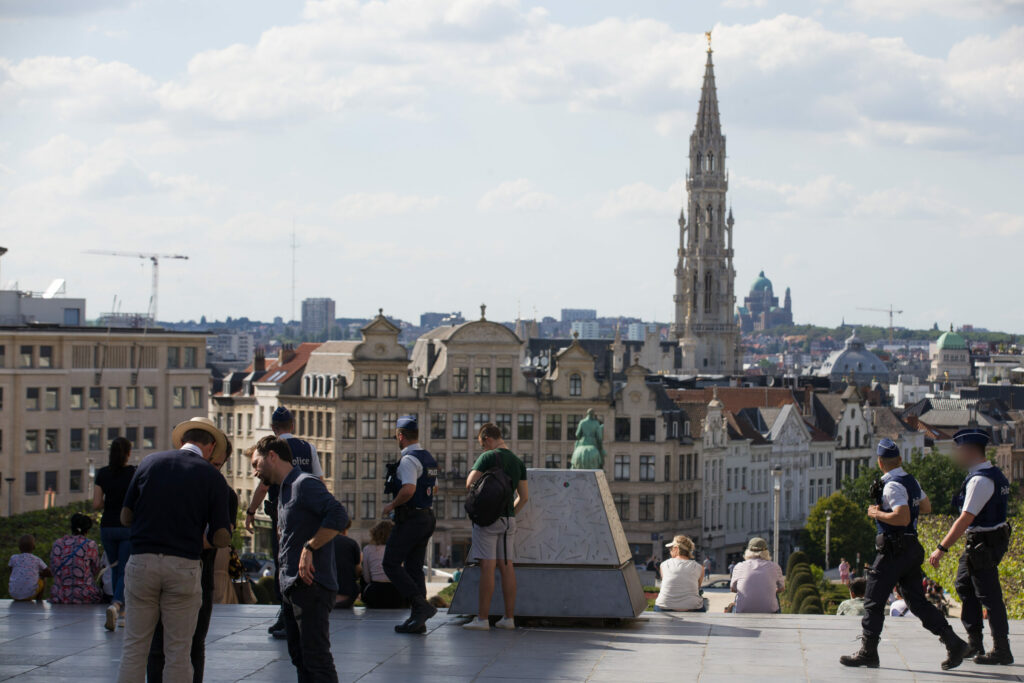
After 613 days, there was finally white smoke in Brussels. The longest government formation since the creation of the Capital Region resulted in an effective and fully-fledged government, with a majority in both language roles.
A moment when I, as a local representative, also breathed a sigh of relief. Not only do we remain below Northern Ireland's sad record (729 days), but above all, I do not have to be embarrassed about announcing that the City of Brussels is applying to become the European capital of democracy in 2027. On the contrary, we have just proven that our democracy can withstand even extreme pressure.
Nevertheless, there is no better time than now to proclaim our city the European Capital of Democracy. Societies around the world are under severe strain, and democracy is on the defensive. In some European countries, too, the rule of law is creaking and groaning under the weight of disinformation and populism.
We are at a tipping point. Authoritarian forces are gaining ground, and politicians are finding it increasingly difficult to defend their policies to citizens, even at the local level.
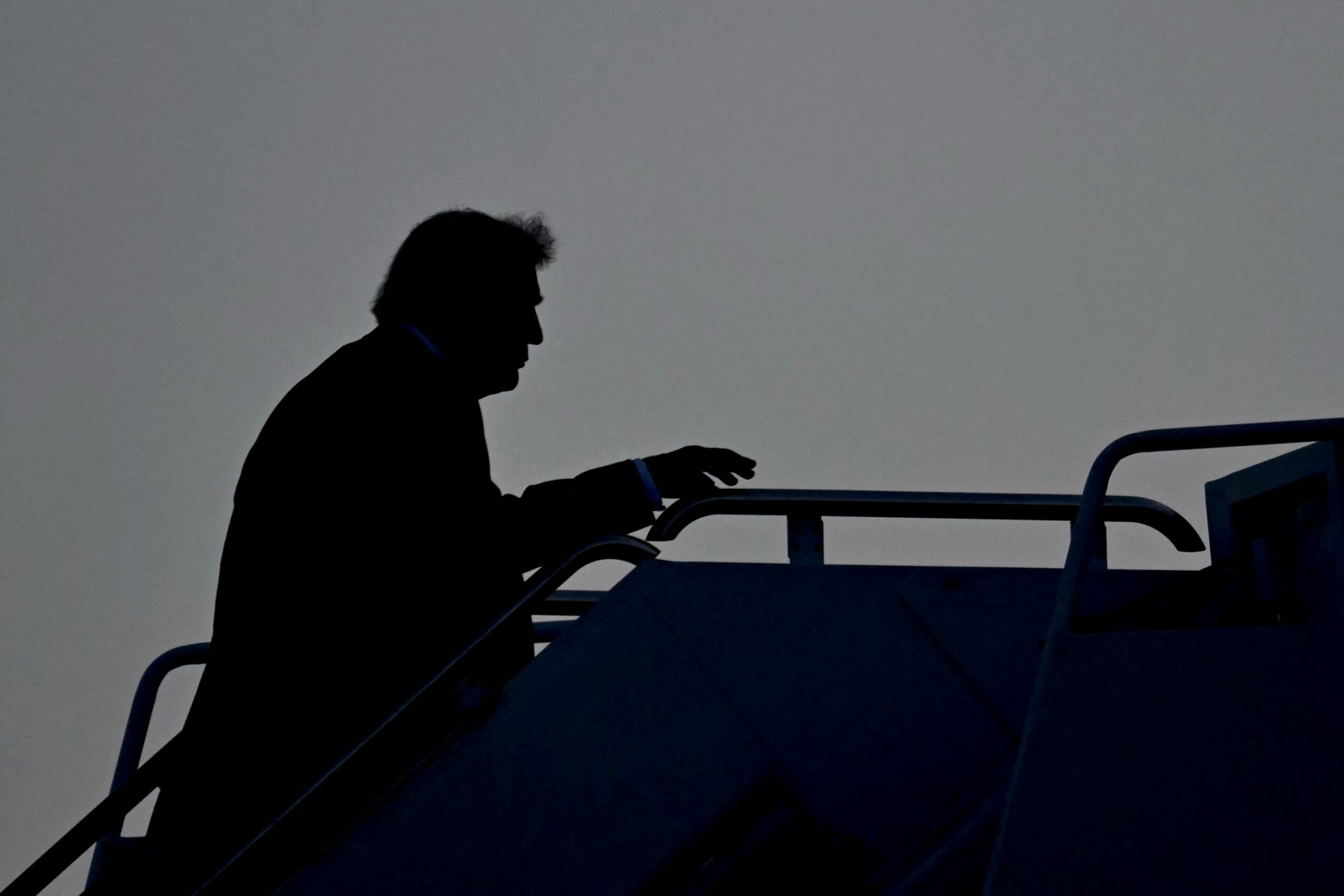
US President Donald Trump boards Air Force One at Joint Base Andrews, Maryland, 15 August 2025. Credit: Andrew Caballero-Reynolds/AFP/Belga
Mistrust is growing in our streets, neighbourhoods and squares. After 600 days of political turmoil, this is somewhat understandable, but it is a phenomenon that has been simmering beneath the surface for much longer.
In this context, you have to be a little crazy to stand up for our democratic values. Crazy to defend our governments without hesitation, including their "défauts." But maybe that's what we are. Maybe we are a little "Democrazy." After all, we are Brussels residents; surrealism is in our DNA.
Brussels is and remains the global home of the democratic system. We are the capital of Flanders, Belgium, the EU and NATO. Now that Washington seems to be on an autocratic slope, it is up to Brussels to fully play its role as the capital of the free world.
We must show Europe and the world that we stand behind our ideals without hesitation. Our mission is clear: to further develop our role as defenders of freedoms, starting in our own neighbourhoods, together with our residents.
If it works in Brussels, it might work everywhere
Brussels is the most diverse city in Europe; 75% of its residents are of non-Belgian origin. We are the free port that gave birth to urban thinking, modernity and enlightenment.
It is, therefore, no surprise that it is mainly cities that defend liberal democratic values today, sometimes in direct opposition to their national governments.
Think of Budapest, where the mayor organised Pride against the will of Orbán's regime. Or, more recently, Minneapolis, which challenged the presence and harsh methods of the federal immigration service, ICE. And you can be sure that these cities look to Brussels as a symbol of freedom and justice.
The brand name "Brussels" may sound boring to some, but it symbolises our European democracy. As the most diverse city on the continent, we are a true democratic laboratory.
Our difficult socio-economic reality and our surreal political oddities provide the perfect breeding ground for innovative participatory and democratic models. Projects such as citizens' assemblies, the G1000 or the "Respect Brussels" plan are the products of a constant search for a new model of society.
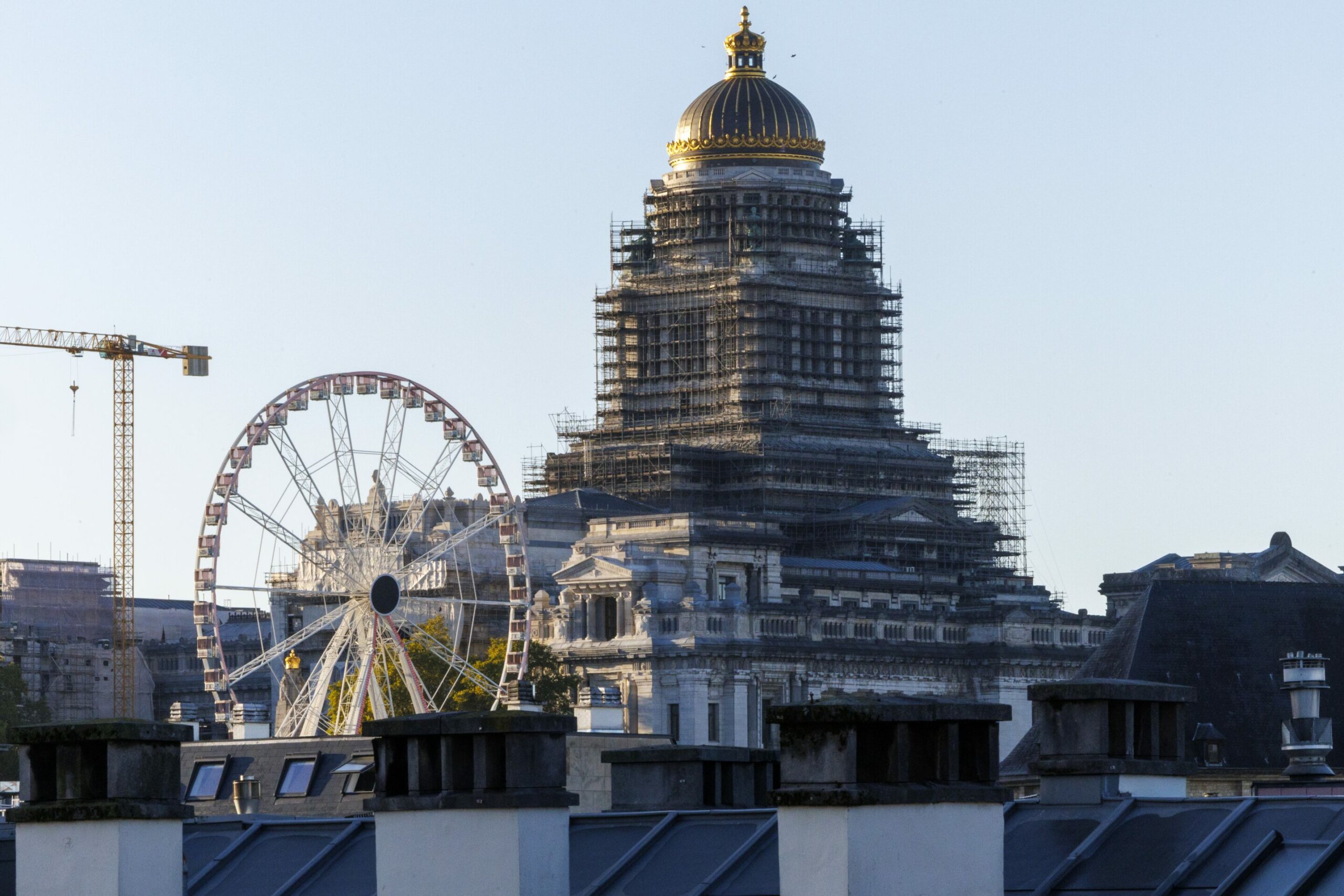
A view on the Palais de Justice taken on Friday 24 October 2025. Credit: Belga/ Nicolas Maeterlinck
Because if it works in Brussels, it will work anywhere. Yes, with ups and downs, but that is precisely what makes democracy so fragile and human: it is never finished, never perfect, always changing. In fact, our democracy is just like a typical Brussels terraced house. You have the beautiful, stately façade, but at the back you find the shacks that have been added over time.
It is a constant evolution; sometimes messy, but always lively and incredibly resilient. In Brussels, we are not afraid of the complexity behind the façade, because that is where life happens.
According to Human Rights Watch, almost three-quarters of the world's population now lives under an autocratic regime. This brings us back to the level of 1985. The decline is particularly rapid in the United States.
The past 613 days may not have been very elegant, but the negotiators continued to search for a workable compromise in the most creative ways. The realisation that the credibility and workability of our democracy was at stake ultimately tipped the balance.
Let it be clear that next time it must be different and faster. Let it also be clear that we need to rethink our system in Brussels. But we will succeed. Precisely because we in Brussels have mastered the art of the impossible compromise, we are the rightful candidate.
Democracy is messy, slow and sometimes exhausting. But in Brussels, we prove every day that it works. We are "Democrazy," and that is exactly what the world needs right now.
Frederik Ceulemans (Anders) is the City of Brussels's councillor for Urban Renewal, Climate, Citizen Participation and Dutch-language
affairs.
