

In 2018, I published a book explaining why Belgium would never split, and setting out a vision for the country’s future built around two main components: a strengthened, common demos and a simplified, federal structure. Since then, Belgium has evolved. The prospects for the first component of this vision have improved, while those for the second have deteriorated.
Belgium will not explode any time soon. The fundamental reason is simple: neither Flanders nor Wallonia can appropriate Brussels, and neither is willing to relinquish it.
In my book Belgium. Une utopie pour notre temps/Belgium. Een utopie voor onze tijd (Académie royale & Polis, 2018), I outlined how radical reforms could significantly improve the quality of the country’s political life. Two pathological features of the current system need to be addressed: the fragmentation of our democratic space along linguistic lines, and the hyper-complexity of the federal structure.
Two democracies
Over the past century, the Flemish movement has advanced many arguments in favour of greater autonomy or outright independence. One of them has gained particular prominence since Bart De Wever, Belgium’s current prime minister, emerged as its main political and intellectual leader: the “two democracies” argument.
“Today, Belgium is no longer a democracy,” he wrote in a 2017 essay entitled 'From stalled mobility to stalled democracy'. “It has split into two democracies: one Flemish and one French-speaking. Each has its own parties, its own media, its own social and political consensus and – due to federalisation – its own political institutions.”
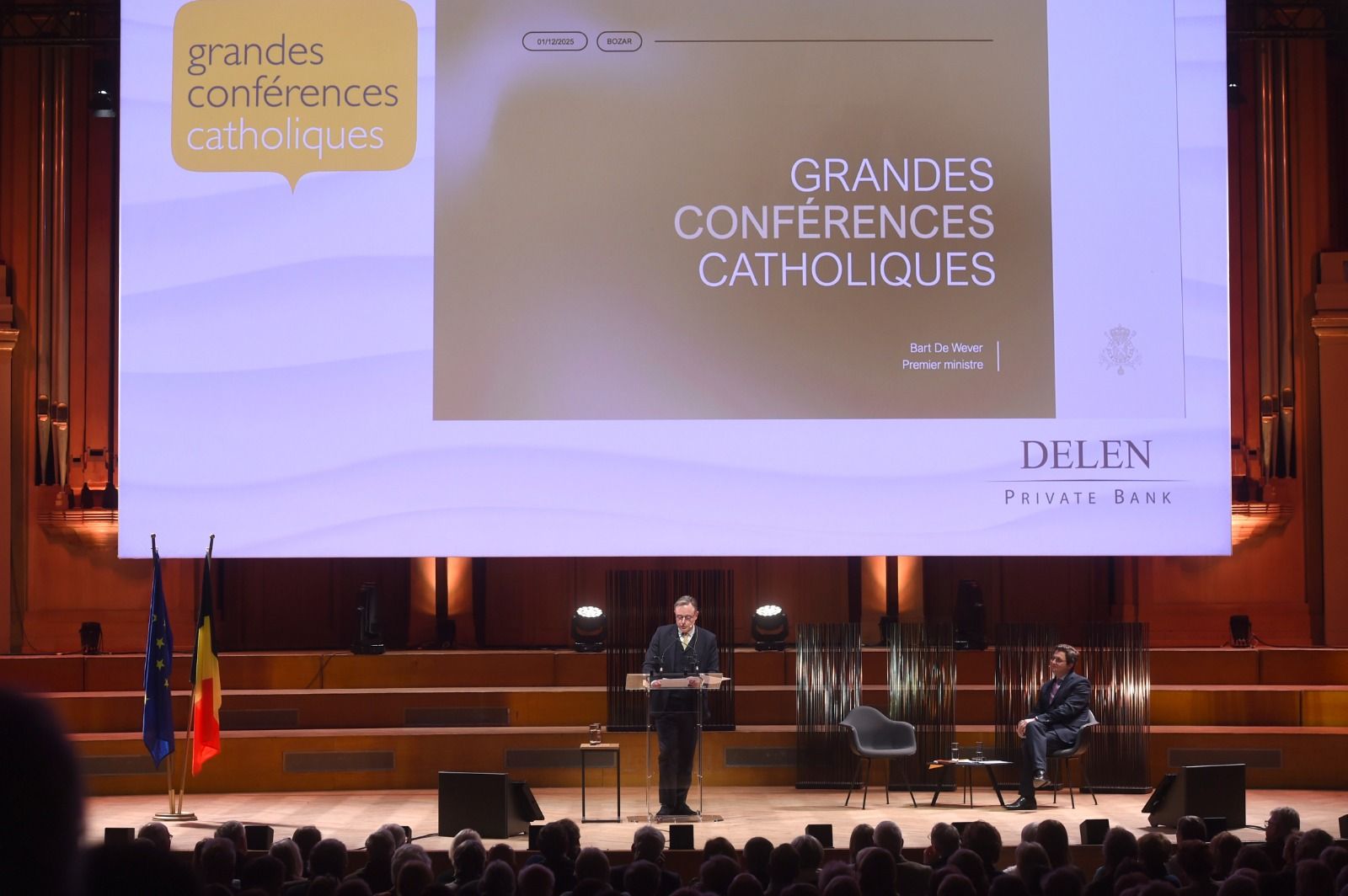
Belgian Prime Minister Bart De Wever gives a speech about the future of Belgium at a university
The idea that a democratic state can only function properly if its citizens participate in a shared public conversation was not one invented just for Belgium. “Among a people without fellow-feeling, especially if they read and speak different languages, the united public opinion necessary to the working of representative government cannot exist,” wrote John Stuart Mill in Considerations on Representative Government (1861). He did cite Belgium as an exception to this rule – but he should not have done so.
Until the end of the 19th century, French was Belgium’s sole official language. Well into the 20th century, it remained the exclusive language of higher education, quality media and national politics. As the Flemish movement gained ground in these domains, however, it gradually produced a flourishing Dutch-speaking democratic forum, increasingly emancipated from the French-speaking one.
Common conversational space
In my book, however, I argued that the “two democracies” thesis was being challenged by a new linguistic reality. While the subtitle of the book appeared in French or Dutch depending on the edition, the title itself was in English in both: Belgium. I presented evidence of a rapid, generational rise in English proficiency.
More recent data have confirmed this trend. The latest Eurobarometer surveys on languages, presented by languageknowledge.eu, show a striking contrast between those born before 1957 and those born after 1989.
In the 2023 edition, 60% of Belgian residents aged 15–34 reported speaking English well or very well – more than those reporting the same for Dutch (57%) or French (56%). In the 2012 edition, only 38% of those aged 55 or over reported good or very good English, compared with 68% for French and 65% for Dutch. What I could only conjecture in 2018 has now clearly materialised: from one generation to the next, English is becoming Belgium’s most widely shared language.
In a lecture delivered in French in December 2025, Bart De Wever himself acknowledged this development: “I fear that in this country we will reach a point in the future where we shall speak English to one another, Flemings and Walloons alike.” This was hardly foreseeable when he founded the N-VA in 2001 and began promoting the “two democracies” narrative.
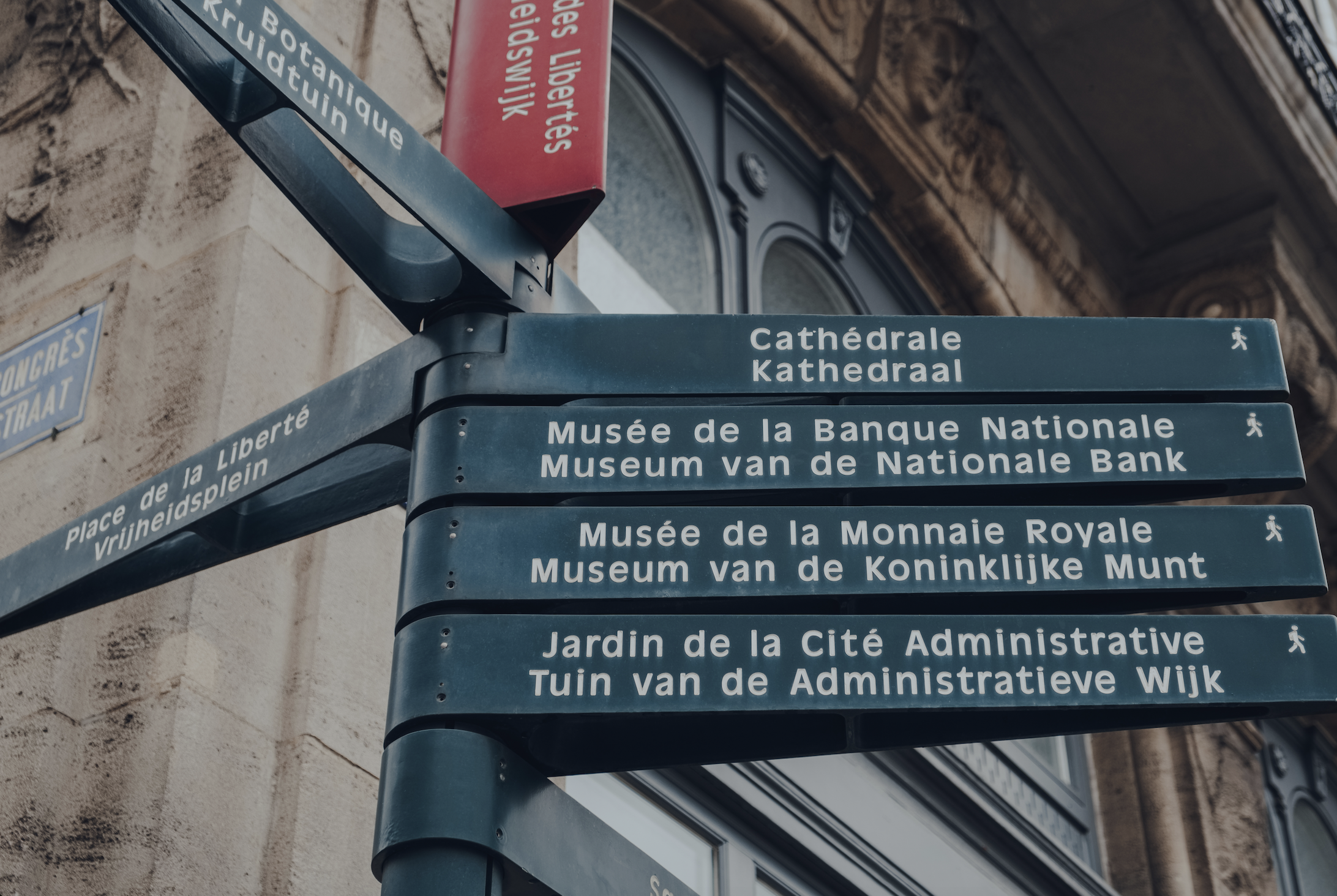
Bilingual signs in Brussels
There is, however, another trend that neither he nor I anticipated: the development of artificial intelligence and the dramatic improvement in machine translation and interpretation that has accompanied it.
With almost all media now online, high-quality AI translation is freely available. As a result, Flemish newspapers can now be read in Walloon villages where no printed Flemish paper has ever circulated – and vice versa.
The impact has been tangible. In December 2025, De Standaard, the leading Flemish quality newspaper, launched a French edition, which it could not have done without cheap high-quality machine translation. This marked a remarkable leap across the language border for a paper founded in 1918 as a flagship of the Flemish movement, which until 1999 still carried the slogan AVV-VVK (“Everything for Flanders – Flanders for Christ”) on its front page.
Taken together, these two trends – the spread of English among younger Belgians and the technological erosion of linguistic barriers – have perforated the language divide so thoroughly that the existence of two native languages can no longer be seen as an inevitable foundation for two separate democracies.
A common electoral space
Yet a genuinely Belgium-wide demos requires more than a shared conversational space. It also needs a revitalised common electoral arena.
That arena collapsed in the 1970s during the conflict over the removal of the French-speaking section of the University of Louvain from Leuven. The crisis triggered the linguistic fragmentation of the three traditional national parties – Christian democrats, liberals and socialists. Since then, electoral competition has unfolded in two largely separate spheres, often with parties attempting to outbid one another at the expense of the other community.
How might this be remedied?
In my book, I supported a proposal first advanced in 2005 by a group of Dutch- and French-speaking academics known as the Pavia Group: the creation of a federal constituency. Under this model, a limited number of MPs – say, 15 of the 150 – would be elected in a nationwide district. Politicians with a genuinely national appeal would naturally gravitate towards it. While bilingual lists would not be mandatory, parties within the same political family would have strong incentives to present them.
Critics argued that ideological divergence between French- and Dutch-speaking parties had become too great for this to work. Yet in the 2024 federal election, all three political families that had split in the 1970s presented joint lists in the Brussels constituency for the first time in half a century. (The green parties had already done so earlier, and the far-left PTB-PVDA has always been a bilingual party.)
Implementing a federal constituency would require a two-thirds parliamentary majority – and therefore the backing of the country’s largest party, the N-VA, which strongly opposed the idea in a 2014 parliamentary hearing. Yet something unprecedented occurred in the June 2024 election: the N-VA fielded candidates in all five Walloon constituencies. With minimal campaigning and no star candidates, they nevertheless secured over 40,000 votes.
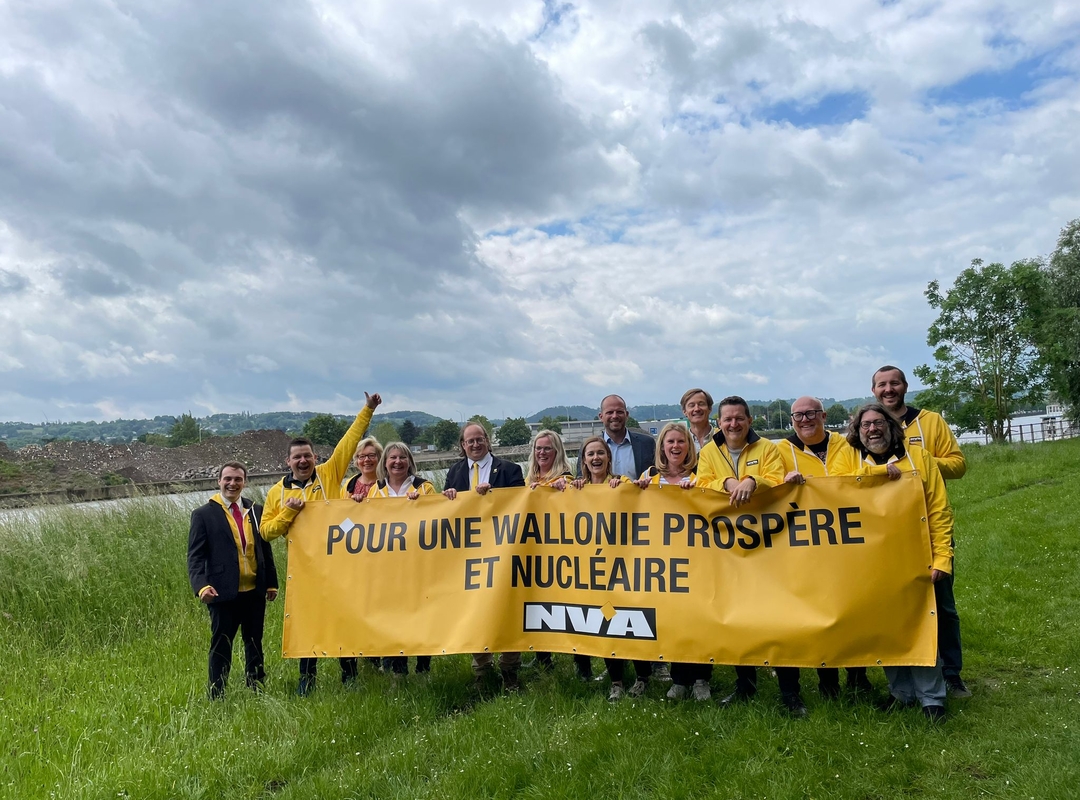
Flemish nationalists N-VA campaign in Wallonia
More striking than the vote total was the gesture itself. The N-VA leadership clearly recognised that its vision for Belgium’s future cannot succeed without engaging Walloon voters. That effort would be far more effective if the party’s senior figures could stand for election in Wallonia – something only a federal constituency would allow. Less than a year after becoming prime minister, Bart De Wever already ranks among the five most popular politicians in Wallonia, far ahead even of Georges-Louis Bouchez, leader of the MR, Wallonia’s top party. It might not take long before the N-VA becomes the most enthusiastic supporter of the federal constituency.
Overall, then, the first pillar of my Utopian project has advanced further, and faster, than I expected. A shared Belgian demos is gradually taking shape, fuelled by linguistic convergence, technological mediation and renewed cross-community political engagement. The spreading of English has been joined by the improvement of machine translation to strengthen a common conversational space, while the strategic reunification of the old national political families and the main Flemish nationalist party’s decision to try to seduce Walloon voters are notably improving the prospects of a stronger common electoral space.
A purely territorial federalism?
The outlook is far less encouraging for the second pillar: simplifying Belgium’s federal structure.
Belgium is not a purely territorial federation. Alongside its three regions – Brussels, Flanders and Wallonia – it also has three language-based Communities responsible for education, culture and parts of social policy.
These Communities share legislative power with the regions in their respective territories: the Dutch-speaking Vlaamse Gemeenschap in Flanders and Brussels, the French-speaking Fédération Wallonie-Bruxelles in Wallonia and Brussels, and the German-speaking Deutschsprachige Gemeinschaft in a small part of Wallonia.
In Flanders, regional and community institutions are merged, limiting confusion. In Wallonia, and even more so in Brussels, overlapping competences generate opacity, weaken policy coherence and blur political accountability.
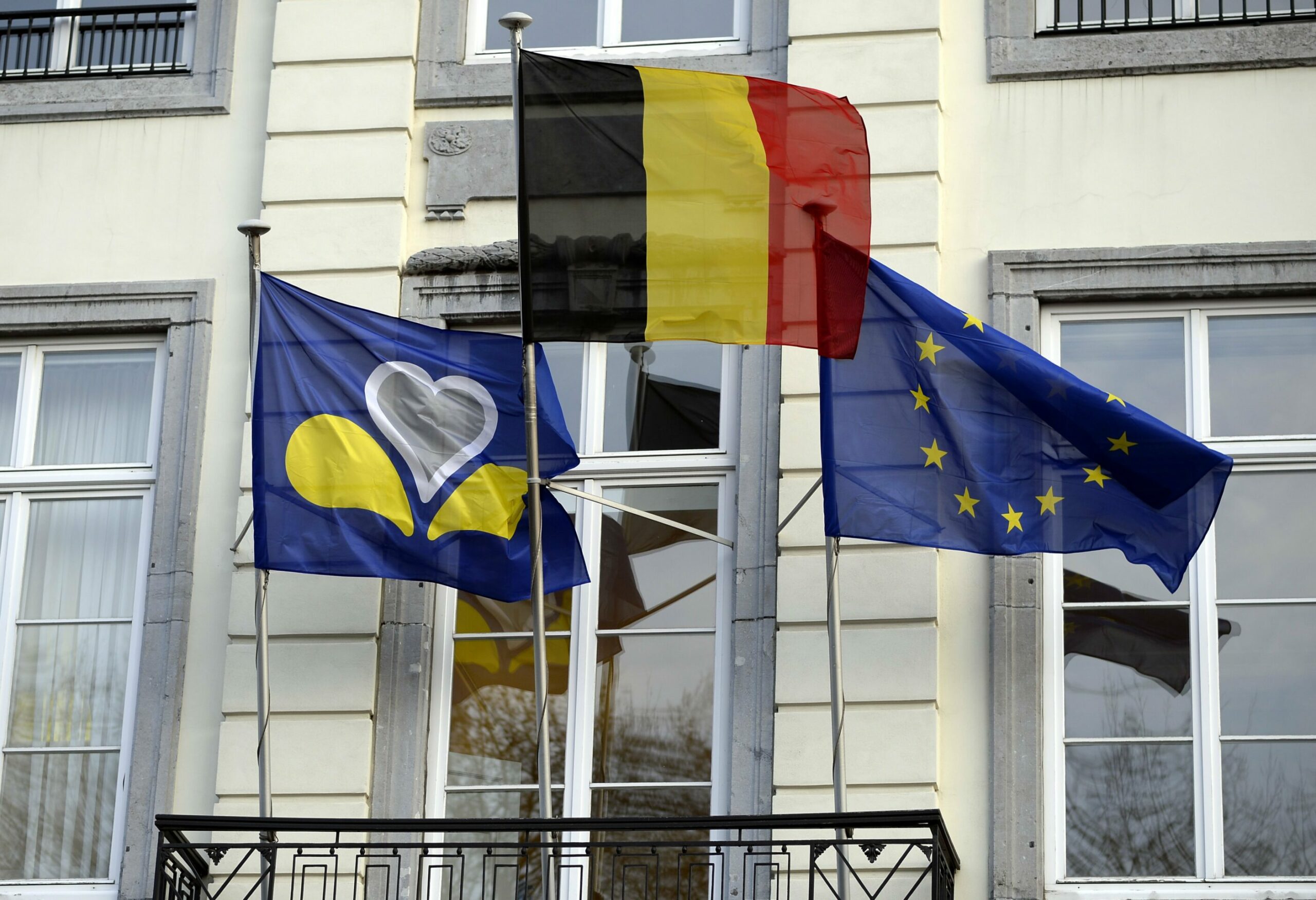
The flags of Brussels Region, Belgium and the European union pictured outside the cabinet of Brussels Region Minister-President. Credit: Belga
Where several sub-federal governments overlap, it is often very difficult for the ordinary citizen to understand who is in charge, the coherence of public policies is undermined, and the accountability of politicians is weakened.
A simpler, purely territorial model therefore has obvious appeal. Ostbelgien could become a fourth region, adding the competences currently exercised by the Walloon Region within its territory to those of the German-speaking community. The Brussels Region would assume the Community competences currently exercised within its territory by the Dutch and French-speaking Communities. All Belgians would then relate to a single sub-federal authority, as in Switzerland, Germany, Canada or the United States.
A fatal dilemma
This is an attractive model, but is it sustainable? In particular, how would Ostbelgien and the Brussels region fare if, together with the expenditures linked to the transferred competences, the regions’ and communities’ revenues, as determined by current federal legislation, were to be reallocated to the four regions in proportion to their populations?
An academic study commissioned by the German-speaking Community showed Ostbelgien would likely cope, albeit with administrative challenges. Many of its citizens work in Luxembourg or Germany and pay income tax there, but the ‘solidarity grant’ fixed by the federal financing law would largely compensate for the resulting loss in revenues. The main challenge for Ostbelgien would be the swelling of its administration. In an area that suffers from a structural brain drain, there might be no other option than to recruit an increasing number of German nationals.
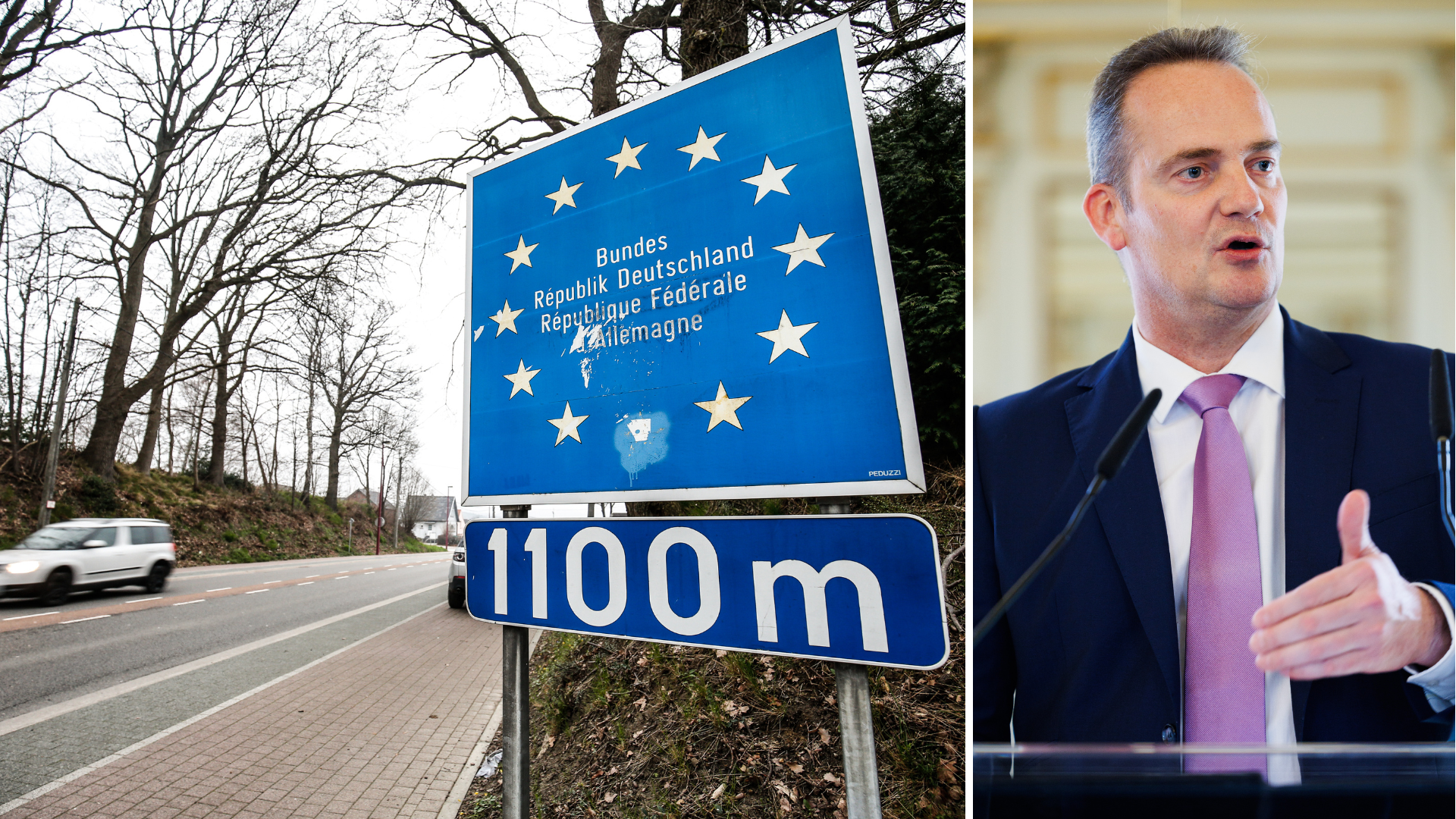
The border between East Belgium and Germany. Oliver Paasch is Minister-President of the German-speaking Community. Credit: Belga
Brussels, however, would face a much deeper fiscal problem. A study commissioned by the Brussels Government showed that absorbing Community competences would significantly increase its already substantial deficit for two reasons.
Firstly, the expenditures of both Communities exceed their revenues, and a proportional share of their deficits would be transferred to the Brussels region. Secondly, the proportion of the Communities’ expenditures currently allocated to Brussels exceeds the proportion of their revenues that would be allocated to Brussels in proportion to its population. This is mainly because the Flemish Community spends far more per capita for the 20% of the Brussels population assumed to be its responsibility than it does in Flanders.
This does not make a transfer of Community competences impossible, but it would clearly require as a precondition that the region gets its budget on track, possibly in part through a reform of the federal financing law. Even in the most favourable scenario, however, it would be impossible for the Brussels Region to exercise the competences of the Communities within its territory in a way that compensates the current “overspending” of the Flemish Community in the Brussels region.
This overspending is vital for the continued success of the Dutch-medium schools, where about 80% of pupils speak no Dutch at home and about 90% of teachers live in Flanders. Dutch is a minority language in a city dominated by French and in which even English is far more widely known. The successful education of a significant proportion of Brussels’ children (now about 20%) with Dutch as the language of instruction requires not only better-paid teachers but also an artificially created Dutch-speaking environment consisting of libraries, cultural centres, after-school, weekend and holiday activities etc, in which Dutch can be practiced, maintained and strengthened.
To provide the corresponding level of funding to Brussels’ French-speaking institutions (which cater for 80% of school pupils) as well as to the Dutch-speaking ones would be financially impossible. To provide it only to the Dutch-speaking institutions would be politically impossible.
Opportunistic Utopianism
This dilemma is the biggest obstacle to a purely territorial federal Belgium. A regionalisation of all Community competences would mean the collapse of the Dutch-speaking educational system in Brussels – which would be both unacceptable for Flanders and undesirable for Brussels. This does not prevent more modest steps in the direction of a simpler model based on four regions.
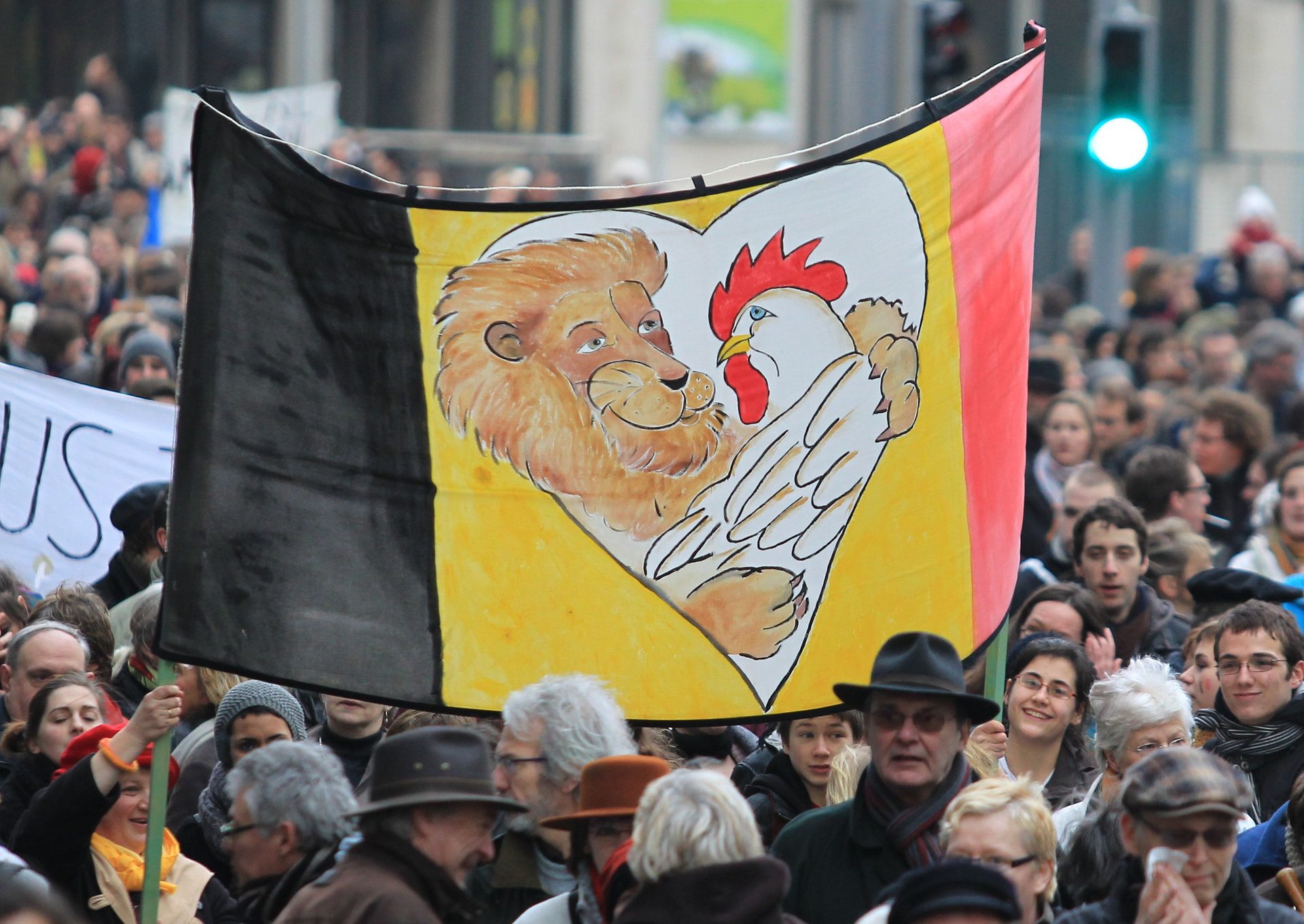
A large Belgian flag with the Flemish lion and the Walloon rooster embracing each other pictured during a demonstration. Credit: Belga/ Julien Warnand
But even those steps are currently jeopardised by the lasting deadlock in the formation of a Brussels regional government. Such deadlocks will keep occurring as long as Brussels retains an electoral system based on two electoral colleges, one for Dutch speakers and one for French speakers, that has become deeply dysfunctional. As a precondition for further desirable steps towards a simpler, more territorial federal Belgium, reforming this system should therefore be the top priority.
These obstacles do not stop me from remaining, unapologetically Utopian – but opportunistic and prepared to redirect his efforts according to where he believes they are most likely to pay off.
When progress stalls, I take comfort in a passage from a school textbook I once received in a village north of Hyderabad in India, reflecting on democracy in divided societies:
“You might find the Belgian model very complicated. But these arrangements have worked well so far. They helped to avoid civil strife between the two major communities and a possible division of the country on linguistic lines. When many countries of Europe came together to form the European Union, Brussels was chosen as its headquarters. A great honour to Belgium and an acknowledgement of Belgium's ability for fair play and justice.”
