
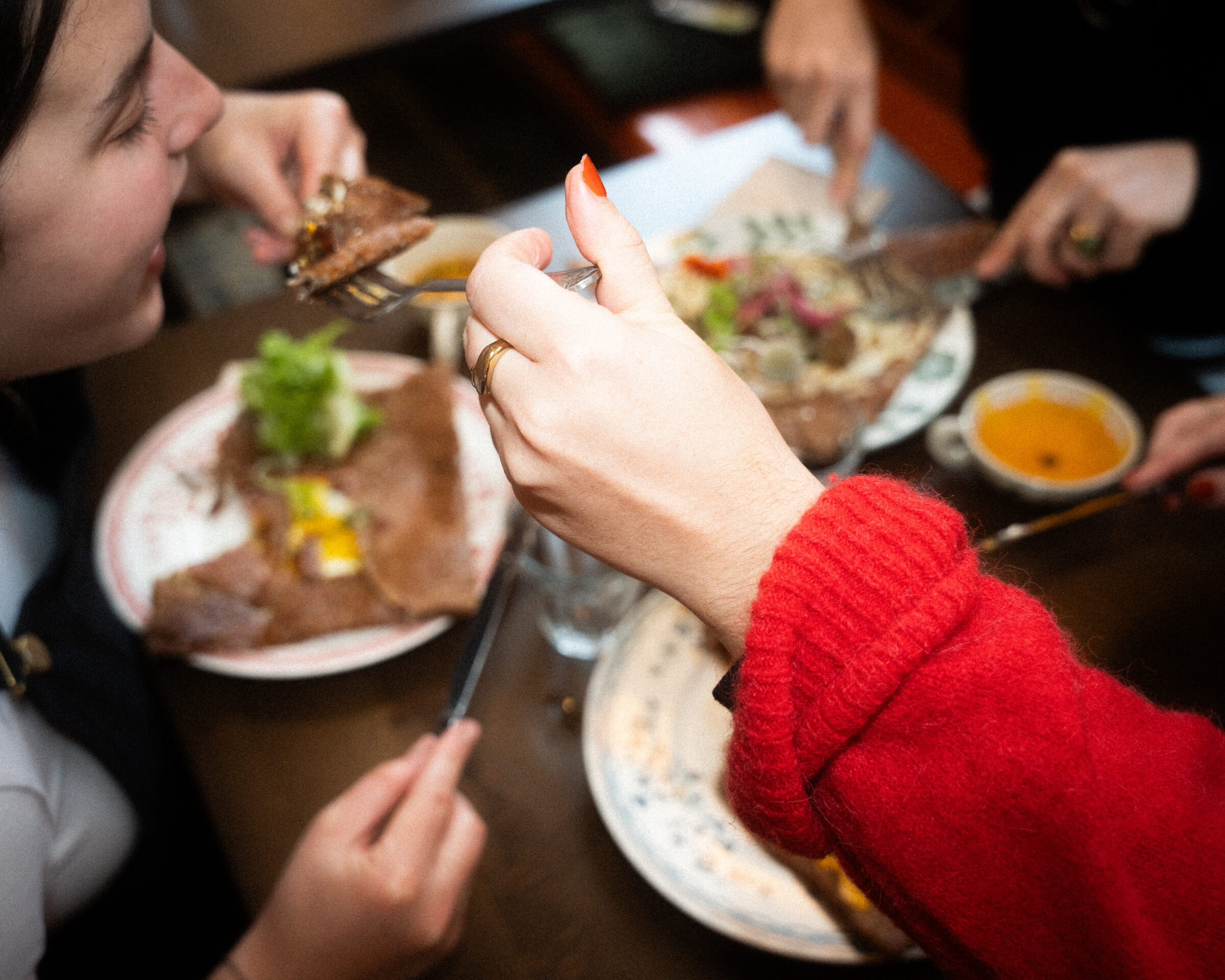
What are the most delicious foods, refreshing drinks, coolest cafés and intriguing restaurants in Belgium and Brussels right now?
Here are the trends that recently caught the eye of our food and drink expert.
Restaurant
Kras Mat
Kras Mat
A Breton crêperie might sound out of place in a Belgian gastronomic column, but Kras Mat fits Brussels perfectly. While its buckwheat flour, andouille and Bordier butter come from Brittany, almost everything else is local: vegetables, eggs, handmade sausages, craft beer, coffee, tea, ice cream, even the china. Ciders are selected with advice from Brussels’ leading cider bar, Joran, while wines come from nearby Wine for Passion.
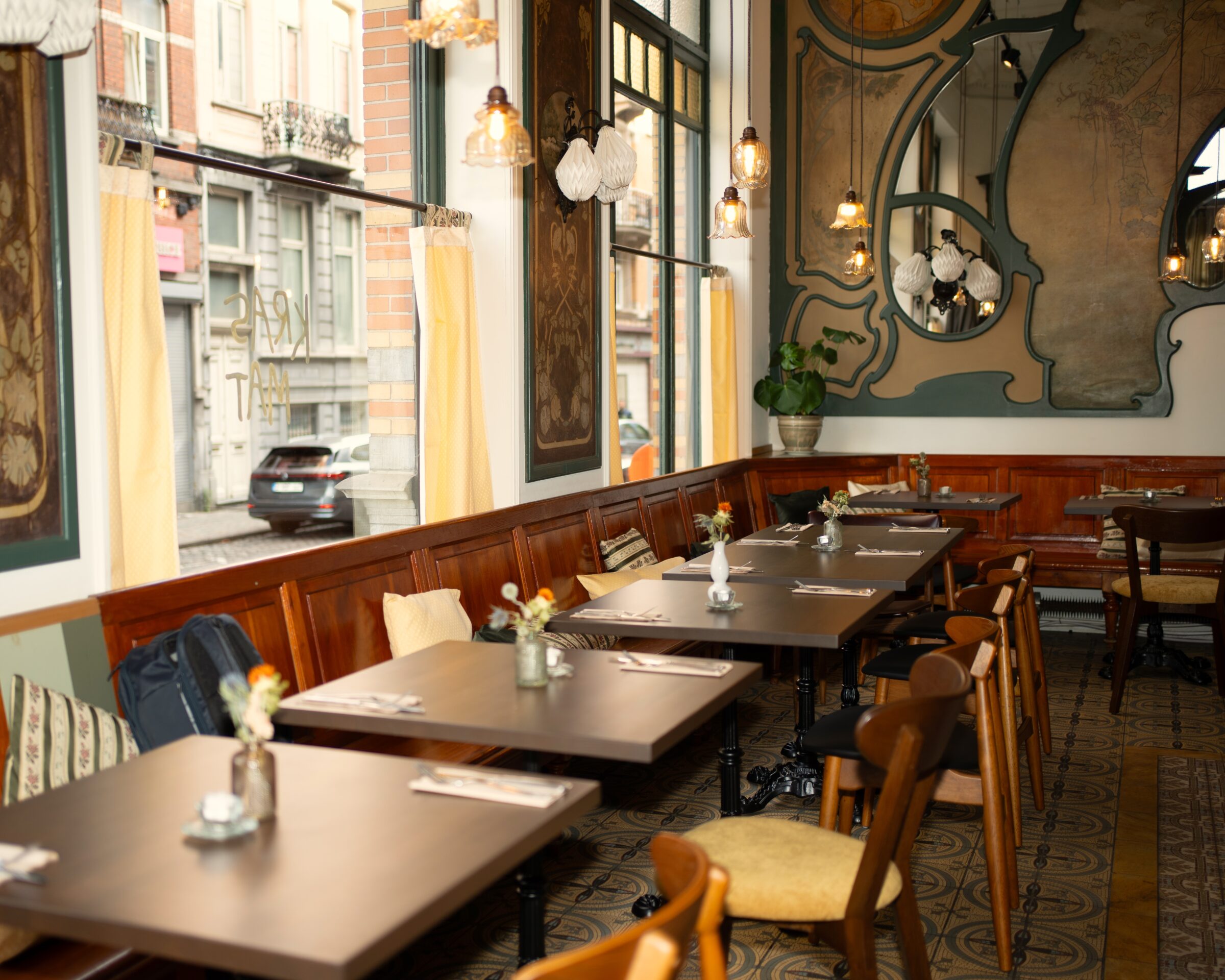
The sense of fusion goes beyond the plate. Kras Mat occupies a listed Art Nouveau building designed in 1906 by Gustave Strauven, lending architectural elegance to the experience. Childhood friends Rebecca Saillard and Mélodie Carré chose Brussels for their first venture abroad, opening the crêperie last year with Breton chef Mickaël Guernalec and cook Lucas Benmahammed.
Kras Mat
True to its name – Kras Mat means ‘well drunk’ in Breton – the restaurant aims to offer a generous, genuine gastronomic experience. Judging by the packed dining room at lunch and dinner since opening five months ago, it is delivering.
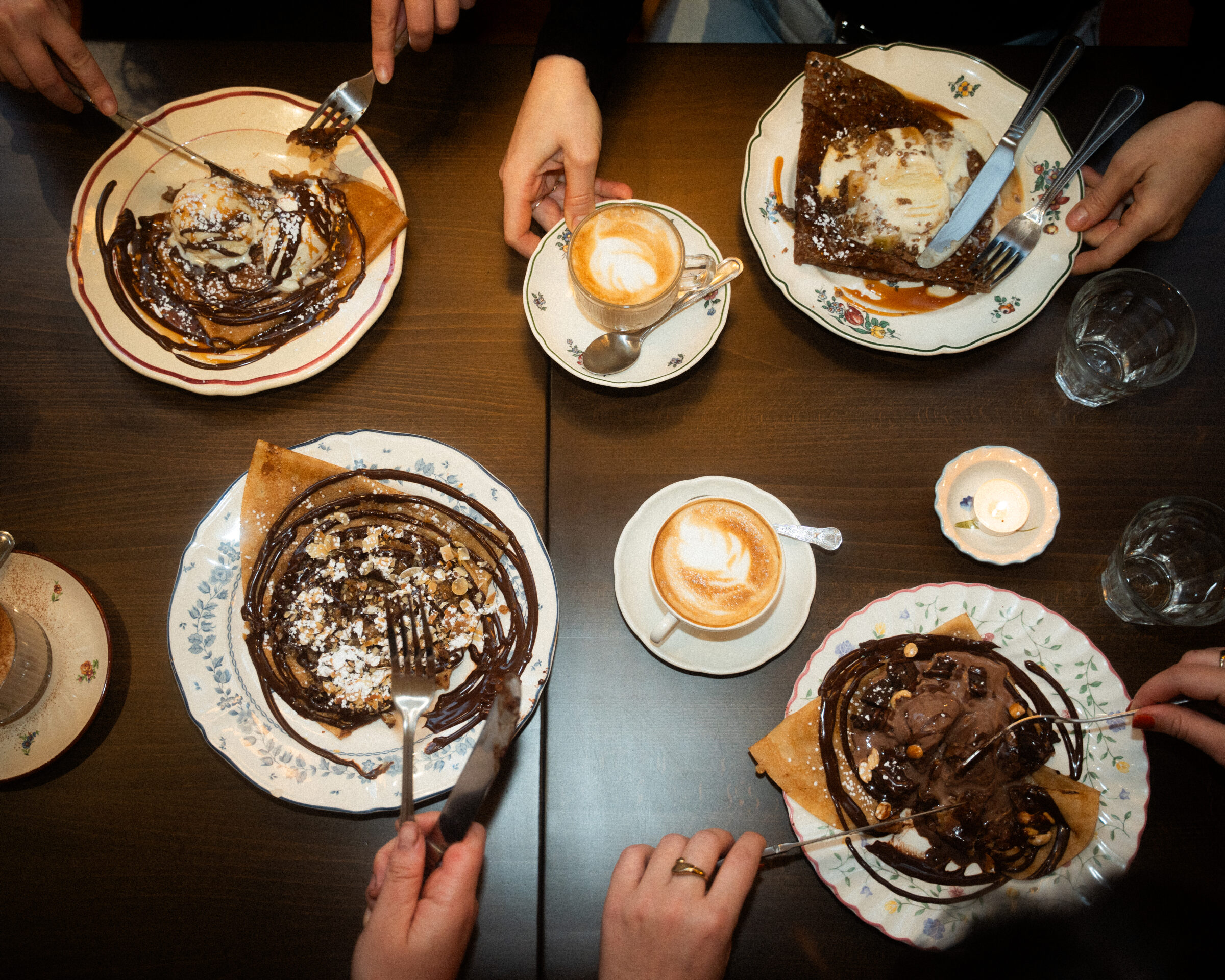
Classics are well represented: savoury buckwheat galettes with cheese, ham and eggs, and wheat crêpes lavish with butter, topped with sugar, jam, chocolate, ice cream or chantilly-mascarpone cream.
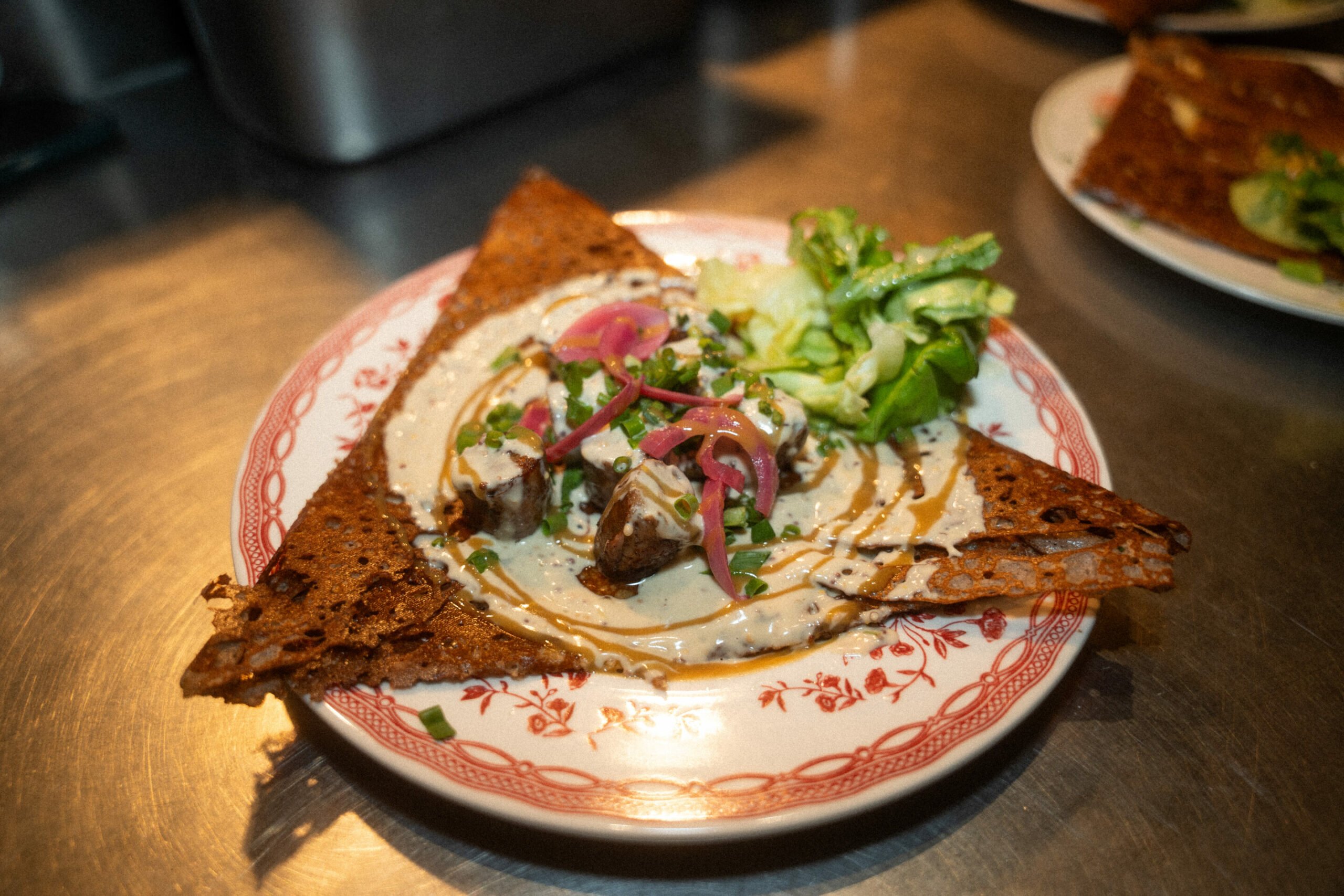
But the real appeal of this Schaerbeek gem lies in its more inventive creations, named after friends and relatives. Mélanie features raw mushrooms; the vegetarian Dominique combines curry and tahini; while Jojo d’hiver is a playful Breton hot dog – a homemade sausage wrapped in buckwheat crêpe with green cabbage and mustard sauce. Among the sweet options, Yannick stands out: cooked apples, salted-butter caramel, artisanal ice cream from nearby Jalou and a crunchy buckwheat crumble.
To drink, try the UK-made Pilton In Touch cider, fermented on Pinot Noir and Bacchus grape skins, which pairs well with meat-based galettes. Sweeter ciders work better with dessert. There is also craft beer from Brussels nano-brewery La Mule, alongside a concise list of organic and natural wines and low-alcohol ciders.
Kras Mat
Kras Mat feels less like a restaurant than a welcoming home. Second-hand plates with colourful floral patterns, personalised cider bowls and a relaxed, intimate atmosphere put guests instantly at ease. The real luxury lies in the details: careful sourcing, attentive service, softened lighting beneath the high ceiling, excellent coffee – or the generous handful of toasted hazelnuts scattered over a galette.
A happy slice of Brittany in Brussels – and a convincing one.
Kras Mat 61, Ave Louis Bertrand, 1030 Schaerbeek
Food
Omage
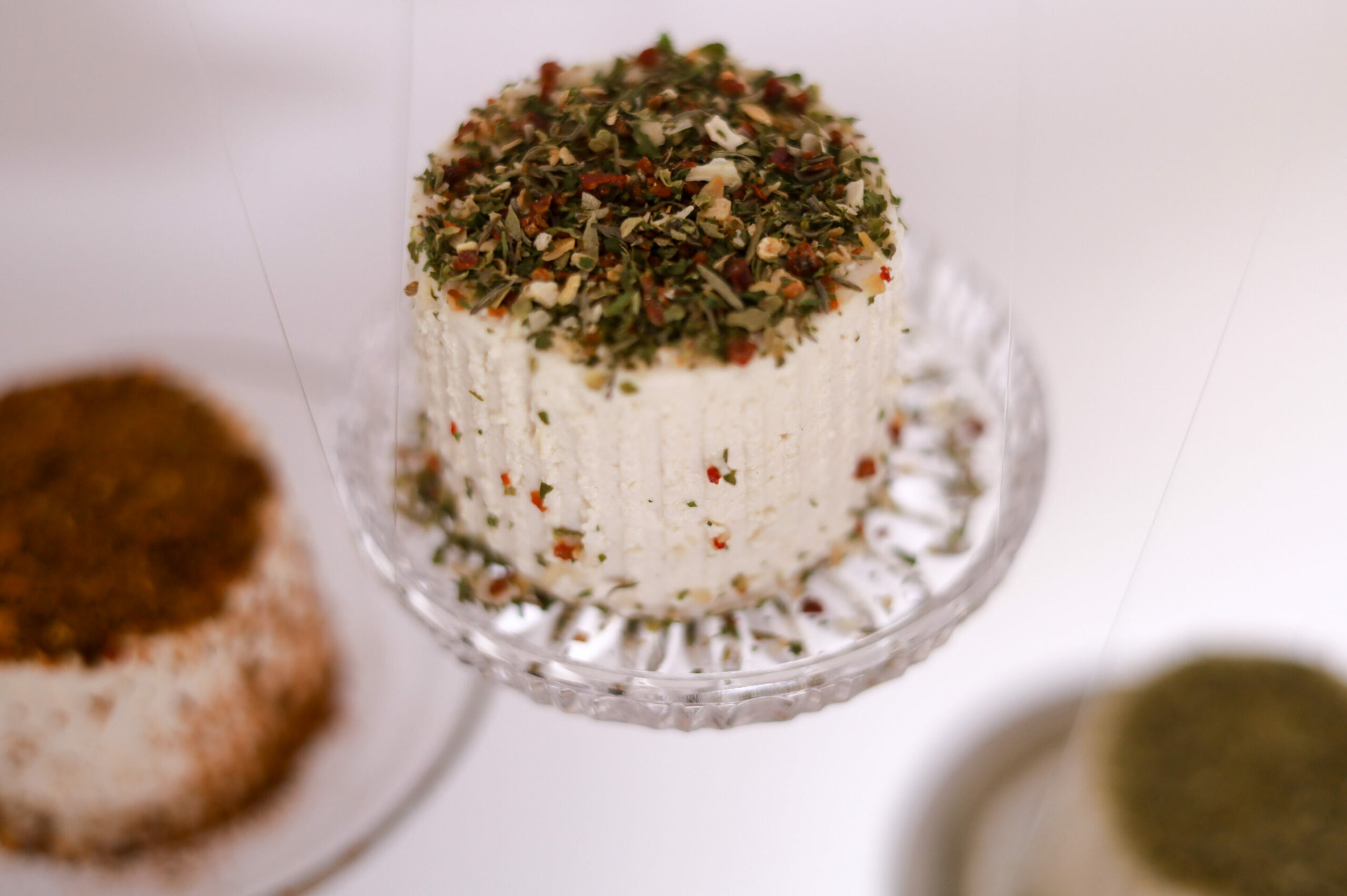
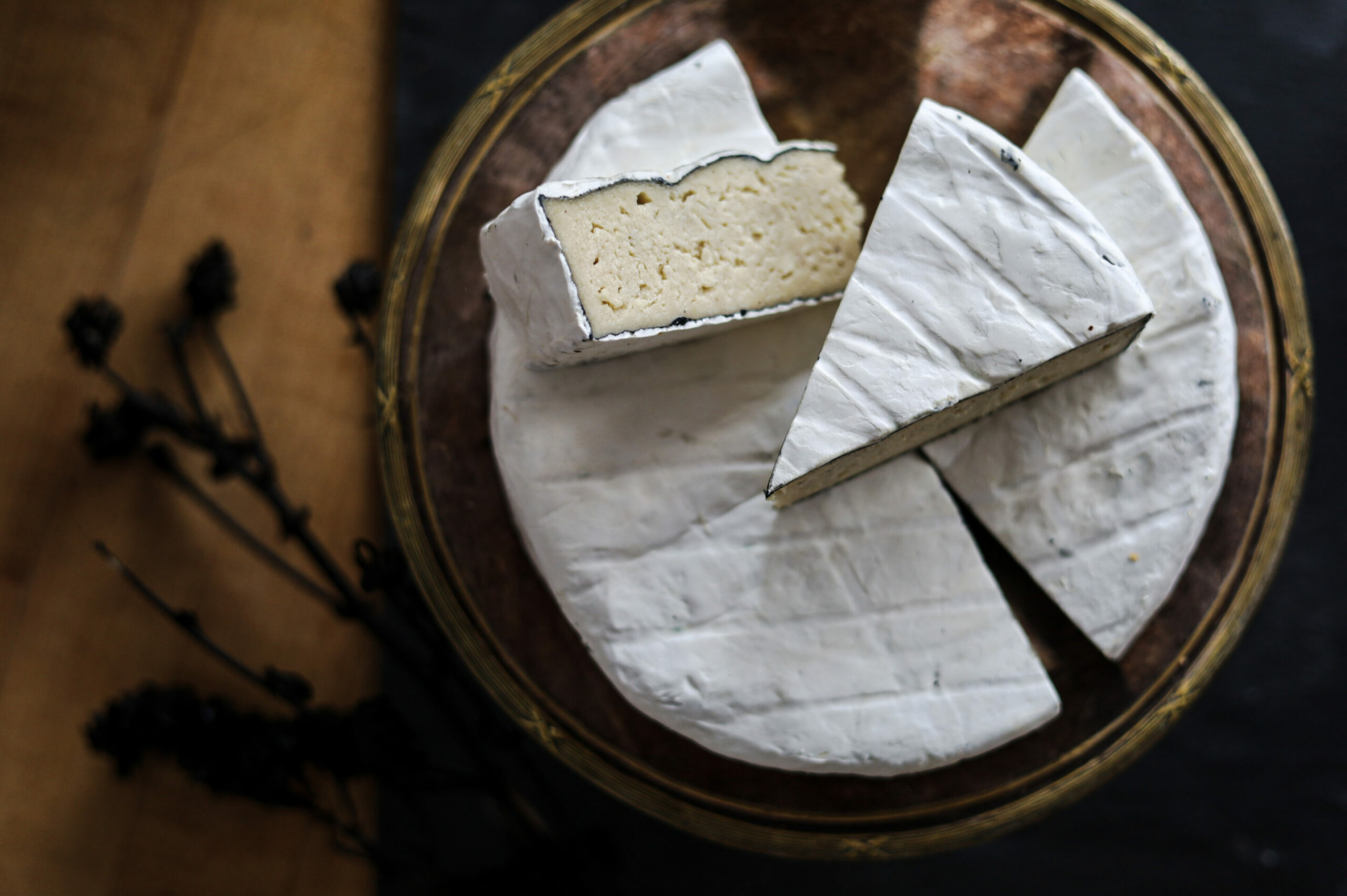
Omage removes dairy from cheese while preserving the ritual. Its name –fromage with the middle letters removed – hints at what it is not, while also sounding like homage. The products resemble cheese in form and texture, but their taste is entirely their own. And that is precisely the point.
Instead, Omage’s creations offer complex flavours built around cereals and nuts. Fermented cashews and almonds are still unusual territory. “They don’t taste like anything you already know,” says Neri De Meester, the brand’s creator.
De Meester trained in fashion design before travelling to the United States, where she followed courses in raw food and dairy alternatives. Back in Belgium, she began experimenting independently, launching her first product, First Snow – a small, camembert-shaped creation. Initially shared within a niche community, its success encouraged her to expand the range.
Today, Omage includes Garlic Galore, a punchier version of First Snow, and Smokey Snow, flavoured with smoked paprika, giving it a vibrant orange hue. In her small workshop near Ghent, De Meester processes nuts into milk, then ferments them much like traditional cheese – but with carefully selected cultures that produce entirely new flavour profiles.
Beyond its vegan credentials, Omage appeals to a broad and growing audience. “Our products are difficult to explain,” De Meester admits, “but once people taste them, it works.” That is why she regularly attends food fairs, encouraging direct discovery. She also supplies a small number of restaurants seeking premium non-dairy options for customers looking for organic, allergen-free, lactose-free, vegan, gluten-free or minimally processed food.
Omage
The range extends further, with mock cream cheeses flavoured with herbs or chilli, coconut-oil-based mock butters, and – a surprise bestseller – mock cheese croquettes made from fermented potato. Omage products are sold through Bio-Planet and online. At around €9 per piece, De Meester is realistic: “They don’t fit in conventional supermarkets.”
Crucially, Omage does not claim to replace cheese. “These products are not replicas,” she explains. “They offer a more sustainable alternative alongside traditional cheese on a cheese board.”
A genuinely original – and tasty – Belgian innovation.
Café
La Maison des Gaufres
La Maison des Gaufres
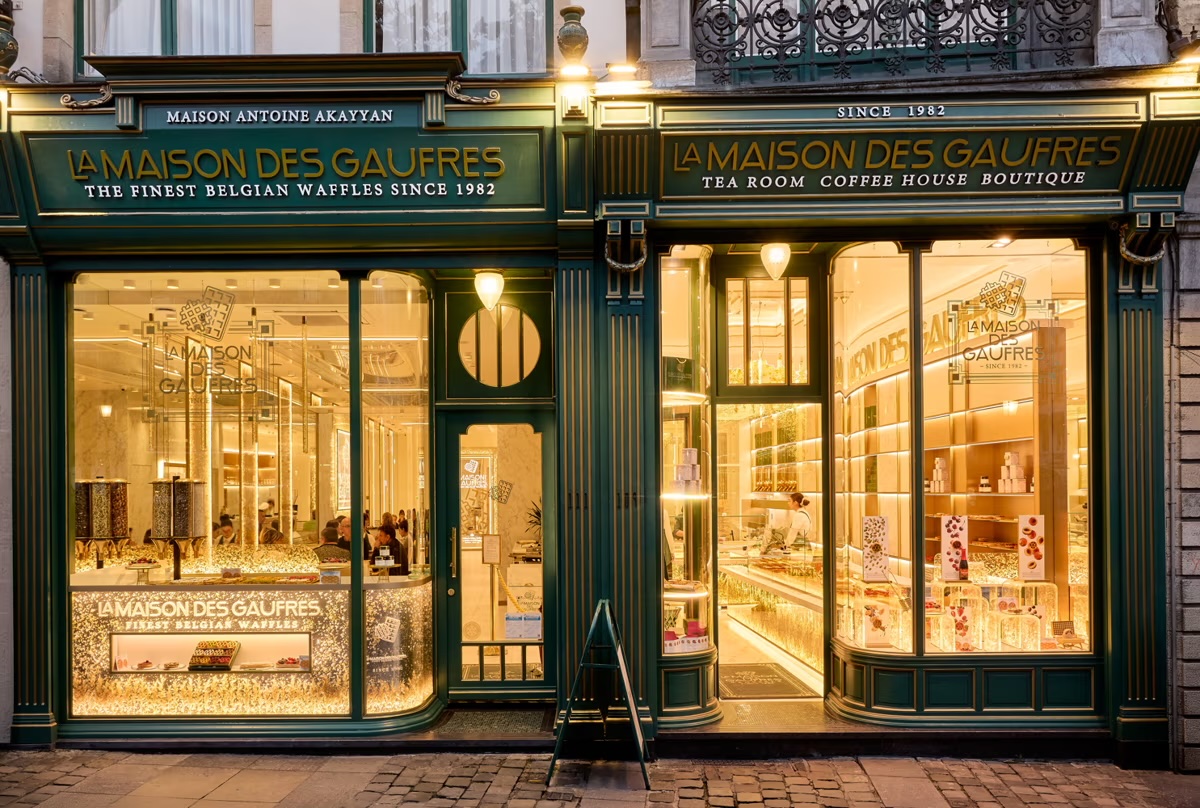
In the heart of Brussels, La Maison des Gaufres offers something unexpected: a genuinely luxurious tearoom dedicated entirely to waffles.
Both Brussels waffles –light and crisp – and Liège waffles – dense and caramelised with pearl sugar –are treated with seriousness and flair.
Owner Antoine Akayyan arrived in Belgium in 1979 as an Armenian refugee and began his career washing dishes in the city centre. Four decades later, he is a street-food entrepreneur, building a small empire of waffle and fries outlets. When the listed 1696 building that houses La Maison des Gaufres came up for sale, he seized the opportunity.
Formerly a butcher’s shop and later a pharmacy, it was completely reimagined. The renovation revealed original Greek columns and carved glass doors, transforming the interior into a luminous space of crystal, marble and discreet touches of 24-carat gold.
La Maison des Gaufres
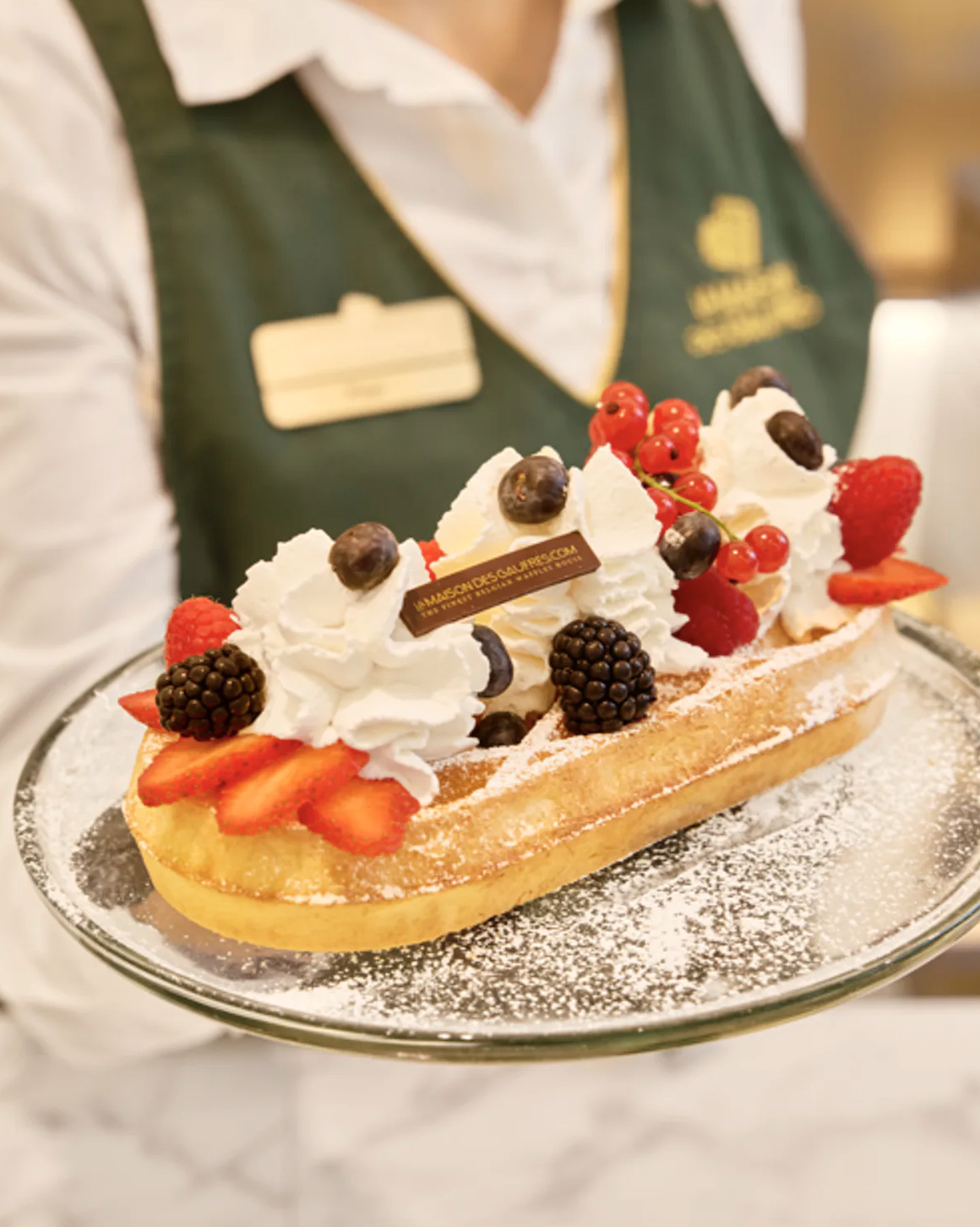
Inside is unapologetic indulgence. Impeccably dressed staff guide guests through a generous menu of hot and cold drinks and an extensive selection of sweet and savoury waffles. Orders can be chosen from the menu or customised with €3 toppings from a tempting list.
The house signature is a family-size Brussels waffle, cooked live with guests in the tearoom – a performance as much as a dish. Behind the scenes, waffles are treated as applied science. The dough follows a traditional recipe, while the waffle irons have undergone extensive research to ensure optimal texture. For the tiramisu waffle, for example, coffee is poured directly into the batter before baking, then topped with mascarpone, cocoa powder, toasted almonds – and a dash of amaretto, on request.
Akayyan favours a rhombus pattern rather than the classic square for his Brussels waffles, inspired by antique moulds displayed on the walls. His own irons, however, are oval – a discreet house signature.
To drink, try the homemade lemonades – mint, raspberry or blueberry. A back room is reserved for VIPs seeking a quieter experience; others may prefer the spectacle of the main room, with its striking benches and transparent tables inlaid with crystals, gold leaf and ears of wheat.
La Maison des Gaufres 109, rue du Marché aux Herbes 1000 Brussels
Drink
Full’iz
Full’iz
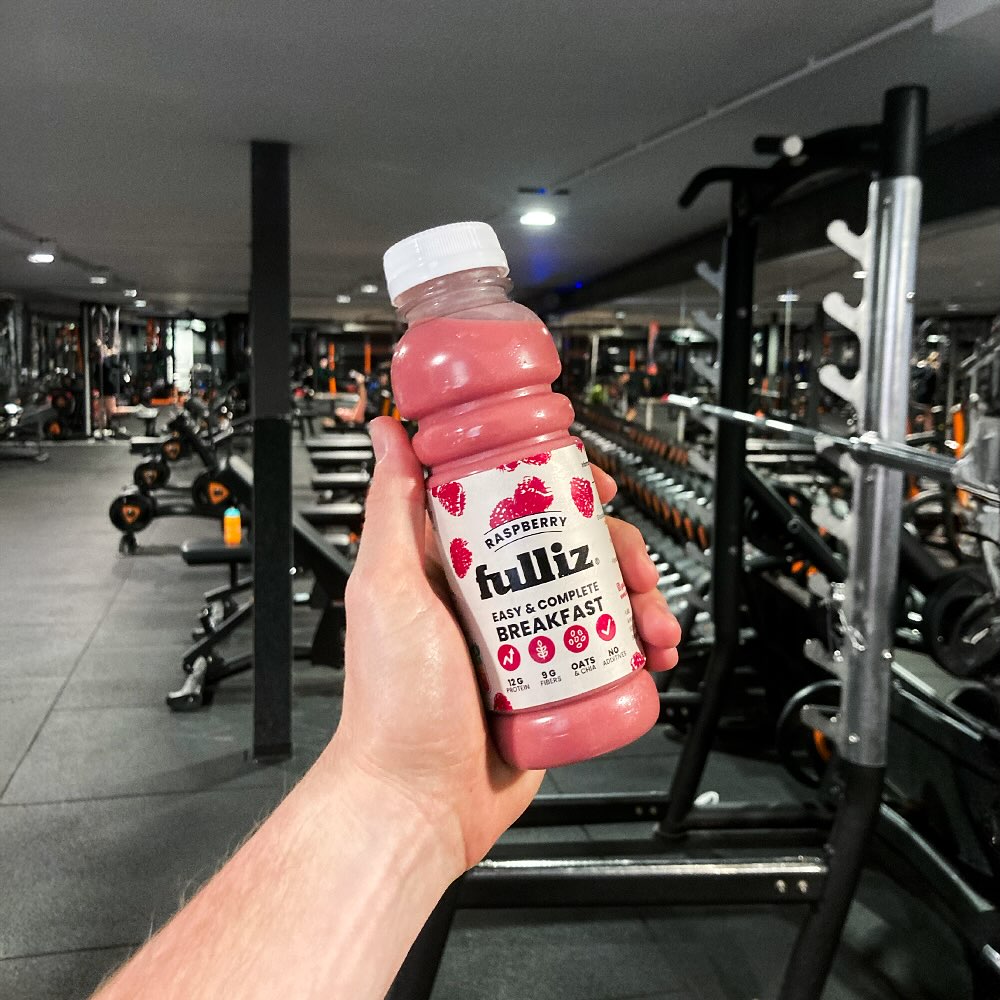
Belgium’s food culture thrives on innovation as much as tradition. Full’iz, a liquid breakfast substitute, is the latest example. Created by agro-engineer Guillaume Thébault and nutritionist Brieuc Migeon, the idea emerged during their studies in food innovation at Gembloux University – and from long, rushed commutes fuelled by petrol-station breakfasts.
“Breakfasts on the go are expensive and unbalanced,” Thébault says. “Developing an alternative made sense – and first and foremost, it was useful.”
Their aim was to design a healthy breakfast replacement that could be consumed quickly, tasted good, and kept well without refrigeration. Research shows that many liquid meals on the market relied heavily on ultra-processed ingredients – flavour enhancers, preservatives, emulsifiers and sweeteners.
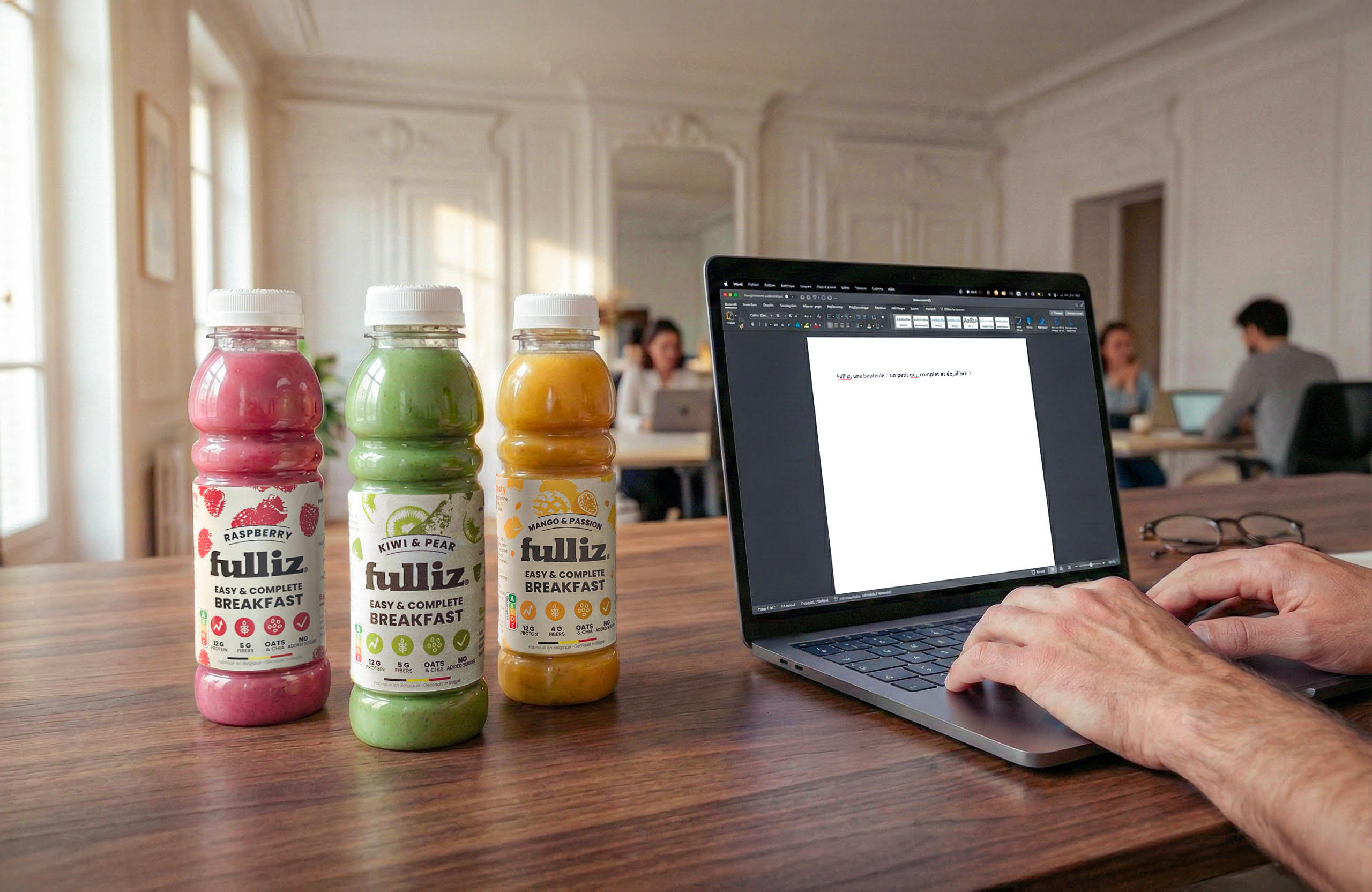
Full’iz was conceived as a deliberate alternative. The founders kept the ingredient list short and transparent, while ensuring strong nutritional density. The drink combines fruit and natural extracts with gluten-free, low glycaemic-index carbohydrates such as hydrolysed oats. Dairy proteins provide satiety, chia seeds add fibre and omega fatty acids, Belgian rapeseed oil boosts Omega-3, and lemon brings acidity and freshness.
Full’iz
Each bottle delivers 350 kcal and around 20% of daily recommended intake for key micronutrients, proteins, carbohydrates and fibre. Flash pasteurisation allows it to be stored at room temperature for up to three months – a clear advantage for busy commuters.
Full’iz comes in 33cl bottles and three flavours: raspberry–banana, mango–passion fruit and kiwi–pear. Smooth, fresh and surprisingly filling, it keeps hunger at bay until lunchtime.
Awarded at last year’s SIAL food innovation fair in France, Full’iz is now stocked by Delitraiteur, Carrefour Express, Delhaize in Walloon Brabant and Rob. In a city of commuters and offices, it is easy to imagine this becoming a staple of Brussels mornings.
