
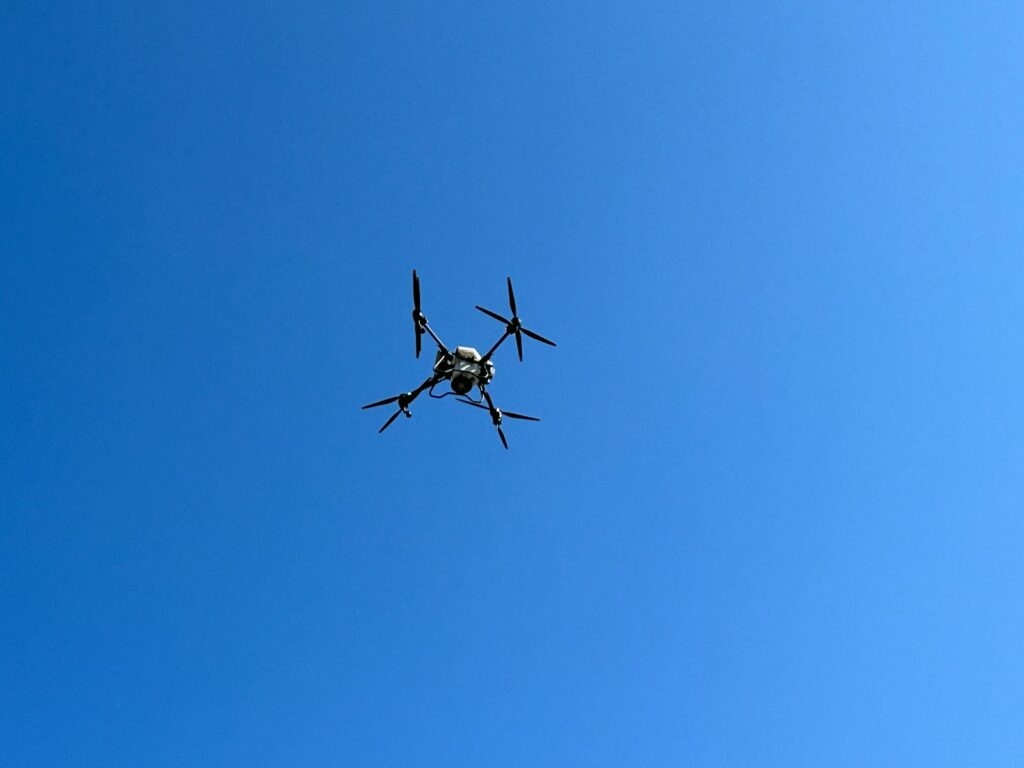
The EU-backed ALTISS drone project — designed to help military forces gather intelligence and spot threats using coordinated swarms of unmanned aircraft — was completed in December 2025.
ALTISS stands for “Highly Automated Swarm of Affordable ISR Long-Endurance UAVs for Force Protection”, and was selected under the European Defence Fund’s 2021 call, the European Commission informed on Thursday.
In plain terms, it involves long-endurance drones (UAVs) working together to carry out intelligence, surveillance and reconnaissance (ISR) tasks that would otherwise require multiple crews and aircraft.
The work was carried out by a consortium led by Magellium SAS, a small and medium-sized enterprise (SME), alongside Sagax, Radionor and M3S Belgium.
ALTISS is built around detecting and identifying targets across large areas, using a combination of sensors and software intended to shorten the time between spotting something and producing usable information, new details show.
The system includes a 360-degree high-resolution optical sensor and a communications intelligence payload that can detect radio signals and estimate their location.
How the system works in practice
The project was designed for “swarm” operations — meaning several drones can be managed together — allowing a single operator to oversee the entire group with AI-assisted mission planning and tools that automatically assign tasks, the Commission said.
Onboard processing and automatic event detection are intended to reduce the need for continuous human monitoring.
ALTISS also links radio-signal detection with visual and infrared imaging, automatically steering cameras towards a detected radio source and using image analysis to refine location and classification.
The European Defence Fund has invested close to €6.5 billion in defence research and development since its launch, with a total budget of nearly €7.3 billion for 2021 to 2027.
