
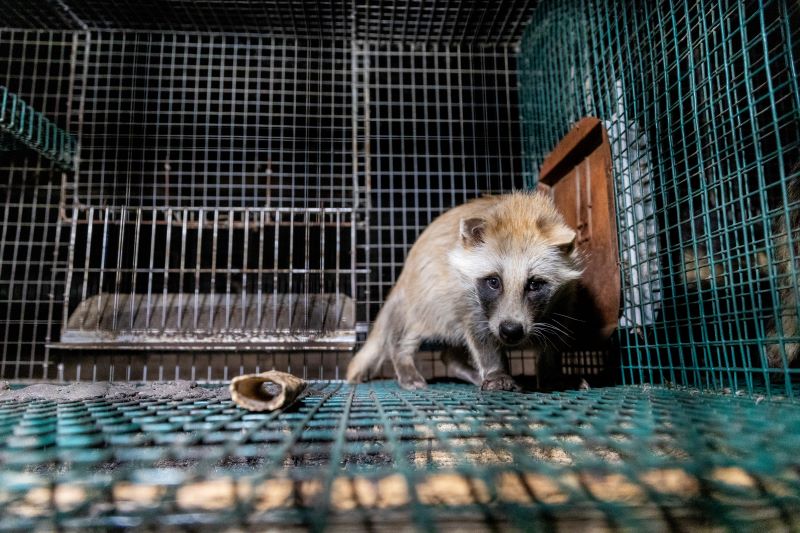
The European Ombudsman replied on Monday to a complaint from animal welfare NGOs against the European Commission for its lack of response to a meeting request concerning the ‘Fur Free Europe’ European Citizens’ Initiative (ECI).
To date, 19 EU member states have totally or partially banned or strictly regulated fur farming, sometimes with phasing-out period, on grounds of animal welfare and public health. However, the EU is still one of the main regions for fur production globally.
The ECI for a ‘Fur Free Europe’ was officially closed in June 2023 after a year of campaigning resulted in over 1.5 million signatures in 18 EU member states. The ECI goes further than most member states in calling not only for a ban on fur farming but also on a ban on the placing and marketing of farmed fur products in the European market.
The organisers of the initiative met with the Commission to present their case in July 2023. To date, the Commission has not replied to the complainants’ meeting request of 12 December 2025. In the letter, the Ombudsman suggests that the Commission should immediately reply to the complainants and inform her office when it is done. She asked that the reply be sent before the date by which the Commission intends to adopt its final position on the ECI.
Under the Code of Good Administrative Behaviour (Decision 2024/3083), the Commission is committed to answering enquiries from the public in the most appropriate manner and without delay. If a reply cannot be sent within 15 working days, the service responsible shall send a holding reply, indicating a date by which the addressee may expect a reply.
The European Commission is expected to table a legislative proposal by March 2026 which could lead to a future EU-wide ban.
The Ombudsman also addressed other concerns raised by the NGOs related to balanced stakeholder involvement and evidence-based decision-making. It expects the Commission to address these elements of the complaint in its reply to the meeting request.
The NGOs noted that, while the Commission held three closed‑door workshops in September last year with fur industry representatives, it ignored meeting requests from civil society and refused to share details or minutes of those workshops. “This imbalance undermines the principle of equal stakeholder engagement at a decisive moment for the initiative.”
“Citizens expect EU institutions to treat their concerns with the same seriousness afforded to industry interests,” commented Reineke Hameleers, CEO, Eurogroup for Animals. “Ensuring transparency, equal access and scientific integrity is essential, not only for the future of fur farming in Europe, but for the credibility of the ECI process itself.”
