
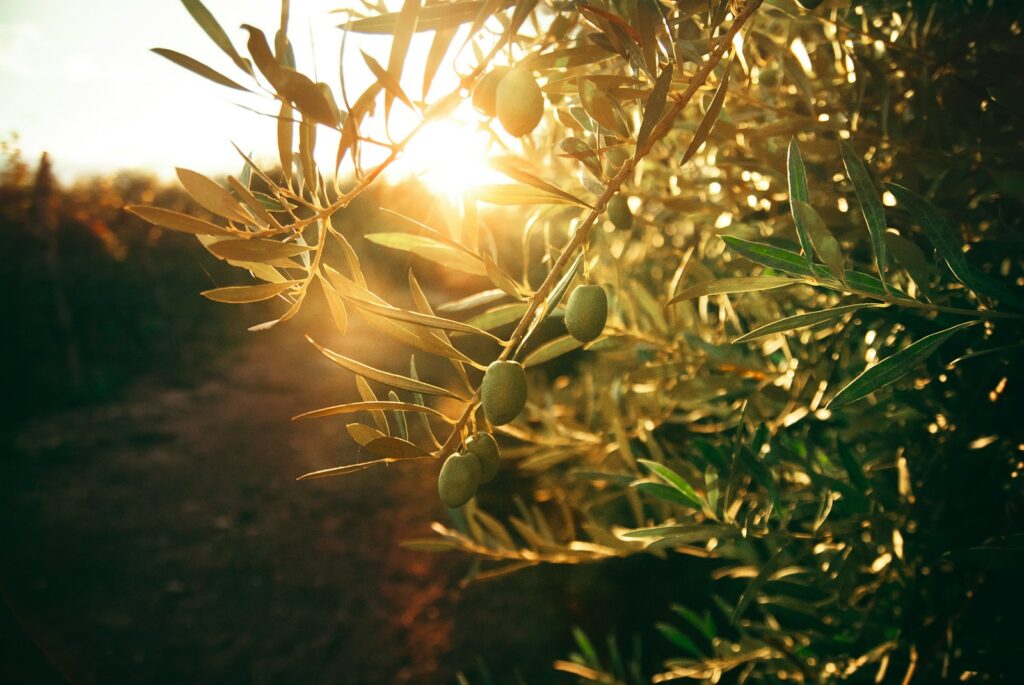
Olive farm waste such as prunings, wastewater and leftover pulp can be converted into compost and bioenergy, cutting carbon emissions by up to 60% and generating modest income for growers.
Olive farming produces by-products from pruning and harvesting, as well as wastewater and pomace — the skins, pulp and seeds left after oil extraction — and how these wastes are handled can affect soil and air quality, the European Commission explained in a release on Tuesday.
Olive mill wastewater contains polyphenols that can reduce beneficial microbe activity in soil, but treated wastewater can be used to produce biodegradable polymers for packaging.
Untreated pomace can ferment and produce methane and pollutants, while processed pomace can be converted to biochar — a charcoal-like material used to improve soil and store carbon — or used in composting.
A study focused on the Aj-Jouf region in northern Saudi Arabia, which produces about two-thirds of the country’s olives and uses high-density orchards and modern irrigation systems to grow trees in arid conditions.
Researchers examined farms growing two olive varieties, Arbosana and Arbequina, and measured the weight of pruning and harvesting residues and the amount of pomace, before calculating figures including waste re-use rates, energy potential, carbon footprint changes, economic gains and soil impacts.
Energy, emissions and farm income
The study estimated total biomass from prunings, harvest residues and pomace at about 10,675 kg to 11,175 kg per hectare, with 6,958 kg to 7,283 kg per hectare used in composting and bioenergy production — an efficiency rate of 63% to 67%.
Harvesting residues had the highest efficiency score, indicating high-density orchards can repurpose by-products effectively.
Residues from harvesting and pruning could produce about 72.6 gigajoules (GJ) of energy per hectare, while pomace could produce about 24 GJ per hectare.
The study estimated the carbon footprint per hectare could fall by 50% to 60% when by-products are used for compost and bioenergy, linked to avoiding open burning, storing carbon in compost and potentially biochar, and replacing fossil fuels.
Each tonne of dry olive biomass used instead of fossil fuels can avoid about 1.5 tonnes of CO₂ emissions, it added, while its calculations suggested about 35% of by-products remain underused.
Turning pruning residues and pomace into heat or electricity, or selling them as biomass fuel such as wood chips or pellets, could bring in about $250 per hectare.
Using compost made from olive waste could also reduce fertiliser costs by about $100 per hectare, with total profit from both sources estimated at about $70 per hectare after collection, processing and application costs.
The study also estimated that using olive by-products would reduce waste by 35% and increase soil organic matter from 1.3% to 1.5%.
The research was published as: Alharbi, A.; Ghonimy, M. “Environmental benefits of olive by-products in energy, soil, and sustainable management”, "Sustainability" (2025).
