
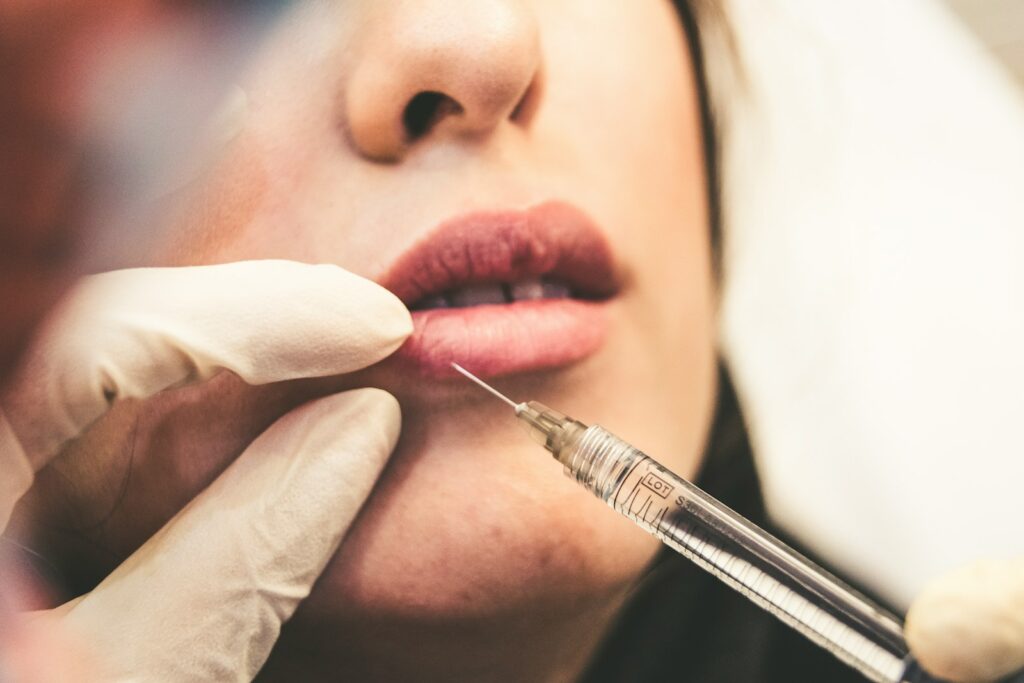
Thirteen of 17 hyaluronic acid-based dermal filler samples collected in nine countries passed laboratory safety tests as part of an EU-funded market surveillance campaign.
Authorities took the samples from products sold in the EU single market, while permanent dermal fillers were excluded from the checks, the European Commission announced on Monday.
Hyaluronic acid-based dermal fillers are injectable products used to treat scar tissue, hydrate skin, add volume and reduce the appearance of wrinkles and fine lines.
A laboratory tested the samples for sterility, endotoxins, cytotoxicity and harmful chemicals.
Endotoxins are substances linked to bacteria that can trigger harmful reactions if present above certain limits, while cytotoxicity tests check whether a product is toxic to cells.
All 17 samples passed sterility tests. Three samples initially failed endotoxin tests, but retesting using a different method found only one exceeded the limits set out in the testing plan. One further sample failed cytotoxicity testing.
Labelling concerns and ongoing investigations
Chemical screening did not produce a simple pass-or-fail result but flagged substances above an analytical threshold used to decide whether further health risk assessment is needed, according to the statement.
Four samples contained unidentified compounds, with manufacturers later identifying the substances in two cases and reporting no associated risk.
Investigations are continuing for the remaining two samples with unidentified compounds, alongside follow-up on the sample that failed cytotoxicity testing and the one with elevated endotoxin levels.
Four of the 17 samples — 23% — did not meet EU requirements for labelling, markings and instructions for use, with issues including missing required information and language requirements not being met.
Manufacturers are being contacted to correct those non-conformities.
The testing formed part of the Joint Actions on Compliance of Products (JACOP), coordinated by the European Commission’s Directorate-General for Internal Market, Industry, Entrepreneurship and SMEs, known as DG GROW.
“Regular market surveillance campaigns are crucial to protect consumers, but also to protect European businesses from unfair competition,” Vanessa Capurso, a policy officer at DG GROW, said.
