
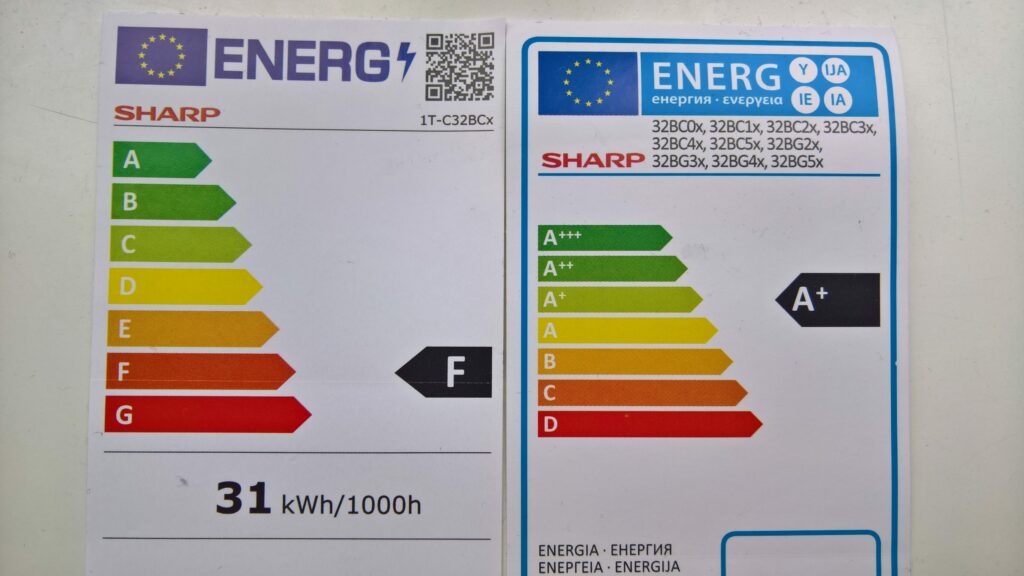
Online retailers across seven EU countries often fail to show energy labels and product information sheets clearly at key points in the shopping journey, according to a monitoring exercise coordinated by the European Commission.
The check, carried out in January 2026, reviewed 36 online shops — including major platforms, smaller e-shops and at least one marketplace site in each country — and assessed how energy labels and product information sheets were displayed for 377 models of smartphones and slate tablets, tumble dryers, and heating and cooling products, the Commission informed on Wednesday.
Energy labels are the familiar A-to-G style stickers designed to help shoppers compare how much energy products use, while product information sheets list key details such as noise levels or water consumption.
The monitoring found that less energy-efficient products were less likely to have energy labels displayed properly than more efficient ones.
Labels and links to product information sheets were often shown on individual product pages, but were frequently missing from catalogue-style list views and, in particular, basket pages where customers make final choices.
Tumble dryers best, heating products worst
Tumble dryers had the highest level of correct label display among the categories checked, the Commission said, noting that updated energy labelling rules for the appliances have applied since July 2025.
Smartphones and slate tablets — newly covered by energy labels since June 2025 — were monitored with a lower level of accurate label display than tumble dryers.
Heating and cooling products, which use energy labels that have not changed since 2022, had the lowest level of label availability overall, with heating products performing worst and air-conditioning products showing better results.
Suppliers such as manufacturers and importers are responsible for providing accurate label information, while retailers are responsible for displaying labels correctly.
Consumers and retailers can access energy labels for products sold in the EU through the EPREL database — an EU online register of energy-labelled products — it added.
A follow-up monitoring exercise is planned in about a year, according to the European Commission.
