
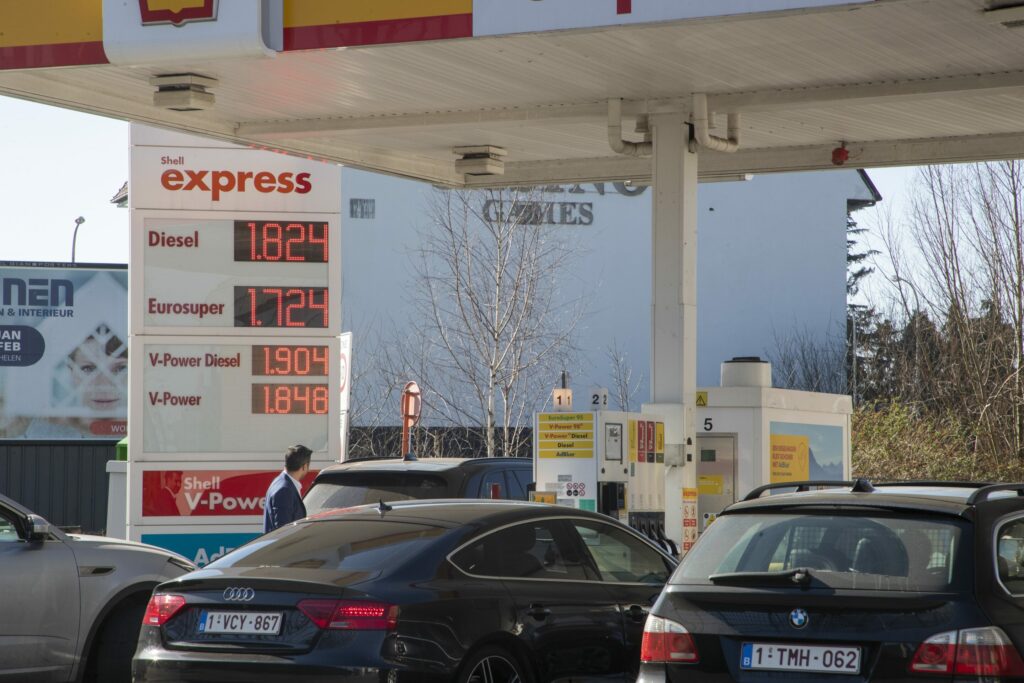
Skyrocketing petrol prices in Europe are leading to an increase in cross-border fuel tourism as motorists seek cheaper prices at the petrol pumps.
Petrol prices in Europe have increased dramatically in recent weeks as a result of ongoing hostilities in the Middle East. Iran is continuing to restrict access to the Strait of Hormuz, where around a fifth of the world's oil usually passes, resulting in a supply crisis which is pushing up fuel prices.
In Germany, the price of diesel has increased by 44% in the past fortnight. In response, some German drivers have started refuelling over the border in Poland, resulting in long queues and fuel shortages.
In the Netherlands, meanwhile, the price of a litre of diesel exceeded €2.50 for the first time ever this week, while the average indicative price of unleaded petrol there rose to €2.45 per litre. Before the start of the war in the Gulf, diesel in the Netherlands was priced at €2.09 per litre and unleaded petrol at €2.28 per litre.
Many Dutch drivers living near Belgium are crossing the border to take advantage of lower fuel prices here. According to Belga News Agency, in Belgium, the maximum price of diesel is currently around €1.92 per litre, while unleaded petrol costs around €1.68 per litre.
However, drivers in the Netherlands have been advised against stockpiling petrol amid fears their cars could become “moving bombs” should they choose to carry the maximum 240 litres of petrol permitted under customs law.
A spokesperson for ANWB, the Royal Dutch Touring Club, told The Times: “It’s better not to carry a jerry can in your trunk at all, not even as an extra tank. It’s not entirely risk-free. Gasoline in your car can be extremely dangerous, for example, if the car is involved in an accident.”
Call for action in Belgium
Despite relatively lower fuel prices here, Belgium’s transport sector and petrol station owners are calling for more active support from the government to stop price hikes.
According to Belga News Agency, petrol station owners in Belgium are asking the government for help because they are making little or no profit due to higher purchase prices combined with the system of statutory maximum prices for consumers.
The transport sector, meanwhile, is asking for diesel to be made cheaper through excise duty reductions.
Earlier this week, Belgian Energy Minister Mathieu Bihet (MR) said that Belgian authorities are "monitoring the situation continuously and closely," in consultation with stakeholders from the energy sector.
The minister issued assurances that there is no problem with the security of supply in Belgium. "Belgium currently has approximately 92 days of strategic oil reserves, which is above the European requirement of 90 days. These reserves are specifically intended to compensate for a physical interruption in supply," he said.
It remains to be seen whether measures will be taken to mitigate the higher energy prices for consumers. The Bihet cabinet told Belga News Agency that consultations were held on Monday with the Directorate-General for Energy "to identify and update the various measures that have been applied in the past and to evaluate their relevance, budgetary impact, effectiveness and division of powers".
The European Commission is also working on a package of measures, and Belgium will "participate fully in the discussions at the European level," according to the minister.
Oil prices fell earlier in the week following US President Donald Trump's declaration that the war with Iran was "virtually" over. However, by Thursday, oil prices climbed back above $100 a barrel, despite the International Energy Agency (IEA) releasing a record 400 million barrels of oil on Wednesday to help mitigate the energy crisis.
