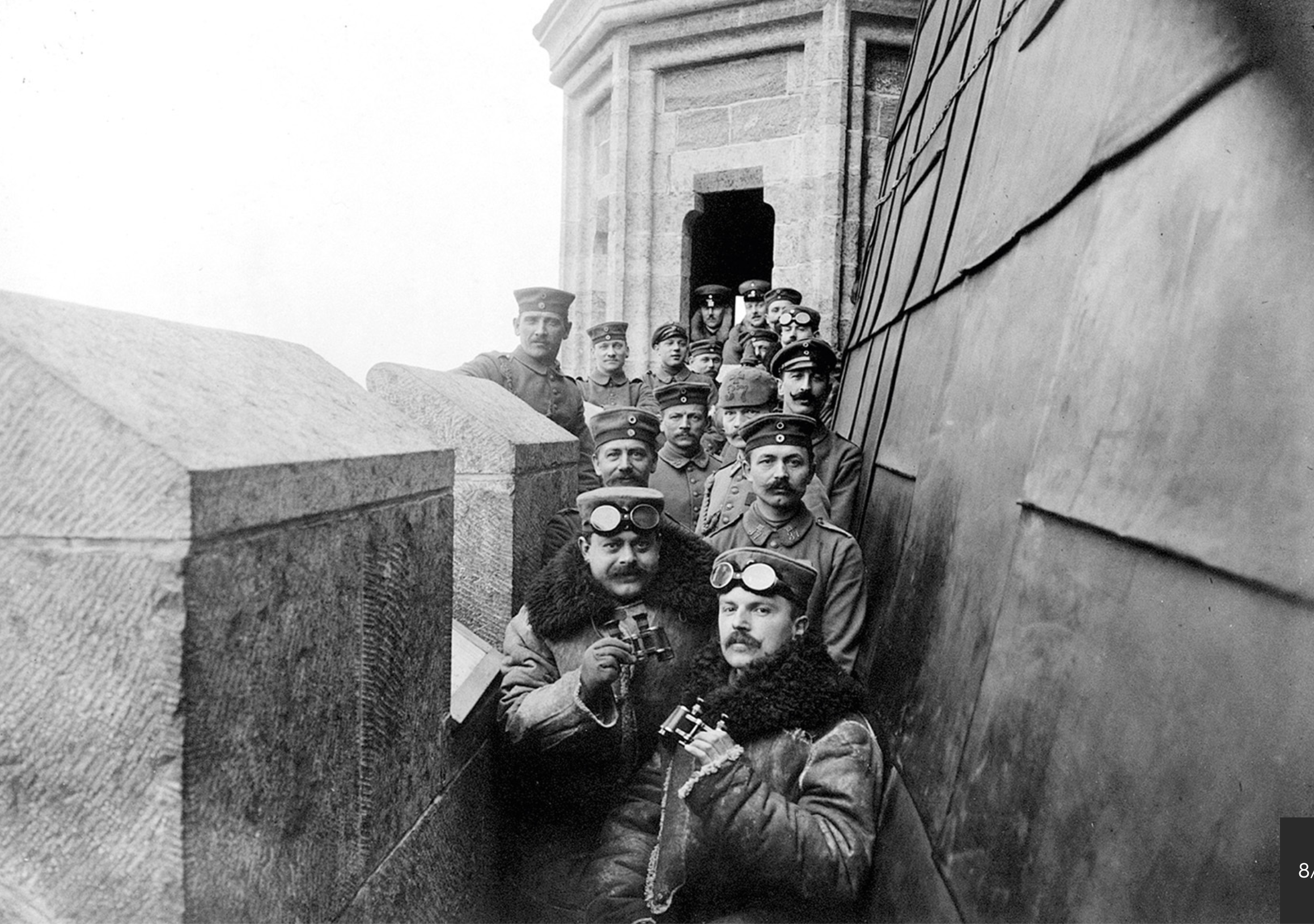
These photographs look calm. Too calm. Streets lie almost empty, façades stand intact, uniforms are neat, and the city appears orderly, even prosperous. At first glance, this could be a travel album from another age. Yet this quiet is deceptive. What we are seeing is not peace, but occupation.
Taken by the German Fourth Army military photographic service during the First World War, these images show Ghent as the occupier wished it to be seen: efficient, controlled, compliant. The camera lingers on grand buildings requisitioned for command posts, hospitals and bureaux; on soldiers at ease in cafés or posing proudly in civic interiors; on infrastructure that still functions. Absence is as telling as presence. The shortages, hunger, fear and coercion that shaped everyday life rarely appear. Instead, the city becomes a stage set, carefully framed to conceal the violence of domination.
And yet, despite their propagandistic intent, these images betray more than they reveal. Look closely and the occupation begins to surface between the lines. Streets are empty not because the city is tranquil, but because movement is regulated, permits required, curfews enforced. Queues form not for leisure but for food, clothing, coal. Public buildings are no longer public; they have been absorbed into the machinery of war.
What makes these photographs so unsettling is precisely their ordinariness. Occupation does not always announce itself with ruins and flames. It settles in slowly, insinuating itself into routines, paperwork, timetables and signage. The images capture a city learning to survive under rules imposed from elsewhere, where daily existence is shaped by requisition orders, censored newspapers, ration cards and the constant presence of authority. This is domination rendered banal.
A century later, these images confront us. They document a real city, real streets, real people caught in extraordinary circumstances. At the same time, they remind us how power seeks to shape memory.
Seen in this way, the photographs are windows onto the lived experience of occupation – not through what they show, but through what they suppress. Their quiet surfaces force us to reckon with how easily violence can be normalised, how occupation can masquerade as order, and how history often survives in the spaces between images.
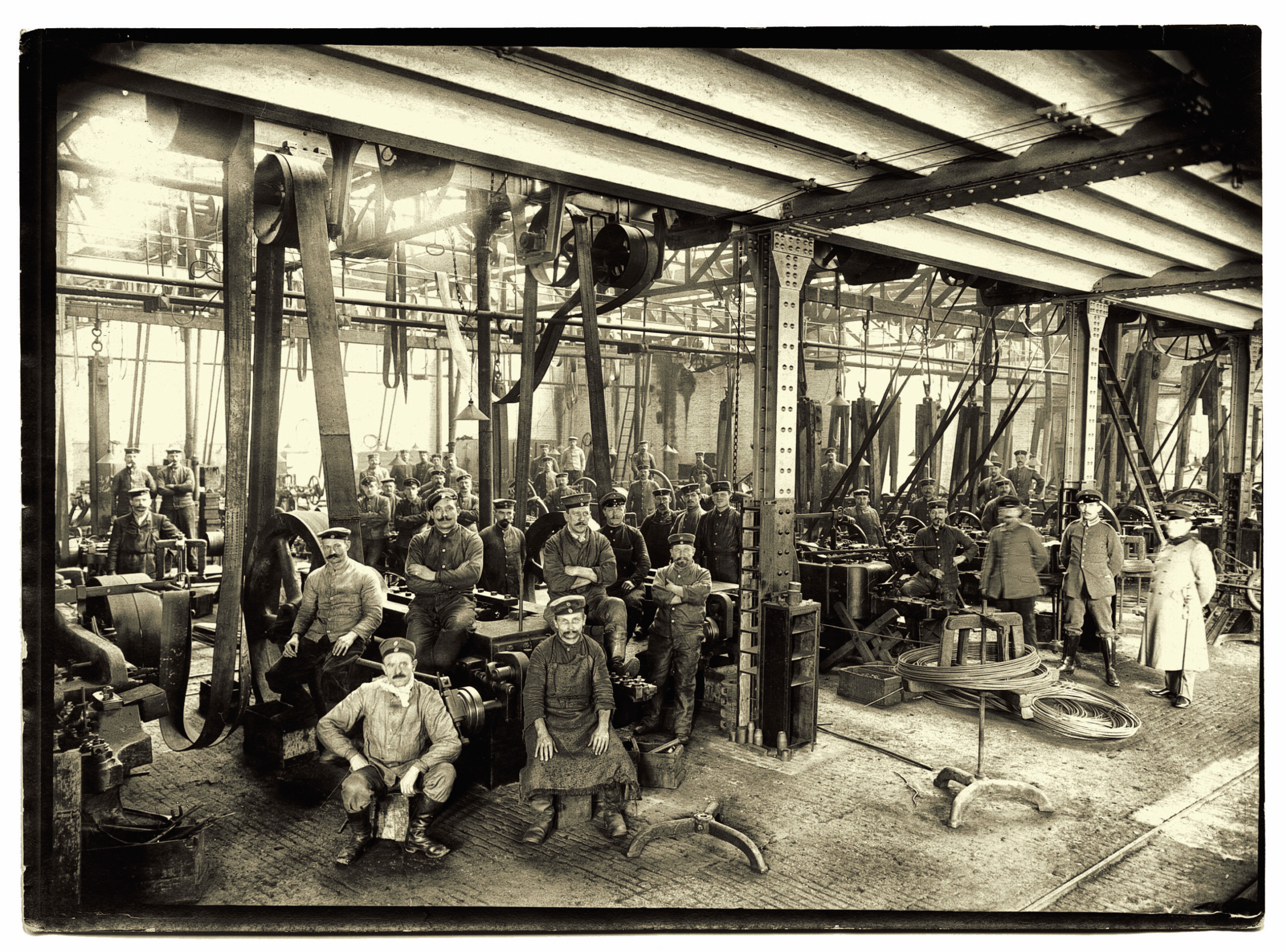
Military wire-drawing at the Puntfabriek in Gentbrugge. In 1916 German soldiers were still working here; later — when the soldiers were needed at the front — they were replaced by Italian and Russian prisoners of war and Belgian conscripts. Credit: Ghent Archives
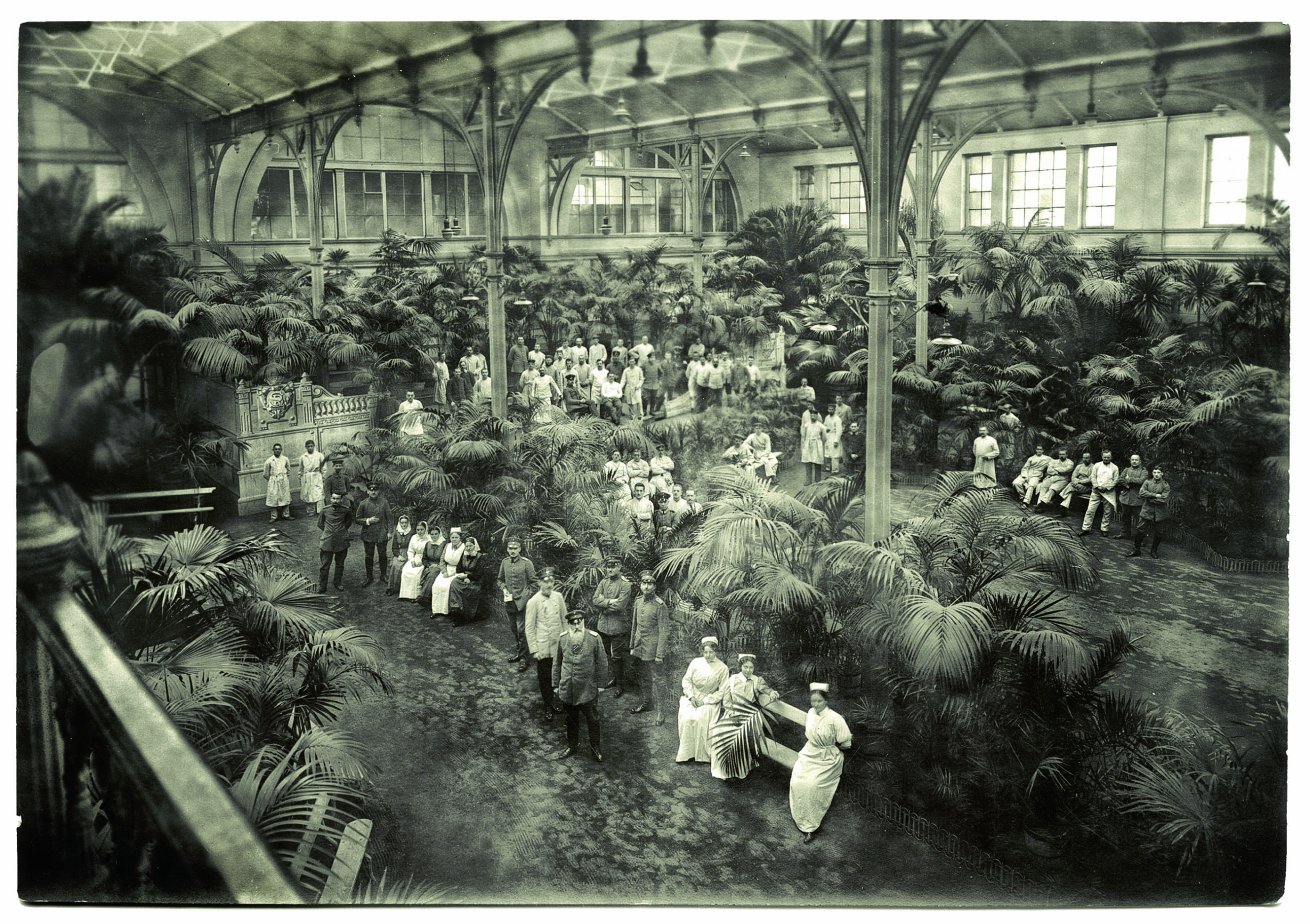
The palm house of the Palmenhaus military hospital in the Casino on Coupure Rechts (later replaced by the School of Veterinary Medicine). Credit: Ghent Archives
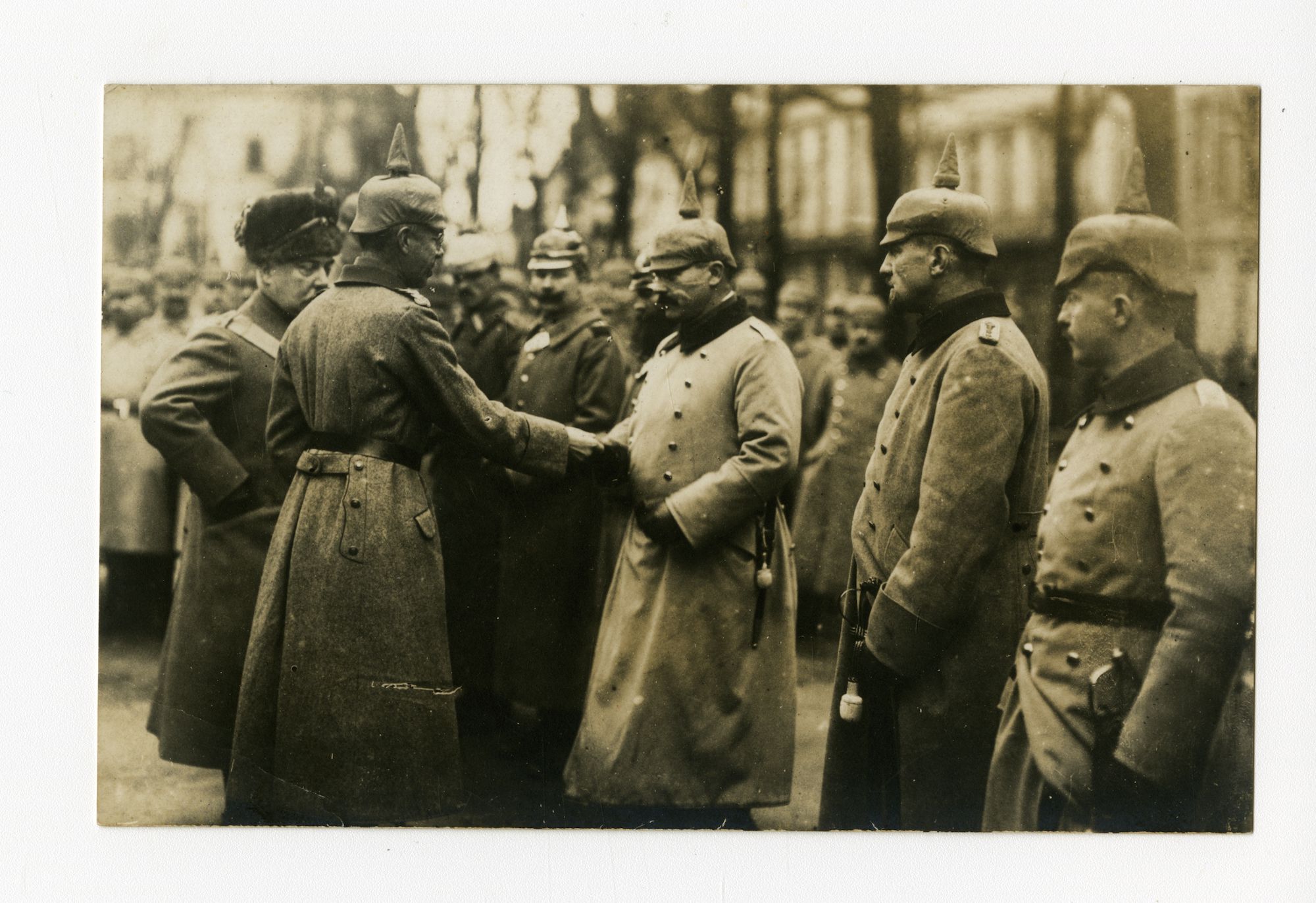
German WW1 soldiers during the occupation of Ghent with their emblematic pointed helmets. Credit: Ghent Archives
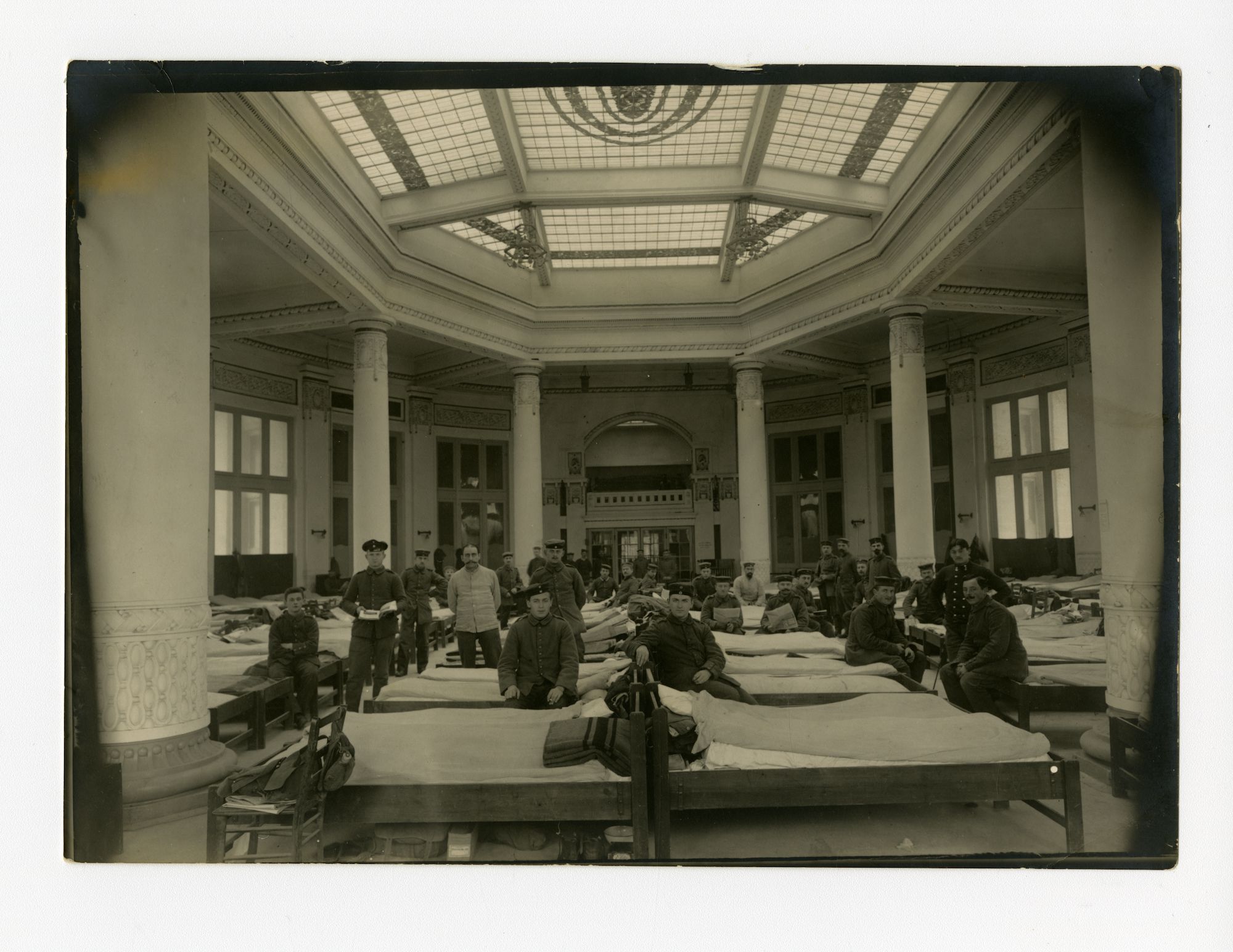
A field hospital in the city of Ghent during German occupation in First World War. Credit: Ghent Archives
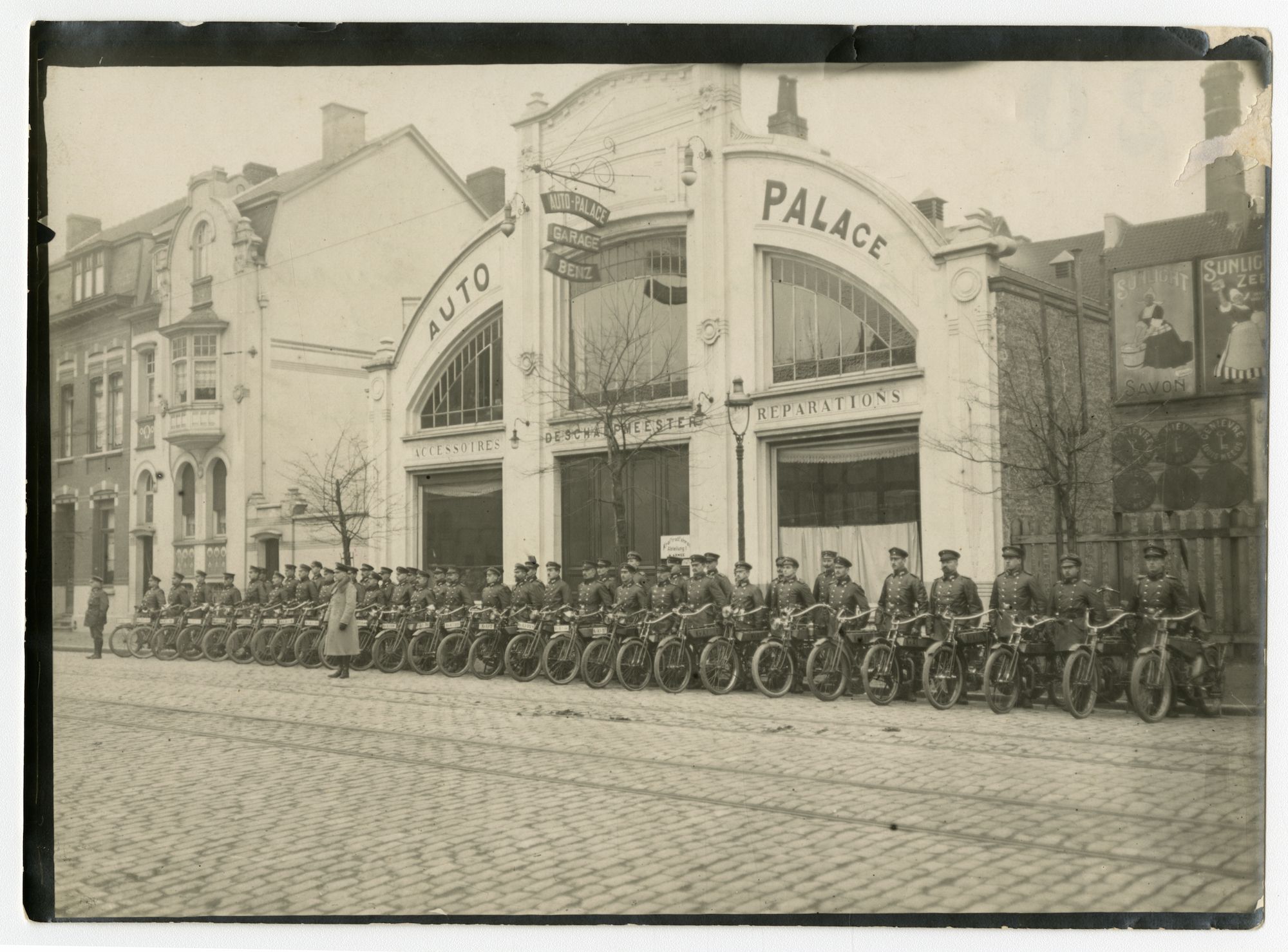
Benz garage Auto Palace (motorcycle department) pictured during the German occupation of Ghent in WW1. Credit: Ghent Archives
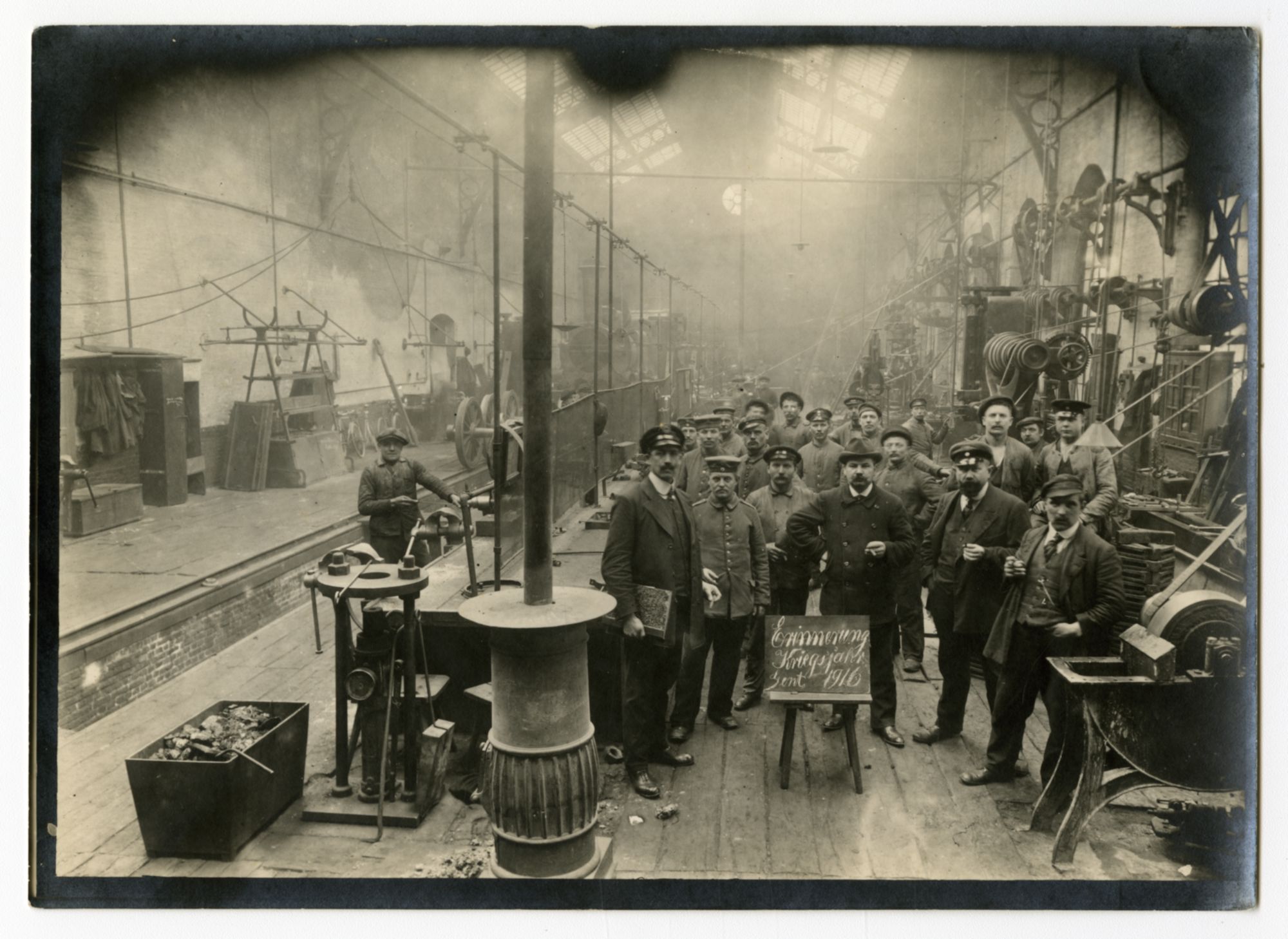
Railway workers inside a warehouse in Ghent during the German occupation of Belgium in the First World War. Credit: Ghent Archives
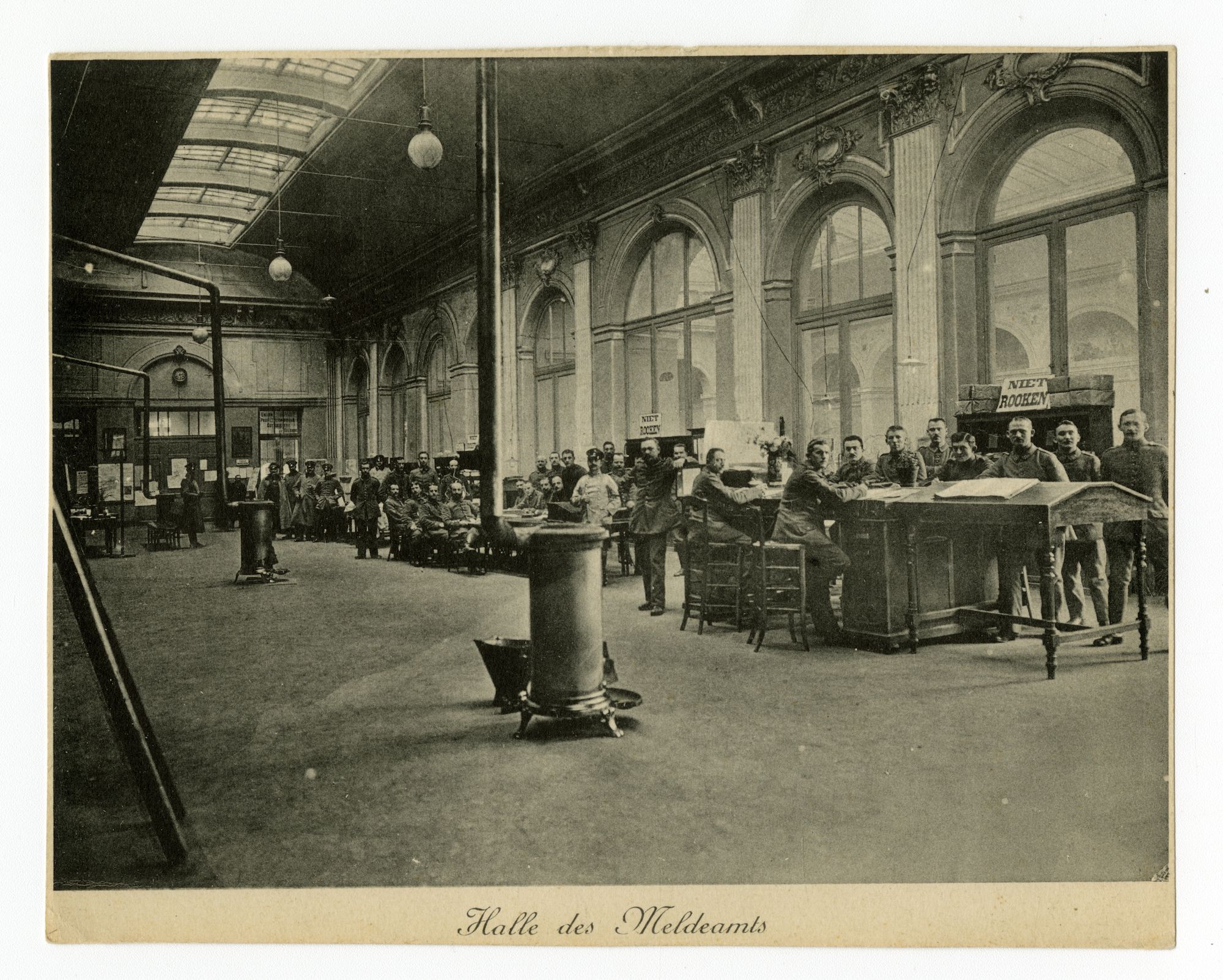
Registration office for Belgian conscripts to join the German army. Credit: Ghent Archives
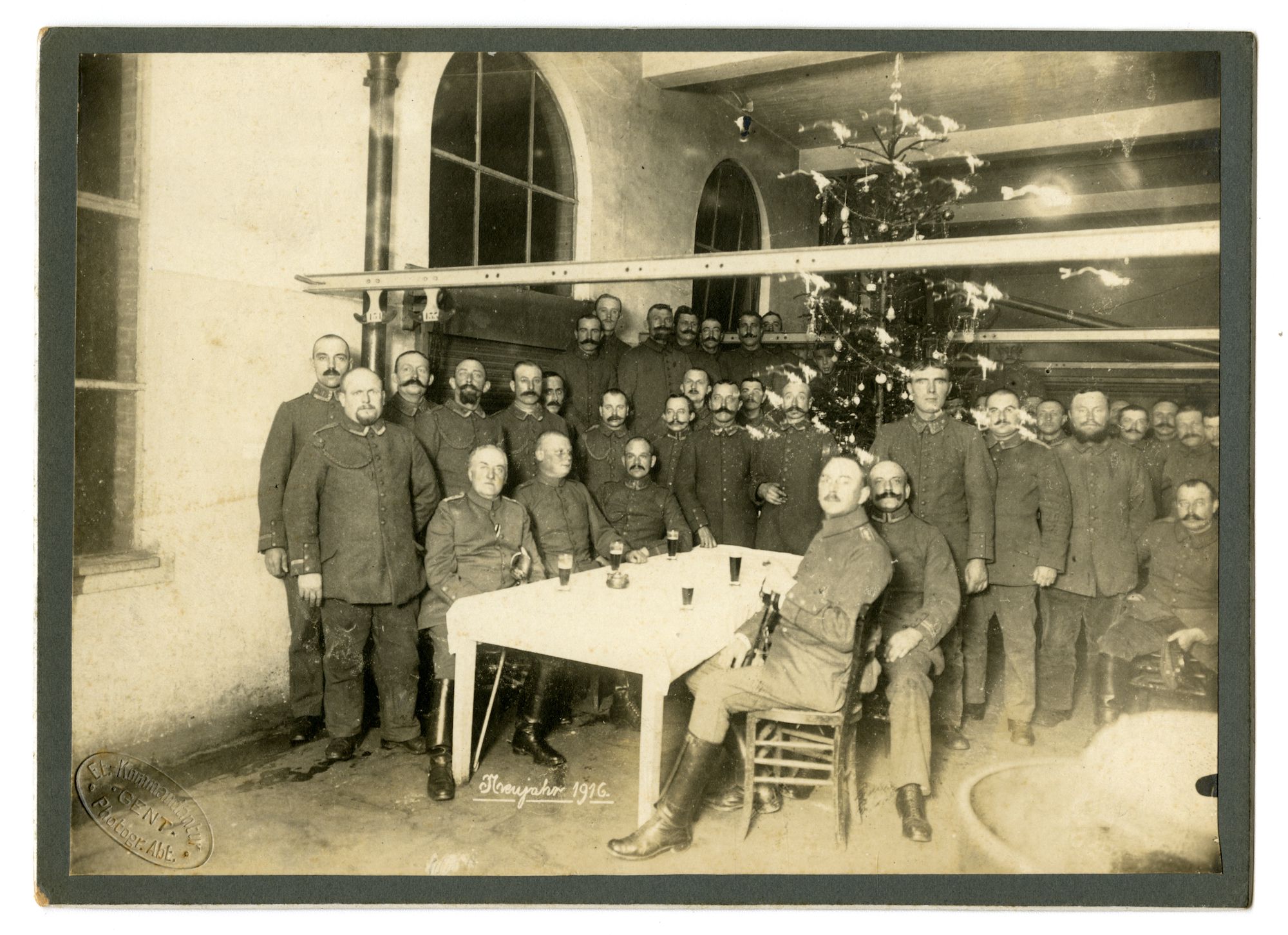
German officers in Ghent on New Year's Eve during the occupation of Ghent. Credit: Ghent Archives
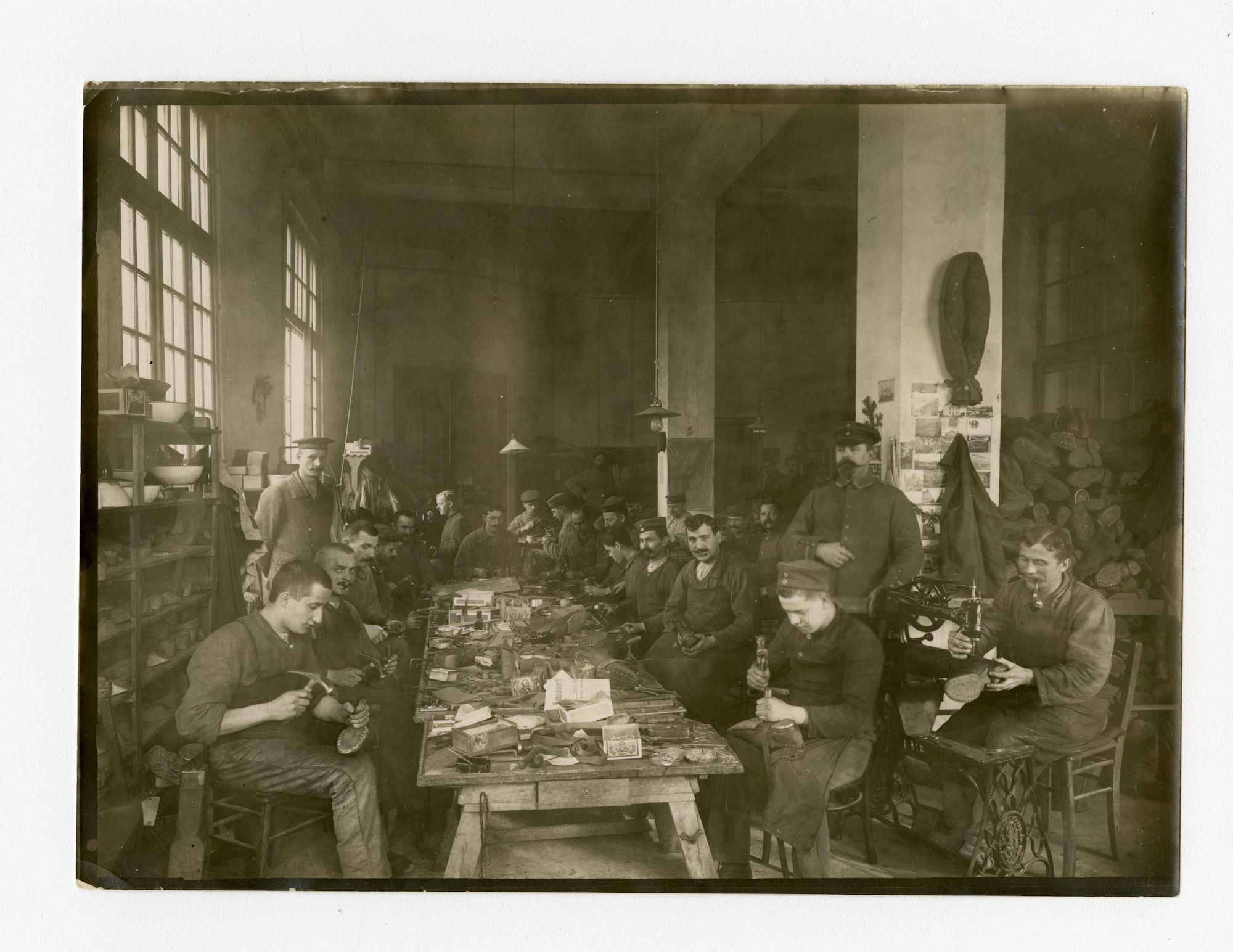
Shoemaker's workshop in Citadelpark in Ghent during First World War
