
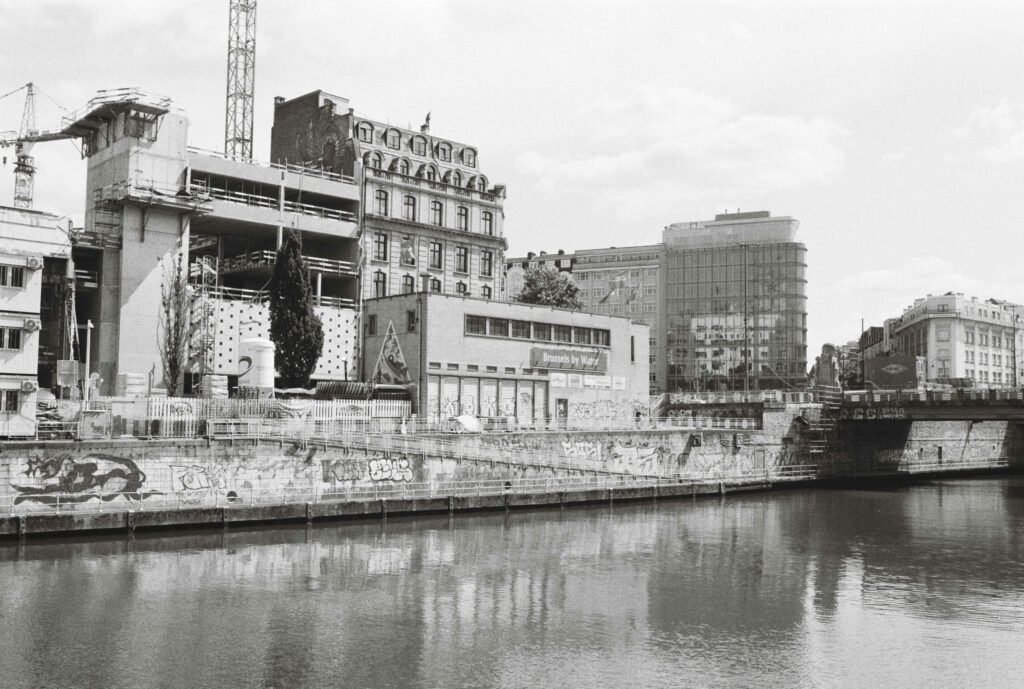
The Brussels-Charleroi canal is not your classic tourist site. Past Tour & Taxis, it doesn’t offer visitors fancy waterfront gastropubs or luxury hotels. However, its significance for the city of Brussels runs deep.
Today, many Brussels residents know little of the canal area. Running 14 km from the north to the south of the city, it is somewhere on the periphery, separating the centre from Molenbeek and then stretching to Anderlecht.
The waterway connecting Brussels, Wallonia and Flanders went through many iterations throughout the country's history. It started as a vital economic artery, transporting resources by water for Belgian industry – connecting the coal mines of Wallonia, the factories in the south of Brussels and the port of Antwerp in the north.
Later, the canal became associated with decay and pollution and the areas around it suffered too.
More recently, significant resources have been ploughed into the canalside area to turn into a more vibrant neighbourhood. Following the success of the regeneration project in the north of the city, local authorities have set their sights on transforming the southern stretch of the canal – notably the part which flows through Anderlecht.
In the summer of 2025, through the lens of my camera, I tried to capture the reality of this fast-changing area in all its glory, including gritty brick buildings, lush green trees and urban wildlife.
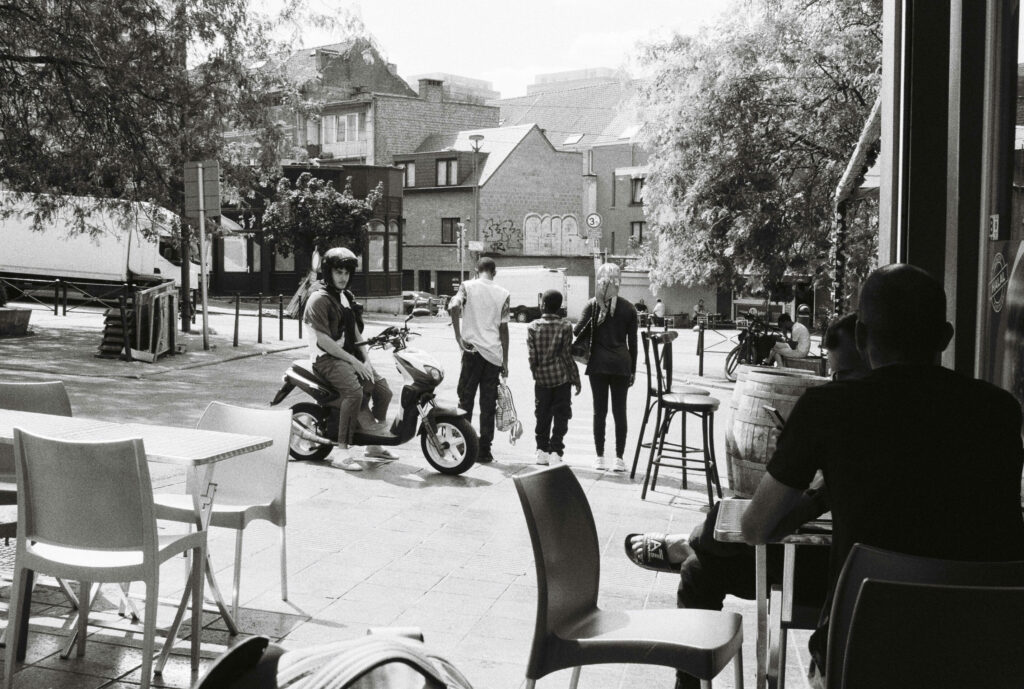
Photo from one of many Turkish bistros in Quartier Brabant, adjacent to the Brussels city's section of the waterfront. Credit: Kosmos Khoroshavin / The Brussels Times [Agfa APX 400]
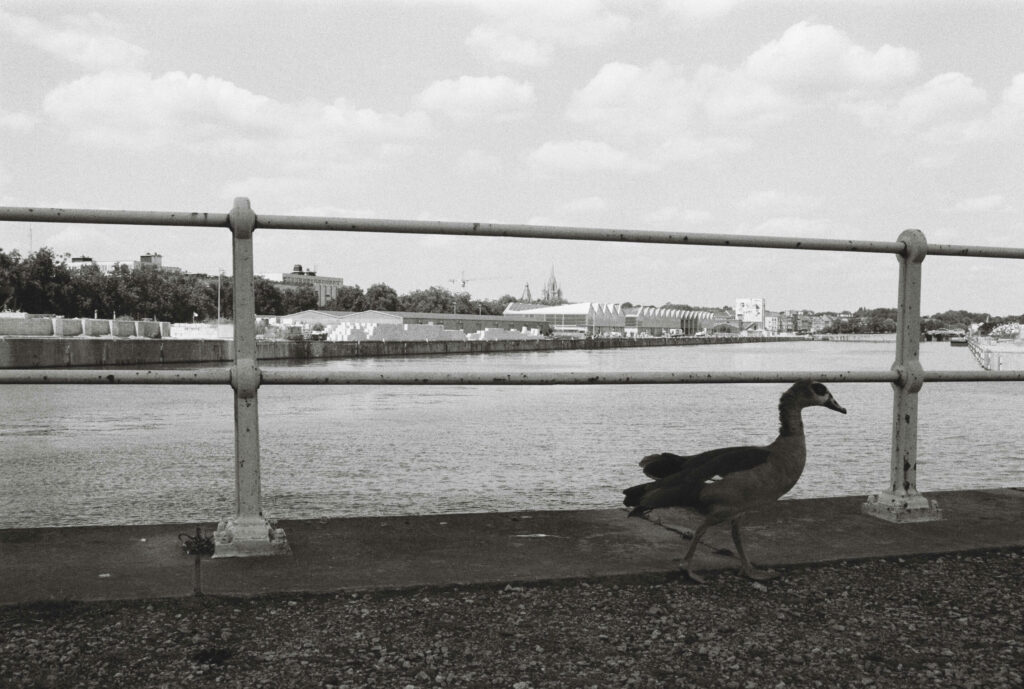
View from Brussels city's waterfront, featuring a duck. Credit: Kosmos Khoroshavin / The Brussels Times [Agfa APX 400]
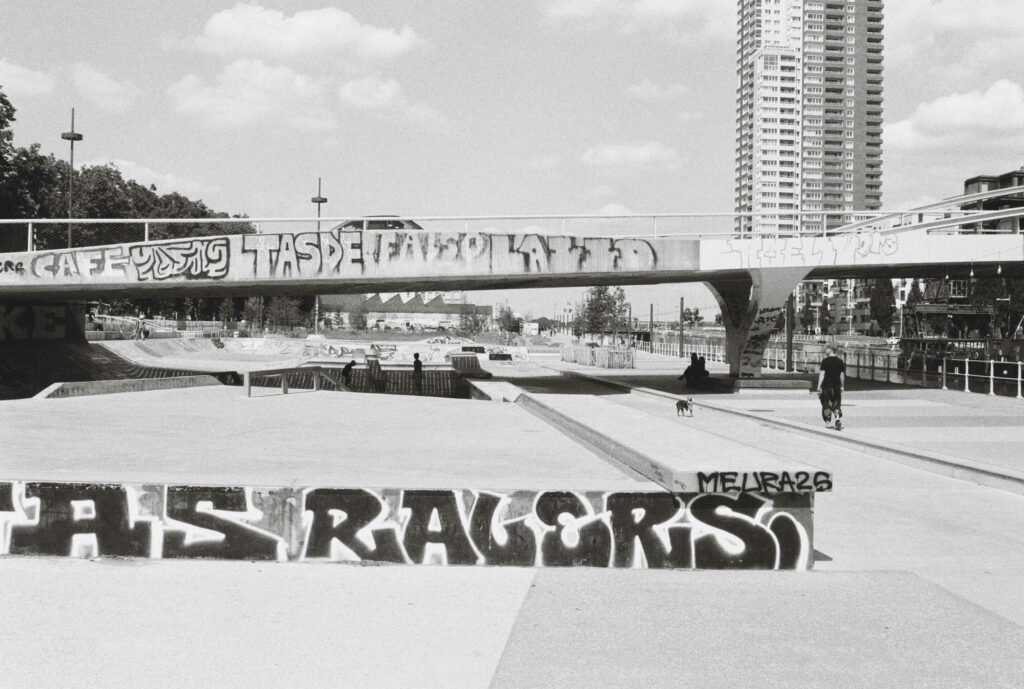
Area around the canal near Tour & Taxis features one of Belgium's largest skateparks. Credit: Kosmos Khoroshavin / The Brussels Times [Agfa APX 400]
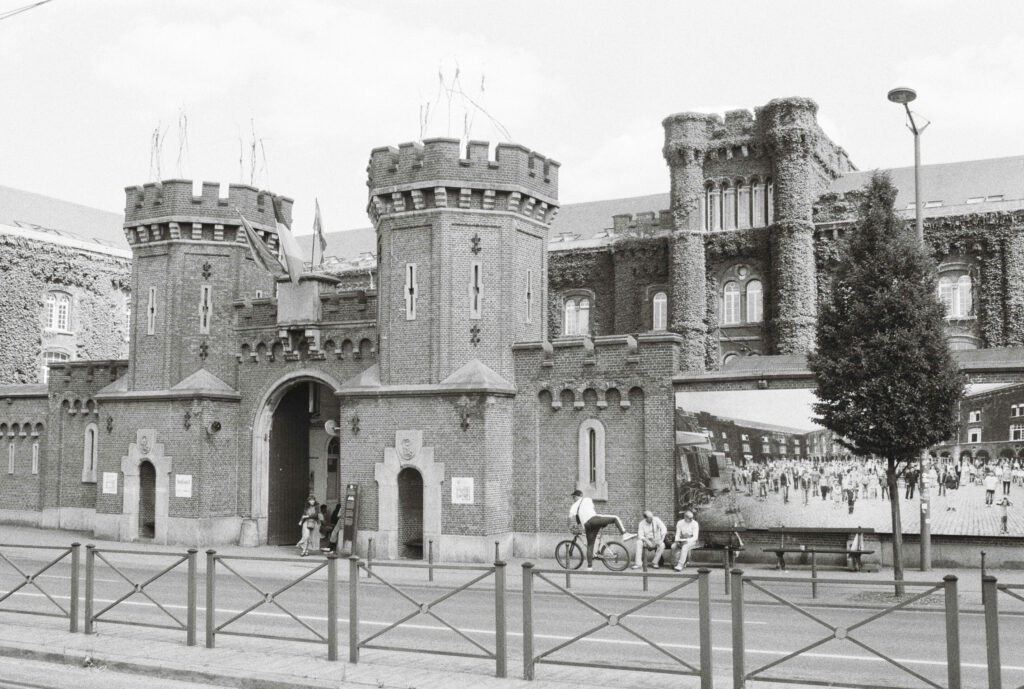
Just like the area it stands in, Le Petit Château (The Little Castle) has a rich history. Situated on the border of Brussels city and Molenbeek it used to house riflemen. Later, it was reused as prison for anti-social offenders. Today, it is a centre for the Belgian asylum seeker reception agency Fedasil, with over 800 housing spaces. Credit: Kosmos Khoroshavin / The Brussels Times [Agfa APX400]
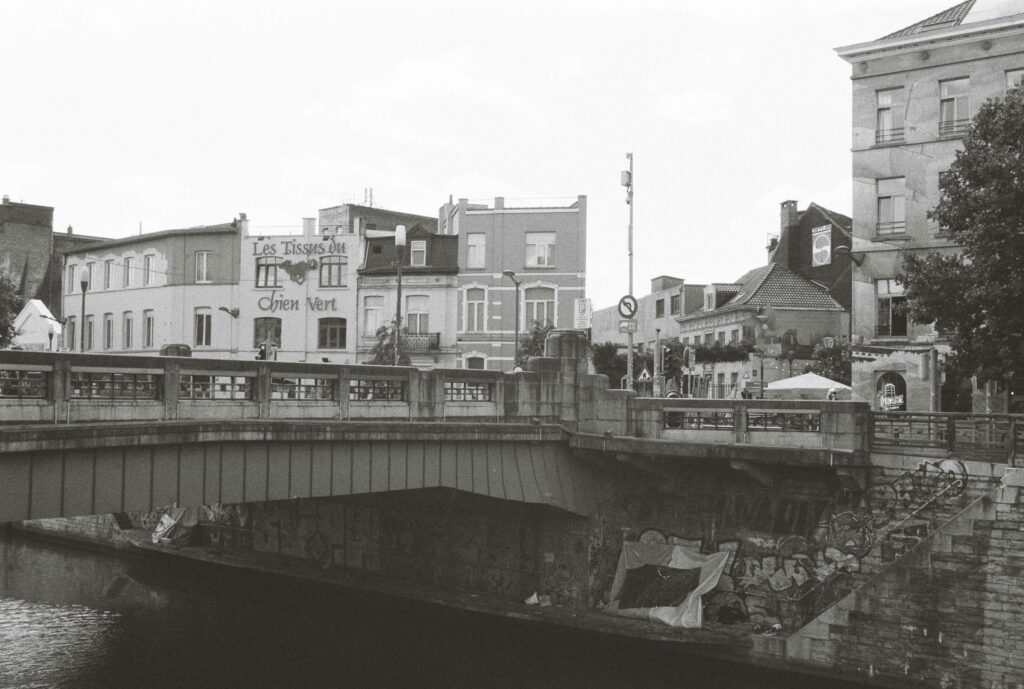
A sad sight: People living under the bridge in tents. Credit: Kosmos Khoroshavin / The Brussels Times [Agfa APX 400]
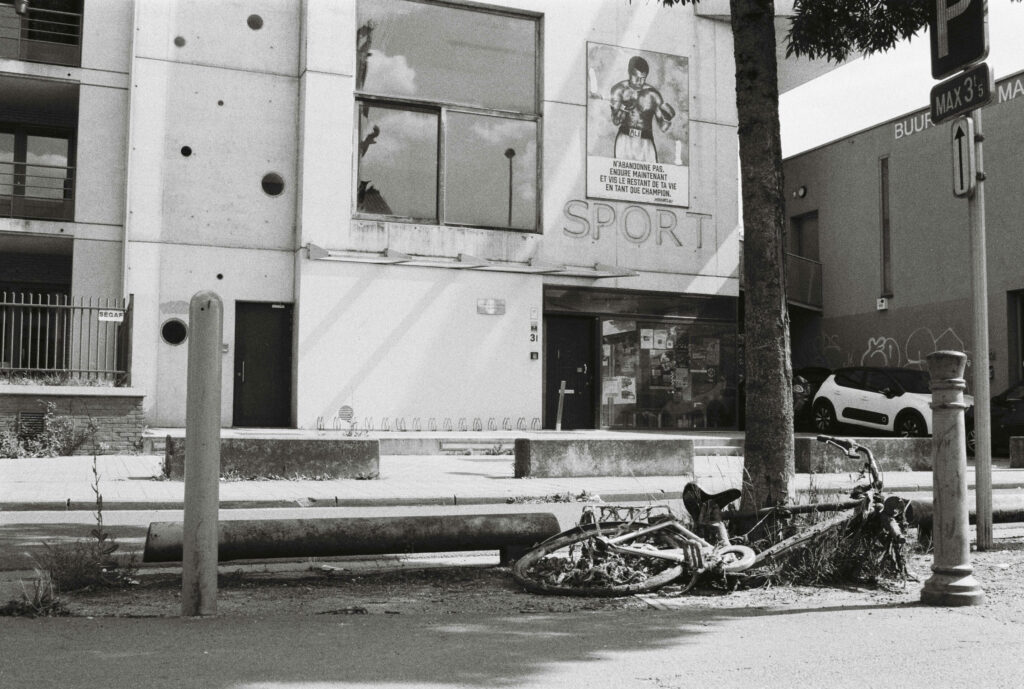
A sports hall in Molenbeek named after boxer Muhammad Ali and a rusted bicycle fished out of the canal. Credit: Kosmos Khoroshavin / The Brussels Times [Agfa APX400]
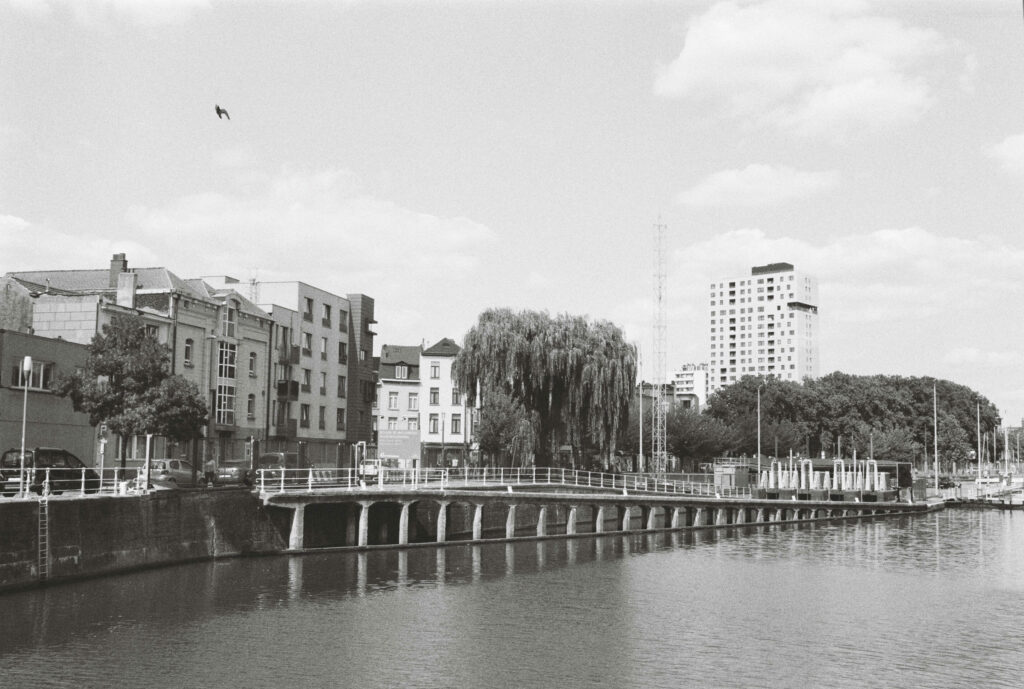
The more you travel south, to the direction of Anderlecht, the greener the landscape becomes. Credit: Kosmos Khoroshavin / The Brussels Times [Agfa APX400]
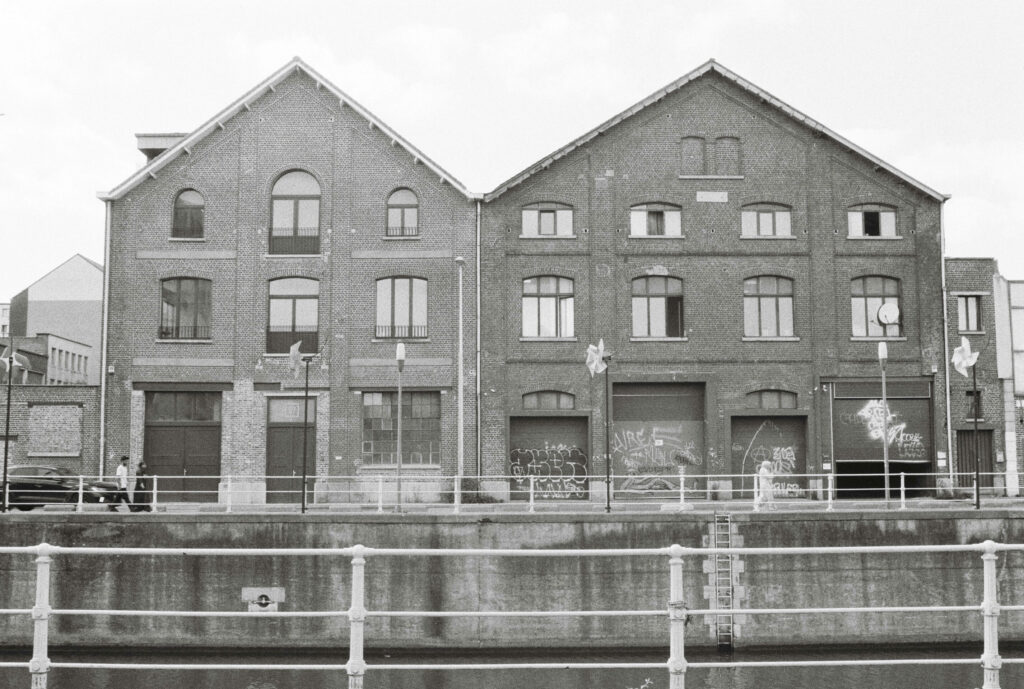
Historical industrial warehouses located in Molenbeek. Credit: Kosmos Khoroshavin / The Brussels Times [Agfa APX400]
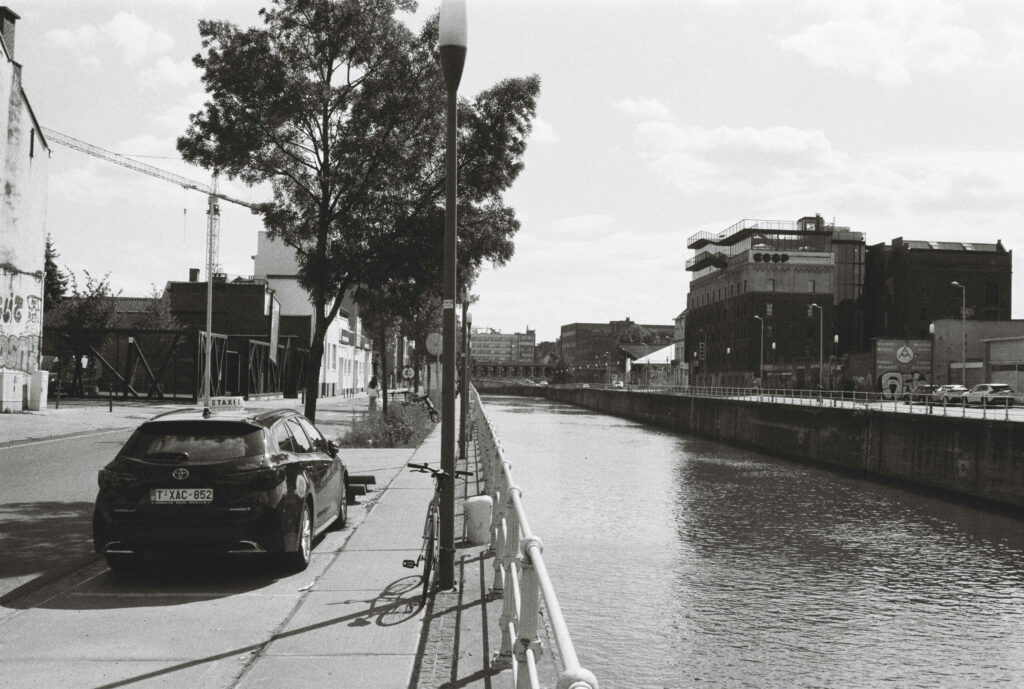
Molenbeek section of the Brussels-Charleroi canal. Credit: Kosmos Khoroshavin / The Brussels Times [Agfa APX400]
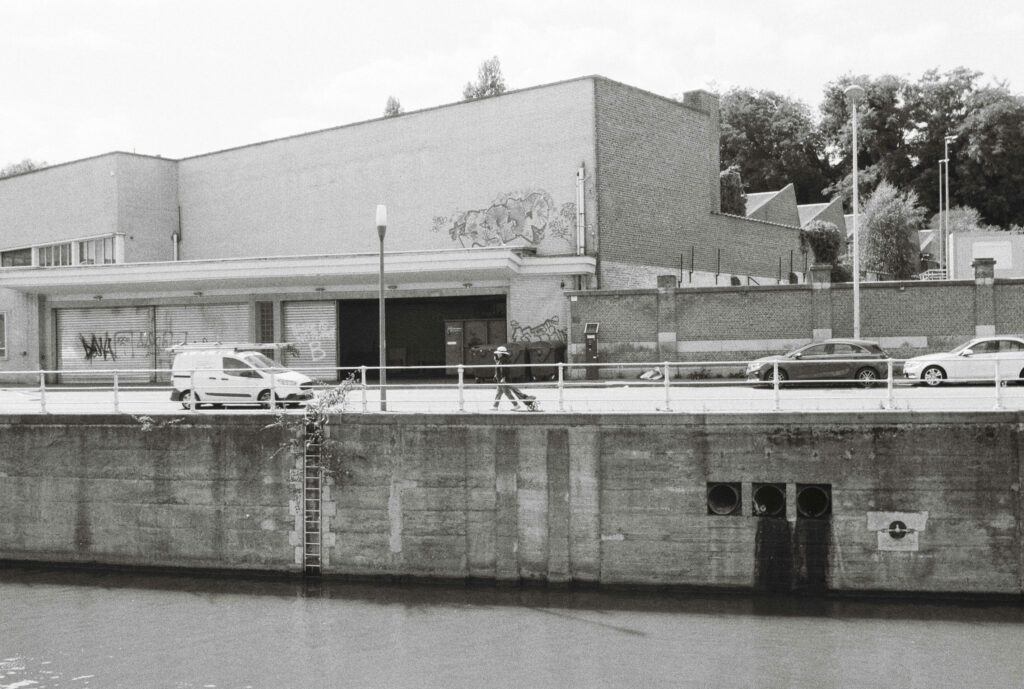
Credit: Kosmos Khoroshavin / The Brussels Times [Agfa APX400]
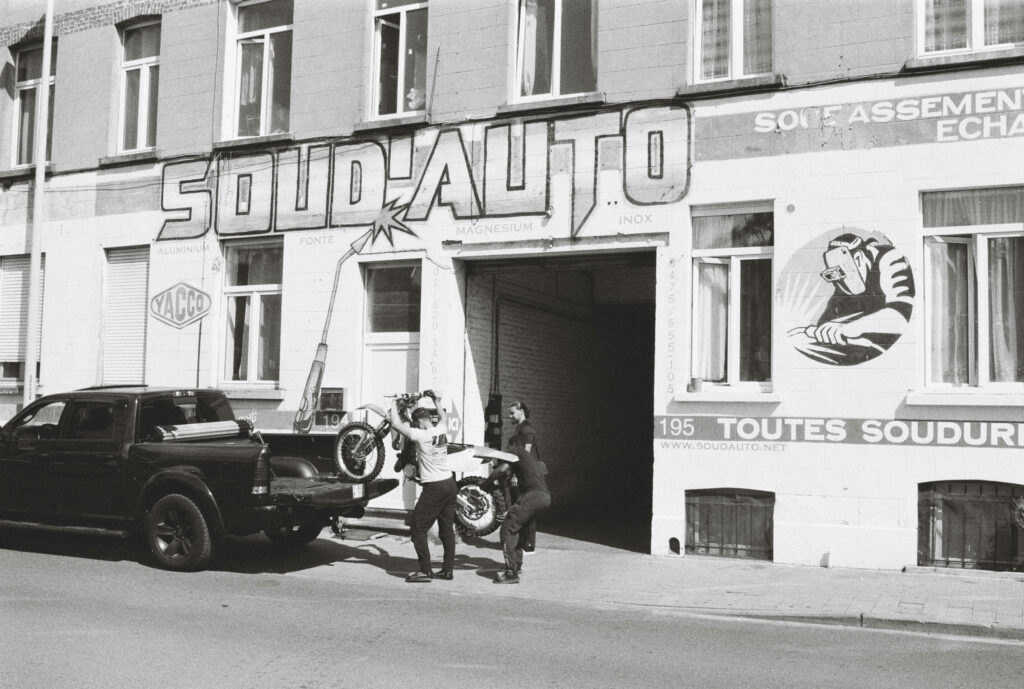
Moroccan car mechanic venue in Anderlecht. Credit: Kosmos Khoroshavin / The Brussels Times [Agfa APX400]
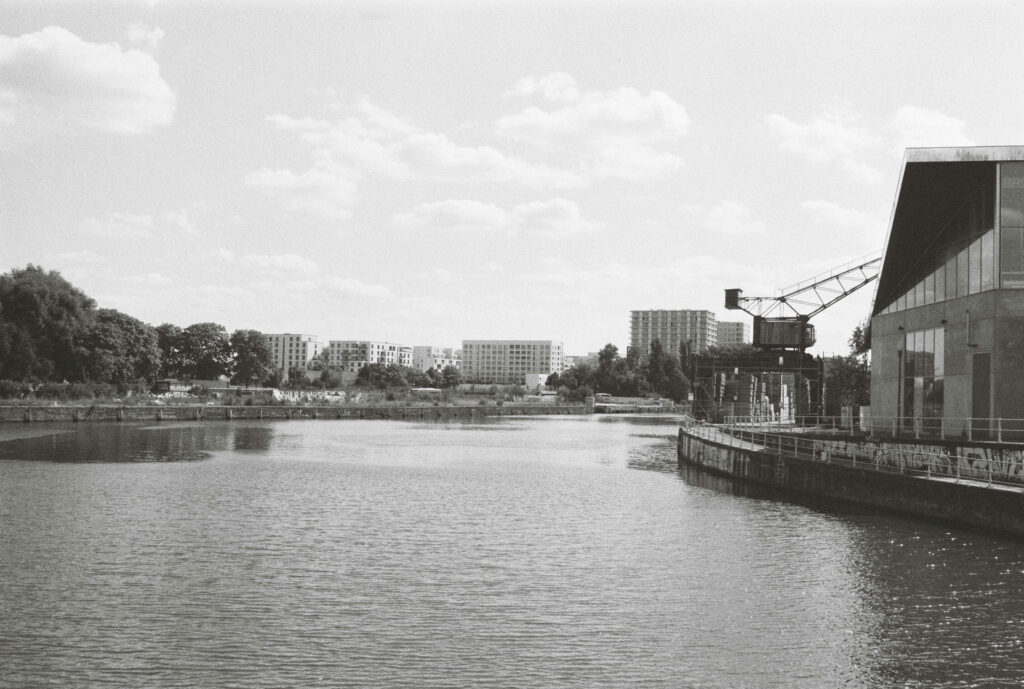
Anderlecht section near the canal dike. Credit: Kosmos Khoroshavin / The Brussels Times [Agfa APX 400]
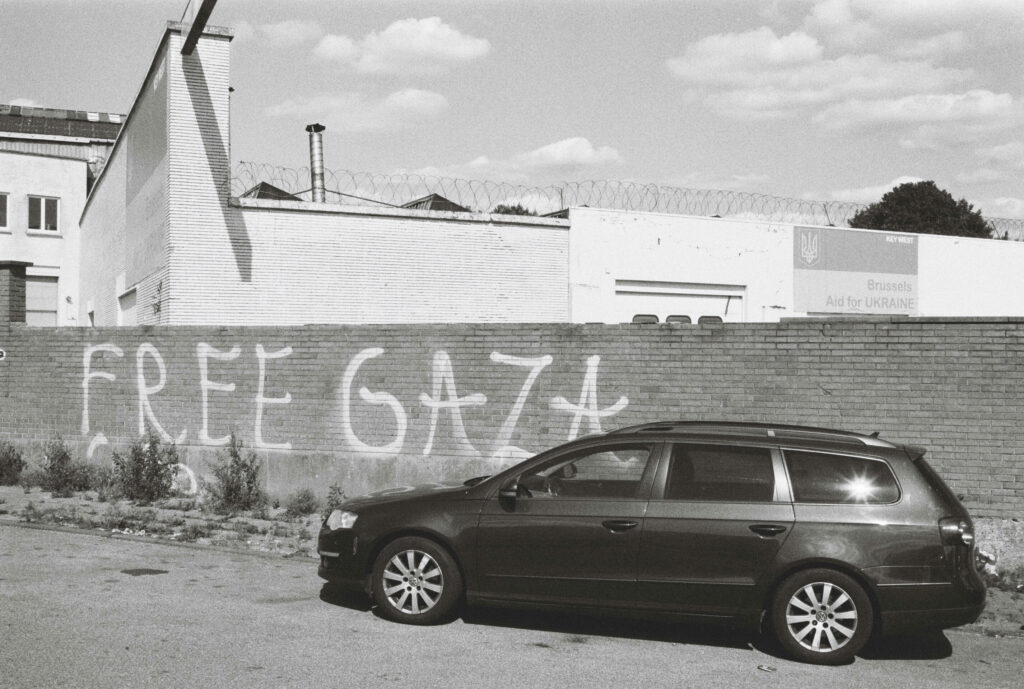
Ukraine aid distribution centre in Anderlecht. Credit: Kosmos Khoroshavin / The Brussels Times [Agfa APX 400]
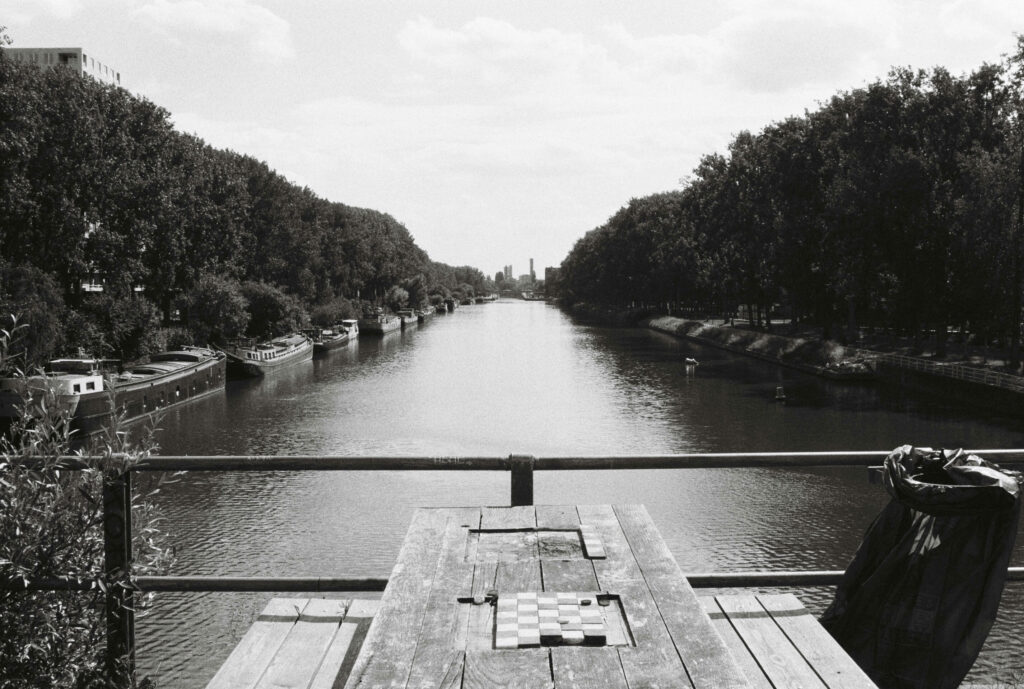
Bridge in the Anderlecht section of the Brussels-Charleroi canal. Credit: Kosmos Khoroshavin / The Brussels Times [Agfa APX 400]
