
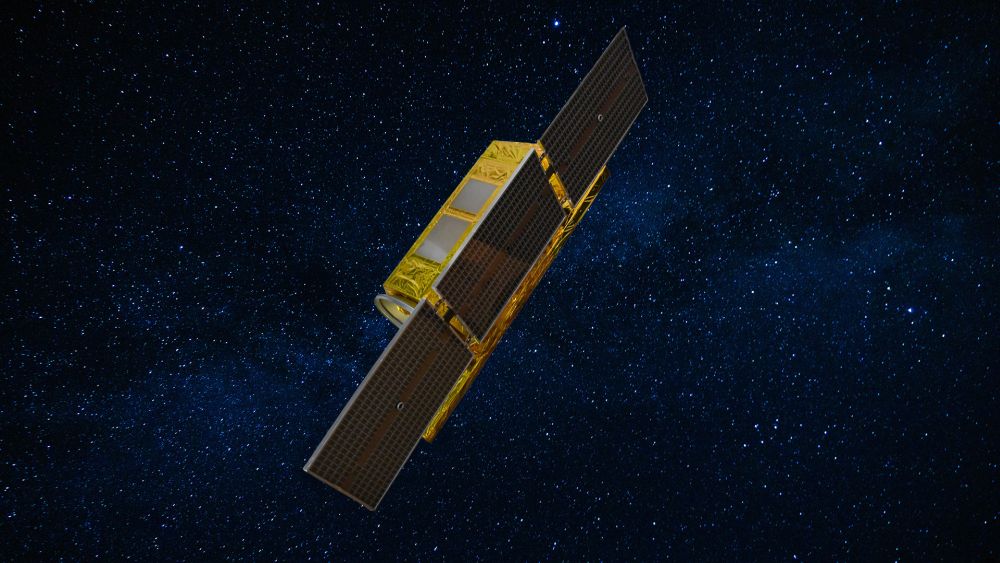
The European Defence Agency (EDA) has signed a €15.65 million research contract with an industry consortium to explore Very Low Earth Orbit (VLEO) for a future European military satellite concept.
The contract was signed on 13 March 2026 and funds a research and technology project called VLEO-DEF, backed by five EU member states, the EDA announced on Friday.
VLEO is described as an orbital region roughly 250 to 350 kilometres above Earth.
Operating closer to the planet allows satellites to capture more detailed images, and signals have a shorter distance to travel, allowing faster delivery of information to military commanders.
The agency said satellites already underpin modern defence, and the project is intended to bring them closer to Earth. The work is set to run for 36 months.
Operating at such low altitudes creates challenges because the atmosphere still causes significant drag that slows satellites down, requiring advanced propulsion, specialised materials and new satellite designs, the European Defence Agency said.
Consortium and earlier work
The initiative involves Spain, France, Luxembourg, Portugal and Slovenia, alongside a consortium of 17 European industrial and research organisations.
The consortium is led by Spanish aerospace engineering company SENER, with participants including Airbus Defence and Space, Thales Alenia Space France, and firms and research organisations from the five countries listed by the agency.
The EDA said it began a separate VLEO-related project in 2024 called LEO2VLEO involving Austria and the Netherlands to build a three-satellite constellation designed to manoeuvre between Low Earth Orbit and VLEO.
VLEO-DEF differs by focusing on designing a satellite concept specifically for sustained operations in Very Low Earth Orbit and preparing a future flight experiment to demonstrate key technologies in orbit, including propulsion systems intended for use in VLEO.
