
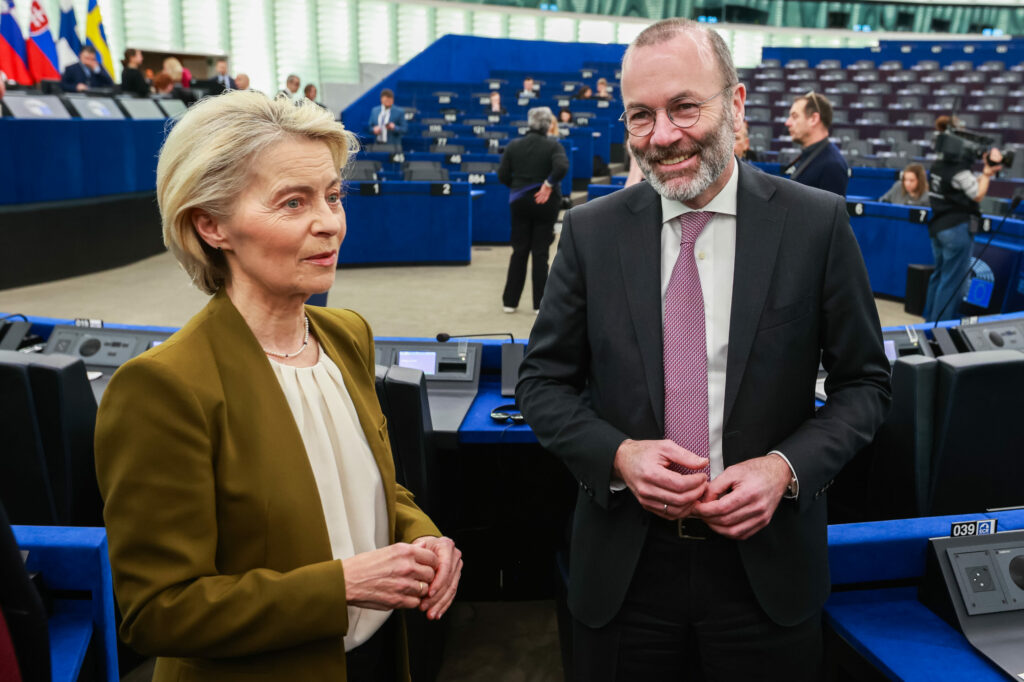
The centre-right European People's Party (EPP), Europe's largest political group, has been working closely with far-right parties, including the German AfD, on tougher EU migration laws, an investigation by the German press agency dpa has revealed.
Leaked communications between the EPP and far-right groups in the European Parliament have shown that the centre-right pro-EU conservatives are working with Eurosceptic far-right groups to push through tougher migration laws.
Messages leaked to dpa revealed a joint WhatsApp chat group with EPP and far-right MEPs, as well as several face-to-face meetings with far-right lawmakers. Both of these were used to draft legislation aimed at tightening EU migration policy.
The collaboration centres on a draft law that would enable the deportation of asylum seekers to "return hubs" in non-EU countries. It follows the model of the Italy-Albania migrant return deal, which after nearly three years is still blocked by the courts with doubts over its legality under EU law, as Albania is outside the EU.
Secret talks
The proposal successfully passed the relevant parliamentary committee shortly after the secret negotiations last week. It was boosted with votes from the EPP and the far-right, including the anti-immigrant and eurosceptic Alternative for Germany (AfD).
EPP leader Manfred Weber has been criticised for having previously given the impression that a "firewall" or cordon sanitaire was in place to protect European values against those he labelled "enemies" of the EU. When approached for comment by dpa, Weber declined to comment.
However, he later denied any knowledge of the chats on Monday: "I am not aware of staff chat groups and have not authorised them."
MEP Lena Düpont (EPP) denied there was "structural cooperation with the AfD and other far-right forces" on the vote. Rather, she claimed "incidental alignment of conservative and far-right camps".
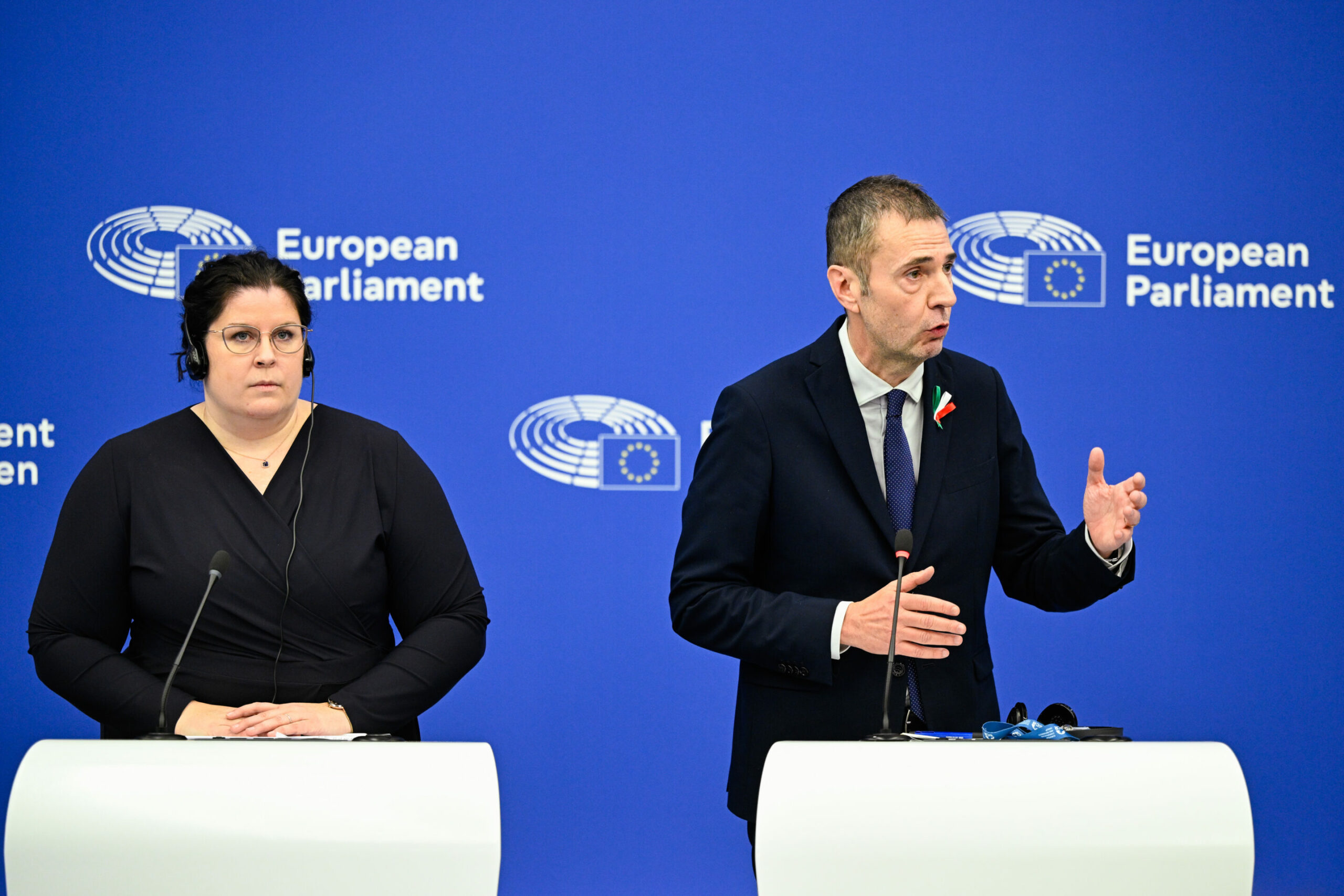
Press conference on "Safe countries of origin and safe third country concept", with Germany's Lena Dupont (EPP), with far-right Italian MEP Alessandro Ciriani (ECR).
When the centre-left Socialist & Democrats (S&D) refused to back the "return hub" concept, EPP representatives used a WhatsApp group to pitch the proposal to three far-right and Eurosceptic factions.
Three separate groups were created: one for the European Conservatives and Reformists (ECR), which includes lawmakers allied with Italian Prime Minister Giorgia Meloni; the Patriots for Europe, which includes French politicians from the National Rally of Marine Le Pen; and the Europe of Sovereign Nations, which includes AfD members.
The report also revealed a high level of collaboration, including the EPP agreeing to adopt positions put forward by the far-right, including by the AfD MEP Mary Khan.
The four MEPs negotiating the bill met in person on 4 March, shortly after the WhatsApp group was created. This included Khan, Ehlers, French EPP member François-Xavier Bellamy and Charlie Weimers, a Swedish politician who sits with the European Conservatives and Reformists.
The bill, which will be voted on by the full European Parliament, is expected in the coming weeks and is now considered largely procedural.
'End of liberal democracies'
Last week, the S&D also expressed regret that "a pro-EU solution was not found" in the migrant returns file. It comes amid growing anger that the socialists helped vote for European Commission President Ursula von der Leyen's second term, under a deal for a pro-EU majority with centrists Renew Europe.
"For the S&D Group, any migration policy must be firmly anchored in the respect for fundamental rights," said MEP Ana Catarina Mendes, S&D deputy leader.
"The protection of human dignity, and the rights of asylum seekers are not optional elements: they are core European values. Unfortunately, these guarantees are not sufficiently reflected in this report."
Erik Marquardt, head of the German Green delegation in the European Parliament, reacted with outrage in a comment to dpa: "Integrating far-right extremists into democratic processes will be the beginning of the end of liberal democracies in Europe."
