
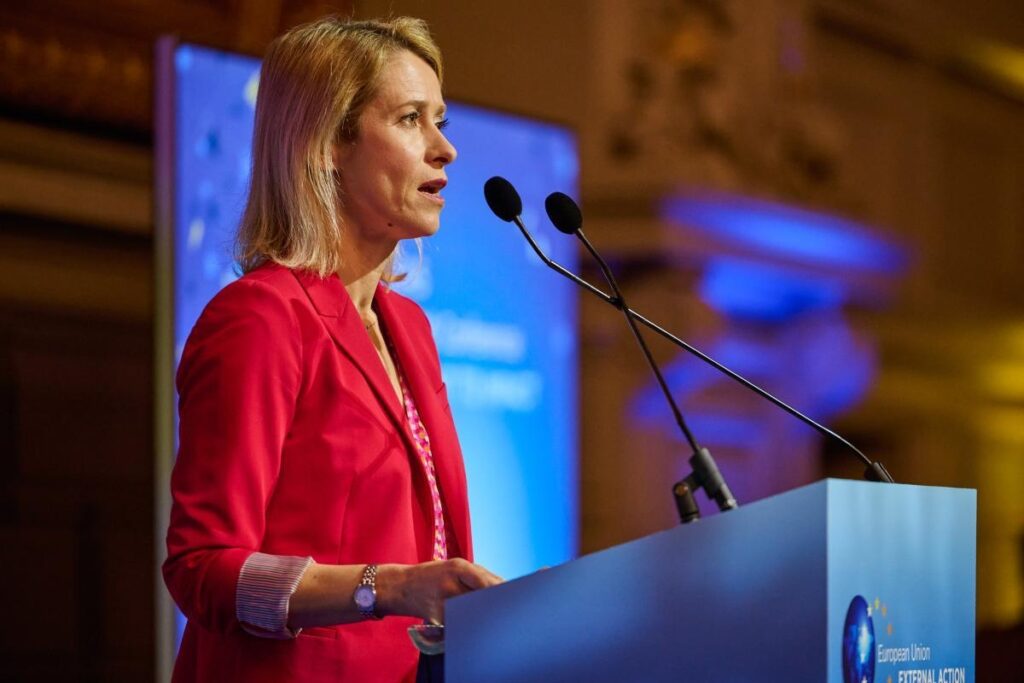
"This is not Europe's war, but Europe's interests are directly at stake," said EU head of foreign affairs Kaja Kallas this week, exemplifying the tricky bind that Europe is in ahead of this week’s EU summit in Brussels.
On Thursday, European leaders will meet to discuss the military escalation in the Middle East and the situation in Iran, including its implications for the EU's energy prices and security.
"The military escalation in the Middle East is causing global instability, and its negative consequences are already being felt in Europe," said European Council President António Costa ahead of the meeting.
Before recent events, leaders were supposed to gather on Thursday to discuss the bloc’s "strategic competitiveness agenda", but the EU has been forced to refocus its efforts on responding to the security, energy and economic shockwaves posed by the war in the Middle East.
Despite its divisions, Europe has brushed off Trump’s pressure on drawing allies in to protect the Strait of Hormuz, a vital passageway for global trade (particularly oil), just off the coast of Iran.
Diplomatic solution
For the EU, securing the strait to allow the safe passage of shipments – particularly fertilisers, food and energy – is an "urgent priority", Kallas stressed after Monday’s council meeting with EU foreign ministers.
She said in an interview with Reuters on Tuesday that the EU is seeking a diplomatic solution to keeping the Strait of Hormuz open.
"Nobody is ready to put their people in harm's way in the Strait of Hormuz. We have to find diplomatic ways to keep this open so that we don't have a food crisis, fertiliser crisis, energy crisis as well," Kallas told Reuters.
The head of EU diplomacy also called on the United States and Israel to immediately end their war with Iran, saying the EU was consulting with governments in the Middle East about how to bring the conflict to a conclusion.
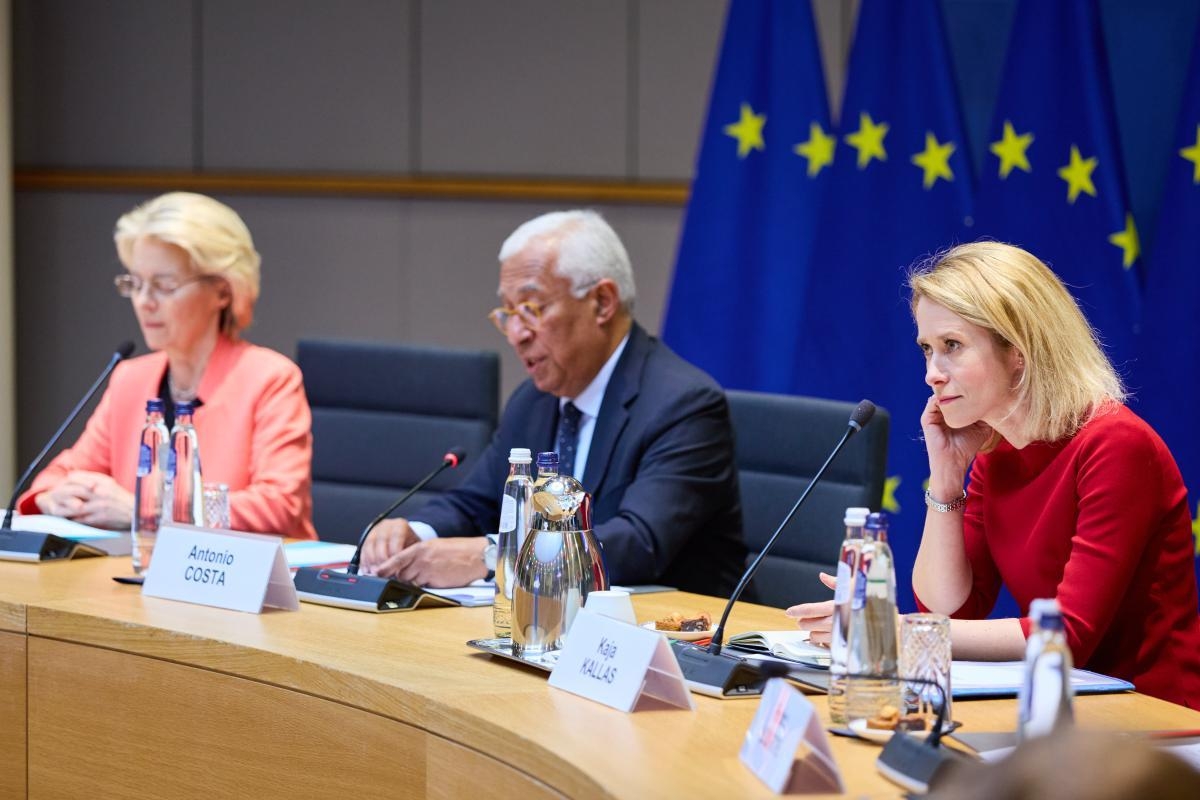
On 9 March 2026, Ursula von der Leyen, President of the European Commission, together with António Costa, President of the European Council, participate in a video conference with Middle East Leaders. Credit: EU
The EU is already conducting naval operations in the region in the shape of ASPIDES – an EU military operation in the Red Sea to counter Houthi attacks on international shipping. Further options– including boosting ASPIDES – have not generated much appetite among EU leaders.
Some 20% of the world's oil and liquified natural gas supplies pass through the Strait of Hormuz, as do huge amounts of fertilisers, which are already affecting Asia, but also Africa.
"If we do not have fertilisers now this year, we will have a famine next year. So, it is a very, very big war with many consequences," Kallas said on Monday, adding that the EU is reaching out to partners to see how it can collectively convince the warring parties to stop.
De Wever mess
The political tensions from the energy fallout are being felt in both the US and Europe.
This week, the US eased certain Russian sanctions on oil to help alleviate the energy supply crunch sparked by the US-Israel war with Iran, drawing criticism from pro-Ukraine campaigners.
The Belgian Prime Minister also found himself at the deep end with comments calling for the normalisation of relations with Russia to access cheaper energy.
European Council President and former socialist Portuguese prime minister, Antonio Costa, responded on Monday afternoon, saying that "the day will come", but "not yet".
"We must now avoid disrupting the efforts led by (US President) Trump to achieve a just and lasting peace," he said. "But we must be prepared because one day, Trump may decide he cannot continue those efforts, or his efforts may fail. And then we must be prepared to carry on the work."
Russian sanctions & Druzhba
On Tuesday, the dispute over the Druzhba pipeline, a key supplier of Russian oil to Hungary and Slovakia and damaged by a Russian attack, appeared to be on the way to being resolved.
European Commission President Ursula Von der Leyen announced that Ukraine had accepted the EU’s offer to fund and repair the damage. It hopes to unblock a diplomatic spat between Kyiv, Budapest and Bratislava, with Hungary and Slovakia accusing Ukraine of deliberately delaying the repairs.
In response, Hungary had been blocking the 20th sanctions package and the €90 billion loan for Ukraine, agreed by EU heads of state and government in December.
To ensure future EU energy security, the European Commission said it will continue to work on "alternative routes" for the transit of non-Russian crude oil to the countries of Central and Eastern Europe.
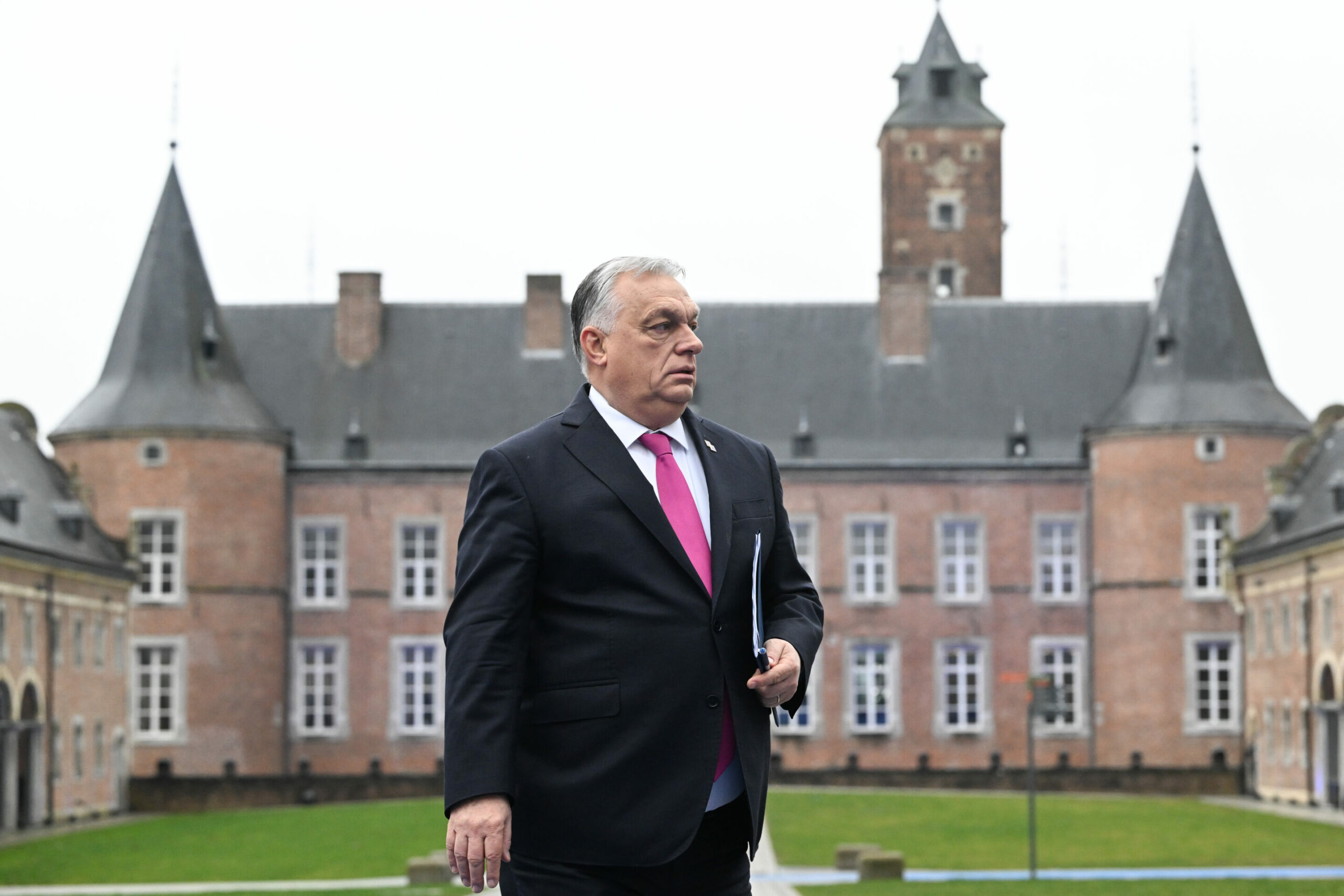
Hungarian Prime Minister Viktor Orbàn informal summit with leaders at a Belgian castle, November 2025. Credit: EU
Now, there are hopes that the latest round of Russian sanctions could be agreed upon at this week's summit.
Von der Leyen’s spokesperson said on Tuesday that the Commission "hopes and is confident that rapid progress will be made in the talks" on the loan, "ideally before the European summit" on Thursday.
In addition, the Commission is closely monitoring discussions on the 20th sanctions package within the Council.
At Thursday's summit, European leaders' main aims will now be to overcome the two-country veto on the Ukraine loan and to define a common approach to a rapidly evolving situation in the Middle East.
UN Secretary-General António Guterres will also attend a working lunch with EU leaders at the summit, with discussions on fighting for a peaceful solution to the Middle East and how Europe can best protect multilateralism in the future.
